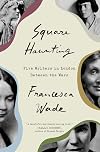
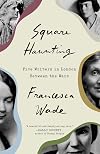
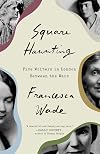
Square Haunting: Five Writers in London Between the Wars
by Francesca Wade
On This Page
Description
"In the early twentieth century, Mecklenburgh Square, a hidden architectural gem in the heart of London, was a radical address. On the outskirts of Bloomsbury known for the eponymous group who "lived in squares, painted in circles, and loved in triangles," the square was home to students, struggling artists, and revolutionaries. In the pivotal era between the two world wars, the lives of five remarkable women intertwined at this one address: modernist poet H. D., detective novelist Dorothy show more L. Sayers, classicist Jane Harrison, economic historian Eileen Power, and author and publisher Virginia Woolf. In an era when women's freedoms were fast expanding, they each sought a space where they could live, love, and above all work independently."-- show lessTags
Recommendations














Member Reviews
[Square Haunting] is a group biography of five writers/academics connected by place, Mecklenburgh Square in London. They didn't all live there at the same time, but were all drawn to the location as a place where, as women, they could be in the middle of life and culture, but also have small place to call their own and focus on their work. The author devotes a section to each woman in the order that she lived in Mecklenburgh Square: the poet and author H.D. (Hilda Doolittle) who lived there from 1916-1918; the novelist Dorothy Sayers who lived there in 1920; academic of ancient history Jane Ellen Harrison who lived there from 1926-1928; economic historian Eileen Power who lived there from 1922-1940; and author Virginia Woolf who was show more there 1939-1940.
I loved reading about these women, who, across the board, struggled to balance the desire to be taken seriously in their fields with the hope of having a balanced and fulfilled life. There are many parallels to be drawn about the challenges they faced to have their work judged on equal footing with men. Overall, I thought this book was pretty successful, especially considering the challenging topic. Though these women had similarities, they weren't a circle and largely did not interact. Drawing them together through the location of Mecklenburgh Square worked very well for some of the women, but for others I thought the tie to place was less strong. Despite these few reservations, I would definitely recommend this to anyone interested in the time period. I hadn't even heard of two of these women, and knew very little about H.D. and Dorothy Sayers. Viriginia Woolf I'm pretty familiar with, but the section about her brought some welcome new ideas about her life.
[[Francesca Wade]], the author, seems fairly young from her bio, and I will read whatever she writes next. show less
I loved reading about these women, who, across the board, struggled to balance the desire to be taken seriously in their fields with the hope of having a balanced and fulfilled life. There are many parallels to be drawn about the challenges they faced to have their work judged on equal footing with men. Overall, I thought this book was pretty successful, especially considering the challenging topic. Though these women had similarities, they weren't a circle and largely did not interact. Drawing them together through the location of Mecklenburgh Square worked very well for some of the women, but for others I thought the tie to place was less strong. Despite these few reservations, I would definitely recommend this to anyone interested in the time period. I hadn't even heard of two of these women, and knew very little about H.D. and Dorothy Sayers. Viriginia Woolf I'm pretty familiar with, but the section about her brought some welcome new ideas about her life.
[[Francesca Wade]], the author, seems fairly young from her bio, and I will read whatever she writes next. show less
Square Haunting brings together original research on five women who lived in a small area of London, examining their experiences of work and life in a period that saw dramatic improvements for some women's lives (as well as entrenchment of some restrictions). All were 'elite' in the sense that they managed to access higher education at a time when Cambridge still didn't award degrees to women (they could study, just not get the degree). I loved the way Wade brought together these very different women's lives to tell a story about how they dealt with discrimination and attempts to limit their choices. I had read a little about Dorothy Sayers, but this section was definitely a highlight for me. Wade shows how she hid her (only) child, show more continuing to write. In the process, the link between her own life and her choices re the character Harriet Vane are made clear. Also additions to the books that never quite made it - would have loved to read Woolf's new history, rethinking ideas about cultural history across time. It was still in note form when she died. Quoting Virginia Woolf-
'Literature is no one's private ground; literature is common ground. It is not cut up into nations, there are no wars there. Let us trespass freely and fearlessly and find our own way for ourselves.'
As always with this kind of book I'm left with a longer TBR pile, from Mary Beard's book about the significant of Jane Harrison's interpretation of classical women's lives, to Swastika Night which 'describes a future society ruled by descendants of Hitler's Nazi's where women are considered a subspecies...' I also want to read some of Eileen Power's history books for Penguin / Puffin. show less
'Literature is no one's private ground; literature is common ground. It is not cut up into nations, there are no wars there. Let us trespass freely and fearlessly and find our own way for ourselves.'
As always with this kind of book I'm left with a longer TBR pile, from Mary Beard's book about the significant of Jane Harrison's interpretation of classical women's lives, to Swastika Night which 'describes a future society ruled by descendants of Hitler's Nazi's where women are considered a subspecies...' I also want to read some of Eileen Power's history books for Penguin / Puffin. show less
This book is so close to getting five stars, and yet I can't quite bring myself to do it! I'm conflicted! On the one hand: Wade is a wonderful writer who provides some lovely insight, and the five women she’s writing about are absolutely fascinating. I loved spending time with them through Wade’s writing.
On the other hand: I remain unsure of whether this book actually works. I’m not sure its central conceit--all of these women lived in the same neighbourhood, though not at the same time, and Wade is focusing on each one’s time there, her feelings about her place in the world as a woman, and her relationship with London--completely comes together. Perhaps the scope is too ambitious, but at the same time, you could sometimes see show more Wade contorting things so that they’ll fit. I found the parallels she drew kind of a stretch at times,even while I was appreciating her profound appreciation for trailblazing women.
Still, the most frustrating thing about the book was that I wanted more about these women’s lives before/after Mecklenburg Square. Honestly, I would have preferred if she’d written five full biographies (they could even be on the short side!) and called the the Mecklenburg Square Quintet or something like that. Choosing to focus just on their lives when they lived in a particular area (and most of them lived there for only a few years or even less) meant that so much gets left out.
That need can be filled by reading dedicated biographies of each woman (which I intend to do), so another part of me almost wishes that Wade had dedicated less of her book to biographical information and more to the women's inner lives, their feelings about their gender and their relationship to the world, their dreams of a better future--because those are the places where Wade really shines. I know that the biographical stuff is necessary to give context to everything else, but in having to include it, Wade is stuck in a too-much or too-little situation. As five biographies, this book does not satisfy. As an exploration of what it was like to be a talented and ambitious female writer in pre-WWII London, it does a much better job and yet I wanted more.
I was also struck again and again by the ways that relationships with other women were so central to the survival and professional flourishing of the five. Some of these women had good, positive relationships with men (some of them even had happy marriages!), but all of them were betrayed by men at one point or another. Andall of them have some profound need that is met by women or groups of women: some of them fell in love with women, some of them were mentored by or mentored other women, some of them had the wonderful opportunity to live and work in the environment of women’s colleges, others were rescued by other women or encouraged by other women in a time of great need. This is beautiful to me, and reminds me of the importance of female relationships and solidarity.
The book gave me loads to think about and I enjoyed it all. There are so many people and things that I was tantalizingly introduced to in this book, and now I want to research and find out more about them all. I would definitely recommend the book to anyone interested in women's history, female writers, pre-WWII London, and interesting people in general. The wonderful things about this book (and there are many) are what make my conflicted feelings so frustrating: this book is so close to being truly great. show less
On the other hand: I remain unsure of whether this book actually works. I’m not sure its central conceit--all of these women lived in the same neighbourhood, though not at the same time, and Wade is focusing on each one’s time there, her feelings about her place in the world as a woman, and her relationship with London--completely comes together. Perhaps the scope is too ambitious, but at the same time, you could sometimes see show more Wade contorting things so that they’ll fit. I found the parallels she drew kind of a stretch at times,even while I was appreciating her profound appreciation for trailblazing women.
Still, the most frustrating thing about the book was that I wanted more about these women’s lives before/after Mecklenburg Square. Honestly, I would have preferred if she’d written five full biographies (they could even be on the short side!) and called the the Mecklenburg Square Quintet or something like that. Choosing to focus just on their lives when they lived in a particular area (and most of them lived there for only a few years or even less) meant that so much gets left out.
That need can be filled by reading dedicated biographies of each woman (which I intend to do), so another part of me almost wishes that Wade had dedicated less of her book to biographical information and more to the women's inner lives, their feelings about their gender and their relationship to the world, their dreams of a better future--because those are the places where Wade really shines. I know that the biographical stuff is necessary to give context to everything else, but in having to include it, Wade is stuck in a too-much or too-little situation. As five biographies, this book does not satisfy. As an exploration of what it was like to be a talented and ambitious female writer in pre-WWII London, it does a much better job and yet I wanted more.
I was also struck again and again by the ways that relationships with other women were so central to the survival and professional flourishing of the five. Some of these women had good, positive relationships with men (some of them even had happy marriages!), but all of them were betrayed by men at one point or another. Andall of them have some profound need that is met by women or groups of women: some of them fell in love with women, some of them were mentored by or mentored other women, some of them had the wonderful opportunity to live and work in the environment of women’s colleges, others were rescued by other women or encouraged by other women in a time of great need. This is beautiful to me, and reminds me of the importance of female relationships and solidarity.
The book gave me loads to think about and I enjoyed it all. There are so many people and things that I was tantalizingly introduced to in this book, and now I want to research and find out more about them all. I would definitely recommend the book to anyone interested in women's history, female writers, pre-WWII London, and interesting people in general. The wonderful things about this book (and there are many) are what make my conflicted feelings so frustrating: this book is so close to being truly great. show less
This is an inventive approach to biography. All of the 5 women in this book lived in the same Square in Bloomsbury between the First world war and the second. They lived their for different times, some less than a year, others for much longer. They didn't always overlap in terms of residency and they didn't necessarily socialise together if they did. But the links that tie them together are many and varied. Some lived there at the start of their writing career, others nearer the end. They each tried to present, in their own way, a different type of life for women, one where independence and a marriage of two minds was possible and desirable. Of the 5 women, I have heard of only 2, which is poor on my part. But I do know the area. I show more worked, for a time, at Brunswick Square, which is the matching square on the other side of the Foundling Hospital from Mecklenburg Square. I liked the idea that these 5 women shared something that was more than just geography, and she makes this case throughout the book. The biographies start quite separate, but gradually then overlap, as the links between the various women through their extended social circle and through their writings becomes clearer. The final chapter on the post war history of the square was interesting as well.
As a means of writing about 5 different women, the use of the location was certainly interesting. I quite enjoyed this and mean to read some of the other women that I am less familiar with. show less
As a means of writing about 5 different women, the use of the location was certainly interesting. I quite enjoyed this and mean to read some of the other women that I am less familiar with. show less
A collective biography of five women—writers H.D. (Hilda Doolittle), Dorothy Sayers and Virginia Woolf, and academics Jane Harrison and Eileen Power—who all lived in in London in a neighbourhood called Mecklenburgh Square in the first half of the twentieth century. Francesca Wade is clearly very invested in her subjects, but Square Haunting never rose above "fine" for me. It read like Wade had pitched the book on the idea of "five influential women literary figures/thinkers lived in unexpectedly close quarters to one another" and felt that she was bound to that idea, even though the strongest thematic resonances between their lives really had little or nothing to do with the square in particular or even London in general. A better show more editor would have told Wade to start over. show less
This is something of a five-part biography of 5 women writers who resided in Mecklenburgh Square in Bloomsbury between the two World Wars. Not all of them lived there at the same time, but they all spent some of there writing life there, and most knew the others and the people in between them as well. Their stories form a picture of women's struggles, successes and failures in this era, some of which, most of which certainly echo today.
The five are H.D. (Hilda Doolittle), Dorothy L. Sayers, Jane Ellen Harrison, Eileen Power, and Virginia Woolf. Of the five, I have read two (Sayers and Woolf), heard of another (H.D.) and was clueless about Harrison and Power, although they were certainly as influential in their time as the other, better show more known names. I was impressed by all their struggles: to be heard, to live without depending on men, to find causes and nerve and their own value in their time. I learned the most from the sections on Harrison and Power, on their impacts and on the history of the time, especially on the lead-up to World War II and the visceral experience of that war in London and the surrounding areas. The psychological as well as professional struggles of these five women are not over, almost 100 years after the fact.
Strongly recommended. show less
The five are H.D. (Hilda Doolittle), Dorothy L. Sayers, Jane Ellen Harrison, Eileen Power, and Virginia Woolf. Of the five, I have read two (Sayers and Woolf), heard of another (H.D.) and was clueless about Harrison and Power, although they were certainly as influential in their time as the other, better show more known names. I was impressed by all their struggles: to be heard, to live without depending on men, to find causes and nerve and their own value in their time. I learned the most from the sections on Harrison and Power, on their impacts and on the history of the time, especially on the lead-up to World War II and the visceral experience of that war in London and the surrounding areas. The psychological as well as professional struggles of these five women are not over, almost 100 years after the fact.
Strongly recommended. show less
To be honest, it took me a while to get into this -- the introduction is far longer than it needs to be, and feels more like an apology or a synopsis entry to a dissertation.
Once the biographies started, I was drawn in more and more. I was particularly fascinated to learn about Hilda Doolittle/HD, Ilene Power and Jane Harrison, as I had never heard of any of them before. I loved learning more about Dorothy Sayers (even though I could wish she loved Wimsey more), and I think the Virginia Woolf section was wonderfully focused on her work -- I like how much it talked about what she was doing and how she was dealing with her mental health, rather than writing her struggles off. On the whole, I thought the premise was a little wacky -- show more connecting via a space, but the interconnections really are astonishing, and I found the strength of the subjects inspiring.
Audio Advanced Reader's Copy Provided by Libro.fm. show less
Once the biographies started, I was drawn in more and more. I was particularly fascinated to learn about Hilda Doolittle/HD, Ilene Power and Jane Harrison, as I had never heard of any of them before. I loved learning more about Dorothy Sayers (even though I could wish she loved Wimsey more), and I think the Virginia Woolf section was wonderfully focused on her work -- I like how much it talked about what she was doing and how she was dealing with her mental health, rather than writing her struggles off. On the whole, I thought the premise was a little wacky -- show more connecting via a space, but the interconnections really are astonishing, and I found the strength of the subjects inspiring.
Audio Advanced Reader's Copy Provided by Libro.fm. show less
Members
- Recently Added By
Lists

Female Author
1,234 works; 67 members

Books Read in 2021
5,361 works; 114 members

Best Books Set in London
157 works; 42 members

Club Read's Recommended Nonfiction Written by Women
618 works; 30 members
Author Information

4+ Works 526 Members
Francesca Wade has written for publications including the London Review of Books,. The Times Literary Supplement, The Paris Review, The New York Times, and Granta. She is editor of The White Review and a winner of the Biographers' Club Tony Lothian Prize. She lives in London.
Some Editions
Awards and Honors
Common Knowledge
- Original publication date
- 2020
- People/Characters
- H.D.; Dorothy L. Sayers; Jane Ellen Harrison; Eileen Power; Virginia Woolf
- Important places
- Mecklenburgh Square, Bloomsbury, London, England, UK
- Epigraph
- 'I like this London life in early Summer - the street sauntering & square haunting.'
VIRGINIA WOOLF, diary 20 April 1925 - First words
- A few minutes past midnight on Tuesday, 10 September 1940, an air raid struck Mecklenburgh Square.
Marooned on an island in the middle of a busy junction, a stone woman stoops to fill an urn with water. - Quotations
- I like this London life in early Summer -
the street sauntering & square haunting
--Virginia Woolf, diary, 20 April 1925 - Last words
- (Click to show. Warning: May contain spoilers.)She crosses Mecklenburgh Square, climbs the stairs, turns the key in the door of her new home, and finds a book sitting on the desk, ready for her to turn the first page: A Room of One's Own.
- Publisher's editor
- Angel, Mitzi (acquiring editor); Hassan, Laura (text editor)
- Blurbers
- Bakewell, Sarah; Wilson, Frances; Gordon, Edmund; Rooney, Sally; Drabble, Margaret; Prideaux, Sue
- Canonical DDC/MDS
- 820.9928709421
- Canonical LCC
- PR110.L6
Classifications
- Genres
- Literature Studies and Criticism, Biography & Memoir, History, Nonfiction, General Nonfiction, Sexuality and Gender Studies
- DDC/MDS
- 820.9928709421 — Literature & rhetoric English & Old English literatures English and Old English (Anglo-Saxon) literatures History, description, critical appraisal of works in more than one form
- LCC
- PR110 .L6 — Language and Literature English English Literature
- BISAC
Statistics
- Members
- 426
- Popularity
- 72,446
- Reviews
- 14
- Rating
- (4.13)
- Languages
- English
- Media
- Paper, Audiobook, Ebook
- ISBNs
- 12
- ASINs
- 4