On This Page
Description
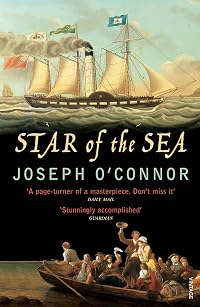
In the bitter winter of 1847, leaving an Ireland torn by famine and injustice, the Star of the Sea sets sail for New York. On board are hundreds of refugees, some of them optimistic, many more of them desperate. Among them are a maid with a devastating secret, the bankrupt Lord Merridith accompanied by his wife and children-and a killer stalking the decks, hungry for the vengeance that will bring absolution. This journey will see many lives end, while others begin anew. Passionate loves are show more tenderly recalled, shirked responsibilities regretted too late, and profound relationships shockingly revealed. In this spellbinding tale of tragedy and mercy, love and healing, the farther the ship sails toward the Promised Land, the more her passengers seem moored to a past that will never let them go. show lessTags
Recommendations































Member Reviews
Forget that this was published in 2004 – this is a Dickensian novel, full of complex characters, vivid storytelling, biting social commentary, Victorian literary experimentation, and bitter wit, all overlaid by a seemingly infinite empathy and compassion for humanity – even those whose bitter lives shape them into monsters. Though the events of the novel are claustrophobically confined to the decks of Star of the Sea, a rotting hulk making one final transatlantic run from Ireland to the U.S. bearing a cargo of tainted coal, toxic mercury, a scattering of first class passengers, and a seething stew of steerage passengers, character backstories drag us across fragrant green Irish fields littered with heather, through cruel workhouses, show more sordid brothels and corrupt jails, inside bleak British boarding schools, down roads lined with emaciated Irish dead, then back again through the villages poor in wealth but rich in love and generosity. All the things that Dickens did so heart-breakingly well.
This is also a very Irish novel, bleak and beautiful, couched in lyric language and imagery, full of characters who might have just stepped out of Irish ballads – hard drinking laborers, cruel landlords, wily thieves, wastrel balladeers, doomed lovers, wronged servant girls – and set in 1847, the great potato famine. Except that, in O’Connor’s adept hands, these archetypes gain flesh (so that we feel their pain), hearts (so that we experience their sorrows) and souls (making it impossible for us to deny their humanity).
Reading these past two paragraphs, I realize there’s a risk of scaring people away with all the sorrow and despair stuff. While I can’t pretend anyone actually ends up living happily ever after at the culmination of this tale, I can reassure potential readers that if you enjoy Dickens, you’ll enjoy this for many of the same reasons. Aside from memorably multi-faceted characters, period ambiance, and bracing satire, a significant enticement is the choice O’Connor has made to let the story unfold through a variety of different literary forms – captain’s logs, newspaper articles, bits of letters and diary entries, police interviews, etc. This literary device not only allows the story to be told through multiple perspectives, but provides ample range to for the author to showcase his formidable narrative creativity and dexterous storytelling.
For this is, above all, a story about stories, and especially storytelling. This is O’Connor reminding us that two million Irish dead of famine isn’t a statistic – it’s two million separate stories, each one tragic in its own unique way. And it’s about the power that all of us possess to shape our own narratives, especially the decisions we make about how we to cast ourselves in the stories we tell to ourselves and others: whether we see ourselves (or wish to be seen by others) as protagonists or antagonists, dissemblers or truth-tellers, victims or villains. Just in case we as a society begin to forget that what we think of as “reality” will always be relative, as long as history continues to be fashioned by the narratives of the survivors, and the narratives of those who do not survive fade gradually away. show less
This is also a very Irish novel, bleak and beautiful, couched in lyric language and imagery, full of characters who might have just stepped out of Irish ballads – hard drinking laborers, cruel landlords, wily thieves, wastrel balladeers, doomed lovers, wronged servant girls – and set in 1847, the great potato famine. Except that, in O’Connor’s adept hands, these archetypes gain flesh (so that we feel their pain), hearts (so that we experience their sorrows) and souls (making it impossible for us to deny their humanity).
Reading these past two paragraphs, I realize there’s a risk of scaring people away with all the sorrow and despair stuff. While I can’t pretend anyone actually ends up living happily ever after at the culmination of this tale, I can reassure potential readers that if you enjoy Dickens, you’ll enjoy this for many of the same reasons. Aside from memorably multi-faceted characters, period ambiance, and bracing satire, a significant enticement is the choice O’Connor has made to let the story unfold through a variety of different literary forms – captain’s logs, newspaper articles, bits of letters and diary entries, police interviews, etc. This literary device not only allows the story to be told through multiple perspectives, but provides ample range to for the author to showcase his formidable narrative creativity and dexterous storytelling.
For this is, above all, a story about stories, and especially storytelling. This is O’Connor reminding us that two million Irish dead of famine isn’t a statistic – it’s two million separate stories, each one tragic in its own unique way. And it’s about the power that all of us possess to shape our own narratives, especially the decisions we make about how we to cast ourselves in the stories we tell to ourselves and others: whether we see ourselves (or wish to be seen by others) as protagonists or antagonists, dissemblers or truth-tellers, victims or villains. Just in case we as a society begin to forget that what we think of as “reality” will always be relative, as long as history continues to be fashioned by the narratives of the survivors, and the narratives of those who do not survive fade gradually away. show less
(28) This was an unsolicited lend from a friend that caught my eye - there is something about long perilous ocean voyages that make for great reading. This is set during the mid 1800's during the worst of the potato famine in Ireland. A novel within a novel frame - the author, Grantley, is an American writer on board the ship who is incensed by the outrages of the famine and also harbors secrets of his own. The ship contains desperately poor Irish in steerage attempting to save their lives by immigrating to America. In first class, Lord David Meredith and his family are also immigrating - an English protestant noble born and raised in Ireland and much maligned in the current political climate, he is marked for death. An Pius Mulvey, a show more mysterious man who walks the deck all night long dragging an injured leg behind him - he is often referred to by Grantley as 'The Monster.'
So the plot is intriguing and thickens as the novel progresses. It has almost a gothic feel to it as recollections about each character are mysterious, melancholy, and filled with dreadful secrets. The writing is quite good and feels authentically of the times. In addition to questions about the veracity of the narration, there is a lot to think about. I very much enjoyed at least 3/4 of this novel but thought it ended a bit weak aesthetically. I do not want to spoil but I think O'Connor over explained. Let your writing speak for itself - it was quite good! Lord Kingscourt was ready to welcome what was coming for him and he got it - but maybe was surprised at the identity of his executioner...
I will read this author again (In part because there are more books by him in the stack given to me by my friend) He is a great story-teller and builds an authentic sense of place and time. If you like Victorian sensationalist yarns like Dickens and Wilkie Collins, then you should read this, old thing. show less
So the plot is intriguing and thickens as the novel progresses. It has almost a gothic feel to it as recollections about each character are mysterious, melancholy, and filled with dreadful secrets. The writing is quite good and feels authentically of the times. In addition to questions about the veracity of the narration, there is a lot to think about. I very much enjoyed at least 3/4 of this novel but thought it ended a bit weak aesthetically. I do not want to spoil but I think O'Connor over explained. Let your writing speak for itself - it was quite good! Lord Kingscourt was ready to welcome what was coming for him and he got it - but maybe was surprised at the identity of his executioner...
I will read this author again (In part because there are more books by him in the stack given to me by my friend) He is a great story-teller and builds an authentic sense of place and time. If you like Victorian sensationalist yarns like Dickens and Wilkie Collins, then you should read this, old thing. show less
Great read from O’Connor. Set during 1840s Irish famine. A disparate group are leaving Ireland on the “Star of the Sea” for a new life in America. During the voyage we learn the background of some of them and of the impact of the famine on rural communities (particularly in the poorer west of Ireland, in this case Connemara). Well written and involving. I waited to see if Lord Kingscourt would be murdered by Pius Mulvey.
This brought home to me more than any dry history could the extent of and devastating effects of the Irish Potato Famine in the 1840s. Through this novel I felt keenly the suffering of the Irish and the devastating effects of the Potato Famine. For many, thrown off their small plots of land by their heartless landlords, the way to escape their poverty and privation was to emigrate to America.
This is the story of the 1847 voyage of a ship filled with emigrants: the "Star of the Sea" and her captain and crew. One man from Connemara, Pius Mulvey, is forced to undertake the murder of impoverished Lord Kingscourt--David Merridith, an Englishman. Those who order him are members of a clandestine group of agitators, the "Hibernian Defenders" show more who hate how cruelly the landowners have treated their tenant-farmers. They say if Mulvey doesn't do the job, he himself will be killed. The story consists of the captain's log for each day at sea [28] and its events. As the journey progresses it becomes bleaker and more grim. Then various chapters give the backgrounds of Mulvey, Mary Duane whom he seduces, Mirridith and family, and many others. An American newspaperman, Dixon, is on board and writes from his point of view continuing after the ship reaches America, its difficulties with the authorities, until concluding on Easter 1916. Upon rereading, I noticed the significance of the date: the Easter Uprising against British Rule.
The writing was gorgeous and amazing. The author waxed poetic on occasion, sometimes excessively so. Sometimes the writing was strong and clipped. The story twisted and turned interweaving all these lives.
A strong, vivid image taken from the description of when the Hibernian Defenders threaten Mulvey:
"He remembered their eyes, so frightened and convinced. The black stained sackcloth of the hooded masks they wore. The slashed out holes where their mouths appeared. They were wielding the tools of their livelihood, but as weapons -- scythes, mattocks, loys, billhooks. Now they had no livelihood left. Centuries stolen in one stunning moment. Their fathers' labour; their sons' inheritances. At the stroke of a pen, they were gone.
Black and green fields. The green of the banner draped across the table, spattered with ribbons of Mulvey's blood. The glint of the weapon they had made him take, the fisherman's knife pressed to his chest, while they raged at him about freedom and land and thievery. The words SHEFFIELD STEEL etched into the blade. He could feel it now, in the pocket of his greatcoat, nestled to his lacerated thigh. He remembered the things they said they would do with that knife if he didn't stop whingeing about murder being too heavy to put on him. When they held him down and started to cut him, Mulvey screamed to be allowed to kill."
A poetic description of the ocean:
"Maritime wreckage. Bone and driftwood. Darker now: the wind blasting and stopping, like exchanges on a battlefield when ammunition is low. Everything had a blue and shadowy look."
Sometimes we "heard" voices of some of the passengers; each was distinct. The plot presented some as interviews, letters [even to misspellings and Irish dialect], an excerpt from a novel of the newspaperman, as songs or prayers. One chapter was a litany to the Virgin Mary; I could hear the frightened steerage passengers reciting the words. I could feel the captain was a compassionate Quaker through his writing. I really empathized with the characters and their conditions. I felt the stench and squalor of steerage conditions. I appreciated the long and detailed "Notes & Acknowledgements" at the end; I feel the reality and truth of the novel.
Highly recommended. show less
This is the story of the 1847 voyage of a ship filled with emigrants: the "Star of the Sea" and her captain and crew. One man from Connemara, Pius Mulvey, is forced to undertake the murder of impoverished Lord Kingscourt--David Merridith, an Englishman. Those who order him are members of a clandestine group of agitators, the "Hibernian Defenders" show more who hate how cruelly the landowners have treated their tenant-farmers. They say if Mulvey doesn't do the job, he himself will be killed. The story consists of the captain's log for each day at sea [28] and its events. As the journey progresses it becomes bleaker and more grim. Then various chapters give the backgrounds of Mulvey, Mary Duane whom he seduces, Mirridith and family, and many others. An American newspaperman, Dixon, is on board and writes from his point of view continuing after the ship reaches America, its difficulties with the authorities, until concluding on Easter 1916. Upon rereading, I noticed the significance of the date: the Easter Uprising against British Rule.
The writing was gorgeous and amazing. The author waxed poetic on occasion, sometimes excessively so. Sometimes the writing was strong and clipped. The story twisted and turned interweaving all these lives.
A strong, vivid image taken from the description of when the Hibernian Defenders threaten Mulvey:
"He remembered their eyes, so frightened and convinced. The black stained sackcloth of the hooded masks they wore. The slashed out holes where their mouths appeared. They were wielding the tools of their livelihood, but as weapons -- scythes, mattocks, loys, billhooks. Now they had no livelihood left. Centuries stolen in one stunning moment. Their fathers' labour; their sons' inheritances. At the stroke of a pen, they were gone.
Black and green fields. The green of the banner draped across the table, spattered with ribbons of Mulvey's blood. The glint of the weapon they had made him take, the fisherman's knife pressed to his chest, while they raged at him about freedom and land and thievery. The words SHEFFIELD STEEL etched into the blade. He could feel it now, in the pocket of his greatcoat, nestled to his lacerated thigh. He remembered the things they said they would do with that knife if he didn't stop whingeing about murder being too heavy to put on him. When they held him down and started to cut him, Mulvey screamed to be allowed to kill."
A poetic description of the ocean:
"Maritime wreckage. Bone and driftwood. Darker now: the wind blasting and stopping, like exchanges on a battlefield when ammunition is low. Everything had a blue and shadowy look."
Sometimes we "heard" voices of some of the passengers; each was distinct. The plot presented some as interviews, letters [even to misspellings and Irish dialect], an excerpt from a novel of the newspaperman, as songs or prayers. One chapter was a litany to the Virgin Mary; I could hear the frightened steerage passengers reciting the words. I could feel the captain was a compassionate Quaker through his writing. I really empathized with the characters and their conditions. I felt the stench and squalor of steerage conditions. I appreciated the long and detailed "Notes & Acknowledgements" at the end; I feel the reality and truth of the novel.
Highly recommended. show less
It is 1847. There is a devastating famine in Ireland. People are dying at an insanely high rate. The rich delight in their social affluence, while the poor suffer deplorable conditions of disease, hunger, and filth. With hopes of reaching America, the fortunate (or not so fortunate) board the Star of the Sea for a journey across the Atlantic that only a percentage of the passengers will even survive.
The depth of writing employed by Joseph O'Connor in Star of the Sea is not something to which I am accustomed, but I am left spellbound nonetheless. It was published in 2002, but it read more like a classic. The language was lovely, and if I was a more competent book reviewer I would be able to present you with several lovely quotes to show more exemplify this language of which I speak... but you will have to simply discover it for youself! :)
In the first chapter, the reader is informed of the murder that will take place on board the Star, but divulging this seemingly large detail in the opening pages gives absolutely nothing away. The ending was still surprising, and I venture to say there are still several plotlines and complexities that I do not fully understand (I need a book club for discussion!). What I most loved was O'Connor's ability to illuminate the atrocities of famine and poverty while maintaining a moving, engaging plot.
Final thoughts: If you prefer quick plot twists and lots of action, this one might be a bit drawn out for you. Otherwise, I highly recommend Star of the Sea. show less
The depth of writing employed by Joseph O'Connor in Star of the Sea is not something to which I am accustomed, but I am left spellbound nonetheless. It was published in 2002, but it read more like a classic. The language was lovely, and if I was a more competent book reviewer I would be able to present you with several lovely quotes to show more exemplify this language of which I speak... but you will have to simply discover it for youself! :)
In the first chapter, the reader is informed of the murder that will take place on board the Star, but divulging this seemingly large detail in the opening pages gives absolutely nothing away. The ending was still surprising, and I venture to say there are still several plotlines and complexities that I do not fully understand (I need a book club for discussion!). What I most loved was O'Connor's ability to illuminate the atrocities of famine and poverty while maintaining a moving, engaging plot.
Final thoughts: If you prefer quick plot twists and lots of action, this one might be a bit drawn out for you. Otherwise, I highly recommend Star of the Sea. show less
This was a very quick read due to O’Connor’s engaging and eclectic writing style and ability to construct some very strong characters and bring them together in creative ways.
Star of the Sea leaves Ireland for New York weighed down with a cargo of impoverished emigrants fleeing the Irish famine. Floating atop the seething masses bedding down with enormous vermin, cholera and typhus below deck is a small group of the wealthy elite who comprise, among others, the journalist who relates the tale that we read.
After the voyage begins, the narrator uses various devices to bring us up to speed on who each of the key characters are and the figurative baggage they have embarked with. As your awareness grows, you realise that the ship is the show more backdrop for a growing crisis which must come to a climax before the ship reaches its destination. O’Connor maintains this pace as well as he maintains your interest in the characters.
What O’Connor also skilfully does is to enlarge your understanding of the issues of the day, particularly those associated with the abominable and probably preventable Irish famine of the mid-19th century. This is something I didn’t have much awareness of, despite ancestors on my grandmother’s side coming from the counties of Roscommon and Connemara. He’s piqued my interest and has reminded me how the novel is a perfect medium for delivering non-fiction in the medium of fiction.
The ending disappointed me a little. The twist was predictable because O’Connor did his best to conceal that there wasn’t going to be a twist by building up a facade to distract you from it. This shows the difference between a good read and crafted literature where the writing itself is as much (or even more) a part of the joy of the novel than the plot. I’m not sure O’Connor is bothered though; it’s clear that his agenda is to communicate the plight of the Irish in history. I’m not sure he’s achieved it fully here but it’s definitely a good attempt and one which engaged me and caused me to want to know more. show less
Star of the Sea leaves Ireland for New York weighed down with a cargo of impoverished emigrants fleeing the Irish famine. Floating atop the seething masses bedding down with enormous vermin, cholera and typhus below deck is a small group of the wealthy elite who comprise, among others, the journalist who relates the tale that we read.
After the voyage begins, the narrator uses various devices to bring us up to speed on who each of the key characters are and the figurative baggage they have embarked with. As your awareness grows, you realise that the ship is the show more backdrop for a growing crisis which must come to a climax before the ship reaches its destination. O’Connor maintains this pace as well as he maintains your interest in the characters.
What O’Connor also skilfully does is to enlarge your understanding of the issues of the day, particularly those associated with the abominable and probably preventable Irish famine of the mid-19th century. This is something I didn’t have much awareness of, despite ancestors on my grandmother’s side coming from the counties of Roscommon and Connemara. He’s piqued my interest and has reminded me how the novel is a perfect medium for delivering non-fiction in the medium of fiction.
The ending disappointed me a little. The twist was predictable because O’Connor did his best to conceal that there wasn’t going to be a twist by building up a facade to distract you from it. This shows the difference between a good read and crafted literature where the writing itself is as much (or even more) a part of the joy of the novel than the plot. I’m not sure O’Connor is bothered though; it’s clear that his agenda is to communicate the plight of the Irish in history. I’m not sure he’s achieved it fully here but it’s definitely a good attempt and one which engaged me and caused me to want to know more. show less
Picked for my reading group and I really didn't think I'd like it. But I did. The writing is very dense and certainly at first I was needing a dictionary at times to look up words. But I was never bored or wanting to stop reading. It's done in a dense Dickens imitation style. I usually dislike "literary" fiction but occasionally it can work. But no wonder the Irish hate the British! Ironically the person who selected the book disliked it on his reread. Most of the rest of the group also disliked it or couldn't finish it. One even suggested it was a "piss take" based on the author foreword - which I didn't read until the end (he does have a point actually).
Members
- Recently Added By
Lists

Best Historical Fiction
620 works; 262 members

water on the brain: maritime fiction
74 works; 18 members

Historical Fiction
889 works; 90 members

Irish writers
87 works; 17 members

BBC Radio 4 Bookclub
341 works; 13 members

History novels (not too romancey)
37 works; 5 members
Books With Water Words in the Title
186 works; 12 members

Books Read in 2024
4,727 works; 125 members

Books Read in 2025
4,128 works; 98 members
Author Information

30+ Works 5,479 Members
Some Editions
Awards and Honors
Distinctions
Series

Belongs to Publisher Series
Fischer Taschenbuch (15972)
Common Knowledge
- Canonical title
- Star of the Sea
- Original title
- Star of the Sea
- Original publication date
- 2002
- People/Characters
- G Grantley Dixon; Earl David Merridith of Kingscourt; Pius Mulvey; Mary Duane; Nicholas Mulvey; Laura Markham (show all 7); Capt. Josias Tuke Lockwood
- Important places
- Atlantic Ocean; Connemara, County Galway, Ireland; Ireland; New York, New York, USA; East End, London, England, UK; Newgate Prison, London, England, UK
- Important events
- Irish Potato Famine (1845 | 1852)
- Epigraph
- [The Famine] is a punishment from God for an idle, ungrateful and rebellious country; an indolent and un-self-reliant people. The Irish are suffering from an affliction of God's providence.
Charles Trevelyan, Assistant Sec... (show all)retary to Her Majesty's Treasury, 1847
(Knighted, 1848, for overseeing famine relief)
England is truly a great public criminal. England! All England! ... She must be punished; that punishment will, as I believe, come upon her by and through Ireland; and so Ireland will be avenged ... The Atlantic ocean be neve... (show all)r so deep as the hell which shall belch down on the oppressors of my race.
John Mitchel, Irish nationalist, 1856
THE MISSING LINK: A creature manifestly between the gorilla and the Negro is to be met with in some of the lowest districts of London and Liverpool by adventurous explorers. It comes from Ireland, whence it has contrived to m... (show all)igrate; it belongs in fact to a tribe of Irish savages: the lowest species of Irish Yahoo. When conversing with its kind it talks a sort of gibberish. It is, moreover, a climbing animal, and may sometimes be seen ascending a ladder laden with a hod of bricks.
Punch magazine, London, 1862
Providence sent the potato blight but England made the Famine ... We are sick of the canting talk of those who tell us that we must not blame the British people for the crimes of their rulers against Ireland. We do blame them... (show all).
James Connolly, co-leader of the Easter Rising against British Rule, 1916 - Dedication
- For Anne-Marie
again and always - First words
- All night long he would walk the ship, from bow to stern, from dusk until quarterlight, that sticklike limping man from Connemara with the drooping shoulders and ash-coloured clothes.
- Last words
- (Click to show. Warning: May contain spoilers.)All the way back to Cain.
- Blurbers*
- Doyle, Roddy
- Canonical DDC/MDS
- 823.914
- Canonical LCC
- PR6065.C558
*Some information comes from Common Knowledge in other languages. Click "Edit" for more information.
Classifications
Statistics
- Members
- 2,114
- Popularity
- 9,786
- Reviews
- 66
- Rating
- (3.89)
- Languages
- 14 — Catalan, Danish, Dutch, English, Estonian, French, German, Hungarian, Italian, Norwegian (Bokmål), Portuguese, Spanish, Swedish, Turkish
- Media
- Paper, Audiobook, Ebook
- ISBNs
- 50
- ASINs
- 16