On This Page
Description
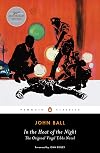
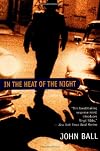
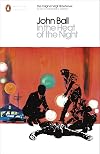
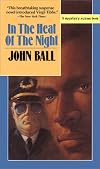
Fiction. Mystery. Thriller. Few detective novels can make as strong a claim to social and political relevance as John Ball's 1965 mystery, In the Heat of the Night. Its protagonist, a black police officer from Pasadena California named Virgil Tibbs, passes through a southern town at an inauspicious moment. An orchestra conductor has been gruesomely murdered, and the police, without much in the way of evidence or possible motives for the crime, arrest Tibbs. When the police discover that he show more is not the killer, but in fact a highly-skilled homicide detective, they enlist him to help solve the case. What makes this novel so interesting-and what made it so timely-is not merely the fact that its hero is a black police officer (at the time, a very unusual figure in popular culture), but that he is teamed with a bigoted southern police officer, Sheriff Gillespie. The evolving relationship between the two men, and the mutual admiration that develops between them, exposes the bankruptcy of racial prejudice. Rational, gentlemanly and a highly capable detective, Virgil Tibbs forces Gillespie to reconsider his stereotyped notions and accord him the kind of respect that the racist sheriff is not used to granting to those of ethnic backgrounds different from his own. Tibbs has not only Gillespie to deal with: his investigation takes him through the backwater town and exposes him to different forms of prejudice harbored by the townspeople. For it is not just Tibbs' ethnicity that rankles the locals he comes into contact with, it is also his urban sophistication and his California background. Part of Ball's achievement in this novel, though, is that he refuses to discredit one stereotype by merely adopting another. That is, he manages to write a tale about a region of the country where ignorance and racism cause terrible suffering without making the mistake of depicting every Southerner as ignorant, or racist. If Virgil Tibbs topples some people's preconceived notions, the portraits of some of the Southerners in this novel do the same. A fascinating pop culture document from the Civil Rights Era, In the Heat of the Night is also a great mystery. Winner of the Edgar Award from the Mystery Writers of America as well as the Crimewriters' Association's Golden Dagger Award, it was also recently named one of the hundred greatest detective novels of the century by the Independent Mystery Booksellers Association. It has also spawned two extremely successful adaptations, most famously the film of the same name starring Sidney Poitier and Rod Steiger, which won a Best Picture Oscar in 1967. The television show, which starred Carroll O'Connor, was a successful but somewhat more loosely-based adaptation. show lessTags
Recommendations

















Member Reviews
Like most people, I came to this book knowing the film a lot better. The two are actually pretty similar – which makes the differences all the more interesting.
The Virgil of the book is a lot less angry than that played by Sidney Poitier; he's much happier to acquiesce to the indignities of segregation for the sake of a quiet life and the chance to get out of it quicker – because let's face it, that's what most intelligent people do when faced with stupid authority. When delivered here, "They call me Mr Tibbs" is not the movie's angry cry of defiance but a statement of fact, and all the sadder for it.
Maybe that tells you something about way two texts with the same story can be positioned very differently; the book is a crime novel show more with a social conscious, while the film – in the best tradition of Best Pictures – is a high-profile cry of anger, a markable moment when mainstream pop culture acknowledges a tectonic shift in its assumptions. The book is quieter, its audience necessarily more self-selecting; two hours of your time for a movie is much less of a commitment than the many more it will take most people to get through even a short novel.
But it's easy to miss in all of that that In the Heat of the Night is also a damn good crime novel. It's testament to John Ball's visual imagery that it was relatively rare my mind defaulted to picturing what I had seen in the film. He writes a Chandler-esque evocation of a dirty, stratified city at night – or as Chandler-esque as any novel with an actual plot can be.
And that title is immensely clever, reflecting the literally oppressive atmosphere that pervades the book while also being a significant clue to its resolution. I like you Mr Ball.
Like any 50 year old book there are some problems. It's regrettable that Ball falls into the stereotype of signifying a black person's intelligence by noting their physical resemblance to a white person (at times that's clearly a deliberate attempt to highlight the white characters' prejudice, at other times I'm not so sure), and there's some questionable gender politics later in the story(Tibbs concludes Purdy can't have been raped because she comes to the police station wearing a push-up bra) .
However, the pragmatic side of me acknowledges even these problems are a lot less than you'd find in many other books of the same period (hello Ian Fleming) and it would seem churlish to knock a star off a book so obviously ahead of the curve in many important ways for letting 1965 creep through in a couple of more minor instances.
I went into In the Heat of the Night expecting to enjoy it and I was not disappointed. If you like Chandler, American crime and to feel vicariously involved in the civil rights movement, do pick it up. show less
The Virgil of the book is a lot less angry than that played by Sidney Poitier; he's much happier to acquiesce to the indignities of segregation for the sake of a quiet life and the chance to get out of it quicker – because let's face it, that's what most intelligent people do when faced with stupid authority. When delivered here, "They call me Mr Tibbs" is not the movie's angry cry of defiance but a statement of fact, and all the sadder for it.
Maybe that tells you something about way two texts with the same story can be positioned very differently; the book is a crime novel show more with a social conscious, while the film – in the best tradition of Best Pictures – is a high-profile cry of anger, a markable moment when mainstream pop culture acknowledges a tectonic shift in its assumptions. The book is quieter, its audience necessarily more self-selecting; two hours of your time for a movie is much less of a commitment than the many more it will take most people to get through even a short novel.
But it's easy to miss in all of that that In the Heat of the Night is also a damn good crime novel. It's testament to John Ball's visual imagery that it was relatively rare my mind defaulted to picturing what I had seen in the film. He writes a Chandler-esque evocation of a dirty, stratified city at night – or as Chandler-esque as any novel with an actual plot can be.
Like any 50 year old book there are some problems. It's regrettable that Ball falls into the stereotype of signifying a black person's intelligence by noting their physical resemblance to a white person (at times that's clearly a deliberate attempt to highlight the white characters' prejudice, at other times I'm not so sure), and there's some questionable gender politics later in the story
However, the pragmatic side of me acknowledges even these problems are a lot less than you'd find in many other books of the same period (hello Ian Fleming) and it would seem churlish to knock a star off a book so obviously ahead of the curve in many important ways for letting 1965 creep through in a couple of more minor instances.
I went into In the Heat of the Night expecting to enjoy it and I was not disappointed. If you like Chandler, American crime and to feel vicariously involved in the civil rights movement, do pick it up. show less
Flashback to 1960 and the horrible reality of Jim Crow. The dignity of Mr. Tibbs and the way he handles the slurs and injustice are at the heart of this novel, and Ball makes Tibbs the most intelligent and able character in the book. He goes a little overboard in drawing the distinctions between the Southern characters and Virgil Tibbs, but he has an important point to make and he makes it If you are ever doubting that race relations have made enormous progress in the last 50 years, read this book and feel the knot in your stomach when Mr. Tibbs comes into a diner and is denied a glass of milk. It is difficult to even imagine people actually feeling this way and yet so many did.
It is painful to read this book now but it matters to show more remember that it was a small book that made a big difference. It exposed us to ourselves, without any place to run and hide. I vaguely remember the furor when Sidney Poitier made Guess Who’s Coming to Dinner. People were outraged. It is the outrage that outrages us now. It is easy to carry the image of Mr. Poitier in my head while reading...who else could be Mr. Tibbs?
It has been decades since I saw the movie and reading the book has made me want to see it again. This was an interesting voyage into the past, a place we wax nostalgic for, but in some ways a place we would never want to occupy again. show less
It is painful to read this book now but it matters to show more remember that it was a small book that made a big difference. It exposed us to ourselves, without any place to run and hide. I vaguely remember the furor when Sidney Poitier made Guess Who’s Coming to Dinner. People were outraged. It is the outrage that outrages us now. It is easy to carry the image of Mr. Poitier in my head while reading...who else could be Mr. Tibbs?
It has been decades since I saw the movie and reading the book has made me want to see it again. This was an interesting voyage into the past, a place we wax nostalgic for, but in some ways a place we would never want to occupy again. show less
Virgil Tibbs happens to be in the wrong place at the wrong time, which is how he gets taken into custody on suspicion of murder. Turns out our Mr. Tibbs is not only innocent, he is a homicide investigator from Pasadena, California on his way back home after visiting his mother. Now the small town of Wells, South Carolina could use a good homicide investigator because they are dealing with the murder of a prominent citizen and an inexperienced Chief of Police; there is just one small problem - Virgil Tibbs is African American. The police department and many of the citizens of Wells are racist. Written in 1965, this novel is set in the days of racial segregation when the color of your skin determined what options were available to you. show more What Ball does so well with this novel is to show how bigotry can blind people to the truth and how true character can defeat prejudice. Tibbs is allowed to stay and investigate the murder because the mayor convinces Chief of Police Bill Gillespie that it's a win/win situation. If he fails, they have a fall guy, and if he succeeds, they can take all the credit for letting him solve the case.
The three main characters are so very interesting here. Bill Gillespie is a racist, but he is also honest with himself and therefore understands that he is out of his league with a murder investigation. Sam Wood, the officer that found the body, likes and respects Virgil Tibbs, but worries about how his own choices and actions will be viewed by others - he is a man of conscience who struggles with his own weaknesses. Virgil Tibbs is a man who understands how the world around him works and who lets his own intelligence and compassion guide him through a world where a lot of the established rules are just plain wrong.
"As a boy Bill Gillespie had been, from the first, considerably bigger than his classmates and the other children with whom he associated. Because of this fact he could dictate the terms of the games that were played and impose his will on others who were not physically his equal. To his credit, Gillespie did not use his size to become a bully and he did not deliberately 'pick on' those who might have wanted to disagree with him. But his automatic leadership deprived him of an early education in one of the most important accomplishments he could have had - diplomacy. He was aware of this and it bothered him occasionally."
The writing in this novel is truly fine for the most part. A few scenes are a bit hokey (mostly the ones where women are involved), and part of the plot is a bit thin. However, these issues can be overlooked because of the wonderful job Ball does of portraying how racism in the deep South infects everything it touches. Ball presents a full spectrum from outright hatred to those who struggle with their own racist views to those who are not racist. An interesting dynamic in a small town where the leading citizens must now depend on an African American to help them solve a murder.
"You're pretty sure of yourself, aren't you, Virgil," Gillespie retorted. "Incidentally, Virgil is a pretty fancy name for a black boy like you. What do they call you around home where you come from?"
"They call me Mr. Tibbs," Virgil answered. show less
The three main characters are so very interesting here. Bill Gillespie is a racist, but he is also honest with himself and therefore understands that he is out of his league with a murder investigation. Sam Wood, the officer that found the body, likes and respects Virgil Tibbs, but worries about how his own choices and actions will be viewed by others - he is a man of conscience who struggles with his own weaknesses. Virgil Tibbs is a man who understands how the world around him works and who lets his own intelligence and compassion guide him through a world where a lot of the established rules are just plain wrong.
"As a boy Bill Gillespie had been, from the first, considerably bigger than his classmates and the other children with whom he associated. Because of this fact he could dictate the terms of the games that were played and impose his will on others who were not physically his equal. To his credit, Gillespie did not use his size to become a bully and he did not deliberately 'pick on' those who might have wanted to disagree with him. But his automatic leadership deprived him of an early education in one of the most important accomplishments he could have had - diplomacy. He was aware of this and it bothered him occasionally."
The writing in this novel is truly fine for the most part. A few scenes are a bit hokey (mostly the ones where women are involved), and part of the plot is a bit thin. However, these issues can be overlooked because of the wonderful job Ball does of portraying how racism in the deep South infects everything it touches. Ball presents a full spectrum from outright hatred to those who struggle with their own racist views to those who are not racist. An interesting dynamic in a small town where the leading citizens must now depend on an African American to help them solve a murder.
"You're pretty sure of yourself, aren't you, Virgil," Gillespie retorted. "Incidentally, Virgil is a pretty fancy name for a black boy like you. What do they call you around home where you come from?"
"They call me Mr. Tibbs," Virgil answered. show less
Back during the turbulent days of the Civil Rights movement, John Dudley Ball set out to write a book that was both mystery and social commentary, the latter an attempt to shine a light on the unjust practices of the racism in the American South. Obviously, his book was a success, for it spawned four more Virgil Tibbs books, three movies, three Academy Awards, a soundtrack by Ray Charles, and a long-running television series.
For all that success, though, I was slightly disappointed by the book. Don’t get me wrong. The writing was great, the mystery was pretty good and the racism was pretty despicable. It just seemed to lack a certain something that made the whole theme come alive. I’ve seen the movie several times and will show more certainly watch it many times more. I feel like the air in between Sidney Poitier and Rod Steiger positively crackles with energy when they go at each other. The same scenes in the book are more sterile, somehow lacking in nuance. Forgive the pun, but Ball’s portrayal of racism is almost too black and white. He seemed too willing to buy into the idea that racism existed only south of the Mason Dixon Line. In one scene Tibbs tells a fellow officer that “at home I can go weeks at a time without anybody reminding me that I’m a Negro. Here I can’t go fifteen minutes.” Even now, fifty years later, I suspect I would be hard-pressed to find a black person who really believes that.
Bottom line: I enjoyed this book and particularly enjoyed discussing it with friends in Goodreads’ On the Southern Literary Trail group. I encourage anyone who has seen the movie to read it and draw your own conclusions. Mine is that I don’t think the book would have withstood the test of time had it not been for the movie. This is ultimately one of those rare cases where the movie is better.
★★★½
FYI: On a 5-point scale I assign stars based on my assessment of what the book needs in the way of improvements:
*5 Stars – Nothing at all. If it ain’t broke, don’t fix it.
*4 Stars – It could stand for a few tweaks here and there but it’s pretty good as it is.
*3 Stars – A solid C grade. Some serious rewriting would be needed in order for this book to be considered great or memorable.
*2 Stars – This book needs a lot of work. A good start would be to change the plot, the character development, the writing style and the ending.
*1 Star - The only thing that would improve this book is a good bonfire. show less
For all that success, though, I was slightly disappointed by the book. Don’t get me wrong. The writing was great, the mystery was pretty good and the racism was pretty despicable. It just seemed to lack a certain something that made the whole theme come alive. I’ve seen the movie several times and will show more certainly watch it many times more. I feel like the air in between Sidney Poitier and Rod Steiger positively crackles with energy when they go at each other. The same scenes in the book are more sterile, somehow lacking in nuance. Forgive the pun, but Ball’s portrayal of racism is almost too black and white. He seemed too willing to buy into the idea that racism existed only south of the Mason Dixon Line. In one scene Tibbs tells a fellow officer that “at home I can go weeks at a time without anybody reminding me that I’m a Negro. Here I can’t go fifteen minutes.” Even now, fifty years later, I suspect I would be hard-pressed to find a black person who really believes that.
Bottom line: I enjoyed this book and particularly enjoyed discussing it with friends in Goodreads’ On the Southern Literary Trail group. I encourage anyone who has seen the movie to read it and draw your own conclusions. Mine is that I don’t think the book would have withstood the test of time had it not been for the movie. This is ultimately one of those rare cases where the movie is better.
★★★½
FYI: On a 5-point scale I assign stars based on my assessment of what the book needs in the way of improvements:
*5 Stars – Nothing at all. If it ain’t broke, don’t fix it.
*4 Stars – It could stand for a few tweaks here and there but it’s pretty good as it is.
*3 Stars – A solid C grade. Some serious rewriting would be needed in order for this book to be considered great or memorable.
*2 Stars – This book needs a lot of work. A good start would be to change the plot, the character development, the writing style and the ending.
*1 Star - The only thing that would improve this book is a good bonfire. show less
Gave it a 4.5 because while reading the images of Rod Steiger and Sydney Poitier and cast kept running in my mind. Great read. The book was tight with no fluff and no glossing over of the hard attitudes of Southerners on race. The grudging respect at the end of the book read well. Not sure if you could write this today. Found it by chance n the local used book store and I discovered there were more Virgil Tibbs novels.
Even fans of the classic film version of "In the Heat of the Night" should find the original novel engrossing. It's a bit more of a whodunit than the film, but the racial tension is strong and the point-of-view characters are exposed in a third-person-omniscient approach that captures the attitudes of the South with realistic perspective.
I read Virgil Tibbs short stories when they appeared in "Ellery Queen's Mystery Magazine" in the '70s and maybe '80s, can't recall. He always struck me in the stories as reflecting Sherlock Holmes-style capabilities of deduction. That's in evidence here also. He catalogs details that others might miss, and all of those serve him well.
If you've seen the film it's interesting to read and see the essence show more of the story that Sterling Silliphant preserved in the screenplay. Most of the twists and turns are preserved though at times in quite different fashion. It's a music festival and not a factory the murder victim's working to bring to the town of Wells, S.C., not Sparta, Miss., and the wealthy local Endicott family isn't Old South but progressive northern transplants serving some of the same purposes as the victim's wife in the film version.
Police officer Sam Wood's a deeper and richer character in the novel, and some of his growth is actually transferred to the police chief in the film.
It's worth a look as a stand-alone whodunit or as a comparison with the film. show less
I read Virgil Tibbs short stories when they appeared in "Ellery Queen's Mystery Magazine" in the '70s and maybe '80s, can't recall. He always struck me in the stories as reflecting Sherlock Holmes-style capabilities of deduction. That's in evidence here also. He catalogs details that others might miss, and all of those serve him well.
If you've seen the film it's interesting to read and see the essence show more of the story that Sterling Silliphant preserved in the screenplay. Most of the twists and turns are preserved though at times in quite different fashion. It's a music festival and not a factory the murder victim's working to bring to the town of Wells, S.C., not Sparta, Miss., and the wealthy local Endicott family isn't Old South but progressive northern transplants serving some of the same purposes as the victim's wife in the film version.
Police officer Sam Wood's a deeper and richer character in the novel, and some of his growth is actually transferred to the police chief in the film.
It's worth a look as a stand-alone whodunit or as a comparison with the film. show less
It's hard to compare this book to the eventual film adaptation. But the movie makes clear the problems of the book: it is the promise of a premise.
The idea of an African-American detective solving a mystery in a racist Southern town is cool. But the book leaves too much on the table. Every interaction in the film is brimming with the subtext of discrimination. It also changes the profession of the murder victim--thereby adding a fantastic dash of class consciousness. And lastly, the sexism is more apparent, both in the murder victim's wife and in the abortion subplot. While some of these are evident in the book, it doesn't go as far as it should.
And, as a book it has a few shortcomings. Virgil isn't as strong as he should be, the show more interracial buddy duo isn't as cool as it could be, and there's one subplot too many. And most of all, the explanation shouldn't end the book. I'd like to see the hero return having changed.
Still, it deserves kudos for the forward thinking of the premise and a general sense of suspense in the mystery. Marginal recommendation. show less
The idea of an African-American detective solving a mystery in a racist Southern town is cool. But the book leaves too much on the table. Every interaction in the film is brimming with the subtext of discrimination. It also changes the profession of the murder victim--thereby adding a fantastic dash of class consciousness. And lastly, the sexism is more apparent, both in the murder victim's wife and in the abortion subplot. While some of these are evident in the book, it doesn't go as far as it should.
And, as a book it has a few shortcomings. Virgil isn't as strong as he should be, the show more interracial buddy duo isn't as cool as it could be, and there's one subplot too many. And most of all, the explanation shouldn't end the book. I'd like to see the hero return having changed.
Still, it deserves kudos for the forward thinking of the premise and a general sense of suspense in the mystery. Marginal recommendation. show less
Members
- Recently Added By
Lists

Books mentioned in Julian Symons’ Bloody Murder
438 works; 6 members

Edgar Award
418 works; 15 members
Author Information

68+ Works 726 Members
Awards and Honors
Awards
Notable Lists
Series

Belongs to Publisher Series
Work Relationships
Is contained in
Has the adaptation
Common Knowledge
- Canonical title
- In the Heat of the Night
- Original title
- In the Heat of the Night
- Alternate titles*
- La calda notte di Virgil Tibbs
- Original publication date
- 1965
- People/Characters
- Virgil Tibbs; Sam Wood; Ralph Henshaw; Enrico Mantoli; Bill Gillespie; Duena Mantoli (show all 16); Harvey Oberst; Delores Purdy; George Endicott; Grace Endicott; Frank Schubert; Gottschalk; Jess; Andy [in In the Heat of the Night]; Eric Kaufmann; Lloyd Purdy
- Important places
- Wells, South Carolina, USA; South Carolina, USA
- Related movies
- In the Heat of the Night (1967 | IMDb)
- Dedication
- For Reverend Glynn T. Settle, whose authoritative knowledge and stimulating conversation contributed so much to the making of this book.
- First words
- At ten minutes to three in the morning, the city of Wells lay inert, hot and stagnant.
- Last words
- (Click to show. Warning: May contain spoilers.)He walked back to his car.
- Original language
- English
*Some information comes from Common Knowledge in other languages. Click "Edit" for more information.
Classifications
Statistics
- Members
- 458
- Popularity
- 66,663
- Reviews
- 13
- Rating
- (3.96)
- Languages
- 8 — English, French, German, Italian, Norwegian (Bokmål), Norwegian, Russian, Spanish
- Media
- Paper, Audiobook, Ebook
- ISBNs
- 33
- ASINs
- 15