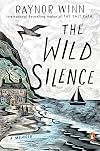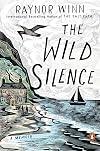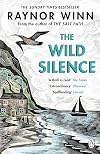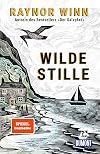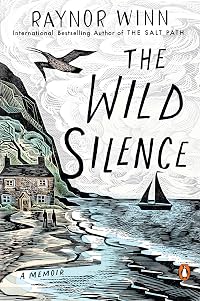
The Wild Silence
by Raynor Winn
On This Page
Description
"The incredible follow-up to the international bestseller The Salt Path, a story of finding your way back home. Nature holds the answers for Raynor and her husband Moth. After walking 630 homeless miles along The Salt Path, living on the windswept and wild English coastline; the cliffs, the sky and the chalky earth now feel like their home. Moth has a terminal diagnosis, but together on the wild coastal path, with their feet firmly rooted outdoors, they discover that anything is possible. show more Now, life beyond The Salt Path awaits and they come back to four walls, but the sense of home is illusive and returning to normality is proving difficult - until an incredible gesture by someone who reads their story changes everything. A chance to breathe life back into a beautiful farmhouse nestled deep in the Cornish hills; rewilding the land and returning nature to its hedgerows becomes their saving grace and their new path to follow. The Wild Silence is a story of hope triumphing over despair, of lifelong love prevailing over everything. It is a luminous account of the human spirit's connection to nature, and how vital it is for us all"-- show lessTags
Recommendations











Member Reviews
I didn’t enjoy The Wild Silence nearly much as I did her first memoir, The Salt Path. Where the first had a clear arc—from a devastating medical prognosis, through homelessness, to a new way of living, and finally to hope—this second wandered from glimpse of her life to glimpse without ever really (in my mind) fully finishing any of them.
And coming off the optimism that ended The Salt Path, the return to the despair of “before” dragged this one down. Only once she reached the why and how of writing The Salt Path did this second one begin to work for me, and I had to wait through fifty percent of the book for that.
It waxes more lyrically about the natural world. That is understandable since it is a theme of this book at least show more coequal to—or perhaps I should say, intertwined with—her life with Moth. So, if you want poetry about the natural world, it’s here. But something of the magic of the first book was lost. It’s as if this was written because people said, “But what happened after all that?” and the answer wasn’t enough to fill a book by itself. show less
And coming off the optimism that ended The Salt Path, the return to the despair of “before” dragged this one down. Only once she reached the why and how of writing The Salt Path did this second one begin to work for me, and I had to wait through fifty percent of the book for that.
It waxes more lyrically about the natural world. That is understandable since it is a theme of this book at least show more coequal to—or perhaps I should say, intertwined with—her life with Moth. So, if you want poetry about the natural world, it’s here. But something of the magic of the first book was lost. It’s as if this was written because people said, “But what happened after all that?” and the answer wasn’t enough to fill a book by itself. show less
I requested both of Raynor Winn's books at the same time from my library system; this one came first. Maybe I'd have liked it better if I had read The Salt Path first.
This is a genre I am always interested in: intimate, knowledgeable, loving studies of nature, wilderness, or farm life. But my bar is pretty high, having been set by Aldo Leopold, Henry Beston, Helen MacDonald (with some reservations), Jon Dunn, James Rebanks, et al. Clearly Winn's heart is full, earnest and in the right place. I might still like The Salt Path, but... not this one. Overwritten, overwrought, repetitive, and then... it starts to turn into writing about her writing. When she completes her labor of love, the manuscript of The Salt Path, her daughter says, wow, show more mom, you should get this published. So she picks out an agent, sends it off, and bingo - she's on her way to best-sellerdom. At which point my grapes went sour and I quit.
No quarrel with Winn's character (I quite identify with her anti-social tendencies, and this last year and a half hasn't helped), her sincerity, her passion for the natural world, and driving desire to describe and share it with her readers (and her beloved husband). She has been amazingly staunch and courageous in the face of her family misfortunes, and how she has clung to what the world can give her in joy and awe. I just didn't care for how she writes about them. I am - like her, in a way - more interested in the woods, the prairies, the badgers, and foxes than I am in human travails, and so want to read more about them, themselves, than how they make a particular human feel or what she thinks about them. So this one just wasn't for me. show less
This is a genre I am always interested in: intimate, knowledgeable, loving studies of nature, wilderness, or farm life. But my bar is pretty high, having been set by Aldo Leopold, Henry Beston, Helen MacDonald (with some reservations), Jon Dunn, James Rebanks, et al. Clearly Winn's heart is full, earnest and in the right place. I might still like The Salt Path, but... not this one. Overwritten, overwrought, repetitive, and then... it starts to turn into writing about her writing. When she completes her labor of love, the manuscript of The Salt Path, her daughter says, wow, show more mom, you should get this published. So she picks out an agent, sends it off, and bingo - she's on her way to best-sellerdom. At which point my grapes went sour and I quit.
No quarrel with Winn's character (I quite identify with her anti-social tendencies, and this last year and a half hasn't helped), her sincerity, her passion for the natural world, and driving desire to describe and share it with her readers (and her beloved husband). She has been amazingly staunch and courageous in the face of her family misfortunes, and how she has clung to what the world can give her in joy and awe. I just didn't care for how she writes about them. I am - like her, in a way - more interested in the woods, the prairies, the badgers, and foxes than I am in human travails, and so want to read more about them, themselves, than how they make a particular human feel or what she thinks about them. So this one just wasn't for me. show less
I bought this book for its lovely cover and title. It's a charming book full of weather, wind and water. Mainly a book about the writing of another book [b:The Salt Path|38085814|The Salt Path|Raynor Winn|https://i.gr-assets.com/images/S/compressed.photo.goodreads.com/books/1520119402l/38085814._SY75_.jpg|59753071], as well as describing a hike in Iceland. But not having read The Salt Path, I think it stands on its own. I enjoyed Raynor Winn's writing with its layers of effortless metaphor.
She's able to move through time and space lightly. A heartfelt, sometimes molecular, song to her relationship with her husband Moth, for whom she has begun to grieve. I see it now as a desperately sad (almost clinging) story of love and loss.
I'm now looking forward to [b:The Salt Path|38085814|The Salt Path|Raynor Winn|https://i.gr-assets.com/images/S/compressed.photo.goodreads.com/books/1520119402l/38085814._SY75_.jpg|59753071] because I once did a six day walk (in bare feet, sleeping rough) along the inter-tidal zone between Point Lonsdale and Apollo Bay on the south-west coast of Victoria. My walk was only about 200km and there was no path. For me, it was all about distant headlands, tides, winds and weather - about which Raynor writes so beautifully. show less
She's able to move through time and space lightly. A heartfelt, sometimes molecular, song to her relationship with her husband Moth, for whom she has begun to grieve. I see it now as a desperately sad (almost clinging) story of love and loss.
Ishow more
looked back to Moth, but he wasn't at my shoulder. Two hundred metres behind , a figure stood on a boulder; he wouldn't have been visible if it hadn't been for the blue cover of his rucksack. Green waterproof arms outstretched, wrapped by the wild air, in a moment of acceptance of the raw blankness of the landscape. I closed my eyes feeling the same wind he did, imprinting the sight of him as he would always be for me; free in the wide embrace of the natural world. (p. 243)Raynor Winn also introduced me to the ancient celtic idea of 'thin places' where the veil between this world and the eternal world is thin. A thin place is where one can walk in two worlds – the worlds are fused together, knitted loosely where the differences can be discerned or tightly where the two worlds become one.
I'm now looking forward to [b:The Salt Path|38085814|The Salt Path|Raynor Winn|https://i.gr-assets.com/images/S/compressed.photo.goodreads.com/books/1520119402l/38085814._SY75_.jpg|59753071] because I once did a six day walk (in bare feet, sleeping rough) along the inter-tidal zone between Point Lonsdale and Apollo Bay on the south-west coast of Victoria. My walk was only about 200km and there was no path. For me, it was all about distant headlands, tides, winds and weather - about which Raynor writes so beautifully. show less
I will start this review with a comment on how much I loved this author’s first book, The Salt Path, which I found both absorbing and inspiring and immediately upon finishing the book, I ordered myself a copy of this second book, The Wild Silence. Unfortunately, this book did not hold the magic of the first one, describing as it does their life after their coastal walk. Moth is going to university to get his degree but the disease has advanced and there are difficulties. Ray learns that he really doesn’t remember much about their life changing walk and so she writes the book that was to become The Salt Path for him. A good part of this book describes Ray’s childhood and how she and Moth met, fell in love and married. The section show more that deals with the death of her mother was a difficult read. The final part of the book is about how they reached the decision to do another walk, and this time they go with friends and chose Iceland as their destination.
While the first book was filled with a sense of hope, this one just felt dragged down with despair and the feeling of inevitability. The Icelandic trip felt like a last ditch effort to recapture something that had passed, although the author still shines at writing descriptively about nature, I wasn’t able to recapture the feeling of wonder and adventure that the first book generated.
I do wish that I had stopped after the first book. The Wild Silence felt like it was put together with bits and pieces to be used as filler, it wasn’t cohesive and didn’t seem to have a theme. It did however, improve a lot once they went to Iceland and were hiking again but by that time, my interest had waned. show less
While the first book was filled with a sense of hope, this one just felt dragged down with despair and the feeling of inevitability. The Icelandic trip felt like a last ditch effort to recapture something that had passed, although the author still shines at writing descriptively about nature, I wasn’t able to recapture the feeling of wonder and adventure that the first book generated.
I do wish that I had stopped after the first book. The Wild Silence felt like it was put together with bits and pieces to be used as filler, it wasn’t cohesive and didn’t seem to have a theme. It did however, improve a lot once they went to Iceland and were hiking again but by that time, my interest had waned. show less
There is a curious difference between Raynor Winn’s two memoirs. In her first, The Salt Path, she created something very special when she described her husband serious health problems, their horrible financial troubles (including the sudden loss of their home and livelihood), and what they did about it. With next to nothing and no future prospects, with all her husband Moth’s doctors saying his terminal brain condition (CBD), meant that he must avoid most all exertion … they went for a hike, a 630-mile hike along England’s coastline. She wrote that book for Moth, when she realized that he didn’t remember much of their incredible trip. Raynor has a natural ability to describe the natural world and the curious people they met, show more but to me it was how she wrote about their love for each other, and the challenges that they faced together that captured my imagination.
With The Wild Silence, she didn’t have as much of a sharp focus, and she went on a bit of an Australian walkabout thematically, before focusing on the property they’re improving, Moth’s health, and a new hike the two took in Iceland. By the time I finished the second book, I found it lacking in comparison. Most likely it was because I so related to the poverty and the loving nature of the first book, when they faced such dire straits together. With this book, her writing wandered and hiking in Iceland just seemed so out of character.
There is a very powerful section of this book when Raynor is dealing with her mother’s health problems, which seem to be steadily improving, and then she suddenly suffers a serious stroke, and is there no more. These times were very personal and almost raw. Also, she seemed to be caught off guard, after all that time spent being so focused on Moth’s health problems.
The publication of the first book changed their lives socially and financially. It brought them a much-needed income, and it also attracted a Londoner named Sam who owned a home in an ancient apple orchard in Cornwall. The land’s soil had been depleted to the point where nothing grew, and Sam was determined to sell or find someone to restore the land. After reading and adoring the first book, he knew that Moth and Raynor were a perfect fit for the place, as they would understand what needed to be done.
As became abundantly clear over time, the doctors were wrong about Moth and the effects of exertion on his health. In the first part of this book, Moth is very busy but sedately completing his academic degree, and his health is steadily declining. Once they are on the Cornwall property, and Moth is very active physically with the land and the house improvements, his health is again improving. The couple come together again through physical challenges out-of-doors. The following lines by Raynor stuck with me. "I needed the safety of being one with the land," she writes. "Without it I would never be whole." She should let herself ponder things more often, because she is very good when she reflects about life, love, the natural world, and the human condition. It’s certainly didn’t originate with her, but considering her history, it’s apt when she wonders how people have become so detached from the natural world. show less
With The Wild Silence, she didn’t have as much of a sharp focus, and she went on a bit of an Australian walkabout thematically, before focusing on the property they’re improving, Moth’s health, and a new hike the two took in Iceland. By the time I finished the second book, I found it lacking in comparison. Most likely it was because I so related to the poverty and the loving nature of the first book, when they faced such dire straits together. With this book, her writing wandered and hiking in Iceland just seemed so out of character.
There is a very powerful section of this book when Raynor is dealing with her mother’s health problems, which seem to be steadily improving, and then she suddenly suffers a serious stroke, and is there no more. These times were very personal and almost raw. Also, she seemed to be caught off guard, after all that time spent being so focused on Moth’s health problems.
The publication of the first book changed their lives socially and financially. It brought them a much-needed income, and it also attracted a Londoner named Sam who owned a home in an ancient apple orchard in Cornwall. The land’s soil had been depleted to the point where nothing grew, and Sam was determined to sell or find someone to restore the land. After reading and adoring the first book, he knew that Moth and Raynor were a perfect fit for the place, as they would understand what needed to be done.
As became abundantly clear over time, the doctors were wrong about Moth and the effects of exertion on his health. In the first part of this book, Moth is very busy but sedately completing his academic degree, and his health is steadily declining. Once they are on the Cornwall property, and Moth is very active physically with the land and the house improvements, his health is again improving. The couple come together again through physical challenges out-of-doors. The following lines by Raynor stuck with me. "I needed the safety of being one with the land," she writes. "Without it I would never be whole." She should let herself ponder things more often, because she is very good when she reflects about life, love, the natural world, and the human condition. It’s certainly didn’t originate with her, but considering her history, it’s apt when she wonders how people have become so detached from the natural world. show less
After walking the South West Path around Cornwall, Ray and Moth settled in Cornwall. Moth went to uni to finish his degree but Ray was a bit at loose ends, so she wrote The Salt Path. This led them to a new home and more walking.
Ray writes so lyrically and descriptively. She captures the world around her in such a lovely way and it makes the reader feel like they're meandering around the farm or woods, or hiking in Iceland with her.
In some ways, I feel like she's charting pieces of my life. I read The Salt Path before I hiked Offa's Dyke Path on my own. I read this book while dealing with my son's diagnosis of PLS and it has encouraged me to push him to read about Moth and his struggles and triumphs.
I look forward to more from Ms. Winn show more and I encourage all to read her books. show less
Ray writes so lyrically and descriptively. She captures the world around her in such a lovely way and it makes the reader feel like they're meandering around the farm or woods, or hiking in Iceland with her.
In some ways, I feel like she's charting pieces of my life. I read The Salt Path before I hiked Offa's Dyke Path on my own. I read this book while dealing with my son's diagnosis of PLS and it has encouraged me to push him to read about Moth and his struggles and triumphs.
I look forward to more from Ms. Winn show more and I encourage all to read her books. show less
This is a memoir by a shy, nature-loving, middle-aged woman. The author is a good writer, with some of the text being pure poetry. The book is very personal, as we hear the voice in her head - a fearful voice filled with self-doubt and anxiety. She frequently escapes to her memories of when she and her husband did the South Coast Walk (a long-distance trek & the focus of her prior book, The Salt Path). Those were better days, when she didn’t have to cope with the reality of her husband’s declining health from CBD (a neurodegenerative disease). But they would have more adventures before the book is done.
The content of the book feels somewhat all over the place. She covers many big overlapping life events, (her mother’s final days, show more her book publication, her husband’s illness, an Icelandic trek, a new farm), but each of these felt incomplete. She only gives these to us in snippets before she moves on to a different aspect of her life (and before the reader is ready to). And there were basic things left unexplained, such as how they became homeless or how they ended up living at The Chapel, though I expect that these were probably covered in her prior book, the Salt Path, (which I have not read).
I listened to the audiobook, read by the author herself, which I expect gave the experience more impact. I think if I had been reading it, I may have become impatient with the many wordy tangents in which she describes nature or environmental issues. show less
The content of the book feels somewhat all over the place. She covers many big overlapping life events, (her mother’s final days, show more her book publication, her husband’s illness, an Icelandic trek, a new farm), but each of these felt incomplete. She only gives these to us in snippets before she moves on to a different aspect of her life (and before the reader is ready to). And there were basic things left unexplained, such as how they became homeless or how they ended up living at The Chapel, though I expect that these were probably covered in her prior book, the Salt Path, (which I have not read).
I listened to the audiobook, read by the author herself, which I expect gave the experience more impact. I think if I had been reading it, I may have become impatient with the many wordy tangents in which she describes nature or environmental issues. show less
Members
- Recently Added By
Published Reviews
ThingScore 100
Notions of home are poignantly explored in Raynor Winn's The Wild Silence (Michael Joseph), the sequel to the award-winning The Salt Path, as the author adjusts to living with a roof over her head after a period of financial hardship followed by homelessness. Winn moves to Cornwall, where she takes on a piece of farmland for rewilding. Her evocations of weather, landscape, the sea and her love show more for her partner, Moth, who has an incurable neurodegenerative condition, are wonderful. show less
added by Cynfelyn
Lists

The Guardian Books of the Year 2020
126 works; 8 members

Books Read in 2022
5,164 works; 112 members
Author Information

4+ Works 2,524 Members
All Editions
Some Editions
Awards and Honors
Work Relationships
Is contained in
Is a (non-series) sequel to
Common Knowledge
- Canonical title
- The Wild Silence
- Original title
- The Wild Silence
- Original publication date
- 2020
- People/Characters
- Raynor Winn
- Important places
- Iceland; Cornwall, England, UK
- Dedication
- For The Team
- First words
- I should have been in bed, sleeping like the rest of the country, not on an ice-cold rock on a cliff top before the dawn of New Year's Day.
- Quotations
- Winds roaring through granite-block cliffs, hurling crows through wild gray skies. (p. 103)
A thousand swallows lifted into the warm wind, into autumn sunlight reflected from outstretched wings the color of midnight skies. As the air cooled and the number of insects lessened the birds simply faced south and let go o... (show all)f the land. Disappeared into the white light of distance. Beyond hope or faith. Instict is our word, not theirs: they simply spread their wings and trust the air. (p. 130) - Last words
- (Click to show. Warning: May contain spoilers.)It had always been there, whispering with the water voles in the ditch, the deer on the mountainside, the seals calling beneath foggy headlands. The voice behind it all . . .
. . . a sound beyond connecting, or belonging.
The hum of particles
vibrating to the energy of life.
The voice of the
beating
pulsing
wild silence
of the earth.
The voice
of . . . . .
home. - Original language
- English
Classifications
- Genres
- Travel, Biography & Memoir, Nonfiction
- DDC/MDS
- 796.51092 — Arts & recreation Recreation, sports, and performing arts Sports Outdoor leisure Hiking and Backpacking Standard subdivisions History, geographic treatment, biography {hiker guides to non-urban areas} Biography
- LCC
- GV199.9 .W56 — Geography, Anthropology and Recreation Recreation. Leisure Recreation. Leisure Outdoor life. Outdoor recreation Mountaineering
- BISAC
Statistics
- Members
- 514
- Popularity
- 58,153
- Reviews
- 16
- Rating
- (3.73)
- Languages
- Czech, Dutch, English, German
- Media
- Paper, Audiobook, Ebook
- ISBNs
- 16
- ASINs
- 6