
Isabella Tree
Author of Wilding: The Return of Nature to a British Farm
About the Author
Image credit: Photo: Charlie Burrell
Works by Isabella Tree
Associated Works
Tagged
Common Knowledge
- Birthdate
- 1964
- Gender
- female
- Agent
- Georgia Garrett (AP Watt)
- Nationality
- UK
- Associated Place (for map)
- UK
Members
Reviews
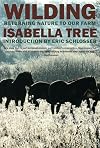
I really enjoyed this in-depth look at one couple's conservation efforts in Britain. When Charlie and Isabella face up to the fact that farming their land at Knepp Castle is not financially feasible, they start thinking about their land differently. They start researching land conservation efforts and decide to "rewild" their land, basically letting nature take control and seeing what happens. Of course, this does take human intervention as well - seeding some fields with native plant seed, show more introducing grazing animals, etc.
This leads to all the interesting chapters/essays in the books. There are chapters on specific birds that return (nightingales and turtle doves), a chapter about the pigs and their benefits to the land, a chapter about soil, parts about how their neighbors felt about the wilding of the land, etc.
I thought the whole thing was fascinating. It had a different vibe than American conservation has - I'm sure part of that is the fact that the UK is an island and so much smaller than the U.S. There is also a lot of desire from the older generations in the UK to produce their own food after the WWII experience. So returning farmland to wild land rubs many people the wrong way. This is understandable. But this book addresses all of that and has good, sensible answers for a lot of the naysayers.
I loved this and highly recommend to anyone interested in conservation efforts. show less
This leads to all the interesting chapters/essays in the books. There are chapters on specific birds that return (nightingales and turtle doves), a chapter about the pigs and their benefits to the land, a chapter about soil, parts about how their neighbors felt about the wilding of the land, etc.
I thought the whole thing was fascinating. It had a different vibe than American conservation has - I'm sure part of that is the fact that the UK is an island and so much smaller than the U.S. There is also a lot of desire from the older generations in the UK to produce their own food after the WWII experience. So returning farmland to wild land rubs many people the wrong way. This is understandable. But this book addresses all of that and has good, sensible answers for a lot of the naysayers.
I loved this and highly recommend to anyone interested in conservation efforts. show less
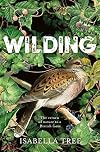
There probably isn’t any higher praise for ‘Wilding’ than to say that, upon finishing it, I wholeheartedly wished I could buy a farm and let it turn into a wildlife haven. The story of a rewilded Sussex farm reminded me how grateful I am to have been taught by my parents to notice and appreciate wildlife. (Even though as a child I often complained about being dragged away from my books to see a meadow of orchids.) The aptly named Isabella Tree recounts how she and her husband abandoned show more intensive farming, which was losing them vast amounts of money despite subsidies, and switched to encouraging biodiversity. It’s an amazing story, as the rewilding has been much more successful than anyone dared to hope. Successive chapters joyfully recount the mammals, birds, fish, reptiles, insects, fungi, and plants that sprung up once given the chance. I found this detailed case study more uplifting than George Monbiot’s [b:Feral: Rewilding the Land, the Sea and Human Life|17160008|Feral Rewilding the Land, the Sea and Human Life|George Monbiot|https://images.gr-assets.com/books/1388690343s/17160008.jpg|23584322], although I enjoyed that very much, as it demonstrates so specifically how well rural biodiversity can bounce back from a monoculture. It also suggests that the agricultural sector can evolve to support rather than undermine the environment. Tree is evangelistic about the approach she took - and justifiably so.
Of particular interest is the detailed explanation of challenges and difficulties that the project faced, some practical (how to move wild deer), some institutional (Natural England were wary), some cultural (local objections to the ‘mess’ and ‘waste’ compared to arable land), and some philosophical (allowing control of the land to lapse). Tree devotes time and careful discussion to the academic theories and popular perceptions that make rewilding especially hard to achieve in Britain, relative to other parts of Europe; George Monbiot also observed this peculiar tendency. Defining ‘wildness’ is fraught with difficulty, as is deciding which species have lived here long enough to be considered ‘native’. I found the argument that Britain was not covered in closed-canopy forest during pre-history convincing, as well as useful. Tree also points out (as I’d recently read in this Citylab article) that the changing climate is forcing species to relocate, so rather than try to replicate the past we should allow wild space to accommodate whatever species can find a niche. In short, stop over-managing for the sake of single species and instead interfere as little as possible. Counter-intuitive in such a heavily managed landscape as Britain, yet the results are incredible.
I was particularly struck by this commentary on shifting baseline syndrome within living memory:
I hope that in the future more of it looks this way. As a child in East Anglia, I remember vast fields of oilseed rape, with isolated snippets of uncultivated land sheltering wild species. How much more diverse, useful, and beautiful the countryside could be if our values and perceptions of land use shifted a little. The possibilities of rewilding are spectacular and I can only hope this book inspires other farmers to give it a try. show less
Of particular interest is the detailed explanation of challenges and difficulties that the project faced, some practical (how to move wild deer), some institutional (Natural England were wary), some cultural (local objections to the ‘mess’ and ‘waste’ compared to arable land), and some philosophical (allowing control of the land to lapse). Tree devotes time and careful discussion to the academic theories and popular perceptions that make rewilding especially hard to achieve in Britain, relative to other parts of Europe; George Monbiot also observed this peculiar tendency. Defining ‘wildness’ is fraught with difficulty, as is deciding which species have lived here long enough to be considered ‘native’. I found the argument that Britain was not covered in closed-canopy forest during pre-history convincing, as well as useful. Tree also points out (as I’d recently read in this Citylab article) that the changing climate is forcing species to relocate, so rather than try to replicate the past we should allow wild space to accommodate whatever species can find a niche. In short, stop over-managing for the sake of single species and instead interfere as little as possible. Counter-intuitive in such a heavily managed landscape as Britain, yet the results are incredible.
I was particularly struck by this commentary on shifting baseline syndrome within living memory:
We were familiar with the usual reaction from our own generation, the forty-to-sixty-somethings. Children of the agricultural revolution were aghast at what we were doing. The twenty-somethings were often more responsive. For them the idea of national food security, of digging for victory, was an anxiety from a bygone age. [...]
But the real surprise came from the oldest generation. Those in their eighties could remember the agricultural depression between the wars, when marginal land across the country had been abandoned… To them, clumps of dog rose and hawthorn, thickets of hazel and sallow - even swathes of ragwort - were not offensive at all. The landscape recalled them, instead, to their childhood ramblings in a countryside heaving with insects and birds, to the days when there was a covey of grey partridges in every field. There was nothing threatening or alarming in what they were seeing. Quite the reverse. To some, it was positively beautiful. “You don’t know what you’re talking about,” one old boy berated his son - a baby during the war - who insisted that what they were seeing was “unnatural”. “This is how the countryside always used to look!”
I hope that in the future more of it looks this way. As a child in East Anglia, I remember vast fields of oilseed rape, with isolated snippets of uncultivated land sheltering wild species. How much more diverse, useful, and beautiful the countryside could be if our values and perceptions of land use shifted a little. The possibilities of rewilding are spectacular and I can only hope this book inspires other farmers to give it a try. show less
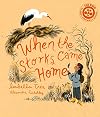
When the Storks Came Home proves a book so inspiring and beautiful that adults — even adults with no kids at home — will adore it. Written by conservationist Isabella Tree and beautifully illustrated by Alexandra Finkeldey, this picture book tells of 8-year-old Beanie who comes up with an idea of reintroducing white storks to the Knepp Estate, a nature preserve in West Sussex, United Kingdom. The entire village of Horsham pitches in to bring storks from Poland to build the population in show more the England once again. The story and pictures will stay with readers long after they turn the last page.
To my surprise, the book is a fictionalized account of the actual reintroduction of storks to England 600 years after they went extinct there. What a heroic tale! Highly, highly, highly recommended.
In the interest of full disclosure, I received this book from NetGalley and Quarto Publishing Group — Ivy Kids in exchange for an honest review. show less
To my surprise, the book is a fictionalized account of the actual reintroduction of storks to England 600 years after they went extinct there. What a heroic tale! Highly, highly, highly recommended.
In the interest of full disclosure, I received this book from NetGalley and Quarto Publishing Group — Ivy Kids in exchange for an honest review. show less
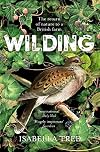
What an amazing book which recounts how nature-led conservation has helped reintroduce nature and wilderness back into urbanised lands, in particular at the 3,500-acre, ex-intensive farming, Knepp estate in West Sussex. A restorative balm to the soul, this book is part of the re-nature-ising narrative that is a glimmer of hope in the incessant cycle of bad news about climate change, natural disasters, environmental pollution, and species decline.
I was a bit sceptical at the beginning, not of show more the conservation efforts, but of the amount of privilege that seemed to be required for someone to be in a position to kickstart a conservation effort like this. Tree and her husband in inherited this massive estate: an estate that has been in the family for over two centuries, an estate that had been visited by king/s for royal hunts before then, an estate that was intensively farmed until the threat of bankruptcy and government funding for conservation stepped in. Knepp's position and indeed the Burrell name and position in the area seem to attract an amount of (free?) professional academic advice, and charitable and government help than if an "ordinary" farmer had started this.
All this, and their oversea trips (ostensibly to observe and learn from other conservation efforts but funded by who), and the unknown fates of the eleven farm employees they fired (while they themselves didn't seem to suffer financially despite apparently already being in a million pounds overdraft) added to my discomfort.
Of course this is another example of nature-restoration requiring an inordinate amount of privilege and wealth but that's got me thinking about what could I, as a still relatively-privileged individual, can do. On a much smaller and different scale closer to home, I was reminded of Wendy Whiteley's Secret Garden in Lavender Bay where she (without council approval and her own money) transformed an abandoned railway land into this lovely community greenspace.
But still, the successes of Tree and co's conservation efforts cannot be denied. They could have not decided upon conservation and the world would have been poorer in its understanding of the importance of biodiversity in rejuvenating endangered species (both flora and fauna) and neglected lands.
Now, how can this be translated to Australian landscape and animals, and what can I do to contribute? Perhaps it really is time now for me to pop over to Bunnings and finally buy that reacher-grabber I've been eyeing and start strolling the streets for litter on the weekends.
Update: An interesting Australian-drought specific type of wilding and a rewilding of the Iron Curtain and Cambridge lawn wilding. show less
I was a bit sceptical at the beginning, not of show more the conservation efforts, but of the amount of privilege that seemed to be required for someone to be in a position to kickstart a conservation effort like this. Tree and her husband in inherited this massive estate: an estate that has been in the family for over two centuries, an estate that had been visited by king/s for royal hunts before then, an estate that was intensively farmed until the threat of bankruptcy and government funding for conservation stepped in. Knepp's position and indeed the Burrell name and position in the area seem to attract an amount of (free?) professional academic advice, and charitable and government help than if an "ordinary" farmer had started this.
All this, and their oversea trips (ostensibly to observe and learn from other conservation efforts but funded by who), and the unknown fates of the eleven farm employees they fired (while they themselves didn't seem to suffer financially despite apparently already being in a million pounds overdraft) added to my discomfort.
Of course this is another example of nature-restoration requiring an inordinate amount of privilege and wealth but that's got me thinking about what could I, as a still relatively-privileged individual, can do. On a much smaller and different scale closer to home, I was reminded of Wendy Whiteley's Secret Garden in Lavender Bay where she (without council approval and her own money) transformed an abandoned railway land into this lovely community greenspace.
But still, the successes of Tree and co's conservation efforts cannot be denied. They could have not decided upon conservation and the world would have been poorer in its understanding of the importance of biodiversity in rejuvenating endangered species (both flora and fauna) and neglected lands.
Now, how can this be translated to Australian landscape and animals, and what can I do to contribute? Perhaps it really is time now for me to pop over to Bunnings and finally buy that reacher-grabber I've been eyeing and start strolling the streets for litter on the weekends.
Update: An interesting Australian-drought specific type of wilding and a rewilding of the Iron Curtain and Cambridge lawn wilding. show less
Lists
Awards


You May Also Like


Associated Authors
Statistics
- Works
- 14
- Also by
- 4
- Members
- 980
- Popularity
- #26,286
- Rating
- 4.2
- Reviews
- 26
- ISBNs
- 52
- Languages
- 5