
Peter Wohlleben
Author of The Hidden Life of Trees: What They Feel, How They Communicate, Discoveries from a Secret World
About the Author
Peter Wohlleben spent over twenty years working for the forestry commission in Germany and now runs an environmentally-friendly woodland where he is working for the return of primeval forests. He is the author of numerous books about the natural world including the New York Times bestseller The show more Hidden Life of Trees. show less
Series
Works by Peter Wohlleben
The Hidden Life of Trees: What They Feel, How They Communicate, Discoveries from a Secret World (2015) 4,729 copies, 137 reviews
The Inner Life of Animals: Love, Grief, and Compassion―Surprising Observations of a Hidden World (2016) 741 copies, 11 reviews
The Secret Wisdom of Nature: Trees, Animals, and the Extraordinary Balance of All Living Things -― Stories from Science and Observation (The Mysteries of Nature, 3) (2018) 621 copies, 10 reviews
The Heartbeat of Trees: Embracing Our Ancient Bond with Forests and Nature (2019) 263 copies, 9 reviews
Can You Hear the Trees Talking?: Discovering the Hidden Life of the Forest (2017) 188 copies, 2 reviews
Do You Know Where the Animals Live?: Discovering the Incredible Creatures All Around Us (2019) 25 copies
Wohllebens Waldführer: Tiere und Pflanzen bestimmen - das Ökosystem entdecken (2016) 15 copies, 1 review
La Vie secrète des arbres en BD 10 copies
Wald ohne Hüter: Im Würgegriff von Jagdinteressen und Forstwirtschaft. Ein Förster erzählt (2007) 3 copies
Menschenspuren im Wald: Ein Waldführer der besonderen Art - erkennen, verstehen, einmischen (2015) 3 copies
Conocer el bosque : entender el mundo desde el bosque : hallazgos asombrosos sobre el bosque, las personas y nuestro futuro (2025) 1 copy
The Hidden Life of Trees: The International Bestseller – What They Feel, How They Communicate 1 copy
Ağaçların Gizli Yaşamı - Ne Hissederler, Nasıl İletişim Kurarlar – Gizli Bir Dünyadan Keşifler (2024) 1 copy
Doğanın Gizli Ağı 1 copy
Wohllebens Welt Sonderheft 1/2021 - Gesundes aus der Natur: Das Naturmagazin von GEO und Peter Wohlleben (2021) 1 copy
Associated Works
Drawdown: The Most Comprehensive Plan Ever Proposed to Reverse Global Warming (2016) — Contributor — 629 copies, 13 reviews
Tagged
Common Knowledge
- Legal name
- Wohlleben, Peter
- Birthdate
- 1964
- Gender
- male
- Occupations
- forester
author - Nationality
- Germany
- Birthplace
- Bonn, Germany
- Map Location
- Germany
Members
Reviews
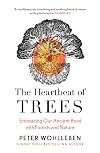
I don't typically like the word "accessible" (at least in this context) because I think it comes loaded with bias and subtexts that don't really serve anyone, but this book does a remarkable job of blending solid research (yay! there are endnotes!), personal anecdotes, and let's say inspirational sensibility, if such a thing exists. Particularly wonderful is the way that Wohlleben tests his own cynic at times. I was prepared for a diatribe against some of the more touchy-feely assertions show more made by the tree-loving community, but Wohlleben's success lies in his willingness to explore all facets of an issue. He patiently explains how voltage works when it comes to touching trees, but also how our touch can impact plants through thigmomorphogenesis. Somehow the author manages to introduce a term like thigmomorphogenesis without losing his inviting tone. Part of this is because it is a story of Wholleben's learning instead of a simple narrative of what he has learned. There are a few awkward bits of English translation, particularly for English speakers in the US, but they shouldn't disrupt one's ability to appreciate this book.
Most valuable is how Wohlleben disrupts conventional/popular notions: e.g. using wood is NOT carbon-neutral. He seems to believe we all have a part to play -- forest-bathers, foresters, lumber companies alike-- and he often offers an idea of a solution (though we lack the blueprint for said solutions). A good read, and perhaps mildly frustrating as there were many times I wanted to put it down to go walk in the forest. :-) show less
Most valuable is how Wohlleben disrupts conventional/popular notions: e.g. using wood is NOT carbon-neutral. He seems to believe we all have a part to play -- forest-bathers, foresters, lumber companies alike-- and he often offers an idea of a solution (though we lack the blueprint for said solutions). A good read, and perhaps mildly frustrating as there were many times I wanted to put it down to go walk in the forest. :-) show less
The Hidden Life of Trees: What They Feel, How They Communicate—Discoveries from a Secret World by Peter Wohlleben
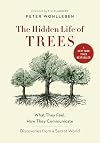
Trees feel pain. They scream, even if we cannot hear them. Trees can learn. They have a sense of taste and a sense of hearing. They are social beings and can communicate messages to other trees. They sleep at night. Like human couples planning the best time to have a baby, trees plan their own procreation. Then they nurse their young.
So says German forester Peter Wohlleben in his remarkable book “The Hidden Life of Trees,” published in Germany in 2015 and translated into English in 2016. show more True, he may be guilty of a bit of anthropomorphism, but his essential points are supported by the work of researchers and by his own observations over decades spent in European forests.
Observing trees is difficult because everything they do they do slowly. They can live hundreds, even thousands of years, especially in dense forests where they are protected from the wind and have the company of others of the same species. So time moves slowly for trees, and they react slowly to change. When assaulted by insects, for example, they can sense the attack and send out toxins to their bark and leaves that taste so bad the insects will depart. In the case of oaks, their toxins can even kill the marauders. But this sending of messages and toxins through limbs and branches can take a long time moving at a rate of a third of an inch per minute.
Much of what people have long thought about trees is wrong, Wohlleben writes. We think they will do better alone, out in the sunshine and some distance away from other trees. Not so. We think healthy young trees grow quickly. Again, not so. Those trees that live the longest are those that grow very slowly during their earliest decades, mostly in the shade of older trees.
Wohlleben's book, relatively short, brims not just with amazing facts about trees but also with advice for humans with regard to growing trees, harvesting trees and enjoying trees. The blood pressure of forest visitors, he writes, "rises when they are under conifers, whereas it calms down and falls in stands of oaks. Why don't you take the test for yourself and see in what type of forest you feel most comfortable?"
And while there don't do anything to make a tree scream. This book convinces us that their comfort is important, too. show less
So says German forester Peter Wohlleben in his remarkable book “The Hidden Life of Trees,” published in Germany in 2015 and translated into English in 2016. show more True, he may be guilty of a bit of anthropomorphism, but his essential points are supported by the work of researchers and by his own observations over decades spent in European forests.
Observing trees is difficult because everything they do they do slowly. They can live hundreds, even thousands of years, especially in dense forests where they are protected from the wind and have the company of others of the same species. So time moves slowly for trees, and they react slowly to change. When assaulted by insects, for example, they can sense the attack and send out toxins to their bark and leaves that taste so bad the insects will depart. In the case of oaks, their toxins can even kill the marauders. But this sending of messages and toxins through limbs and branches can take a long time moving at a rate of a third of an inch per minute.
Much of what people have long thought about trees is wrong, Wohlleben writes. We think they will do better alone, out in the sunshine and some distance away from other trees. Not so. We think healthy young trees grow quickly. Again, not so. Those trees that live the longest are those that grow very slowly during their earliest decades, mostly in the shade of older trees.
Wohlleben's book, relatively short, brims not just with amazing facts about trees but also with advice for humans with regard to growing trees, harvesting trees and enjoying trees. The blood pressure of forest visitors, he writes, "rises when they are under conifers, whereas it calms down and falls in stands of oaks. Why don't you take the test for yourself and see in what type of forest you feel most comfortable?"
And while there don't do anything to make a tree scream. This book convinces us that their comfort is important, too. show less
The Power of Trees: How Ancient Forests Can Save Us if We Let Them (From the Author of The Hidden Life of Trees) by Peter Wohlleben
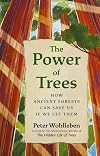
Oh man, this book. I loved it. I hated it. The death of trees really upsets me, and it scares me how even well intentioned governments can go so far off-track as this book suggests is happening right now. I can't stop thinking about it with the sort of futile despair that is hard to overcome in the world right now, when we _know_ what to do to heal the world and our greed and politics won't let us do it. It's a spectacular read, and a perfect follow-up to the last book -- updating the show more science, delving even more into the connections evident in old-growth forests and how trees both move over time and affect the weather. My mind was blown many times, and I appreciate that it's a book with a clear path to healing forests and affecting climate change. It makes me want to go buy semi-forested land and just, I dunno, camp next to it while it re-wilds. Not something I can afford to do, but I wonder if we could get this book into more politicians' hands and send more foresters to learn the new science, what changes might that bring?
Advanced Readers' Copy provided by Edelweiss. show less
Advanced Readers' Copy provided by Edelweiss. show less
The Hidden Life of Trees: What They Feel, How They Communicate―Discoveries from A Secret World: 1 (The Mysteries of Nature, 1) by Peter Wohlleben
Forests are more than scattered bunches of trees growing up all over the place, with a plethora of other surrounding plants and animals to complete the mix. Forests, as the author brilliantly reminds us here, are in fact whole symbiotic communities those complex working and interconnections we barely have started to acknowledge. The thing is, to understand how trees reproduce, grow, and survive, we must first understand how they act as… social beings! If this sounds like a radical new show more approach to nature that’s because, of course, it is. How so?
As Peter Wohlleben shows, trees can ‘smell’. They can ‘taste’. They can ‘feel’ ‘pain’, for instance in their various ways of reacting to various pests and predators. Trees can also ‘parent’. They can cooperate, including by ‘taking care’ of ‘their dead’. More, trees are far from acting alone in their survival. They, in fact, rely on what’s been dubbed the ‘wood wide web’ that is, a complex network of fungi and multiple other micro-organisms those interplay (as fascinating as it can be breath-taking in its complexity and effectiveness) came to prominence only during the past few decades. But: so what?
This book challenges many of our misconceptions and prejudices, including when it comes to what we accept as supposedly being *obvious* (e.g. the author doubts that capillary action and transpiration alone can explain how water travel along from roots to tips). This, of course, is a welcoming approach, yet it can also backfire. I, for one, personally struggled a bit with what I felt was a close walk on the anthropomorphic razor-line, something which was particularly unsettling when it came to topics such as sensory perceptions. For example, was his comparing of the vibrations registered in thirsty trees to vibrating vocal chords (and his use of the term ‘screams’ to describe them) a way to say that trees can ‘talk’? Or was it just a mere metaphor, reflecting how our language (shaped by our own experience of the world around us) fails miserably when it comes to assess how other species/ organisms can ‘feel’, let alone their level of consciousness if any? Taken literally, it can be difficult to discern between the proper science, and the enthusiasm of an author who, sharing his passion, seems to absolutely wants to portray trees as being very close to ours in far too many ways...
Regardless of such criticism, though, this truly is a brilliant read. My back cover states: ‘A walk in the wood will never be the same again’. And indeed: it won’t. If you care, even one bit only, about the woodlands, then this is a must read. show less
As Peter Wohlleben shows, trees can ‘smell’. They can ‘taste’. They can ‘feel’ ‘pain’, for instance in their various ways of reacting to various pests and predators. Trees can also ‘parent’. They can cooperate, including by ‘taking care’ of ‘their dead’. More, trees are far from acting alone in their survival. They, in fact, rely on what’s been dubbed the ‘wood wide web’ that is, a complex network of fungi and multiple other micro-organisms those interplay (as fascinating as it can be breath-taking in its complexity and effectiveness) came to prominence only during the past few decades. But: so what?
This book challenges many of our misconceptions and prejudices, including when it comes to what we accept as supposedly being *obvious* (e.g. the author doubts that capillary action and transpiration alone can explain how water travel along from roots to tips). This, of course, is a welcoming approach, yet it can also backfire. I, for one, personally struggled a bit with what I felt was a close walk on the anthropomorphic razor-line, something which was particularly unsettling when it came to topics such as sensory perceptions. For example, was his comparing of the vibrations registered in thirsty trees to vibrating vocal chords (and his use of the term ‘screams’ to describe them) a way to say that trees can ‘talk’? Or was it just a mere metaphor, reflecting how our language (shaped by our own experience of the world around us) fails miserably when it comes to assess how other species/ organisms can ‘feel’, let alone their level of consciousness if any? Taken literally, it can be difficult to discern between the proper science, and the enthusiasm of an author who, sharing his passion, seems to absolutely wants to portray trees as being very close to ours in far too many ways...
Regardless of such criticism, though, this truly is a brilliant read. My back cover states: ‘A walk in the wood will never be the same again’. And indeed: it won’t. If you care, even one bit only, about the woodlands, then this is a must read. show less
Lists
Awards


You May Also Like


Associated Authors
Statistics
- Works
- 63
- Also by
- 2
- Members
- 7,787
- Popularity
- #3,131
- Rating
- 3.9
- Reviews
- 195
- ISBNs
- 365
- Languages
- 21
- Favorited
- 2