
Jonathan Drori
Author of Around the World in 80 Trees
Series
Works by Jonathan Drori
Associated Works
Tagged
Common Knowledge
- Gender
- male
- Nationality
- UK
- Places of residence
- London, England, UK
- Associated Place (for map)
- England, UK
Members
Reviews
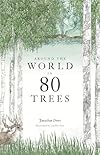
Jonathan Drori has created an irresistible book for tree lovers. In 80 short pieces (a page or two eacn), he illuminates the history, culture (and more) of trees from all over the world, exotic and ordinary (and thankfully he doesn't feel the need to give them human qualities). The illustrations are lovely and add to the tone of the book. I love to pick this book up at some odd moment and read an entry randomly; Dutch elm, the Horse chestnut, the European box (I never really thought about show more the wood and oboe is made from), Neem, Quinine, Banyan, Linden, Weeping Willow (mentioned in Psalm 137)… and my local nemesis, the Quaking Aspen. It’s not exhaustive (what, no entry for Sassafras?), but I forgive the author.
I love this book. I’ve bought 4 or 5 copies—gifts to fellow tree-lovers in my life. I don’t think I will ever be officially "done" with this book (I'm reading about the Upas tree now), so I thought it best to tell you about it sooner rather than later. show less
I love this book. I’ve bought 4 or 5 copies—gifts to fellow tree-lovers in my life. I don’t think I will ever be officially "done" with this book (I'm reading about the Upas tree now), so I thought it best to tell you about it sooner rather than later. show less
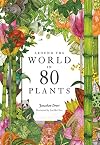
Plants are really fucking cool.
Also, this book is so good that I bought myself a copy to have halfway through reading my copy from the library. Can't wait to dip back in and savor it all over again. ^.^
Recommended: yes!
for curious people, for gardeners, for people who like science, animals, travelling, and/or learning, for a fascinating set of plant vignettes that are easy to dip into and savor
Thoughts:
Fun fact about me: I generally dislike touching plants. It's a weird little aversion, and show more maybe it's from that time I pet a cactus as a child and learned what "regret" meant, but regardless of the reason, it's a thing for me. Buuuuut I also really love nature and plants and learning and science. This is a fantastic little book, and what I most want to emphasize is that I truly think anyone can read and enjoy this!!! For a very factual nonfiction book on a very sciency topic, that is quite impressive!
So what makes it so accessible? It comes down to a few things: short chapters, cultural and societal stories about each plant, and gorgeous illustrations.
Short chapters make this super easy to read one or two sections of whenever you have some time. This is not a book that you have to read in a particular order -- and in fact, Drori encourages readers not to! He wants you to explore this book like you would travel the world. Do you feel like going somewhere tropical today? Are you seeking a seemingly barren desert? Are you climbing a mountain? Pick a country, find it's page, and go there through it's plant life. For people who struggle to sit with a book, this is a great choice, as it is easy to sample in small tastes when you feel like it.
The descriptions are lush, as is fitting a book about plant growth. Yes, the factual science portion is in here, complete with Latin names and etymology and words like "stamen" and "inflorescence" and even the occasional "secretions." But the bulk of it is about the impact of the plant on animal and human life. Did you know that there was once a DEATH PENALTY for illicitly growing or selling nutmegs? Did you know that vanilla has been done dirty by becoming synonymous with "boring" when it's really one of the most truly exquisite flavors around? Did you know that all bamboo in the world flowers simultaneously no matter where they are and we STILL have no idea why? Look, this is what I found interesting, and there's so much more. The chapter on tomatoes blew my mind. But this is just a hint of what's packed into these pages.
The illustrations absolutely make this book. The clever and gentle commentary on the plants themselves are the bones of the book, but the illustrations are the heart. They are generous, with every plant having at least on page and often more, showing the shoots, the variations, the way humans and animals use them, the flowers, everything about it you can imagine. They are stunning and make me almost want to reach out and touch these plants. show less
Also, this book is so good that I bought myself a copy to have halfway through reading my copy from the library. Can't wait to dip back in and savor it all over again. ^.^
Recommended: yes!
for curious people, for gardeners, for people who like science, animals, travelling, and/or learning, for a fascinating set of plant vignettes that are easy to dip into and savor
Thoughts:
Fun fact about me: I generally dislike touching plants. It's a weird little aversion, and show more maybe it's from that time I pet a cactus as a child and learned what "regret" meant, but regardless of the reason, it's a thing for me. Buuuuut I also really love nature and plants and learning and science. This is a fantastic little book, and what I most want to emphasize is that I truly think anyone can read and enjoy this!!! For a very factual nonfiction book on a very sciency topic, that is quite impressive!
So what makes it so accessible? It comes down to a few things: short chapters, cultural and societal stories about each plant, and gorgeous illustrations.
Short chapters make this super easy to read one or two sections of whenever you have some time. This is not a book that you have to read in a particular order -- and in fact, Drori encourages readers not to! He wants you to explore this book like you would travel the world. Do you feel like going somewhere tropical today? Are you seeking a seemingly barren desert? Are you climbing a mountain? Pick a country, find it's page, and go there through it's plant life. For people who struggle to sit with a book, this is a great choice, as it is easy to sample in small tastes when you feel like it.
The descriptions are lush, as is fitting a book about plant growth. Yes, the factual science portion is in here, complete with Latin names and etymology and words like "stamen" and "inflorescence" and even the occasional "secretions." But the bulk of it is about the impact of the plant on animal and human life. Did you know that there was once a DEATH PENALTY for illicitly growing or selling nutmegs? Did you know that vanilla has been done dirty by becoming synonymous with "boring" when it's really one of the most truly exquisite flavors around? Did you know that all bamboo in the world flowers simultaneously no matter where they are and we STILL have no idea why? Look, this is what I found interesting, and there's so much more. The chapter on tomatoes blew my mind. But this is just a hint of what's packed into these pages.
The illustrations absolutely make this book. The clever and gentle commentary on the plants themselves are the bones of the book, but the illustrations are the heart. They are generous, with every plant having at least on page and often more, showing the shoots, the variations, the way humans and animals use them, the flowers, everything about it you can imagine. They are stunning and make me almost want to reach out and touch these plants. show less

Trees are one of humanity’s most constant and most varied companions. From India’s sacred banyan tree to the fragrant cedar of Lebanon, they offer us sanctuary and inspiration – not to mention the raw materials for everything from aspirin to maple syrup.
In Around the World in 80 Trees, expert Jonathan Drori uses plant science to illuminate how trees play a role in every part of human life, from the romantic to the regrettable. Stops on the trip include the lime trees of Berlin’s show more Unter den Linden boulevard, which intoxicate amorous Germans and hungry bees alike, the swankiest streets in nineteenth-century London, which were paved with Australian eucalyptus wood, and the redwood forests of California, where the secret to the trees’ soaring heights can be found in the properties of the tiniest drops of water.
Each of these strange and true tales – populated by self-mummifying monks, tree-climbing goats and ever-so-slightly radioactive nuts – is illustrated by Lucille Clerc, taking the reader on a journey that is as informative as it is beautiful. show less
In Around the World in 80 Trees, expert Jonathan Drori uses plant science to illuminate how trees play a role in every part of human life, from the romantic to the regrettable. Stops on the trip include the lime trees of Berlin’s show more Unter den Linden boulevard, which intoxicate amorous Germans and hungry bees alike, the swankiest streets in nineteenth-century London, which were paved with Australian eucalyptus wood, and the redwood forests of California, where the secret to the trees’ soaring heights can be found in the properties of the tiniest drops of water.
Each of these strange and true tales – populated by self-mummifying monks, tree-climbing goats and ever-so-slightly radioactive nuts – is illustrated by Lucille Clerc, taking the reader on a journey that is as informative as it is beautiful. show less
Trees are gifts. Just figure out what their special features are, and you can keep the gifts coming. The gifts can be as simple as shade, as complex as medicine, as practical as boards and posts or as supportive as fruits and nuts. And that’s just for humans. In Around the World in 80 Trees, Jonathan Drori demonstrates a true passion and appreciation of those gifts, as he describes 80 of them by geographical region. He describes the, what’s unique about how they work and stories of how show more they fit in.
The text is accompanied by exquisite color drawings by Lucille Clerc which are far superior to photographs. They highlight what Drori writes about in closeups of seeds or fruits in various stages, roots, canopies or trunks. For boxwoods, there is a complex French garden. For alders, there is Venice. Drori uses both sides of the page, differently for every tree, giving the layout nice variety.
There are trees so dense they sink rather than float, trees that only grow in saltwater-soaking sands, and trees that hold their seeds tightly sealed in wax until there is a forest fire below them. One tree holds its seeds in pods that explode with such violence the seeds fly off at 150 mph (the sandbox, Costa Rica).
Some to remember:
Linden trees are limes. Aphids live in them and drop honeydew on the ground – or on parked cars, leaving that famous sticky mess. It’s not the tree’s doing. Bees get drunk on the blossoms, and can often be seen stumbling around on the ground beneath them. People don’t act quite as badly, but are still smitten (with each other) in spring by the fragrance of the blossoms.
The argan of the Mediterranean has a fruit so tempting to goats that they climb up the trees and out onto the branches to get at it. The oil from it is used in creams, cosmetics and cooking, giving employment to about three million – people.
Nordic spruce grows so slowly its rings are tiny, giving the wood great strength while remaining light. That is why they are used in violins, cellos and basses (notably Stradivarius). Their solidity produces the best vibrations, aka sound. The wood is so dense it takes 10-50 years for the wood to dry. The longer you can wait, the better the sound will be.
Alder is waterproof when totally submerged. Venice is built on it: thousands of poles, carved to a point and driven into the mud. Its charcoal makes the best gunpowder, sending balls faster harder and farther. It even burns hotter, enabling ironworks.
Beech trees can survive lightning strikes because water runs down their smooth bark onto the ground. Unusually, the bark expands as the tree grows, keeping the surface smooth. On most other trees, the bark splits as the tree grows, allowing water and insects to invade the interior.
Coco-de-Mer is native to the Seychelles only. Its coconut weighs 65 pounds, the heaviest seed there is. Imagine a bag of cement falling from the top of a tree. After it rots, the seed sends out roots 15 feet away so as not to interfere with the mother tree.
The gutta-percha tree of Borneo turned out to have latex inside the trunk and the leaves that could be a sealant. Werner von Siemens invented a process to coat transoceanic cables with it and prevent the salt water from destroying the copper wires inside. He produced a quarter million miles of cable for telegraph systems.
Mangrove trees are unique in that their seeds germinate and grow roots while still growing on the tree. They fall like darts and anchor themselves in the sand, firmly enough to withstand tides. The tree is a desalination plant, purifying the salt water as it is sucked up towards the leaves by the sun evaporating moisture from them. They can live only in the narrow band of territory between the mean sea level and high tide, and so are threatened by rising seas.
The giant redwoods of California grow to what turns out to be theoretical maximum height for trees – 400 feet. Any taller and gravity would overtake water’s cohesion properties and the crown of the tree would dry up, killing the tree.
You can read Around the World in 80 Trees as a reference book, looking up trees you’ve heard about or what is native to different countries. Or, you can read it as a regular book, and the astounding variety of strategies that plants took on fairly jump off the page. From having pollinators tunnel through fruit to spikes and spines and various poisons in the bark and leaves, trees are far more varied beings than we give them credit for.
One word of advice, do not get the Kindle version. The few drawings that made into that format have been reduced to thumbnails to fit the small screen. You miss fully half the book. Stick to paper – a gift from trees.
David Wineberg show less
The text is accompanied by exquisite color drawings by Lucille Clerc which are far superior to photographs. They highlight what Drori writes about in closeups of seeds or fruits in various stages, roots, canopies or trunks. For boxwoods, there is a complex French garden. For alders, there is Venice. Drori uses both sides of the page, differently for every tree, giving the layout nice variety.
There are trees so dense they sink rather than float, trees that only grow in saltwater-soaking sands, and trees that hold their seeds tightly sealed in wax until there is a forest fire below them. One tree holds its seeds in pods that explode with such violence the seeds fly off at 150 mph (the sandbox, Costa Rica).
Some to remember:
Linden trees are limes. Aphids live in them and drop honeydew on the ground – or on parked cars, leaving that famous sticky mess. It’s not the tree’s doing. Bees get drunk on the blossoms, and can often be seen stumbling around on the ground beneath them. People don’t act quite as badly, but are still smitten (with each other) in spring by the fragrance of the blossoms.
The argan of the Mediterranean has a fruit so tempting to goats that they climb up the trees and out onto the branches to get at it. The oil from it is used in creams, cosmetics and cooking, giving employment to about three million – people.
Nordic spruce grows so slowly its rings are tiny, giving the wood great strength while remaining light. That is why they are used in violins, cellos and basses (notably Stradivarius). Their solidity produces the best vibrations, aka sound. The wood is so dense it takes 10-50 years for the wood to dry. The longer you can wait, the better the sound will be.
Alder is waterproof when totally submerged. Venice is built on it: thousands of poles, carved to a point and driven into the mud. Its charcoal makes the best gunpowder, sending balls faster harder and farther. It even burns hotter, enabling ironworks.
Beech trees can survive lightning strikes because water runs down their smooth bark onto the ground. Unusually, the bark expands as the tree grows, keeping the surface smooth. On most other trees, the bark splits as the tree grows, allowing water and insects to invade the interior.
Coco-de-Mer is native to the Seychelles only. Its coconut weighs 65 pounds, the heaviest seed there is. Imagine a bag of cement falling from the top of a tree. After it rots, the seed sends out roots 15 feet away so as not to interfere with the mother tree.
The gutta-percha tree of Borneo turned out to have latex inside the trunk and the leaves that could be a sealant. Werner von Siemens invented a process to coat transoceanic cables with it and prevent the salt water from destroying the copper wires inside. He produced a quarter million miles of cable for telegraph systems.
Mangrove trees are unique in that their seeds germinate and grow roots while still growing on the tree. They fall like darts and anchor themselves in the sand, firmly enough to withstand tides. The tree is a desalination plant, purifying the salt water as it is sucked up towards the leaves by the sun evaporating moisture from them. They can live only in the narrow band of territory between the mean sea level and high tide, and so are threatened by rising seas.
The giant redwoods of California grow to what turns out to be theoretical maximum height for trees – 400 feet. Any taller and gravity would overtake water’s cohesion properties and the crown of the tree would dry up, killing the tree.
You can read Around the World in 80 Trees as a reference book, looking up trees you’ve heard about or what is native to different countries. Or, you can read it as a regular book, and the astounding variety of strategies that plants took on fairly jump off the page. From having pollinators tunnel through fruit to spikes and spines and various poisons in the bark and leaves, trees are far more varied beings than we give them credit for.
One word of advice, do not get the Kindle version. The few drawings that made into that format have been reduced to thumbnails to fit the small screen. You miss fully half the book. Stick to paper – a gift from trees.
David Wineberg show less
Lists
Awards


You May Also Like


Associated Authors
Statistics
- Works
- 4
- Also by
- 1
- Members
- 633
- Popularity
- #39,815
- Rating
- 4.6
- Reviews
- 21
- ISBNs
- 20
- Languages
- 7