
Douglas W. Tallamy
Author of Bringing Nature Home: How You Can Sustain Wildlife with Native Plants
About the Author
Douglas W. Tallamy is Professor and Chair of the Department of Entomology and Wildlife Ecology at the University of Delaware in Newark, Delaware.
Image credit: Douglas W. Tallamy
Works by Douglas W. Tallamy
Nature's Best Hope: A New Approach to Conservation That Starts in Your Yard (2020) 486 copies, 13 reviews
The Nature of Oaks: The Rich Ecology of Our Most Essential Native Trees (2021) 284 copies, 13 reviews
The Living Landscape: Designing for Beauty and Biodiversity in the Home Garden (2014) 182 copies, 2 reviews
The Nature of Oaks 1 copy
Associated Works
The New American Landscape: Leading Voices on the Future of Sustainable Gardening (2011) — Contributor — 44 copies, 1 review
The Woods in Your Backyard: Learning to Create and Enhance Natural Areas around Your Home (2006) — Foreword, some editions — 10 copies, 1 review
Tagged
Common Knowledge
- Birthdate
- 1952
- Gender
- male
- Occupations
- entomologist
college professor - Organizations
- University of Delaware
- Nationality
- USA
- Associated Place (for map)
- USA
Members
Reviews
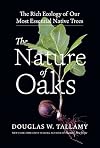
This book breaks down the life of an Oak tree month-by-month (starting in October). At the end, you can find a list of Oak species and where they grow best (Oaks grow in AZ! My sister has one!).
I'd been stuck on what to read after loving Emma Lion and Monk & Robot. I tried Graceland by Margaret Renkl but it wasn't what I was looking for, then I started Murderbot (book 1) and it wasn't it either. Then one day my sister was telling me that her dog brings the acorns from the Oak inside just to show more hold in her mouth —when my sister was telling me about all the acorns she was picking up to keep them out of her house, I started thinking about masting Oaks...which brought me to this book available via Kindle Unlimited (I had actually already downloaded it, but her acorns made me start reading it).
I do not spend much time with Oak trees these days. As I've mentioned before, we have an African Sumac (invasive!) in our front yard that started growing sometime between 2008 & 2011. It may have been there before 2008, but Google Maps doesn't go back that far and the picture quality is not great. There were several shrubs back then, but by the time we bought our house in 2019 there were two African Sumacs (and a stump!), a mystery palm (I think there are two different kinds of palms?!), and a Red Peacock Flower. The neighbors in 2008 had a yard full of African Daisies but our house didn't have a flower in sight—a stark contrast between the scattered bright orange of the daisies and the manicured muted browns.
But back to Oaks! When I was a kid, there was a big Oak tree in the middle of my hometown (named for an Oak tree species) and our house had two big Oaks—one has since been struck by lightning and the other was blown over in a hurricane (I think). Both were still there when I was a kid and provided lots of shade but I didn't spend a lot of time with trees back then because I was afraid of worms. I still hate worms. There was one tree (not an Oak) that DEFINITELY always had worms on the leaves and I swear my dad planted it so I would leave him alone when he was in his barn—I took a WIDE path around that tree to get to the barn.
Reading this book, I was reminded that worms DO fall out of Oak trees (or dangle from a leaf). I swear this must have happened to me at some point, a worm falling from the sky, that convinced me worms are horrifying. I do not want a creepy crawly on me, I do not go fishing because I do not want to bait a hook. If a worm didn't fall on me, then maybe a cousin tortured me with a worm? My Papa had at least a dozen worm beds in his backyard.
Any book that can bring back memories of my childhood is welcome to hang around my catalog. I learned about SO MANY critters that call Oaks home (or stopping posts). Warblers and Blue Jays, Caterpillars and Cicadas, and more make use of Oaks—their leaves, their xylem, their litter. And Oaks cover the entire Northern Hemisphere. AND caterpillars bleed green!
More books about (or featuring) terrific trees:
Wishtree by Katherine Applegate
Finding the Mother Tree by Suzanne Simard
Mesquite: An Arboreal Love Affair by Gary Paul Nabhan
The Overstory by Richard Powers
The River Has Roots by Amal El-Mohtar
American Canopy by Eric Rutkow show less
I'd been stuck on what to read after loving Emma Lion and Monk & Robot. I tried Graceland by Margaret Renkl but it wasn't what I was looking for, then I started Murderbot (book 1) and it wasn't it either. Then one day my sister was telling me that her dog brings the acorns from the Oak inside just to show more hold in her mouth —when my sister was telling me about all the acorns she was picking up to keep them out of her house, I started thinking about masting Oaks...which brought me to this book available via Kindle Unlimited (I had actually already downloaded it, but her acorns made me start reading it).
I do not spend much time with Oak trees these days. As I've mentioned before, we have an African Sumac (invasive!) in our front yard that started growing sometime between 2008 & 2011. It may have been there before 2008, but Google Maps doesn't go back that far and the picture quality is not great. There were several shrubs back then, but by the time we bought our house in 2019 there were two African Sumacs (and a stump!), a mystery palm (I think there are two different kinds of palms?!), and a Red Peacock Flower. The neighbors in 2008 had a yard full of African Daisies but our house didn't have a flower in sight—a stark contrast between the scattered bright orange of the daisies and the manicured muted browns.
But back to Oaks! When I was a kid, there was a big Oak tree in the middle of my hometown (named for an Oak tree species) and our house had two big Oaks—one has since been struck by lightning and the other was blown over in a hurricane (I think). Both were still there when I was a kid and provided lots of shade but I didn't spend a lot of time with trees back then because I was afraid of worms. I still hate worms. There was one tree (not an Oak) that DEFINITELY always had worms on the leaves and I swear my dad planted it so I would leave him alone when he was in his barn—I took a WIDE path around that tree to get to the barn.
Reading this book, I was reminded that worms DO fall out of Oak trees (or dangle from a leaf). I swear this must have happened to me at some point, a worm falling from the sky, that convinced me worms are horrifying. I do not want a creepy crawly on me, I do not go fishing because I do not want to bait a hook. If a worm didn't fall on me, then maybe a cousin tortured me with a worm? My Papa had at least a dozen worm beds in his backyard.
Any book that can bring back memories of my childhood is welcome to hang around my catalog. I learned about SO MANY critters that call Oaks home (or stopping posts). Warblers and Blue Jays, Caterpillars and Cicadas, and more make use of Oaks—their leaves, their xylem, their litter. And Oaks cover the entire Northern Hemisphere. AND caterpillars bleed green!
More books about (or featuring) terrific trees:
Wishtree by Katherine Applegate
Finding the Mother Tree by Suzanne Simard
Mesquite: An Arboreal Love Affair by Gary Paul Nabhan
The Overstory by Richard Powers
The River Has Roots by Amal El-Mohtar
American Canopy by Eric Rutkow show less
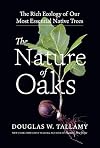
Fascinating And Easy Read. This is one of those esoteric books that you didn't know you wanted to read that turns out to be utterly fascinating... at least if you're remotely interested in caterpillars and similar insects. The narrative structure takes on each month of the year, beginning in October, and looks at what is happening within, on, under, and around an oak tree within that month - and there is quite a bit more than most probably realize. Written by an academic who studies oaks and show more with a particular emphasis on what he sees in the oaks within his own yard, this book is remarkably approachable and I daresay even funny - which is rare for such an academic tome. But that seems to have been at least part of the author's goal - to write a tale for the rest of us showing just why these trees are so important and the rich biodiversity they support. This is a goal the author pulled off remarkably well, and this book is very much recommended. show less
Bringing Nature Home: How You Can Sustain Wildlife with Native Plants, Updated and Expanded by Douglas W. Tallamy
Tallamy presents a simple elegant argument, based on scientific evidence, that should serve as a model for anyone writing about the environment. The dire consequences of ill-informed actions can be clearly illustrated without hysterical hyperbole. Let's face it: an insect does not make a compelling poster child. The fund raisers prefer the polar bear, the bald eagle and the gray wolf. But this book is compelling enough to make you reassess what you are doing in your own backyard. It is not show more just an alarming case study of what is going wrong. It is a clear and simple prescription for what all gardeners can do to correct the problem. And the brilliance of this book is that you can figure out the solution without having Professor Tallamy bore you with the answer. show less
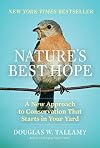
Consider me converted to the idea that we need to restore native plants to our respective regions. Tallamy's book lays out all the reasons that native plants are important - vital - to our conservation efforts. This book is great because he convinced me that even my small yard can make a difference. Most books on conservation and environment leave me feeling completely overwhelmed and hopeless, but here is something that I can do that should help.
The crux of Tallamy's argument is that we show more need to stop thinking of nature as someplace we visit and create habitats in our own yards, workplaces, and common neighborhood areas. He talks about plants that support specific caterpillars that support specific birds and how that circle is the bedrock of a healthy environment. And it sounds doable. Replacing non-native ornamentals with native plants, reducing lawn, leaving leaf litter, and adding a small clean water source - these are things that everyone can do.
This book is not really a "how-to" book; it is a book to convince you and to give you the arguments to convince your neighbors. I did read plenty of reviews that complained about this. But, for me, I'd heard a little about the benefits of native plants but had never known all the reasons why they are so important. This book was an important step for me in really being able to name the benefits of returning native plants to our landscaping.
I highly recommend reading this book if you are new to this concept or want clearly laid out reasoning about why it's important. show less
The crux of Tallamy's argument is that we show more need to stop thinking of nature as someplace we visit and create habitats in our own yards, workplaces, and common neighborhood areas. He talks about plants that support specific caterpillars that support specific birds and how that circle is the bedrock of a healthy environment. And it sounds doable. Replacing non-native ornamentals with native plants, reducing lawn, leaving leaf litter, and adding a small clean water source - these are things that everyone can do.
This book is not really a "how-to" book; it is a book to convince you and to give you the arguments to convince your neighbors. I did read plenty of reviews that complained about this. But, for me, I'd heard a little about the benefits of native plants but had never known all the reasons why they are so important. This book was an important step for me in really being able to name the benefits of returning native plants to our landscaping.
I highly recommend reading this book if you are new to this concept or want clearly laid out reasoning about why it's important. show less
Lists
Awards


You May Also Like


Associated Authors
Statistics
- Works
- 9
- Also by
- 2
- Members
- 1,748
- Popularity
- #14,713
- Rating
- 4.3
- Reviews
- 46
- ISBNs
- 29