
Diana Beresford-Kroeger
Author of To Speak for the Trees: My Life's Journey from Ancient Celtic Wisdom to a Healing Vision of the Forest
About the Author
Diana Beresford-Kroeger is a botanist, medical and agricultural researcher, lecturer, and self-defined "renegade scientist" in the fields of classical botany, medical biochemistry, organic chemistry, and nuclear chemistry. She lives in Ontario, Canada
Image credit: Power of One Woman
Works by Diana Beresford-Kroeger
To Speak for the Trees: My Life's Journey from Ancient Celtic Wisdom to a Healing Vision of the Forest (2019) 190 copies, 6 reviews
The Sweetness of a Simple Life: Tips for Healthier, Happier and Kinder Living from a Visionary Natural Scientist (2013) 47 copies, 2 reviews
A Garden for Life: The Natural Approach to Designing, Planting, and Maintaining a North Temperate Garden (2004) 22 copies, 1 review
Call of the Forest 3 copies
Tagged
Common Knowledge
- Birthdate
- 1944-07-25
- Gender
- female
- Short biography
- Beresford-Kroeger was orphaned at a young age and raised in Ireland by a bachelor uncle, Patrick O'Donoghue, who was a noted athlete, chemist, scholar, and bibliophile. He nurtured her quest for knowledge and encouraged her to read and discuss everything from Irish poetry, world religions, and philosophy, to physics and quantum mechanics. She attended private schools in Ireland and England. Her summers were spent in the countryside in West Cork and Kerry, which is where she received the lessons of her folk lineage. A great-aunt taught her the early Irish Brehon law as well as Druidic philosophy and ancient ethnobotanical medicine.
- Nationality
- Ireland
- Birthplace
- Islington, England
- Places of residence
- Ottawa, Canada
- Associated Place (for map)
- Islington, England
Members
Reviews
To Speak for the Trees: My Life's Journey from Ancient Celtic Wisdom to a Healing Vision of the Forest by Diana Beresford-Kroeger
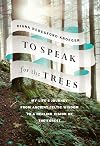
Wow! Memoir, botany, trees, Ogham alphabet. A neighbor handed me this book and it took months for me to pick it up. I finally did so when at a physically low point after surgery, a year of pandemic, and the insurrection at the Capitol in D.C. had left me with no energy for problem novels and who-dun-its.
Diana Beresford-Kroeger is a force of nature. She began as the seemingly shy child of an English lord and an Irish woman of ancient Celtic nobility, a child not wanted by her mother, and not show more fought for by her father. By age 11, she was orphaned. As a female orphan in Ireland in the 1950s, she might have been sent to live in a place like the Magdalen Laundries, an orphanage run by the Catholic church where girls (orphans or unwed mothers) earned their keep by doing laundry until they reached the age of emancipation (wasn't that just so nice of the Catholic church?), except she was the daughter of a Lord, and the judge feared trouble if he sent her there. The solution was a bachelor uncle, who took her in but didn't provide much in the way of parental support. Her salvation came from relatives in the countryside, where she spent her summers. These country folk decided to give her the ancient Celtic knowledge, imparted by numerous relatives over a period of three summers. They were the first to make her feel valued and loved, and they saved her. She became strong and resilient, and went on to become a scholar.
Her story is infused with Celtic lore, modern science, and the Ogham alphabet, the second oldest written language, after Sanskrit. A whole section of the book, at the end of the memoir, is devoted to explaining each letter of that alphabet. Each letter is tied to a tree or shrub--the forest was sacred to the Celts. She explains how each tree or shrub was used as medicine or food by the ancient Celts, and ties this in with modern botany.
After finishing the book, I watched a couple of YouTube videos: one an interview with a Canadian reporter, and the other, a teach-in with Jane Fonda on her program called Fire Drill Fridays (Jane is still an activist, as we all know). Beresford-Kroeger is gentle, erudite, and a teacher with a lovely lilt in her voice. She is still optimistic about saving the planet. She is my new heroine. show less
Diana Beresford-Kroeger is a force of nature. She began as the seemingly shy child of an English lord and an Irish woman of ancient Celtic nobility, a child not wanted by her mother, and not show more fought for by her father. By age 11, she was orphaned. As a female orphan in Ireland in the 1950s, she might have been sent to live in a place like the Magdalen Laundries, an orphanage run by the Catholic church where girls (orphans or unwed mothers) earned their keep by doing laundry until they reached the age of emancipation (wasn't that just so nice of the Catholic church?), except she was the daughter of a Lord, and the judge feared trouble if he sent her there. The solution was a bachelor uncle, who took her in but didn't provide much in the way of parental support. Her salvation came from relatives in the countryside, where she spent her summers. These country folk decided to give her the ancient Celtic knowledge, imparted by numerous relatives over a period of three summers. They were the first to make her feel valued and loved, and they saved her. She became strong and resilient, and went on to become a scholar.
Her story is infused with Celtic lore, modern science, and the Ogham alphabet, the second oldest written language, after Sanskrit. A whole section of the book, at the end of the memoir, is devoted to explaining each letter of that alphabet. Each letter is tied to a tree or shrub--the forest was sacred to the Celts. She explains how each tree or shrub was used as medicine or food by the ancient Celts, and ties this in with modern botany.
After finishing the book, I watched a couple of YouTube videos: one an interview with a Canadian reporter, and the other, a teach-in with Jane Fonda on her program called Fire Drill Fridays (Jane is still an activist, as we all know). Beresford-Kroeger is gentle, erudite, and a teacher with a lovely lilt in her voice. She is still optimistic about saving the planet. She is my new heroine. show less
The Sweetness of a Simple Life: Tips for Healthier, Happier and Kinder Living from a Visionary Natural Scientist by Diana Beresford-Kroeger
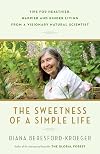
Honestly, this book kind of drove me crazy. On the one hand, she's fascinating. I didn't love her audiobook narration, but what an interesting person with such a interesting background. I loved hearing the science, I loved hearing her relate that to simple and concrete ways of living. I also... hesitate to go all in with someone who has lined their home with foil, and let's be real, she's an aristocrat who's using her money for good, so there's a little bit of stretch to try and believe that show more how she lives is how _I_ could live.
One the other hand, she is ALL ABOUT TREES, so I think she's a good candidate for sainthood and perhaps all of the governments in the world should immediately do what she says about preserving forests, restoring rare trees and creating healthier human habitats in cities. And I totally want to carpet my yard in pet-healthy thyme to make my cat happy.
She might be kind of loopy, I can't really tell. Or she's absolutely one of the most brilliant minds out there today. Perche no los dos?
Advanced listening copy provided by Libro.fm show less
One the other hand, she is ALL ABOUT TREES, so I think she's a good candidate for sainthood and perhaps all of the governments in the world should immediately do what she says about preserving forests, restoring rare trees and creating healthier human habitats in cities. And I totally want to carpet my yard in pet-healthy thyme to make my cat happy.
She might be kind of loopy, I can't really tell. Or she's absolutely one of the most brilliant minds out there today. Perche no los dos?
Advanced listening copy provided by Libro.fm show less

There is no question that Beresford-Kroeger, a botanist and medical biochemist who is an expert on the medicinal, environmental, and nutritional properties of trees set out with all the right intentions with this series of essays on the many reasons—both known and obscure—as to why trees are essential to the planet and to humanity. With essay titles ranging from "A Suit for Sustainability", "The Paranormal", "The Forest, the Fairy, and the Child", "Two-Tier Agriculture", "Medicinal Wood" show more and "Green Sex and the Affairs of the Heart" (yes, this one is about the sex life of trees), among many others, two things become clear: that this woman is passionate about trees and, while she makes scientific and climactic arguments that can't be argued with, her more spiritual leanings and esoteric ideas can't be an easy sale for the average reader. Which might explain why this book hasn't made any best-seller lists. It might have worked better were she a more gifted writer and better able to structure her ideas, but I found that from one essay to the other, some notions kept being repeated, while others were a bit too far-fetched for me, even though I have claimed in the past to be a Forest Fairy myself... I badly wanted to love this book, because I too passionately love trees (my name means "tree" in Hebrew, and I've often felt myself to be one too), and because this book was a gift from a beloved aunt who's opinions matter to me and who took the time to have the book signed by the author in my name. But really, it left me feeling quite dejected mostly, though I can't fault the author for that; it's just that, like most other appeals for conservancy and the preservation of nature and animal species, it just seems like such a lost cause sometimes, even though I support as many of the worthy causes as I can. But maybe that's just my own lack of optimism getting in the way. show less
To Speak for the Trees: My Life's Journey from Ancient Celtic Wisdom to a Healing Vision of the Forest by Diana Beresford-Kroeger
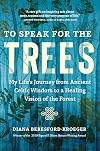
This book was more autobiography/memoir, and I was surprised that it wasn't categorised as such when I initially picked up the review copy to read. I definitely think this book is about 90% autobiography through a life that's pitched as pretty traumatising even though she ends up very friendly with one of her main maltreating caregivers, and about 10% ancient Celtic wisdom and scientific facts about trees, the forest, the soil, fungi etc. I really enjoyed the moments when Beresford-Kroeger show more shared the wisdom that she was learning, or the simple joy in reading books with her family member Pat (though it was difficult to ignore that he starved her to the point of fainting regularly when she was a child).
Sometimes it felt like this book wasn't entirely sure what it wanted to be, but even so, moving from chapter to chapter was still compelling. The book isn't told in a wholly linear fashion, and sometimes the focus is more on scientific knowledge, and sometimes it's more on Irish/Celtic wisdom. There's a couple of uncomfortable moments of 'white woman saviour' elements happening when the author makes a point of speaking about the land, and an Indigenous person comes up simply to say they agree with her and 'she speaks with us' - but there's no real effort to promote, centre or name Indigenous voices or peoples of the land she's speaking on behalf of.
Beresford-Kroeger's writing style is gentle and easy to read. It's not opaque or dense, and just about anyone can pick this up and enjoy the book. But I do think it needs to be clear that this isn't really a book on Celtic wisdom, it's an autobiography with a few bits and pieces of Celtic knowledge, and a comprehensive section on the Ogham right at the end. The concept of the global bioplan was interesting, though not written with accessibility and disability in mind, and I feel like the subject needs its own book, rather than to be folded into a work that is predominantly an autobiography/memoir. show less
Sometimes it felt like this book wasn't entirely sure what it wanted to be, but even so, moving from chapter to chapter was still compelling. The book isn't told in a wholly linear fashion, and sometimes the focus is more on scientific knowledge, and sometimes it's more on Irish/Celtic wisdom. There's a couple of uncomfortable moments of 'white woman saviour' elements happening when the author makes a point of speaking about the land, and an Indigenous person comes up simply to say they agree with her and 'she speaks with us' - but there's no real effort to promote, centre or name Indigenous voices or peoples of the land she's speaking on behalf of.
Beresford-Kroeger's writing style is gentle and easy to read. It's not opaque or dense, and just about anyone can pick this up and enjoy the book. But I do think it needs to be clear that this isn't really a book on Celtic wisdom, it's an autobiography with a few bits and pieces of Celtic knowledge, and a comprehensive section on the Ogham right at the end. The concept of the global bioplan was interesting, though not written with accessibility and disability in mind, and I feel like the subject needs its own book, rather than to be folded into a work that is predominantly an autobiography/memoir. show less
Lists
Awards

You May Also Like


Statistics
- Works
- 9
- Members
- 481
- Popularity
- #51,316
- Rating
- 4.2
- Reviews
- 13
- ISBNs
- 27
- Favorited
- 1