
Joan Maloof
Author of Teaching the Trees: Lessons from the Forest
About the Author
Dr. Joan Maloof, Ph.D., is a professor of biology and environmental studies at Salisbury University in Salisbury, MD, and is also the author of Teaching the Trees: Lessons from the Forest, published by the University of Georgia Press in 2005.
Image credit: Joan Maloof
Works by Joan Maloof
Forty Ways to Know a Tree 1 copy
Tagged
Common Knowledge
- Gender
- female
- Occupations
- forest biologist
ecologist - Organizations
- Old-Growth Forest Network
Salisbury University - Places of residence
- Salisbury, Maryland, USA
- Associated Place (for map)
- Maryland, USA
Members
Reviews

This book celebrates the role of trees in our lives and in the ecology of their diverse habitats. Written by a scientist and a teacher, it footnotes a few references but these are as likely to refer to poets as to research studies. Maloof is not afraid to be personal, to tell us of her own attachment to trees, from the tulip poplar she climbed as a child to the loblolly pines perched in by eagles she watches. She links our interactions with trees to our wellness as a people, allowing the show more elder "grandfather' trees to live out their days, planting our children's placenta by the roots of a guardian tree. I would love to attend her classroom to hear her talk in the personal style she uses in her writing.
Most chapters address a specific tree species and introduce us to the insects, caterpillars, bird, and animals whose lives are dependant on it. As a subtext, she makes a plea for protection for trees, for viewing them as more than a mere commodity.
While most people would assume this book is meant for adults, I think it would be equally valued by intelligent middle schoolers and high schoolers who are searching for their purpose in life, who might be swayed by this author telling them there is still much we don't know about the world around us.
Trees mentioned in chapter headings: Tulip Poplar, Sycamore, Beech, Pine, Oak, Maple, Black Locust, Red Cedar, Holly, Bald Cypress, Sweet Gum. show less
Most chapters address a specific tree species and introduce us to the insects, caterpillars, bird, and animals whose lives are dependant on it. As a subtext, she makes a plea for protection for trees, for viewing them as more than a mere commodity.
While most people would assume this book is meant for adults, I think it would be equally valued by intelligent middle schoolers and high schoolers who are searching for their purpose in life, who might be swayed by this author telling them there is still much we don't know about the world around us.
Trees mentioned in chapter headings: Tulip Poplar, Sycamore, Beech, Pine, Oak, Maple, Black Locust, Red Cedar, Holly, Bald Cypress, Sweet Gum. show less

I was attracted to this book because of the photographs - most of my work is made up of similar shots and in some cases, nearly identical ones. Some of the images included are sub-par in my opinion. Not only in comparison to Llewellyn's other work in the book, but to mine. Many of the images are excellent though, particularly the tree bud photos.
If you’re into nature, nature writing and natural history you may find this a pretty simplistic book. It doesn’t use a lot of science jargon show more and sometimes simplifies things too much. Here’s an example - on p 26 it’s said that the ear tufts on owls are for display. Well, kinda but not really. They are there to break up the owl’s silhouette and keep them hidden...it’s a camouflage strategy not for display in the common sense of the word. Also the writer used the term spore pods for sporophytes and I don't understand why. It's a perfectly acceptable teaching moment.
That said, I did enjoy my time with the book since the authors have the same wonder and appreciation for woodlands that I do. It’s a magical place of peace and intricate harmony for me and I love every minute I get to spend there and am glad my house is basically in the middle of the woods. Here are a few things I learned from this book -
** Box turtles eat may apples - they are the perfect height for them to nosh
** Maple trees have both male and female flowers - the males fall off and the females become samaras (the helicoptery seeds)
** Some species of moth can jam bat sonar!
** Rhododendron leaves can stay on the plant for 6 years before falling off show less
If you’re into nature, nature writing and natural history you may find this a pretty simplistic book. It doesn’t use a lot of science jargon show more and sometimes simplifies things too much. Here’s an example - on p 26 it’s said that the ear tufts on owls are for display. Well, kinda but not really. They are there to break up the owl’s silhouette and keep them hidden...it’s a camouflage strategy not for display in the common sense of the word. Also the writer used the term spore pods for sporophytes and I don't understand why. It's a perfectly acceptable teaching moment.
That said, I did enjoy my time with the book since the authors have the same wonder and appreciation for woodlands that I do. It’s a magical place of peace and intricate harmony for me and I love every minute I get to spend there and am glad my house is basically in the middle of the woods. Here are a few things I learned from this book -
** Box turtles eat may apples - they are the perfect height for them to nosh
** Maple trees have both male and female flowers - the males fall off and the females become samaras (the helicoptery seeds)
** Some species of moth can jam bat sonar!
** Rhododendron leaves can stay on the plant for 6 years before falling off show less
⭐ Nature | Educational
Thank you to Chronicle Books for this ARC in exchange for my honest review!
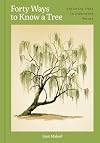
Forty Ways to Know a Tree was a difficult ARC to read due to a large square blocking out portions of many pages, leaving only fragments of text and imagery visible. From what I could see, the illustrations appear to be watercolor, while some pages include actual photographs or what look like photo manipulations. It’s a bit unusual to see both styles mixed, so I’m assuming these photos might show more be placeholders that will be fully illustrated in the final version.
The text is fairly dense, and while there was some content that was visible, it would’ve been nice to see more variety in the typography or text weight to make such heavy passages easier to engage with. There are also figure notations that hint at a more educational, reference-style layout.
As someone who genuinely loves trees, I was hoping to learn something new, but most of the visible information was material I already knew. The parts I could read felt more like the author’s personal observations and reflections rather than a structured educational guide.
Overall, it’s tough to give a full assessment because so much of the ARC was obscured. show less
Thank you to Chronicle Books for this ARC in exchange for my honest review!
Forty Ways to Know a Tree was a difficult ARC to read due to a large square blocking out portions of many pages, leaving only fragments of text and imagery visible. From what I could see, the illustrations appear to be watercolor, while some pages include actual photographs or what look like photo manipulations. It’s a bit unusual to see both styles mixed, so I’m assuming these photos might show more be placeholders that will be fully illustrated in the final version.
The text is fairly dense, and while there was some content that was visible, it would’ve been nice to see more variety in the typography or text weight to make such heavy passages easier to engage with. There are also figure notations that hint at a more educational, reference-style layout.
As someone who genuinely loves trees, I was hoping to learn something new, but most of the visible information was material I already knew. The parts I could read felt more like the author’s personal observations and reflections rather than a structured educational guide.
Overall, it’s tough to give a full assessment because so much of the ARC was obscured. show less
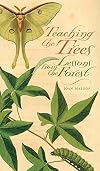
Maloof always provides an entertaining mix of science and anecdote/memoire, with just a smidgen of activist enthusiasm tossed in. This book is no exception. My main criticism is that it ended rather abruptly. I wasn't aware I was finishing until the next page was the appendix.
Lists
You May Also Like


Associated Authors
Statistics
- Works
- 9
- Members
- 312
- Popularity
- #75,594
- Rating
- 3.9
- Reviews
- 13
- ISBNs
- 18
