
Jennifer Ackerman
Author of The Genius of Birds
About the Author
Jennifer G. Ackerman is a writer specializing in the sciences. A contributor to the "New York Times", "National Geographic", & many other publications, she is a former staff writer & researcher for the book division of the National Geographic Society. She has lectured at Harvard, MIT, the show more University of Virginia, the Nature Conservancy, & other institutions. Her first book, "Notes from the Shore", was published in 1995. Ackerman won a Bunting fellowship & a grant from the Alfred P. Sloan Foundation to write "Chance in the House of Fate". She is married to the novelist Karl Ackerman & has two daughters. (Bowker Author Biography) show less
Image credit: Photo by Robert Llewellyn
Works by Jennifer Ackerman
What an Owl Knows: The New Science of the World's Most Enigmatic Birds (2023) 606 copies, 14 reviews
The Bird Way: A New Look at How Birds Talk, Work, Play, Parent, and Think (2020) 606 copies, 15 reviews
Associated Works
Tagged
Common Knowledge
- Birthdate
- 1959
- Gender
- female
- Education
- Yale University (BA, English), 1980
- Relationships
- Ackerman, Karl (husband)
Gorham, William (father)
Gorham, Sarah (sister) - Short biography
- [from What an Owl Knows]
Jennifer Ackerman has been writing about science and nature for more than three decades. Her previous books include The Bird Way, the New York Times bestseller The Genius of Birds, Birds by the Shore, Sex Sleep Eat Drink Dream, and Chance in the House of Fate. Ackerman's articles and essays have appeared in National Geographic, The New York Times Magazine, Scientific American, and many other publications. She is the recipient of numerous awards and fellowships, including a National Endowment for the Arts Literature Fellowship in Nonfiction, a Bunting Fellowship, and a grant from the Alfred P. Sloan Foundation. - Nationality
- USA
- Birthplace
- Omaha, Nebraska, USA
- Associated Place (for map)
- Nebraska, USA
Members
Reviews
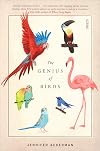
It seemed natural to move from a book about earthworms to a book about birds, and while the reading demographic for this one will naturally be larger, it's still not a book that will appeal to the masses.
It should though. I'm not a dedicated birdwatcher, but I find them fascinating, endearing, entertaining and sometimes comical. And it turns out some of them are impressively clever. In fact, accuse me of anthropomorphism if you'd like, but I'll go so far as to say intelligent.
Not all of show more them of course; 15 seconds with any one of my chickens would put paid to that idea. But we all know about crows and their ability to make and use tools; they can also play the game known as Concentration - the memory game where you have to match up images. Going one step further, the crows, when asked to match a card with another that had a corresponding theme (i.e. match a card with 2 yellow squares with a card that has 2 yellow circles), the crows could immediately do it successfully. That's cognition.
Then there's Alex, the African Grey Parrot who not only knew hundreds of vocabulary words and how to use them in correct context, but could also categorise objects correctly and when asked how many objects were in a category could correctly answer 8 out of 10 times.
Clark's nutcrackers and scrub jays collect food for the winter and hide it in hidden caches. These hidden caches can number up to 5,000 different locations in a single season for nutcrackers, and for scrub jays those caches include fresh fruit, insects and other perishable items. 7 out of 10 times the nutcrackers will go directly to the precise location of their stashes - that's 3500 little caches of food, buried anywhere in an area from a dozen square miles to hundreds of square miles, that they can immediately recall to the millimetre, as necessary. The scrub jays keep track of what is in each of their caches, which caches have perishable items that need to be eaten first, and where those caches are.
I'm lucky if I can keep track of my keys and phone for more than 24 hours.
There's so much more, but I'll stick with the highlights. And my personal favourite (I think - it's hard to choose): The Satin Bowerbird. The male satin bowerbird builds bowers as a way to woo a female (or females). These aren't nests - no mating or rearing takes place in these bowers. Rather they are monuments to, and for, seduction; the stage and props he'll use as the backdrop for his wooing dance.
Each species of bower building bowerbirds is partial to a specific color. Satin bowerbirds are all about the blues; in fact when scientists placed scarlet items in their bowers, the birds immediately ran in and removed those items and made sure they could not be seen from their bower. When they couldn't be removed, they buried them.
The Genius of Birds is full of information like this, written in an easy conversational style but including the science, the studies, the theories and counter-theories. Not enough to scare off the non-science bird-lovers, but more than enough to satisfy the armchair naturalist. What's missing is referenced in a very comprehensive notes section at the back. There are a few references to types of studies I abhor, no matter what anyone would argue about their scientific merit, but they're passed over quickly.
If you're interested in a broad overview of the under appreciated gifts birds have, and their misunderstood intelligence, this is a great book. show less
It should though. I'm not a dedicated birdwatcher, but I find them fascinating, endearing, entertaining and sometimes comical. And it turns out some of them are impressively clever. In fact, accuse me of anthropomorphism if you'd like, but I'll go so far as to say intelligent.
Not all of show more them of course; 15 seconds with any one of my chickens would put paid to that idea. But we all know about crows and their ability to make and use tools; they can also play the game known as Concentration - the memory game where you have to match up images. Going one step further, the crows, when asked to match a card with another that had a corresponding theme (i.e. match a card with 2 yellow squares with a card that has 2 yellow circles), the crows could immediately do it successfully. That's cognition.
Then there's Alex, the African Grey Parrot who not only knew hundreds of vocabulary words and how to use them in correct context, but could also categorise objects correctly and when asked how many objects were in a category could correctly answer 8 out of 10 times.
Clark's nutcrackers and scrub jays collect food for the winter and hide it in hidden caches. These hidden caches can number up to 5,000 different locations in a single season for nutcrackers, and for scrub jays those caches include fresh fruit, insects and other perishable items. 7 out of 10 times the nutcrackers will go directly to the precise location of their stashes - that's 3500 little caches of food, buried anywhere in an area from a dozen square miles to hundreds of square miles, that they can immediately recall to the millimetre, as necessary. The scrub jays keep track of what is in each of their caches, which caches have perishable items that need to be eaten first, and where those caches are.
I'm lucky if I can keep track of my keys and phone for more than 24 hours.
There's so much more, but I'll stick with the highlights. And my personal favourite (I think - it's hard to choose): The Satin Bowerbird. The male satin bowerbird builds bowers as a way to woo a female (or females). These aren't nests - no mating or rearing takes place in these bowers. Rather they are monuments to, and for, seduction; the stage and props he'll use as the backdrop for his wooing dance.
Each species of bower building bowerbirds is partial to a specific color. Satin bowerbirds are all about the blues; in fact when scientists placed scarlet items in their bowers, the birds immediately ran in and removed those items and made sure they could not be seen from their bower. When they couldn't be removed, they buried them.
The Genius of Birds is full of information like this, written in an easy conversational style but including the science, the studies, the theories and counter-theories. Not enough to scare off the non-science bird-lovers, but more than enough to satisfy the armchair naturalist. What's missing is referenced in a very comprehensive notes section at the back. There are a few references to types of studies I abhor, no matter what anyone would argue about their scientific merit, but they're passed over quickly.
If you're interested in a broad overview of the under appreciated gifts birds have, and their misunderstood intelligence, this is a great book. show less
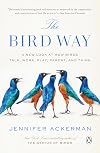
I try to respect nature and am honestly curious about how the natural world operates. However, despite an immense appreciation of life, I am no scientific specialist or ornithological hobbyist (i.e., bird-watcher). As such, I cannot judge the academic merits of this text, but I can appreciate the literary merits. Ackerman dramatically brings alive the lives of birds in a way that demonstrates that much more is going on than first meets the eye.
The size of a rice kernel, birds’ brains are show more famously small, yet they have an incredible amount of neurons in such a small space. In the past, many explained that birds’ ways are hard-wired by genetics. The newer research that Ackerman cites clearly calls this into question. First, much diversity of behaviors exists within this population. Second, studies show that birds in different regions learn over time different practices. There clearly is a lot going on underneath a bird’s proverbial hood.
Ackerman demystifies birds’ social lives by showing their language, play, mating habits, and parenting schemes. For instance, cooperative parenting is a huge thing in the bird world. Who knew? Maybe we humans can learn from their example. The section on sex and mating is likewise fascinating due to varied rituals among many species. Some mental acumen is required to keep track of the different names of birds – of which I am frankly unfamiliar – but their behaviors, incredibly common among all birds, are fascinating in detail.
I would have liked to have read more about birds’ impact on humans and humans’ impact on birds. Only the final chapter addresses this, but more needs to be devoted to this topic. Can we humans learn anything from birds’ social behaviors? Can anything be specifically done to stop the tide of climate change on bird environments? What about insecticides limiting bird feeding? Ackerman addresses these questions at a high level, but more detail is clearly needed. I think this topic could have been addressed without delving head-first into a Silent Spring type of scenario.
Overall, this book aims to find an audience among the general public who are interested in newer research about birds. Writers, journalists, and those in the public sphere who want to learn about birds without reading a dry textbook will especially benefit from Ackerman’s lively style. When I next see a group of birds in a field along the side of the road, I might take a few more seconds to see what they’re up to. (Hopefully, I’m not driving a car!) When I do so, I will certainly think of her adages in this book. show less
The size of a rice kernel, birds’ brains are show more famously small, yet they have an incredible amount of neurons in such a small space. In the past, many explained that birds’ ways are hard-wired by genetics. The newer research that Ackerman cites clearly calls this into question. First, much diversity of behaviors exists within this population. Second, studies show that birds in different regions learn over time different practices. There clearly is a lot going on underneath a bird’s proverbial hood.
Ackerman demystifies birds’ social lives by showing their language, play, mating habits, and parenting schemes. For instance, cooperative parenting is a huge thing in the bird world. Who knew? Maybe we humans can learn from their example. The section on sex and mating is likewise fascinating due to varied rituals among many species. Some mental acumen is required to keep track of the different names of birds – of which I am frankly unfamiliar – but their behaviors, incredibly common among all birds, are fascinating in detail.
I would have liked to have read more about birds’ impact on humans and humans’ impact on birds. Only the final chapter addresses this, but more needs to be devoted to this topic. Can we humans learn anything from birds’ social behaviors? Can anything be specifically done to stop the tide of climate change on bird environments? What about insecticides limiting bird feeding? Ackerman addresses these questions at a high level, but more detail is clearly needed. I think this topic could have been addressed without delving head-first into a Silent Spring type of scenario.
Overall, this book aims to find an audience among the general public who are interested in newer research about birds. Writers, journalists, and those in the public sphere who want to learn about birds without reading a dry textbook will especially benefit from Ackerman’s lively style. When I next see a group of birds in a field along the side of the road, I might take a few more seconds to see what they’re up to. (Hopefully, I’m not driving a car!) When I do so, I will certainly think of her adages in this book. show less
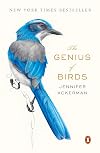
Accurately measuring intelligence requires the right yardstick, except that there is no such thing. There are just too many kinds of intelligence for one yardstick to measure. Jennifer Ackerman concedes in “The Genius of Birds” (2016), "I would flunk these sorts of intelligence tests readily as birds might fail mine." She is speaking of the intelligence tests that various species of birds can pass with ease. Take for instance the ability of some birds to hide thousands of seeds and then show more remember where to find them months later or the ability of a homing pigeon to find its way home from hundreds of miles away.
Scientists might frown on my use of the word intelligence because it sounds to them like anthropomorphizing. They prefer the word cognition when talking about birds and other animals. Give Ackerman credit for being intelligent enough to use the word, however, because it is intelligence that we are talking about.
Even the word cognition has been something of a concession for science, which had long preferred thinking of every amazing thing an animal does as just instinct. By now there have been enough experiments and observations to recognize that birds, more than most animal species, can solve challenging problems. Young birds don't know their songs by instinct but must learn them over a long period of trial and error, just as a child learns to talk. Sparrows in New Zealand learned to use the sensors for a cafeteria's automatic doors so they could fly in to steal food, then fly out again.
Ackerman covers many different kinds of intelligence in birds, including the artistry of bowerbirds and the ability of mockingbirds to learn not only their own song but the songs of many other species of birds.
Some birds seem to be smarter than others, and Ackerman devotes much of her book puzzling over why. Are species that eat a variety of foods smarter than those with a more limited diet? Are birds that live in social groups smarter than loners? Are birds that migrate smarter than those that stay in one place? While discussing such questions, she describes the work of numerous authorities in the field without ever losing her audience, made up of readers of ordinary intelligence, like me, who are humbled by the genius of birds. show less
Scientists might frown on my use of the word intelligence because it sounds to them like anthropomorphizing. They prefer the word cognition when talking about birds and other animals. Give Ackerman credit for being intelligent enough to use the word, however, because it is intelligence that we are talking about.
Even the word cognition has been something of a concession for science, which had long preferred thinking of every amazing thing an animal does as just instinct. By now there have been enough experiments and observations to recognize that birds, more than most animal species, can solve challenging problems. Young birds don't know their songs by instinct but must learn them over a long period of trial and error, just as a child learns to talk. Sparrows in New Zealand learned to use the sensors for a cafeteria's automatic doors so they could fly in to steal food, then fly out again.
Ackerman covers many different kinds of intelligence in birds, including the artistry of bowerbirds and the ability of mockingbirds to learn not only their own song but the songs of many other species of birds.
Some birds seem to be smarter than others, and Ackerman devotes much of her book puzzling over why. Are species that eat a variety of foods smarter than those with a more limited diet? Are birds that live in social groups smarter than loners? Are birds that migrate smarter than those that stay in one place? While discussing such questions, she describes the work of numerous authorities in the field without ever losing her audience, made up of readers of ordinary intelligence, like me, who are humbled by the genius of birds. show less
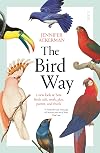
I loved this book so much, I started putting together a post for it and realised I was going to end up writing something half as long as the book itself, with pictures most of my friends have already seen. Thankfully I realised just how much work that would be, and frankly, Jennifer Ackerman’s done a better job that I’d ever be able to do.
The Bird Way is sort of a follow-up to The Genius of Birds, which I also highly recommend. Both bring birds to life in a way that highlights just how show more unique, how smart, and how under-appreciated they are as a species by the general population. The Bird Way focuses on some of the even more unique outliers of the species; the ones that defy expectations either by their intelligence, their capacity for play, their weird mating rituals, communications, or parenting styles (or the lack thereof).
After reading this, one comes to terms with the idea that there is truly nothing new under the sun. There are birds that commit chicknapping, and birds that leave their eggs in everybody else’s nests.. There are birds that murder other birds, rape their females and commit acts of necrophilia. It’s all very sordid, but their are also birds that go out of their way to feed another species’ fledglings, warn other species about predators, and practice cooperative, communal parenting. Birds that sing so beautifully that symphonies have been written around their song, and birds that create literal walls of sound that chase out every competitor in their vicinity.
Obviously, I thoroughly enjoyed this book. It’s easy, accessible reading, but Ackerman has done her research and includes a comprehensive Further Reading at the back of the book, broken down by chapters, that serves as a list of citations. I’ll admit, part of why I enjoyed the book as much as I did was that while her focus was international, a lot of the birds discussed were Australian and ones I’ve been privileged enough to see myself. It’s probably this first hand experience that pushed the book solidly into 5 star territory for me; perhaps without it I might have rated it 4.5 stars. Either way, it’s a book I’d happily recommend to anyone interested in not just birds, but it how we are discovering just how wrong we’ve been about what makes humanity “special”. And if the section about Keas doesn’t make you smile, and perhaps chuckle out loud, you must be having a really bad day. show less
The Bird Way is sort of a follow-up to The Genius of Birds, which I also highly recommend. Both bring birds to life in a way that highlights just how show more unique, how smart, and how under-appreciated they are as a species by the general population. The Bird Way focuses on some of the even more unique outliers of the species; the ones that defy expectations either by their intelligence, their capacity for play, their weird mating rituals, communications, or parenting styles (or the lack thereof).
After reading this, one comes to terms with the idea that there is truly nothing new under the sun. There are birds that commit chicknapping, and birds that leave their eggs in everybody else’s nests.. There are birds that murder other birds, rape their females and commit acts of necrophilia. It’s all very sordid, but their are also birds that go out of their way to feed another species’ fledglings, warn other species about predators, and practice cooperative, communal parenting. Birds that sing so beautifully that symphonies have been written around their song, and birds that create literal walls of sound that chase out every competitor in their vicinity.
Obviously, I thoroughly enjoyed this book. It’s easy, accessible reading, but Ackerman has done her research and includes a comprehensive Further Reading at the back of the book, broken down by chapters, that serves as a list of citations. I’ll admit, part of why I enjoyed the book as much as I did was that while her focus was international, a lot of the birds discussed were Australian and ones I’ve been privileged enough to see myself. It’s probably this first hand experience that pushed the book solidly into 5 star territory for me; perhaps without it I might have rated it 4.5 stars. Either way, it’s a book I’d happily recommend to anyone interested in not just birds, but it how we are discovering just how wrong we’ve been about what makes humanity “special”. And if the section about Keas doesn’t make you smile, and perhaps chuckle out loud, you must be having a really bad day. show less
Lists
Five star books (1)
Awards


You May Also Like


Associated Authors
Statistics
- Works
- 17
- Also by
- 4
- Members
- 3,758
- Popularity
- #6,743
- Rating
- 3.9
- Reviews
- 102
- ISBNs
- 113
- Languages
- 13
- Favorited
- 1