
Scott Weidensaul
Author of Birds: National Audubon Society First Field Guide
About the Author
Scott Weidensaul is the author of Living on the Wind: Across the Hemisphere with Migratory Birds (North Point Press, 1999), which was a Pulitzer Prize finalist; and nearl two dozen other books
Image credit: Amy Weidensaul/author's website
Works by Scott Weidensaul
The First Frontier: The Forgotten History of Struggle, Savagery, and Endurance in Early America (2012) 312 copies, 4 reviews
The Ghost with Trembling Wings: Science, Wishful Thinking and the Search for Lost Species (2002) 203 copies, 8 reviews
Return to Wild America: A Yearlong Search for the Continent's Natural Soul (2005) 141 copies, 4 reviews
The Raptor Almanac: A Comprehensive Guide to Eagles, Hawks, Falcons, and Vultures (2000) 41 copies, 1 review
The Birder's Miscellany: A Fascinating Collection of Facts, Figures, and Folklore from the World of Birds (1991) 39 copies
Practical Nature Lover's Guide 5 copies
Associated Works
Good Birders Don't Wear White: 50 Tips From North America's Top Birders (2007) — Contributor — 154 copies, 6 reviews
Tagged
Common Knowledge
- Birthdate
- 1959
- Gender
- male
- Agent
- Peter Matson (Sterling Lord Literistic)
- Nationality
- USA
- Places of residence
- Pennsylvania, USA
- Map Location
- USA
Members
Reviews
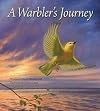
Well written and beautifully illustrated with oil paintings by Nancy Lane, this picture book charts the miraculous, almost 4000-mile journey of a little female yellow warbler, from the tropical rain forests and traditional shade coffee farms of Nicaragua, to the Yucatan Peninsula, across the Gulf of Mexico, over the swamps of Florida, the farmlands of central North America, to her final destination on the shores of Great Slave Lake in Canada’s Northwest Territories. Scott Weidensaul show more describes the sights and sounds—the voices of other birds and of land animals—in the various habitats along the way. With the refrain, “These were just the sounds of the forest. The sounds of home,” the author emphasizes the naturalness of this journey for the migratory bird, her flexibility and adaptability to multiple habitats, and the fact that she has many homes, all of which sustain her on a remarkable flight.
At three points in the narrative, Weidensaul focuses on a young child’s sighting the bird, and learning a little about her. While the book ends with ways the reader can assist migratory birds and includes some useful hyperlinks, brief notes on the the warbler’s anatomy, lifecycle, and diet would have been welcome. Furthermore, attractive as Lane’s paintings are, their colours are occasionally too fluorescent. Several times the little warbler appears to be greenish yellow—too similar in colour to the background to remain distinct. It shouldn’t be hard to spot the main character in a picture book’s illustrations. The bird’s route ought to have been indicated in a bolder, contrasting pigment to to the colours of the map itself. These criticisms aside, this is worthwhile book.
Rating: 3.5 rounded up show less
At three points in the narrative, Weidensaul focuses on a young child’s sighting the bird, and learning a little about her. While the book ends with ways the reader can assist migratory birds and includes some useful hyperlinks, brief notes on the the warbler’s anatomy, lifecycle, and diet would have been welcome. Furthermore, attractive as Lane’s paintings are, their colours are occasionally too fluorescent. Several times the little warbler appears to be greenish yellow—too similar in colour to the background to remain distinct. It shouldn’t be hard to spot the main character in a picture book’s illustrations. The bird’s route ought to have been indicated in a bolder, contrasting pigment to to the colours of the map itself. These criticisms aside, this is worthwhile book.
Rating: 3.5 rounded up show less
Excellent book that meshes the new information that scientists are discovering about the mysteries of bird migration with the environmental issues that are harming them. In the past 20 years, the study of bird migration has taken off, as technology has enabled scientists to fit birds with extremely light weight geo-locators. Even with the advances in technology there are still so many questions about bird migration. But, there is also a lot of fascinating information coming out that will show more hopefully make humans care about how they are affecting the world these birds inhabit with us.
As I look through my kindle notes, I could write pages about all the things I learned. I was particularly fascinated by the way birds navigate, the way they prepare for migrations that are thousands of miles long, and the various routes they take. Weidensaul makes you really care about each bird he focuses on (probably about a dozen throughout the book). It helped me to also look up some pictures of the birds as I read about them.
And then he starts talking about all the ways the world is changing and making things more difficult for the birds such as the fragmentation of forests, changing weather patterns, farming practices, light pollution, and hunting practices. The good news is that solid information about bird migration, including global hot spots that many different species of birds all rely on, is helping conservationists convince people and governments to make changes to help birds. Of course, this is not always an easy road and is met with resistance in many places, but at least there is now the beginning of the information we need to even know what change needs to happen.
Some of my favorite birds that I learned about in this book were the spoon-billed sandpiper, the red knot, the godwit, frigatebirds, kirtland’s warblers, and swainson’s hawks. I highly recommend this book for anyone interested in birds, nature, conservation, and/or environmental issues.
Original publication date: 2021
Author’s nationality: American
Original language: English
Length: 400 pages
Rating: 4 stars
Format/where I acquired the book: purchased for kindle
Why I read this: off the shelf show less
As I look through my kindle notes, I could write pages about all the things I learned. I was particularly fascinated by the way birds navigate, the way they prepare for migrations that are thousands of miles long, and the various routes they take. Weidensaul makes you really care about each bird he focuses on (probably about a dozen throughout the book). It helped me to also look up some pictures of the birds as I read about them.
And then he starts talking about all the ways the world is changing and making things more difficult for the birds such as the fragmentation of forests, changing weather patterns, farming practices, light pollution, and hunting practices. The good news is that solid information about bird migration, including global hot spots that many different species of birds all rely on, is helping conservationists convince people and governments to make changes to help birds. Of course, this is not always an easy road and is met with resistance in many places, but at least there is now the beginning of the information we need to even know what change needs to happen.
Some of my favorite birds that I learned about in this book were the spoon-billed sandpiper, the red knot, the godwit, frigatebirds, kirtland’s warblers, and swainson’s hawks. I highly recommend this book for anyone interested in birds, nature, conservation, and/or environmental issues.
Original publication date: 2021
Author’s nationality: American
Original language: English
Length: 400 pages
Rating: 4 stars
Format/where I acquired the book: purchased for kindle
Why I read this: off the shelf show less
The First Frontier: The Forgotten History of Struggle, Savagery, and Endurance in Early America by Scott Weidensaul
The subtitle is awful; ignore it. This is an excellent book of serious history, no fluff or novelistic devices. Weidensaul retells the story of the Plymouth Bay Colony & it's offspring and their relationships with Native Americans from a less heroic side than you may be used to. The acts of English aggression, deception, and genocide he describes are as awful as anything you'll read about in any annals of war. Weidensaul's source-based narrative is gripping and horrifying in equal measure.
The Ghost with Trembling Wings: Science, Wishful Thinking and the Search for Lost Species by Scott Weidensaul
(review originally written for Bookslut)
The Ghost with Trembling Wings is easily the most enjoyable science book I have read since The Botany of Desire. Tidbits from this book brought up in conversation have made me sound more intelligent and well-read at parties, and isn't that why we read non-fiction? The main topic of the book, the search for lost species, is something most of us have thought about. Although few people lose any sleep over the thought of an invertebrate species being lost show more to the void, I believe that most, when faced with the irrevocable loss of a more charismatic species, are at least temporarily saddened -- providing their personal property is not determined to be the final natural habitat of the endangered species in question. In this book, Scott Weidensaul wisely confines most of his attention to birds and mammals, straying only for terribly noteworthy amphibians and fish, like a brilliant gold toad, and the Loch Ness monster.
Yes, really, the Loch Ness monster. Along with the majestic ivory-billed woodpecker, and the disappearing and reappearing black-footed ferret, Weidensaul devotes quite a bit of inquiry to species that probably never existed. Like the Loch Ness monster, Yeti, and the Black Beast of Inkberrow. While he never seems to expect to actually locate these creatures, his hypotheses about how these creatures came to exist in our collective unconscious are enlightening.
Despite the attention given to myth, this book is far from frivolous. It covers all the bases. From attempts at reintroducing species that are extinct in the wild to attempts to locate a species that was only seen once, by one man, who didn't record where he saw it. He also documents attempts to recreate species that are completely extinct.
As interesting as all these searches are, it is again the author's speculations on why we go to such lengths to find them that really draw me into the book. Why would anyone want to spend millions of dollars trying to clone the DNA of an extinct marsupial? Why are there so many unconfirmed sightings of species long after they have been declared extinct? Why do so many people report seeing black panthers in places where it is nearly impossible that they should be? Why do so many cultures have myths of an abominable snowman, yeti, large hairy man with claws? What are we really losing when a species finally disappears forever? And what should we do if we suddenly discover ten of them living on some tiny island?
If any of the above questions interest you, I wholeheartedly recommend that you read this book. show less
The Ghost with Trembling Wings is easily the most enjoyable science book I have read since The Botany of Desire. Tidbits from this book brought up in conversation have made me sound more intelligent and well-read at parties, and isn't that why we read non-fiction? The main topic of the book, the search for lost species, is something most of us have thought about. Although few people lose any sleep over the thought of an invertebrate species being lost show more to the void, I believe that most, when faced with the irrevocable loss of a more charismatic species, are at least temporarily saddened -- providing their personal property is not determined to be the final natural habitat of the endangered species in question. In this book, Scott Weidensaul wisely confines most of his attention to birds and mammals, straying only for terribly noteworthy amphibians and fish, like a brilliant gold toad, and the Loch Ness monster.
Yes, really, the Loch Ness monster. Along with the majestic ivory-billed woodpecker, and the disappearing and reappearing black-footed ferret, Weidensaul devotes quite a bit of inquiry to species that probably never existed. Like the Loch Ness monster, Yeti, and the Black Beast of Inkberrow. While he never seems to expect to actually locate these creatures, his hypotheses about how these creatures came to exist in our collective unconscious are enlightening.
Despite the attention given to myth, this book is far from frivolous. It covers all the bases. From attempts at reintroducing species that are extinct in the wild to attempts to locate a species that was only seen once, by one man, who didn't record where he saw it. He also documents attempts to recreate species that are completely extinct.
As interesting as all these searches are, it is again the author's speculations on why we go to such lengths to find them that really draw me into the book. Why would anyone want to spend millions of dollars trying to clone the DNA of an extinct marsupial? Why are there so many unconfirmed sightings of species long after they have been declared extinct? Why do so many people report seeing black panthers in places where it is nearly impossible that they should be? Why do so many cultures have myths of an abominable snowman, yeti, large hairy man with claws? What are we really losing when a species finally disappears forever? And what should we do if we suddenly discover ten of them living on some tiny island?
If any of the above questions interest you, I wholeheartedly recommend that you read this book. show less
Lists
Awards


You May Also Like


Associated Authors
Statistics
- Works
- 43
- Also by
- 2
- Members
- 2,654
- Popularity
- #9,670
- Rating
- 4.0
- Reviews
- 45
- ISBNs
- 100
- Languages
- 4
- Favorited
- 2