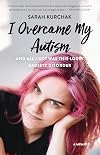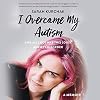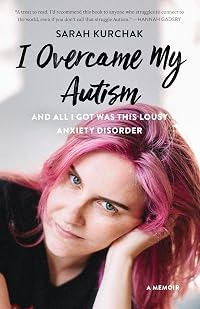
I Overcame My Autism and All I Got Was This Lousy Anxiety Disorder: A Memoir
by Sarah Kurchak
On This Page
Description
Sarah Kurchak is autistic. She hasn't let that get in the way of pursuing her dream to become a writer, or to find love, but she has let it get in the way of being in the same room with someone chewing food loudly, and of cleaning her bathroom sink. In I Overcame My Autism and All I Got Was This Lousy Anxiety Disorder, Kurchak examines the Byzantine steps she took to become "an autistic success story," how the process almost ruined her life and how she is now trying to recover. Growing up show more undiagnosed in small-town Ontario in the eighties and nineties, Kurchak realized early that she was somehow different from her peers. She discovered an effective strategy to fend off bullying: she consciously altered nearly everything about herself-from her personality to her body language. She forced herself to wear the denim jeans that felt like being enclosed in a sandpaper iron maiden. Every day, she dragged herself through the door with an elevated pulse and a churning stomach, nearly crumbling under the effort of the performance. By the time she was finally diagnosed with autism at twenty-seven, she struggled with depression and anxiety largely caused by the same strategy she had mastered precisely. She came to wonder, were all those years of intensely pretending to be someone else really worth it? Tackling everything from autism parenting culture to love, sex, alcohol, obsessions and professional pillow fighting, Kurchak's enlightening memoir challenges stereotypes and preconceptions about autism and considers what might really make the lives of autistic people healthier, happier and more fulfilling. show lessTags
Recommendations




Member Reviews
Although I'd never heard of Sarah Kurchak before reading this book, she wrote an article in 2015 titled I’m Autistic, And Believe Me, It’s A Lot Better Than Measles (subtitle: Vaccines don’t cause autism. But even if they did, is being like me really a fate worse than death?) which is what I have been saying about the fucking anti-vax movement all along, too! Ever since then, she's been trying to explain that she doesn't speak for or represent every autistic person, with her words often falling on covered ears. However, writing about her personal experiences with autism eventually led to an offer to write a book. After her first ideas (an autistic teen sex comedy and a "novella about Plato, Socrates, professional wrestling and show more homoerotic fanfiction") were politely dismissed, she proposed a memoir/essay collection with this title.
So here you have my fifteen uneasy steps to an autistic "success" story. You're welcome to call this real. I hope you do. Just please don't try this at home.
The chapters, Steps One through Fifteen, have tongue-in-cheek self-help directions such as "Step One: Be born to Jane and Dan Kurchak" (maybe not replicable for most, but her parents sound pretty awesome) and "Step Five: Work and socialize with people who are arguably less normal than you are" (which I personally have always found makes life better). "Step 8: Drink" and "Step 9: Fail" are followed by "Step 11: Write a story about vaccines. Never hear the end of it." (See link above.) Ms. Kurchak's recounting of her life and experiences ranges from very general to uncomfortably intimate, all thankfully coated in a lot of sarcasm and self-deprecating humor and interspersed with information about her unique interests, such as "Step Seven: Find a healthy outlet for your identity crisis. Like professional pillow fighting" and "Step Twelve: Burn out and watch 105 episodes of a 50-year-old TV show."
While Ms. Kurchak is sick of trying to convince people that she's "really autistic," simply because her support needs are relatively low, she apparently felt a lot of pressure from her publishers to divulge, divulge, divulge. Additionally, she struggles with anxiety and depression, which are all too common for autistic people trying to fit into a world that wants them to change to fit the "regular" world instead of making accommodations. Which is to say that being allowed inside her head can be very dark. (Consider that fair warning if you're not up for reading some of her rock-bottom thoughts.) When I finished the book, I was genuinely worried about how the pandemic has affected her, so I consulted the interwebs. She interviewed herself in April 2020, which gave me a (kind of out-of-date) update on her, but also serves as a good introduction if you're trying to decide whether this book is for you. (She also appears to be alive and well on Twitter.) Her interview with herself ends with this:
That seems like an encouraging note to end on! Is there anything else you’d like to add, anything you’d like people to know about you or your book before we wrap this up?
I just hope that people appreciate it. I’d love it if people thought that I was funny. But maybe it’s more important that they think it’s thoughtful. I hope that the people I wrote it for find it valuable. I hope that my goal to use my individual story to try to address some bigger issues that concern many autistic people wasn’t a complete failure. And this is a big ask, but I hope people buy it, because fuck knows what else I’m going to do with my life now.
Also, I should probably clarify: I do not speak for all autistic people. I will not try to. I do not want to. I wish to be a voice/face of autism in a much greater, more nuanced and diverse conversation, not the voice or face of autism.
(This was a really difficult review for me to write. While I loved the book overall, I really struggled with some of the darker parts. I identify with some of her experiences, in my own life and my son's, but we also have some very different perspectives and experiences. She also made me more aware of how much I mask and dissociate as coping mechanisms.) show less
So here you have my fifteen uneasy steps to an autistic "success" story. You're welcome to call this real. I hope you do. Just please don't try this at home.
The chapters, Steps One through Fifteen, have tongue-in-cheek self-help directions such as "Step One: Be born to Jane and Dan Kurchak" (maybe not replicable for most, but her parents sound pretty awesome) and "Step Five: Work and socialize with people who are arguably less normal than you are" (which I personally have always found makes life better). "Step 8: Drink" and "Step 9: Fail" are followed by "Step 11: Write a story about vaccines. Never hear the end of it." (See link above.) Ms. Kurchak's recounting of her life and experiences ranges from very general to uncomfortably intimate, all thankfully coated in a lot of sarcasm and self-deprecating humor and interspersed with information about her unique interests, such as "Step Seven: Find a healthy outlet for your identity crisis. Like professional pillow fighting" and "Step Twelve: Burn out and watch 105 episodes of a 50-year-old TV show."
While Ms. Kurchak is sick of trying to convince people that she's "really autistic," simply because her support needs are relatively low, she apparently felt a lot of pressure from her publishers to divulge, divulge, divulge. Additionally, she struggles with anxiety and depression, which are all too common for autistic people trying to fit into a world that wants them to change to fit the "regular" world instead of making accommodations. Which is to say that being allowed inside her head can be very dark. (Consider that fair warning if you're not up for reading some of her rock-bottom thoughts.) When I finished the book, I was genuinely worried about how the pandemic has affected her, so I consulted the interwebs. She interviewed herself in April 2020, which gave me a (kind of out-of-date) update on her, but also serves as a good introduction if you're trying to decide whether this book is for you. (She also appears to be alive and well on Twitter.) Her interview with herself ends with this:
That seems like an encouraging note to end on! Is there anything else you’d like to add, anything you’d like people to know about you or your book before we wrap this up?
I just hope that people appreciate it. I’d love it if people thought that I was funny. But maybe it’s more important that they think it’s thoughtful. I hope that the people I wrote it for find it valuable. I hope that my goal to use my individual story to try to address some bigger issues that concern many autistic people wasn’t a complete failure. And this is a big ask, but I hope people buy it, because fuck knows what else I’m going to do with my life now.
Also, I should probably clarify: I do not speak for all autistic people. I will not try to. I do not want to. I wish to be a voice/face of autism in a much greater, more nuanced and diverse conversation, not the voice or face of autism.
(This was a really difficult review for me to write. While I loved the book overall, I really struggled with some of the darker parts. I identify with some of her experiences, in my own life and my son's, but we also have some very different perspectives and experiences. She also made me more aware of how much I mask and dissociate as coping mechanisms.) show less
Ratings
Members
- Recently Added By
Lists

Neuro Pride Ireland Recommendations
101 works; 1 member

Evergreen Award™ Winners and Nominees 2005–2024
200 works; 3 members
Author Information
2 Works 115 Members
Awards and Honors
Awards
Classifications
- Genres
- Nonfiction, Biography & Memoir, General Nonfiction
- DDC/MDS
- 616.89 — Applied science & technology Medicine & health Diseases, Allergies, Skin Conditions Nervous Disorders: Autism, Anorexia, OCD Mental disorders: bi-polar/schizophrenia
- LCC
- RC553 .A88 .K865 — Medicine Internal medicine Internal medicine Neurosciences. Biological psychiatry. Neuropsychiatry Psychiatry Psychopathology
- BISAC
Statistics
- Members
- 73
- Popularity
- 431,590
- Reviews
- 1
- Rating
- (4.68)
- Languages
- English
- Media
- Paper, Audiobook, Ebook
- ISBNs
- 6
- ASINs
- 2