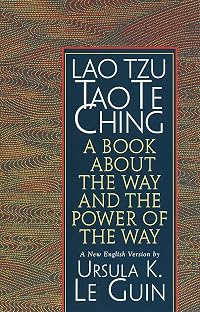
Lao Tzu : Tao Te Ching : A Book About the Way and the Power of the Way
by Ursula K. Le Guin (Author, Translator), J. P. Seaton, Lao Tzu (Author)
On This Page
Description
Most people know Ursula K. Le Guin for her extraordinary science fiction and fantasy writing. Fewer know just how pervasive Taoist themes are to so much of her work. And in Lao Tzu: Tao Te Ching, we are treated to Le Guin's unique take on Taoist philosophy's founding classic. Reflecting more than forty years of Le Guin's personal study and contemplation, her rendering of the text is a brilliant testament to her deep-seated understanding of Taoist principles and their value for our troubled show more world today. Avoiding traditional patriarchal interpretations, scholarly fixations, and esotericism, she embues the Tao Te Ching with transformative, awe-inspiring power like no other. Also included are Le Guin's personal reflections and notes on the text throughout. To anyone who has enjoyed Le Guin's writing and yearns for a deeper window into her mind--or to all who simply wish to explore the philosophical bedrock that shaped an incredible, historically significant author--Le Guin's Lao Tzu: Tao Te Ching will be an incomparable treasure. show lessTags
Recommendations






Member Reviews
Sure, there's wisdom here. But much of it sounds like Aristotle and Aquinas' bumpkin cousin. You'll find "natural law" and even an unmoved mover here. You'll find dislike of what is new, and what feels to me like a constrained, joyless golden mean as well.
Underwhelmed. I love Le Guin and appreciate that for her and many, this book is a wellspring. I'm sorry; I haven't found much water here.
Underwhelmed. I love Le Guin and appreciate that for her and many, this book is a wellspring. I'm sorry; I haven't found much water here.
I don’t know how many times I’ve read this, but it’s not enough.
That may be ironic — the way to read the Tao Teh Ching more times may be to read it fewer times. Just kidding, but if you’ve read it, you get it.
Reading it, for me, is a way of restarting, a reboot in the midst of life, a reminder of what’s important and what isn’t, what to concern myself with and what to forget. Unfortunately, when I read it I’m usually a little late. You shouldn’t wait until you need to reboot to reboot.
It shuts down the noise and the busy-ness, the ambitions, the wants, the compulsions to control, to know, or to contend.
Its style is paradox, because maybe what you are doing is exactly the thing that will prevent you from getting where show more you should be going. Maybe wanting to get someplace and striving to get there is exactly the wrong way to get there.
Here’s something that slaps me in the face but makes me smile every time I read it — “He who knows does not speak. He who speaks does not know.”
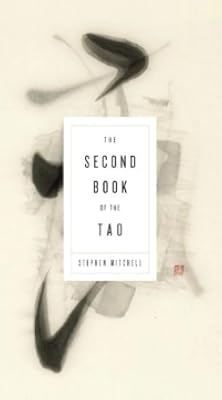
*Adding Some Remarks from Reading Stephen Mitchell’s translation —
Actually Mitchell’s “translation” isn’t strictly speaking a translation. He refers to it as a “version”. He exercises a great deal of author’s privilege in rendering what he believes the meaning of the book to be, often departing considerably from anything like a literal translation. I don’t know Chinese, much less ancient Chinese, but I do know that “tractors”, “warheads”, “electrons”, and “galaxies” were not part of the vocabulary of the time.
That’s not actually a complaint. Academic purity is, I suspct, antithetical to the Tao.
What I can say though is that his “version” is eminently readable. It flows, and it makes the kind of ready sense that the book can make, allowing for its paradoxical form. As a reader, you do need to remember to slow down — passing your eyes over the words, as easy as it is to do, is a loss.
It’s worth reading more than one translation/version. Like seeing from as many angles as you can.
*Adding More Remarks from Reading Ursula Le Guin’s version —
Like Stephen Mitchell’s version, Le Guin’s is not a translation. She used the 1898 Carus translation, which included the original characters, transliterations, and character-by-character translation in order to put together her own rendering. She also consulted a number of other translations, and her own readings of those.
I was interested in reading her version because she was, after all, an accomplished writer in her own right, both in prose and fiction. And her version shows that. Like Mitchell, she is liberal in her re-telling, relying on context and overall understanding of the text, to re-render each chapter, along with short commentaries on many of them. My impression though is that she is more faithful to the text and more careful to place her rendering within the tradition.
Le Guin is strong on featuring the concept of “wu wei,” action that is not action. And this is the concept that may most attract me, at least at the time of this reading. While the Tao is ineffable, and maybe mystical, it is absolutely realistic. There are ways in which the world moves and works. Working against them is effort (“action”), working with them is action that is not effort (“inaction”). Denying, fighting against, competing with them is frustration, defeat, unhappiness. Accepting, even in some sense using them, is the path to “success” where success may be redefined in the doing. All that again sounds a bit mystical, but, again, the message is realism and acceptance.
I think that any translation or re-telling of the Tao Te Ching is going to be a particular interpretation. Reading each is valuable, almost like reading a new book with new insights, both from the new telling and from your own new experience. I intend to read more versions. show less
That may be ironic — the way to read the Tao Teh Ching more times may be to read it fewer times. Just kidding, but if you’ve read it, you get it.
Reading it, for me, is a way of restarting, a reboot in the midst of life, a reminder of what’s important and what isn’t, what to concern myself with and what to forget. Unfortunately, when I read it I’m usually a little late. You shouldn’t wait until you need to reboot to reboot.
It shuts down the noise and the busy-ness, the ambitions, the wants, the compulsions to control, to know, or to contend.
Its style is paradox, because maybe what you are doing is exactly the thing that will prevent you from getting where show more you should be going. Maybe wanting to get someplace and striving to get there is exactly the wrong way to get there.
Here’s something that slaps me in the face but makes me smile every time I read it — “He who knows does not speak. He who speaks does not know.”
*Adding Some Remarks from Reading Stephen Mitchell’s translation —
Actually Mitchell’s “translation” isn’t strictly speaking a translation. He refers to it as a “version”. He exercises a great deal of author’s privilege in rendering what he believes the meaning of the book to be, often departing considerably from anything like a literal translation. I don’t know Chinese, much less ancient Chinese, but I do know that “tractors”, “warheads”, “electrons”, and “galaxies” were not part of the vocabulary of the time.
That’s not actually a complaint. Academic purity is, I suspct, antithetical to the Tao.
What I can say though is that his “version” is eminently readable. It flows, and it makes the kind of ready sense that the book can make, allowing for its paradoxical form. As a reader, you do need to remember to slow down — passing your eyes over the words, as easy as it is to do, is a loss.
It’s worth reading more than one translation/version. Like seeing from as many angles as you can.
*Adding More Remarks from Reading Ursula Le Guin’s version —
Like Stephen Mitchell’s version, Le Guin’s is not a translation. She used the 1898 Carus translation, which included the original characters, transliterations, and character-by-character translation in order to put together her own rendering. She also consulted a number of other translations, and her own readings of those.
I was interested in reading her version because she was, after all, an accomplished writer in her own right, both in prose and fiction. And her version shows that. Like Mitchell, she is liberal in her re-telling, relying on context and overall understanding of the text, to re-render each chapter, along with short commentaries on many of them. My impression though is that she is more faithful to the text and more careful to place her rendering within the tradition.
Le Guin is strong on featuring the concept of “wu wei,” action that is not action. And this is the concept that may most attract me, at least at the time of this reading. While the Tao is ineffable, and maybe mystical, it is absolutely realistic. There are ways in which the world moves and works. Working against them is effort (“action”), working with them is action that is not effort (“inaction”). Denying, fighting against, competing with them is frustration, defeat, unhappiness. Accepting, even in some sense using them, is the path to “success” where success may be redefined in the doing. All that again sounds a bit mystical, but, again, the message is realism and acceptance.
I think that any translation or re-telling of the Tao Te Ching is going to be a particular interpretation. Reading each is valuable, almost like reading a new book with new insights, both from the new telling and from your own new experience. I intend to read more versions. show less
I had been intending to read a different translation/interpretation of this, when I came upon Le Guin's version which is clean, exquisite and spare. I am wondering whether one will always favour the first version one reads. As well as studying this version more fully, next year I will read the version I originally planned to read, with its academic disquisition.
Lovely and unexpected. Slippery with playful twists and turns to upturn conventional logic. Thinking about how figuring out my own politics and how to exist in the death spectacle of capitalism has led me to many similar conclusions, especially where it concerns ambition, greed, envy, "being competitive", "being the best", "climbing the corporate ladder", "surviving the rat race", and other similar "common sense" notions that make me want to die.
Read it alongside A Wizard of Earthsea and it made me appreciate that book better despite having a bit of a rocky start with it.
Read it alongside A Wizard of Earthsea and it made me appreciate that book better despite having a bit of a rocky start with it.
I read this as part of my research for a paper I'm will be presenting on Le Guin's [b:The Left Hand of Darkness|18423|The Left Hand of Darkness (Hainish Cycle, #4)|Ursula K. Le Guin|https://d.gr-assets.com/books/1388229638s/18423.jpg|817527] in January at Mythmoot III. I was surprised to find how short the book is, and was able to read it in one sitting — though, having done so, I suspect it is not the intended method of consumption. It seems better suited to small, daily chunks for rumination or meditation. It's unlikely that I will read it in that manner, but I suspect I will revisit it a couple times in the next month or so.
Overall, I quite enjoyed it. I read more for feeling than sense, and Le Guin's brief, sporadic commentaries show more seem to uphold such a reading. Much of it is the sort of short, enigmatic, oscillating verse that one might expect, but I was surprised to find how much of it is fairly comprehensible. Indeed, there's plenty of strangeness and a tendency toward epigrammatic enigma, but on the whole there's a simplicity to the sensibleness of many of the verses. It's hard to say how much of that is inherent in the text itself, and how much of it is Le Guin's rendering. She warns, in her notes at the end, that she did not translate it, but created her own version based on a dozen or so prior translations that she has studied over many years, working on it bit by bit, sometimes with decade-long hiatuses.
Anyway, if I have one criticism, it's in a single comment she makes on chapter 53, "Insight," the last stanza of which reads:
Le Guin's comment: "So much for capitalism."
*sigh*
The obvious reply here is that when Lau Tzu (or whomever) wrote this, capitalism wasn't "a thing," so to call out capitalism in response to these statements is disingenuous at best. More to the point, the text seems to indicate that these things are not "the way" regardless of the political and economic situation one finds themselves. (In the prior stanza, there is a reference to splendiferous palaces, which seems distinctly anti-capitalist to me.) The idea that ornamentalism, ostentatiousness, warmongering, gluttony, greed and theft are solely the products of capitalism is simply absurd.
In fact, there are other moments in Le Guin's commentary that seem to favor capitalist — in particular, anarcho-capitalist — ideals. The author "sees sacrifice of the self or others as a corruption of power," she writes in her comment on chapter 13, "Shameless." "This is a radically subversive attitude. No wonder anarchists and Taoists make good friends." This idea is cognate with modern libertarian attitudes against so-called "crony capitalism," which is an oxymoron insofar as it isn't truly capitalism but more like fascism (in the original sense of the word). In chapter 57, "Being simple," are found the lines:
Le Guin's comment, in part, is, "No pessimist would say that people are able to look after themselves, be just, and prosper on their own. No anarchist can be a pessimist." Again, this fits well with libertarian/capitalist viewpoints. It was, after all, [a:Adam Smith|14424|Adam Smith|https://d.gr-assets.com/authors/1244624882p2/14424.jpg], the patron saint of capitalism, who wrote, "We may often fulfill all the roles of justice by sitting still and doing nothing."
Perhaps I've ranted too long. Overall I quite enjoyed the work. And bonus: I even found some stuff to use for my paper on Left Hand....
Edit: I feel compelled to add that I realize Le Guin's definition of anarchism is likely not anarcho-capitalism but rather anarcho-syndicalism. I mean, I have read [b:The Dispossessed|13651|The Dispossessed (Hainish Cycle, #5)|Ursula K. Le Guin|https://d.gr-assets.com/books/1353467455s/13651.jpg|2684122]. Still, my objections stand. show less
Overall, I quite enjoyed it. I read more for feeling than sense, and Le Guin's brief, sporadic commentaries show more seem to uphold such a reading. Much of it is the sort of short, enigmatic, oscillating verse that one might expect, but I was surprised to find how much of it is fairly comprehensible. Indeed, there's plenty of strangeness and a tendency toward epigrammatic enigma, but on the whole there's a simplicity to the sensibleness of many of the verses. It's hard to say how much of that is inherent in the text itself, and how much of it is Le Guin's rendering. She warns, in her notes at the end, that she did not translate it, but created her own version based on a dozen or so prior translations that she has studied over many years, working on it bit by bit, sometimes with decade-long hiatuses.
Anyway, if I have one criticism, it's in a single comment she makes on chapter 53, "Insight," the last stanza of which reads:
People wearing ornaments and fancy clothes, carrying weapons,
drinking a lot and eating a lot,
having a lot of things, a lot of money:
shameless thieves.
Surely their way
isn't the way.
Le Guin's comment: "So much for capitalism."
*sigh*
The obvious reply here is that when Lau Tzu (or whomever) wrote this, capitalism wasn't "a thing," so to call out capitalism in response to these statements is disingenuous at best. More to the point, the text seems to indicate that these things are not "the way" regardless of the political and economic situation one finds themselves. (In the prior stanza, there is a reference to splendiferous palaces, which seems distinctly anti-capitalist to me.) The idea that ornamentalism, ostentatiousness, warmongering, gluttony, greed and theft are solely the products of capitalism is simply absurd.
In fact, there are other moments in Le Guin's commentary that seem to favor capitalist — in particular, anarcho-capitalist — ideals. The author "sees sacrifice of the self or others as a corruption of power," she writes in her comment on chapter 13, "Shameless." "This is a radically subversive attitude. No wonder anarchists and Taoists make good friends." This idea is cognate with modern libertarian attitudes against so-called "crony capitalism," which is an oxymoron insofar as it isn't truly capitalism but more like fascism (in the original sense of the word). In chapter 57, "Being simple," are found the lines:
The more restrictions and prohibitions in the world,
the poorer people get
...
So a wise leader might say:
I practice inaction, and the people look after themselves.
I love to be quiet, and the people themselves find justice.
Le Guin's comment, in part, is, "No pessimist would say that people are able to look after themselves, be just, and prosper on their own. No anarchist can be a pessimist." Again, this fits well with libertarian/capitalist viewpoints. It was, after all, [a:Adam Smith|14424|Adam Smith|https://d.gr-assets.com/authors/1244624882p2/14424.jpg], the patron saint of capitalism, who wrote, "We may often fulfill all the roles of justice by sitting still and doing nothing."
Perhaps I've ranted too long. Overall I quite enjoyed the work. And bonus: I even found some stuff to use for my paper on Left Hand....
Edit: I feel compelled to add that I realize Le Guin's definition of anarchism is likely not anarcho-capitalism but rather anarcho-syndicalism. I mean, I have read [b:The Dispossessed|13651|The Dispossessed (Hainish Cycle, #5)|Ursula K. Le Guin|https://d.gr-assets.com/books/1353467455s/13651.jpg|2684122]. Still, my objections stand. show less
Went down a rabbit hole with reading differing translations of 78, Ursula renders it:
Nothing in the world
is as soft, as weak, as water;
nothing else can wear away
the hard, the strong,
and remain unaltered.
Soft overcomes hard,
weak overcomes strong.
Everybody knows it, nobody uses the knowledge.
Maybe ...nobody uses the time... Of course, water hurries too.
Nothing in the world
is as soft, as weak, as water;
nothing else can wear away
the hard, the strong,
and remain unaltered.
Soft overcomes hard,
weak overcomes strong.
Everybody knows it, nobody uses the knowledge.
Maybe ...nobody uses the time... Of course, water hurries too.
One Berkeley professor I worked for encouraged students to memorize poems so they could reflect on them while waiting in line. This was not just a throw-away piece of "do as I say, not as I do" advice--he would frequently come to class with a story about how he contemplated a stanza by Yeats (or whoever we were studying that week) while walking to his car (or something) and had a profound philosophical insight.
The poems of the Tao Te Ching are perfect examples of the kind of verse you need to mentally chew on over time, to revisit again and again (although I feel rereading can be as useful as memorizing the short lines). The messages are still strikingly relevant after hundreds of years.
It's comforting to know that people from many show more different ages have struggled with distractions and have struggled to be mindful (to live in the moment). Often, modern technology is blamed for the inability to quiet the mind. The people in Lao Tzu's time did not have social media, but there were enough distractions that he wrote about the need to free oneself from fame and material goods.
Overvaluing objects and money--what we now call late capitalism in that it rules our social, economic, and political spheres--is also not new. This too is comforting because we can look to what did and didn't work in the past to deal with the present incarnation of greed. The Way is there and here, then and now. show less
The poems of the Tao Te Ching are perfect examples of the kind of verse you need to mentally chew on over time, to revisit again and again (although I feel rereading can be as useful as memorizing the short lines). The messages are still strikingly relevant after hundreds of years.
It's comforting to know that people from many show more different ages have struggled with distractions and have struggled to be mindful (to live in the moment). Often, modern technology is blamed for the inability to quiet the mind. The people in Lao Tzu's time did not have social media, but there were enough distractions that he wrote about the need to free oneself from fame and material goods.
Overvaluing objects and money--what we now call late capitalism in that it rules our social, economic, and political spheres--is also not new. This too is comforting because we can look to what did and didn't work in the past to deal with the present incarnation of greed. The Way is there and here, then and now. show less
Members
- Recently Added By
Lists

hypatian_kat to-read
429 works; 3 members
Author Information

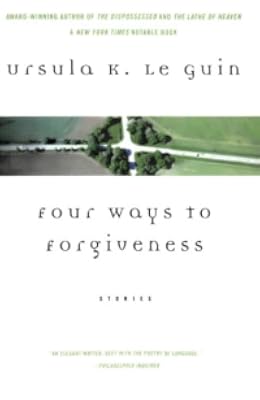
Ursula K. Le Guin was born Ursula Kroeber in Berkeley, California on October 21, 1929. She received a bachelor's degree from Radcliffe College in 1951 and a master's degree in romance literature of the Middle Ages and Renaissance from Columbia University in 1952. She won a Fulbright fellowship in 1953 to study in Paris, where she met and married show more Charles Le Guin. Her first science-fiction novel, Rocannon's World, was published in 1966. Her other books included the Earthsea series, The Left Hand of Darkness, The Dispossessed: An Ambiguous Utopia, The Lathe of Heaven, Four Ways to Forgiveness, and The Telling. A Wizard of Earthsea received an American Library Association Notable Book citation, a Horn Book Honor List citation, and the Lewis Carroll Shelf Award in 1979. She received the Medal for Distinguished Contribution to American Letters in 2014. She also received the Nebula Award and the Hugo Award. She also wrote books of poetry, short stories collections, collections of essays, children's books, a guide for writers, and volumes of translation including the Tao Te Ching of Lao Tzu and selected poems by Gabriela Mistral. She died on January 22, 2018 at the age of 88. (Bowker Author Biography) show less
9+ Works 1,703 Members

Lao Tzu, a Chinese philosopher, is considered to be the founder of Taoism. His birth and death dates are uncertain. According to legend, Lao Tzu was keeper of the archives at the imperial court. When he was eighty years old he set out for the western border of China, saddened and disillusioned that men were unwilling to follow the path to natural show more goodness. At the border, he was asked by a border guard to record his teachings before he left. These teachings were compiled into the Tao Te Ching (The Way and Its Power). (Bowker Author Biography) show less
Some Editions
Work Relationships
Is contained in
Contains
Common Knowledge
- Original publication date
- 1997
- Disambiguation notice
- Le Guin's version of the Tao Te Ching includes extensive personal commentary.
Classifications
- Genres
- Philosophy, Religion & Spirituality, Nonfiction
- DDC/MDS
- 299.51482 — Religion Other religions Shintoism/Taoism/Other Mythologies Of Asian Origin Religions of Chinese Origin Taoism Scriptures
- LCC
- BL1900 .L26 .E5 — Philosophy, Psychology and Religion Religions. Mythology. Rationalism Religions. Mythology. Rationalism History and principles of religions Asian. Oriental By region or country China Taoism
- BISAC
Statistics
- Members
- 1,311
- Popularity
- 18,443
- Reviews
- 26
- Rating
- (4.40)
- Languages
- 7 — Danish, Dutch, English, French, Polish, Portuguese, Turkish
- Media
- Paper, Audiobook, Ebook
- ISBNs
- 13
- ASINs
- 13
