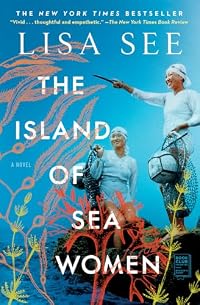
The Island of Sea Women
by Lisa See
On This Page
Description
"A new novel from Lisa See, the New York Times bestselling author of The Tea Girl of Hummingbird Lane, about female friendship and family secrets on a small Korean island. Mi-ja and Young-sook, two girls living on the Korean island of Jeju, are best friends that come from very different backgrounds. When they are old enough, they begin working in the sea with their village's all-female diving collective, led by Young-sook's mother. As the girls take up their positions as baby divers, they show more know they are beginning a life of excitement and responsibility but also danger. Despite their love for each other, Mi-ja and Young-sook's differences are impossible to ignore. The Island of Sea Women is an epoch set over many decades, beginning during a period of Japanese colonialism in the 1930s and 1940s, followed by World War II, the Korean War and its aftermath, through the era of cell phones and wet suits for the women divers. Throughout this time, the residents of Jeju find themselves caught between warring empires. Mi-ja is the daughter of a Japanese collaborator, and she will forever be marked by this association. Young-sook was born into a long line of haenyeo and will inherit her mother's position leading the divers in their village. Little do the two friends know that after surviving hundreds of dives and developing the closest of bonds, forces outside their control will push their friendship to the breaking point. This beautiful, thoughtful novel illuminates a world turned upside down, one where the women are in charge, engaging in dangerous physical work, and the men take care of the children. A classic Lisa See story--one of women's friendships and the larger forces that shape them--The Island of Sea Women introduces readers to the fierce and unforgettable female divers of Jeju Island and the dramatic history that shaped their lives"-- show lessTags
Recommendations

























Member Reviews
I was rather skeptical that I would like this book. I'm not sure how accurate it is to the time period and the historical value, just because I had never heard of this part of world culture. Learning that alone was very enlightening. The biggest impact, though, for me was how it shed light on those (Americans) who came in after these people had been living this way for centuries with their big ideas on how to "do things better." The change they (we) brought can be seen in a lot of ways as detrimental and even crushing to their way of life. I hope it makes me question implemented change in the name of good from here on out and think "Good for who?"
Set on the Korean island of Jeju, this multi-generational story spans a period of approximately 70 years, from the late 1930s to 2008. The novel follows the lives of two women in a fascinating matrifocal society who are haenyeo, elite women divers who can hold their breath for long periods and withstand cold water temperatures, and become caught up in the 4.3 Uprising against the Japanese occupiers in the late 1940s (another genocidal massacre largely unknown to the world) and the Korean War. The events strain the once-close relationship of the central characters, and the book explores betrayals and the difficulty of forgiveness both on the personal level and the political. Beautifully written, as all of Lisa See's works are.
This book was the choice of my book club. It is probably not a book I would have picked up on my own, but it turned out to be a good one. It tells the story of the women divers of Jeju, a Korean island. It starts in the 1930's when Korea was occupied by Japanese colonizers and continues to 2008. The culture of Jeju island was unique and "matrifocal," where the mother was considered the head of the household. Due to unusual historical circumstances, the women were the ones who went diving for seafood, the work that supported their families. It was difficult and dangerous work.
At the heart of the story is the friendship between two of the women, and the events that happened to break the friendship. We also see the progress of history and show more the world events that affected the island. It begins with the hated Japanese colonizers who are eventually replaced by mainland Korean and American occupiers after WWII. As much as the Japanese were despised, the post-war era is worse, with much unrest, fears of communism, and persecution of opposition leading to a massacre, known as the 4.3 Incident, which is a turning point for the story. We see how modernization impacts the unique culture of the island and how a way of life is lost. This story of lost culture is different from what we usually see, where colonizing Europeans disrupt native American/Eskimo culture or, as in the case of Chinua Achebe's Things Fall Apart, Africa. In this case, it is their countrymen, Koreans from the mainland, who are the primary agents of the change.
Lisa See does a beautiful job of showing us the way of life on Jeju and the relationships between the women and their families. There are a number of tragedies that befall the inhabitants of Jeju, and some of this is difficult to read. But the story was very engrossing, and I learned about a place and way of life that I had no idea existed. show less
At the heart of the story is the friendship between two of the women, and the events that happened to break the friendship. We also see the progress of history and show more the world events that affected the island. It begins with the hated Japanese colonizers who are eventually replaced by mainland Korean and American occupiers after WWII. As much as the Japanese were despised, the post-war era is worse, with much unrest, fears of communism, and persecution of opposition leading to a massacre, known as the 4.3 Incident, which is a turning point for the story. We see how modernization impacts the unique culture of the island and how a way of life is lost. This story of lost culture is different from what we usually see, where colonizing Europeans disrupt native American/Eskimo culture or, as in the case of Chinua Achebe's Things Fall Apart, Africa. In this case, it is their countrymen, Koreans from the mainland, who are the primary agents of the change.
Lisa See does a beautiful job of showing us the way of life on Jeju and the relationships between the women and their families. There are a number of tragedies that befall the inhabitants of Jeju, and some of this is difficult to read. But the story was very engrossing, and I learned about a place and way of life that I had no idea existed. show less
I was surprised at how good this book was. I’ve never read any of the author’s other books; to be honest, I was a bit afraid that it would be kind of a voyeuristic look at a quaintly isolated community. Let me just say: it’s not that. I don’t know about the cultural authenticity—it’s probably about 80%; wouldn’t that be typical? But beyond that, it’s a very human story about deep, lasting relationships. It’s also about some really challenging, jolting experiences. It’s about the ways we connect with our community and its history. It’s about the ways we dehumanize other people, and the terrible danger of doing so.
I’ll note that I’ve read some reviews that say the book is overly shocking, but I disagree. Some show more things are meant to be shocking, and it would be disrespectful to treat them any other way. This book does not flinch, and it’s better for it. show less
I’ll note that I’ve read some reviews that say the book is overly shocking, but I disagree. Some show more things are meant to be shocking, and it would be disrespectful to treat them any other way. This book does not flinch, and it’s better for it. show less
The Korean “sea women” endure frigid waters to collect sea animals to sell & survive, for they are the breadwinners & heads of family on the island of Jeju, Korea. Men care for the children. I loved this matrifocal book about fiercely strong women thru the terrorizing Japanese & American occupations (read it & you’ll understand) to today. Brutal, absolutely brutal—so beware. I learned so much history in a compelling & heartbreaking story about female friendship and forgiveness under the harshest of circumstances. This edition has an interview with Lisa See and I don’t doubt her knowledge of the topic: her research was comprehensive. Beautifully written. Five stars in a heartbeat.
Reread in 2024: Two friends grow up on show more Japanese-occupied Jeju island, through WWII, marry, and suffer through the transition to the island becoming part of South Korea. On Jeju, many women including the friends are haenyeo, who can tolerate extremely cold temperatures and hold their breath for inordinate amounts of time to dive for seafood. This is their astounding story, as well as the heinous acts and murder of Jeju residents by South Korean soldiers under America’s watch during the transition to divide up the Koreas. The story is also a fable about the cost of hate. This is a reread and I still love it. A beautiful if not tragic tale, told by an expert storyteller. show less
Reread in 2024: Two friends grow up on show more Japanese-occupied Jeju island, through WWII, marry, and suffer through the transition to the island becoming part of South Korea. On Jeju, many women including the friends are haenyeo, who can tolerate extremely cold temperatures and hold their breath for inordinate amounts of time to dive for seafood. This is their astounding story, as well as the heinous acts and murder of Jeju residents by South Korean soldiers under America’s watch during the transition to divide up the Koreas. The story is also a fable about the cost of hate. This is a reread and I still love it. A beautiful if not tragic tale, told by an expert storyteller. show less
This is just about perfect historical fiction - comprehensively researched on the history side, combined with a story well told, and populated with characters that are complex, believabe and compelling.
Set around women sea divers in Korea in the era 1930s to 2000s, the book delivers an awareness of the amazing lives of these women, set against a background of the horrors faced by Korean residents in that era.
The writing is crisp and clear. The author avoids over-telling the story, and "shows" the reader what is happening. And, most pleasingly, the author has avoided "dumbing down" the story for those unfamiliar with the era, and has delivered an absolute gem of a book.
I don't normally gush in my reviews, but this book invites no other show more response. show less
Set around women sea divers in Korea in the era 1930s to 2000s, the book delivers an awareness of the amazing lives of these women, set against a background of the horrors faced by Korean residents in that era.
The writing is crisp and clear. The author avoids over-telling the story, and "shows" the reader what is happening. And, most pleasingly, the author has avoided "dumbing down" the story for those unfamiliar with the era, and has delivered an absolute gem of a book.
I don't normally gush in my reviews, but this book invites no other show more response. show less
The Island of Sea Women by Lisa See is a historical fiction novel set on the Korean island of Jeju. It is the story of two haenyeo who form a deep friendship as children but circumstances in later life tears them apart. Haenyeo are South Korean female divers whose livelihood consists of harvesting a variety of shellfish, seaweed and other sea life from the ocean. They are known for their independent spirit and determination, and on the island of Jeju the haenyeo are the matriarchs of their families.
Young-Sook’s mother is the head of the local diving collective so she has been training to become a diver all of her life. Mi-ja moves to the village after the death of her Japanese collaborator father so she is not fully accepted by show more others. Both girls train together and form a bond with other. Japan has control of Korea through the years leading up to World War II and after the war, Korea goes through years of uncertainty as the communists take the north part of the country and the Americans try to keep the south from being absorbed. Koreans aren’t really given a choice, they are expected to follow whatever policy their current overlords have decided upon.
The Island of Sea Women is a slow paced, multi-generational story that is rich in details as the author explores culture, history, economy, politics and family relationships. I always find Lisa See’s novels memorable but in this case I wasn’t as interested in the story as I would have hoped. I think the author did some amazing research but perhaps all these facts took away from the heart of the story. show less
Young-Sook’s mother is the head of the local diving collective so she has been training to become a diver all of her life. Mi-ja moves to the village after the death of her Japanese collaborator father so she is not fully accepted by show more others. Both girls train together and form a bond with other. Japan has control of Korea through the years leading up to World War II and after the war, Korea goes through years of uncertainty as the communists take the north part of the country and the Americans try to keep the south from being absorbed. Koreans aren’t really given a choice, they are expected to follow whatever policy their current overlords have decided upon.
The Island of Sea Women is a slow paced, multi-generational story that is rich in details as the author explores culture, history, economy, politics and family relationships. I always find Lisa See’s novels memorable but in this case I wasn’t as interested in the story as I would have hoped. I think the author did some amazing research but perhaps all these facts took away from the heart of the story. show less
Members
- Recently Added By
Lists

Top Five Books of 2020
982 works; 348 members

Sense of place
156 works; 13 members

Pleasant Surprises: Books That Exceeded Our Expectations
418 works; 143 members

Literature About Women and Girls
391 works; 39 members

Mothers and Daughters
114 works; 11 members

Books Read in 2020
4,379 works; 124 members

Netgalley Reads
455 works; 3 members

Global Reads: Books Set in East Asia
139 works; 12 members

Books Read in 2021
5,361 works; 114 members

Books With Water Words in the Title
186 works; 12 members

Asian American Literature
46 works; 6 members

Books recommended by Calgary Public Library staff
1,588 works; 4 members

Books That Changed Our Perspective
423 works; 166 members

Books We Couldn't Put Down
443 works; 197 members

Governerds Insider
32 works; 1 member
Author Information

20+ Works 32,853 Members
Lisa See was born in Paris but grew up in Los Angeles, spending much of her time in Chinatown. She is of Chinese decent. Her first book, On Gold Mountain: The One Hundred Year Odyssey of My Chinese-American Family (1995), was a national bestseller and a New York Times Notable Book. The book traces the journey of Lisa's great-grandfather, Fong See. show more Her first fiction novel, Flower Net (1997) was a national bestseller, a New York Times Notable Book, and on the Los Angeles Times Best Books List for 1997. Flower Net was also nominated for an Edgar award for best first novel. In addition to writing books, Ms. See was the Publishers Weekly West Coast Correspondent for 13 years. Her bestselling novels, all inspired by her Chinese heritage, include Snow Flower and the Secret Fan, A Peony in Love, Shanghi Girls, Dreams of Joy and China Dolls. Among her awards and recognitions are the Organization of Chinese Americans Women's 2001 award as National Woman of the Year and the 2003 History Makers Award presented by the Chinese American Museum. See serves as a Los Angeles City Commissioner. (Bowker Author Biography) show less
Awards and Honors
Awards
Common Knowledge
- Canonical title
- The Island of Sea Women
- Original title
- The Island of Sea Women
- Original publication date
- 2019-03
- People/Characters
- Mi-ja Han; Young-sook Kim; Sun-sil Kim; Do-saeng Yang; Gu-ja Kang; Gu-sun Kang (show all 22); Yu-ri Yang; Sang-mun Lee; Lee-ok; Him-chan; Han-Bong Lee; Jun-bu Yang; In-ha Kim; Yo-chan Lee; Min-lee Yang; Sung-soo Yang; Clara; Kyung-soo Yang; Joon-lee Yang; Wan-soon; Yang-gin; Ji-young (Janet)
- Important places
- Hado, Jeju Island, Korea; Vladivostok, Russia; Jeju City, Korea; Bukchon, Korea; Hamdeok, Korea
- Important events
- World War II; Korean War
- First words
- An old woman sits on the beach, a cushion strapped to her bottom, sorting algae that's washed ashore.
- Quotations
- No one picks a friend for us; we come together by choice. We are not tied together through ceremony or the responsibility to create a son; we tie ourselves together through moments. The spark when we first meet. Laughter and ... (show all)tears shared. Secrets packed away to be treasured, hoarded, and protected. The wonder that someone can be so different from you and yet still understand your heart in a way no one else ever will.
"Every woman who goes into the sea carries a coffin on her back. In this world, in the undersea world, we tow the burdens of this hard life."
Sometimes you must experience heartache to have a treasured result.
For a tree that has many branches, even a small breeze will shake some loose. - Last words
- (Click to show. Warning: May contain spoilers.)A breath,
a breath,
a breath... - Blurbers
- Picoult, Jodi; Kidd, Sue Monk; Hannah, Kristin
Classifications
Statistics
- Members
- 2,319
- Popularity
- 8,472
- Reviews
- 121
- Rating
- (4.14)
- Languages
- 7 — Catalan, Czech, English, French, Italian, Korean, Spanish
- Media
- Paper, Audiobook, Ebook
- ISBNs
- 32
- ASINs
- 10