On This Page
Description
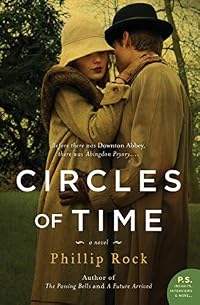
"From the countess to the chauffeur, the inhabitants of Abingdon Pryory seek to forget the past and adjust their lives to a new era in which old values, social codes, and sexual mores have been irretrievably swept away"--P. [4] of cover.Tags
Recommendations

























Member Reviews
Due to some complications with the shipping of the second and third books in this series, my tour dates got pushed back. As such it has been over a month since I read The Passing Bells. That's enough time for a lot of the little details to go rushing out of my head. Thankfully, who was who came back quite quickly. Circles of Time is just as enjoyable, both from a family drama perspective and a historical perspective as the first book in the series.
Fiction set during WWI and WWII abounds, but there's a definite shortage of works that bridge the gap between the two. Circles of Time covers the years 1921-1923, the post-war period in which Europe tries to rebuild and find its footing in this new world. The first half of the novel focuses show more primarily on the disconnect between the modern lifestyle of the 1920s and the old-fashioned values embodied by old estates and money, like Abingdon Pryory.
The conflict between modern sensibilities and tradition comes up in a lot of ways, especially in the romance. Where marriages of convenience, made for financial concerns or to obtain a title, ruled the upper classes before the war, more and more couples are marrying for love, even if it offends the family. Alexandra is the best example of this. Her marriage to a Scottish doctor just barely before she became pregnant resulted in a rift with her family, who cannot except that a lady would have an affair with a married man or almost have a child out of wedlock. Increasingly, love is winning out over social concerns. Romantic and family drama comprise most of the first half, and I found Alexandra's arc in particular quite touching.
In the postwar period, there's also a move towards the acknowledgement of just how awful the war was for everyone. War was once this glamorous thing, romanticized and considered an honorable death for a man. WWI, with its trench warfare and unbelievable death toll, was nothing but a mindless slaughter. Martin Rilke's story arc deals with the tension between those determined to cover up the senselessness of most of the fighting and those who think the truth should out.
The second half of Circles of Time changes gears to focus almost entirely on post WWI Germany, during the years of the unstable Weimar Republic, reparations, and Hitler's initial rise to prominence. The Weimar years are really sad, because France's desire for reparations destroyed the German economy, which printed off money like it was going out of style to pay the French. That brought about rampant inflation to the degree that money no longer had any meaning. The inflation resulted in desperation in the people, and the desire for a leader to make things better. Then came Hitler. I've not seen this period in fiction before, and, as it's one of my favorite eras to study, I loved reading about it here. However, those who are less into history will probably be disappointed in the change in tone and focus from the more Downton-esque first half.
For those who enjoyed The Passing Bells, Circles of Time will not be a disappointment. I'm excited to finish up the trilogy this week. show less
Fiction set during WWI and WWII abounds, but there's a definite shortage of works that bridge the gap between the two. Circles of Time covers the years 1921-1923, the post-war period in which Europe tries to rebuild and find its footing in this new world. The first half of the novel focuses show more primarily on the disconnect between the modern lifestyle of the 1920s and the old-fashioned values embodied by old estates and money, like Abingdon Pryory.
The conflict between modern sensibilities and tradition comes up in a lot of ways, especially in the romance. Where marriages of convenience, made for financial concerns or to obtain a title, ruled the upper classes before the war, more and more couples are marrying for love, even if it offends the family. Alexandra is the best example of this. Her marriage to a Scottish doctor just barely before she became pregnant resulted in a rift with her family, who cannot except that a lady would have an affair with a married man or almost have a child out of wedlock. Increasingly, love is winning out over social concerns. Romantic and family drama comprise most of the first half, and I found Alexandra's arc in particular quite touching.
In the postwar period, there's also a move towards the acknowledgement of just how awful the war was for everyone. War was once this glamorous thing, romanticized and considered an honorable death for a man. WWI, with its trench warfare and unbelievable death toll, was nothing but a mindless slaughter. Martin Rilke's story arc deals with the tension between those determined to cover up the senselessness of most of the fighting and those who think the truth should out.
The second half of Circles of Time changes gears to focus almost entirely on post WWI Germany, during the years of the unstable Weimar Republic, reparations, and Hitler's initial rise to prominence. The Weimar years are really sad, because France's desire for reparations destroyed the German economy, which printed off money like it was going out of style to pay the French. That brought about rampant inflation to the degree that money no longer had any meaning. The inflation resulted in desperation in the people, and the desire for a leader to make things better. Then came Hitler. I've not seen this period in fiction before, and, as it's one of my favorite eras to study, I loved reading about it here. However, those who are less into history will probably be disappointed in the change in tone and focus from the more Downton-esque first half.
For those who enjoyed The Passing Bells, Circles of Time will not be a disappointment. I'm excited to finish up the trilogy this week. show less
Circles of Time is the second book in The Passing Bells Trilogy. This book picks up a few years after the end of WWI as each of the characters the reader met in the first book struggles to adjust to life in a world turned upside down by a war that killed millions.
Abingdon Pryory is being rebuilt by Lord Greville exactly as it was before the war. He plans to move back there once the renovations are done despite the fact that Lady Greville does not seem as anxious to move back to the country and the large house. Especially since their son Charles is in hospital suffering from what we now know as post traumatic shock syndrome. Their daughter Alexandra is back in England from Canada after what they consider to be a disastrous life choice show more and Lord Greville barely acknowledges her presence. Fenton Wood-Lacy butt heads with the upper echelons of Her Majesty's Army and is being encouraged to retire but he wants no other job so he accepts a posting that is supposed to be the end of his career leaving his pregnant wife with their two daughters to await him in England.
But this book I think is truly Martin Rilke's tale. Having written his book which told the truth about the true horrors of the war he is finally ready to leave his wife's grave in France and come back to England and further his career in journalism. He is the driver of this part of the trilogy and he is the perfect linchpin being friends to most and related to the rest of the main characters. The book is told mostly through Martin's eyes - not all of it, but most of it.
Just as with The Passing Bells I found myself completely wrapped up in the lives of these characters. In some ways even more so because they were like old friends. I felt the pain of the loss of some of them and was horrified by the aftereffects of the war on the people and the countries. But peace was not to last forever as history showed us and this book ends just as Hitler is starting to spout his ugly rhetoric.
I've given this a slightly lower rating than The Passing Bells because of the last third of the book. Too much wrapped up much too quickly in my opinion. The first book and the beginning of this book was so rich in character and detail I felt that so much happened so quickly and without all of that wonderful attention to what the characters were feeling and to the history of the time. It's as if the author was just ready to move on to the next book and needed to tie up loose ends.
A minor complaint indeed when applied to the whole of story so far. I am very much looking forward to the finale in A Future Arrived. show less
Abingdon Pryory is being rebuilt by Lord Greville exactly as it was before the war. He plans to move back there once the renovations are done despite the fact that Lady Greville does not seem as anxious to move back to the country and the large house. Especially since their son Charles is in hospital suffering from what we now know as post traumatic shock syndrome. Their daughter Alexandra is back in England from Canada after what they consider to be a disastrous life choice show more and Lord Greville barely acknowledges her presence. Fenton Wood-Lacy butt heads with the upper echelons of Her Majesty's Army and is being encouraged to retire but he wants no other job so he accepts a posting that is supposed to be the end of his career leaving his pregnant wife with their two daughters to await him in England.
But this book I think is truly Martin Rilke's tale. Having written his book which told the truth about the true horrors of the war he is finally ready to leave his wife's grave in France and come back to England and further his career in journalism. He is the driver of this part of the trilogy and he is the perfect linchpin being friends to most and related to the rest of the main characters. The book is told mostly through Martin's eyes - not all of it, but most of it.
Just as with The Passing Bells I found myself completely wrapped up in the lives of these characters. In some ways even more so because they were like old friends. I felt the pain of the loss of some of them and was horrified by the aftereffects of the war on the people and the countries. But peace was not to last forever as history showed us and this book ends just as Hitler is starting to spout his ugly rhetoric.
I've given this a slightly lower rating than The Passing Bells because of the last third of the book. Too much wrapped up much too quickly in my opinion. The first book and the beginning of this book was so rich in character and detail I felt that so much happened so quickly and without all of that wonderful attention to what the characters were feeling and to the history of the time. It's as if the author was just ready to move on to the next book and needed to tie up loose ends.
A minor complaint indeed when applied to the whole of story so far. I am very much looking forward to the finale in A Future Arrived. show less
I really haven't been able to breath since starting these books, the three novels that make up Philip Rock's Passing Bells trilogy. I am in serious love. (See my review of the first book for the start of my swooning fit.)
This book has a much tighter time span -- 1921 to 1923 -- and starts a year after the first book ends. Life in Britain has changed: the 'Jazz Age' has dawned, and the public starts to accept a more open discussion of the events of World War I. Rock covers an array of details in this novel as in the first book; here, we learn about the development of engines for jet planes and the growing Fascist presence in Britain.
A good deal -- but not all -- of the characters from the first book return. As in life, some of the show more characters have come to terms with the losses from the war, while others are still in denial about it. Beautiful Alexandra, no longer flighty and superficial, must be married, according to her mother -- but the war decimated the population of marriageable men. Four members of the Abingdon Pryory staff were killed in the war, and what staff are there are new, men too old to have served. Chauffer Jamie is now a successful engineer, and Martin still travels Europe, reporting on the shifting political landscapes. (Rock has really honed in on his American journalist, Martin Rilke, as the main character of this saga, which kind of disappoints me because he's not my favorite. Which isn't to say he's not interesting or anything, but I'm far more fond of the women and their challenges.)
Oddly, even though the page count is similar to the first book, I feel like I saw 'less' of the characters than I did in The Passing Bells. Perhaps it's because Rock has narrowed his focus a little, keeping an eye on Martin, with the rest of the characters circling around that plot arc. (I'm hesitant to squee or wail about specific characters for fear of spoiling the story for anyone, so I apologize if this review seems super vague!)
Rock still has the habit of having some major events happen 'off the page', so to speak; we only learn of it when a character mentions it in passing. Which isn't to say the reader is denied emotion and drama -- that's to be found here, although less gutting than in the first book -- as we hurtle toward the 1930s, World War II, and a shifting focus from the parents to their children.
This could possibly be read as a standalone -- Rock recapped characters and plot quite frequently, which surprised me given that originally there had been only a year between the publishing of the first and second book. (Rock took four years between this book and the final book in the trilogy.) Still, for maximum oomph, pick up The Passing Bells before this one, and have a weekend, lots of tea, and tissues handy. show less
This book has a much tighter time span -- 1921 to 1923 -- and starts a year after the first book ends. Life in Britain has changed: the 'Jazz Age' has dawned, and the public starts to accept a more open discussion of the events of World War I. Rock covers an array of details in this novel as in the first book; here, we learn about the development of engines for jet planes and the growing Fascist presence in Britain.
A good deal -- but not all -- of the characters from the first book return. As in life, some of the show more characters have come to terms with the losses from the war, while others are still in denial about it. Beautiful Alexandra, no longer flighty and superficial, must be married, according to her mother -- but the war decimated the population of marriageable men. Four members of the Abingdon Pryory staff were killed in the war, and what staff are there are new, men too old to have served. Chauffer Jamie is now a successful engineer, and Martin still travels Europe, reporting on the shifting political landscapes. (Rock has really honed in on his American journalist, Martin Rilke, as the main character of this saga, which kind of disappoints me because he's not my favorite. Which isn't to say he's not interesting or anything, but I'm far more fond of the women and their challenges.)
Oddly, even though the page count is similar to the first book, I feel like I saw 'less' of the characters than I did in The Passing Bells. Perhaps it's because Rock has narrowed his focus a little, keeping an eye on Martin, with the rest of the characters circling around that plot arc. (I'm hesitant to squee or wail about specific characters for fear of spoiling the story for anyone, so I apologize if this review seems super vague!)
Rock still has the habit of having some major events happen 'off the page', so to speak; we only learn of it when a character mentions it in passing. Which isn't to say the reader is denied emotion and drama -- that's to be found here, although less gutting than in the first book -- as we hurtle toward the 1930s, World War II, and a shifting focus from the parents to their children.
This could possibly be read as a standalone -- Rock recapped characters and plot quite frequently, which surprised me given that originally there had been only a year between the publishing of the first and second book. (Rock took four years between this book and the final book in the trilogy.) Still, for maximum oomph, pick up The Passing Bells before this one, and have a weekend, lots of tea, and tissues handy. show less
For fans of Downton Abbey going through withdrawal, the rerelease of Phillip Rock's Abingdon Pryory trilogy is a welcome relief. The first novel, The Passing Bells, introduced us to the Greville family, owners of Abingdon Pryory, which is very similar to Downton. Sir Anthony has the title and his German-American wife Hannah has the money.
The first novel took us deep into WWI- the politics of war, the horrors of the fighting, the loss of vibrant young men and women. The second novel, Circles of Time, deals with the aftermath of the war, both personally and nationally.
Charles Greville is suffering from post-traumatic stress, as well as the effects of a tragedy he caused. Charles begins the novel living in a mental hospital and his family show more fears there may be no reaching him.
Charles' sister Alexandra is back home after losing her doctor husband to a heart attack. She brings their young son Colin back to Abingdon, but she too is lost in a cloud of sadness.
Jamie Ross is the Greville's former chauffeur who worked for a tank manufacturer during the war. Ross moved to America, started his own company building airplane engines and became wealthy. He returns to England on business and befriends Colin and Alexandra.
American cousin Martin lost his wife Ivy during the war and has thrown himself into his work as a journalist. He has written articles on how generals made bad decisions during the war that cost many British men their lives needlessly, and his views are riling feathers.
The first novel had more of a sense of urgency and drama to it because of the war. This second novel deals with the aftermath of the war on its participants and the society at large. So many changes came to Britain; the rigid class system was loosened. People from the working class, like Jamie, were able to use their skills and knowledge to advance their lot, something unheard of before the war.
The war also brought changes to the ruling class. Sir Anthony came to accept that his sons would not follow the career paths he laid out for them; they would follow their own ambitions and dreams. He even came to accept the path that Alexandra chooses to follow much more readily that the usually more practical Hannah. For goodness sake, Sir Anthony is even driving his own car by the end of the story!
One of the more interesting sections of the novel concerns the rise of the rise of the Nazi party in Germany. Martin returns to Germany, where he finds that the monetary reparations that Britain and France have imposed on Germany is impoverishing that country.
The people are starving, inflation is outrageous and certain politicians are exploiting this to further their cause. Martin uncovers information that an assassination is being planned and he tries to stop it. His German cousins are involved in this and he even meets Hitler at his family's home.
History buffs will once again be satisfied with this part of the story. We see how certain people in Britain did not want another war and were willing to ignore the rumblings of trouble in Germany. The generals were reluctant to face their culpability in the slaughters that occurred overseas and still do not want to modernize their equipment or strategy to deal with another possible looming war.
The last novel, Future Arrived, deals with the storm clouds of another war and the next generation's coming of age. I'm looking forward to continuing on this journey. show less
The first novel took us deep into WWI- the politics of war, the horrors of the fighting, the loss of vibrant young men and women. The second novel, Circles of Time, deals with the aftermath of the war, both personally and nationally.
Charles Greville is suffering from post-traumatic stress, as well as the effects of a tragedy he caused. Charles begins the novel living in a mental hospital and his family show more fears there may be no reaching him.
Charles' sister Alexandra is back home after losing her doctor husband to a heart attack. She brings their young son Colin back to Abingdon, but she too is lost in a cloud of sadness.
Jamie Ross is the Greville's former chauffeur who worked for a tank manufacturer during the war. Ross moved to America, started his own company building airplane engines and became wealthy. He returns to England on business and befriends Colin and Alexandra.
American cousin Martin lost his wife Ivy during the war and has thrown himself into his work as a journalist. He has written articles on how generals made bad decisions during the war that cost many British men their lives needlessly, and his views are riling feathers.
The first novel had more of a sense of urgency and drama to it because of the war. This second novel deals with the aftermath of the war on its participants and the society at large. So many changes came to Britain; the rigid class system was loosened. People from the working class, like Jamie, were able to use their skills and knowledge to advance their lot, something unheard of before the war.
The war also brought changes to the ruling class. Sir Anthony came to accept that his sons would not follow the career paths he laid out for them; they would follow their own ambitions and dreams. He even came to accept the path that Alexandra chooses to follow much more readily that the usually more practical Hannah. For goodness sake, Sir Anthony is even driving his own car by the end of the story!
One of the more interesting sections of the novel concerns the rise of the rise of the Nazi party in Germany. Martin returns to Germany, where he finds that the monetary reparations that Britain and France have imposed on Germany is impoverishing that country.
The people are starving, inflation is outrageous and certain politicians are exploiting this to further their cause. Martin uncovers information that an assassination is being planned and he tries to stop it. His German cousins are involved in this and he even meets Hitler at his family's home.
History buffs will once again be satisfied with this part of the story. We see how certain people in Britain did not want another war and were willing to ignore the rumblings of trouble in Germany. The generals were reluctant to face their culpability in the slaughters that occurred overseas and still do not want to modernize their equipment or strategy to deal with another possible looming war.
The last novel, Future Arrived, deals with the storm clouds of another war and the next generation's coming of age. I'm looking forward to continuing on this journey. show less
Circles of Time is the sequel to The Passing Bells. I have to say that I like this book just as much, if not more, than the first. The war is over and now begins the reconstruction not only of building, but also of lives. "The horizons have been expanded" in every direction. The line that divided the classes no longer existed. This is one of the major themes of this book: Exploring this new age. Once again the book focuses on Martin. He's from Chicago, but spent many years during the war as a journalist. He's written a book about the war that is getting a lot of publicity; both good and bad.
One of things I liked most about this book is that we learn a lot more about the Greville family through Martin. After the mental breakdown of their show more son Charles and the unconventional path led by their daughter Alexandria, the family is thrown into a sort of tailspin. The Greville family has always been set in their traditional ways. However with the tide of change they must learn to sink or swim.
Rock did an excellent job portraying the effect that the war had on people. The changes that England as well as many other countries went through. The horrors and the joys. This is a series I would recommend for anyone who enjoys shows like Downton Abbey, or books about World War I.
Read more at http://www.2readornot2read.com/2013/02/review-circles-of-time.html#E4vbMxtxyvDPj... show less
One of things I liked most about this book is that we learn a lot more about the Greville family through Martin. After the mental breakdown of their show more son Charles and the unconventional path led by their daughter Alexandria, the family is thrown into a sort of tailspin. The Greville family has always been set in their traditional ways. However with the tide of change they must learn to sink or swim.
Rock did an excellent job portraying the effect that the war had on people. The changes that England as well as many other countries went through. The horrors and the joys. This is a series I would recommend for anyone who enjoys shows like Downton Abbey, or books about World War I.
Read more at http://www.2readornot2read.com/2013/02/review-circles-of-time.html#E4vbMxtxyvDPj... show less
Fantastic read - this was written in the early 80s and the writing is spare and the characters are deeply developed - my favorite type of novel. Can't wait for the third book in the trilogy but must read Z (Zelda Fitzgerald) first for a book club.
Ratings
Members
- Recently Added By
Author Information

22+ Works 596 Members
Series

Work Relationships
Common Knowledge
- Canonical title
- Circles of Time
- Original publication date
- 1981
- Dedication
- For Charlotte Wolfers
Death is a sleep.
Classifications
Statistics
- Members
- 142
- Popularity
- 229,694
- Reviews
- 6
- Rating
- (4.00)
- Languages
- English, Swedish
- Media
- Paper, Ebook
- ISBNs
- 9
- ASINs
- 3