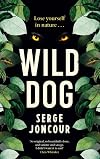
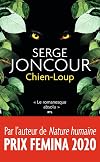
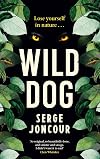
Chien-Loup
by Serge Joncour
On This Page
Description
[A] deservedly award-studded delight Strong Words Magazine 'A smart, scathing and bleakly funny cross of folk horror, satire and historical fiction' Toronto Star 'Reads like a modern fairy tale'New York Journal of Books 'Eerie and sensual' The Guardian 'So original, so beautifully done, and sinister and savage. I didn't want it to end' Chris Whitaker Franck and Lise, a French couple in the film industry, rent a cottage in the quiet hills of the French Lot to get away from the show more stresses of modern life. In this remote corner of the world, there is no phone signal. A mysterious dog emerges, looking for a new master. Ghosts of a dark past run wild in these hills, where a German lion tamer took refuge in the First World War ... Franck and Lise are confronted with nature at its most brutal. And they are about to discover that man and beast have more in common than they think. A literary sensation in France, Wild Dog is a dark, menacing tale of isolation, human nature and the infinite savagery of the wild. show lessTags
Recommendations


















Member Reviews
A well translated mystery – or is it contemporary fiction? There’s one mystery, but it’s not a who-dunnit, it’s simply what happened to the people who owned and who own the house on the hill above an abandoned village. There are two stories in alternating chapters, the first, the mystery which takes place in 1914 and 1915 and the second story, which takes place in 2017 when a couple rent the house for three weeks.
There is quite a bit of buildup on both stories, as jealousy, meat shortages, WWI, and unexpected love occur in the first and the evolution of the man from town-dwelling-cellphone-wielding producer to cunning adversary in the second. There are some beautiful descriptions and interesting perspectives on how people show more reacted to the Great War early on in a small village and interesting perspectives on Lise and Franck’s marriage and what motivates each in the isolation of the house on the hill. I couldn’t imagine how each story would resolve, which kept me reading although there was such detail and focus that it had to be read with deliberation and a slow pace in order to fully appreciate the nuances. show less
There is quite a bit of buildup on both stories, as jealousy, meat shortages, WWI, and unexpected love occur in the first and the evolution of the man from town-dwelling-cellphone-wielding producer to cunning adversary in the second. There are some beautiful descriptions and interesting perspectives on how people show more reacted to the Great War early on in a small village and interesting perspectives on Lise and Franck’s marriage and what motivates each in the isolation of the house on the hill. I couldn’t imagine how each story would resolve, which kept me reading although there was such detail and focus that it had to be read with deliberation and a slow pace in order to fully appreciate the nuances. show less
 This review was written for LibraryThing Early Reviewers.
This was much better than I was expecting. The story was interesting and the ending wasn't entirely predictable. I'm not usually a fan of the two stories from different eras that end up meeting up at the end, especially if one of those stories is modern and the other from WWI or WWII, but for this book it worked well. Overall I enjoyed it and am glad to have received an early copy.
This review was written for LibraryThing Early Reviewers.It's difficult for me to judge a translated work because I don't necessarily know which aspects are inherent to the original text. In this case I was definitely conscious the entire time that I was reading a translation -- in many places it felt clunky and occasionally even incomprehensible. (That's not to suggest it's all bad. There were also some really beautiful moments in the text, eg "They paced nervously up and down in a sort of symmetrical dance, the choreography of famished beasts.") I also felt that the story itself was rather repetitive. I love a good slow burn (and I also like unlikable characters!), but just because the action is taking a long time to build doesn't mean I need to hear the characters' motivations repeated show more endlessly. I almost think this story might work better as a slow film, where strategic silence could be used effectively in place of such circular storytelling. The plot itself had a strong appeal for me and I would like to find a copy in the original French to see the difference. show less
This review was written for LibraryThing Early Reviewers.Disclaimer: I won an ARC via a giveaway on Librarything. I am also reading the book in translation.
Franck and his wife Lise go the middle of nowhere to spend time away, and as always in these situations, thing happen. Some of the things are tied to what happened in the same area over 100 years, during the first World War. That is the start of the novel which unfolds in 2017 and 1915.
The book has strong promise, yet doesn’t quite live up to it. The biography of Joncour indicts that he is a screenwriter, and this book does almost beg to made into a film or mini-series. To be honest, for a thriller, the book isn’t that thrilling. While I never want to not finish the book, it was a book you could quite easily put down and walk away show more from for quite a bit. (In half the amount of time it took me to read this 300+ page book, I made 200+ pages into different book).
Part of this is the structure. While the dual narratives do provide or provoke curiosity, the two timelines are not equally interesting. The 1915 narrative was the strong of the two. Part of this has to do with the better sense of setting and place. Another reason is that the characters and the situation were more compelling. The 1915 narrative concerns the town during the war as well as the strange German who takes shelter in the area. He has five big cats. And how exactly does he feed them?
The 2017 narrative about Lise and Franck pales a bit in comparison. Part of this is because the sense of place is not as acute. This could be in part because such a strong sense is done in the 1915 sections. However, given the 100 years difference in time period, the sense of place would have changed somewhat, gotten spookier or something. Yet this does not get much description. Additionally, the modern narrative at first sounds like it is going to be Lise’s, but than it becomes almost solely Franck’s. Lise becomes a presence, not even a Muse, though it almost seems like she was/is intended to be one.
This isn’t to say that Josephine, the woman from the 1915 narrative is much better. If Joncour had mention her attractiveness one more time, especially in how she thought about it, I was going to smack the nearest person up side the head. Despite this, Josephine is still more of a character than Lise, who just seems to be there.
Franck who controls and dominates the modern narrative, isn’t all that developed either. The change in him doesn’t quite work, though it is central to the plot. And the dog. I get the dog and the symbolism. But the dog doesn’t quite work either, even if you see it has a symbol of the half wild state that we should be.
That said, it isn’t a bad book. There are good passages. You do have some curiosity about what happens. The 1915 sections are very good. The idea has promise. It just doesn’t quite gel. show less
Franck and his wife Lise go the middle of nowhere to spend time away, and as always in these situations, thing happen. Some of the things are tied to what happened in the same area over 100 years, during the first World War. That is the start of the novel which unfolds in 2017 and 1915.
The book has strong promise, yet doesn’t quite live up to it. The biography of Joncour indicts that he is a screenwriter, and this book does almost beg to made into a film or mini-series. To be honest, for a thriller, the book isn’t that thrilling. While I never want to not finish the book, it was a book you could quite easily put down and walk away show more from for quite a bit. (In half the amount of time it took me to read this 300+ page book, I made 200+ pages into different book).
Part of this is the structure. While the dual narratives do provide or provoke curiosity, the two timelines are not equally interesting. The 1915 narrative was the strong of the two. Part of this has to do with the better sense of setting and place. Another reason is that the characters and the situation were more compelling. The 1915 narrative concerns the town during the war as well as the strange German who takes shelter in the area. He has five big cats. And how exactly does he feed them?
The 2017 narrative about Lise and Franck pales a bit in comparison. Part of this is because the sense of place is not as acute. This could be in part because such a strong sense is done in the 1915 sections. However, given the 100 years difference in time period, the sense of place would have changed somewhat, gotten spookier or something. Yet this does not get much description. Additionally, the modern narrative at first sounds like it is going to be Lise’s, but than it becomes almost solely Franck’s. Lise becomes a presence, not even a Muse, though it almost seems like she was/is intended to be one.
This isn’t to say that Josephine, the woman from the 1915 narrative is much better. If Joncour had mention her attractiveness one more time, especially in how she thought about it, I was going to smack the nearest person up side the head. Despite this, Josephine is still more of a character than Lise, who just seems to be there.
Franck who controls and dominates the modern narrative, isn’t all that developed either. The change in him doesn’t quite work, though it is central to the plot. And the dog. I get the dog and the symbolism. But the dog doesn’t quite work either, even if you see it has a symbol of the half wild state that we should be.
That said, it isn’t a bad book. There are good passages. You do have some curiosity about what happens. The 1915 sections are very good. The idea has promise. It just doesn’t quite gel. show less
This review was written for LibraryThing Early Reviewers.The premise is interesting, but the story execution was (except for some flashes of brilliant imagery that made me sad for what might have been) tedious-to-ridiculous. The author seems to have had an idea for a story that didn't quite work. I kept wanting to edit the story as I read, and that is never a good sign. Too much of the story line depends on a dog that behaves in unbelievable, non-doggish ways. The alternating stories from different times distracted from one another. I would have preferred the entire novel to be about the older story line, as it was far more interesting. I can’t recommend it.
This review was written for LibraryThing Early Reviewers.oh I did not like this book. I gave it two stars because the writing was very readable. However, I hated one of the main characters. He did illogical things only to think seconds later, oh I shouldn't have done that. Then he goes on to do even crazier things. It just seemed implausible and I didn't care about any of the characters, even the dog. I usually love dog characters.
This review was written for LibraryThing Early Reviewers.This started out promising, but quickly devolved. First, it seemed like the main character switched (or at least wasn't established well). I thought the protagonist was the wife, but it ended up being the husband. The husband was unlikeable in so many ways and the story's progression made little sense. How quickly the protagonist devolved just didn't make sense. You'd think it took place over the course of months, but I'm pretty sure it was literally days (for the contemporary arc of the story). The ending was so rushed too - it just seems it wasn't planned out for both the past and present storyline.
This review was written for LibraryThing Early Reviewers.Members
- Recently Added By
Author Information

22 Works 396 Members
Awards and Honors
Common Knowledge
- Important places*
- le Lot, France
- Original language
- French
*Some information comes from Common Knowledge in other languages. Click "Edit" for more information.
Classifications
- Genres
- Fiction and Literature, General Fiction, Suspense & Thriller
- DDC/MDS
- 843.914 — Literature & rhetoric French Literature French fiction 1900- 20th Century 1945-1999
- LCC
- PQ2670 .O475 .C4513 — Language and Literature French, Italian, Spanish and Portuguese literatures French literature Modern literature 1961-2000
- BISAC
Statistics
- Members
- 57
- Popularity
- 538,166
- Reviews
- 12
- Rating
- (3.22)
- Languages
- English, French
- Media
- Paper, Ebook
- ISBNs
- 7
- ASINs
- 3