On This Page
Description
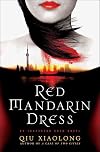
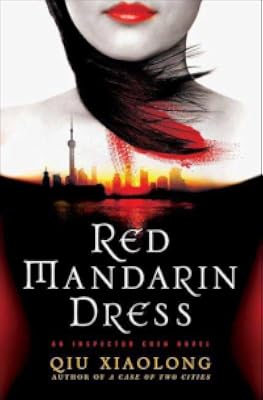
Chief Inspector Chen Cao of the Shanghai Police Department finds himself caught up in a dangerous case when the bodies of two young women dressed in identical red mandarin dresses turn up, igniting fears of the city's first sexual serial killer.Tags
Recommendations

























Member Reviews
The beginning of this installment in the series started off a bit slowly for me, I suspect because of the time spent with characters other than Chen himself. I don't enjoy being attached to the other characters so much, especially when it comes to Yu and his wife, and for a while it felt as if they were actually going to be the focus here more so than Chen. By the midway point, though, the book evened out for me and felt more like earlier works in the series, so that I could get lost in Chen's investigation and other concerns. I wouldn't say this is the strongest in the series for me, but I still enjoyed it and look forward to reading more of the series.
Much More Than Just a Mystery Novel Set in Shanghai: To the ranks of such modern-day fictional detectives as Martin Cruz Smith's Arkady Renko and P.D. James's Adam Dalgliesh, add Qiu Xiaolong's Inspector Chen. RED MANDARIN DRESS presents Qiu's irrepressible Shanghai police inspector in his fifth crime novel along with his familiar cast of side characters from those earlier works. Like Arkady Renko, Chen is a loner and a thinker, a dogged deducer and a clever intuitionist whose case approach marks him as idiosynchratic among his peers. Like Renko, Chen lives alone, dresses somewhat lackadaisically, appeases his superiors just enough so he can ignore them, and generally follows the proverbial beat of his own drummer. Like Adam Dalgliesh, show more Chen is a literary detective, well educated and given to studying and writing poetry.
RED MANDARIN DRESS opens with the appearance of a young woman's murdered body, found posed in a flowerbed on a very public Shanghai street. The dead woman, Jasmine, was a hotel worker, living an utterly nondescript life, but she is found wearing a torn red mandarin dress, usually called a qipao or cheongsam, in the classic Chinese style: high collar, full length, body hugging, side slit to the thigh. Hers is a vintage design, however, dating back to the days before the Cultural Revolution. Exactly one week later, another young woman is found murdered, dressed the same way and left in another very public Shanghai location. Another week passes, and a third body appears, and then a fourth, one of Chen's associates who had agreed to work undercover. At the same time Shanghai is gripped by its first publicly reported serial murder case, Inspector Chen is asked to follow another case involving public corruption in a real estate development. He is also experiencing a sort of dual existential and career crisis. Should he continue as a police detective or return to his first intellectual love, Tang Dynasty poetry, for which he is trying to write a paper analyzing the treatment of women in three such poems?
As the detective story moves inexorably toward its climactic face-off between Chen and the murderer, Qiu treats the reader with a fascinating introduction to Tang Dynasty poetry, a core element of Chinese culture. He juxtaposes Chen's paper's theme of "thirsty illness," a literal reference to diabetes but a metaphorical reference to romantic love, with the killer's own thirsty illness for revenge. Along the way, Qiu inserts additional elements of decidedly non-Chinese Freudian psychological theory into Chen's search for a serial killer's motives. Chen is no Sherlock Holmes, magically pulling a rabbit out of a hatful of clues; rather, he is more bloodhound, catching a faint scent and following it determinedly to its eventful conclusion.
What makes Qiu Xiaolong's stories stand out as more than just mystery novels is his exemplary folding of Chinese history abd culture into his work. References to Tang Dynasty poetry and the mass criticism of Wang Guangmei (as wife of President Liu Shaoqi, China's "First Lady") during the Cultural Revolution bring elements of those eras to life and introduce the reader to their place in the Chinese psyche. Inspector Chen's interactions with other characters exemplify such fascinating aspects of Chinese life as the importance of connections (guangxi) and the exchanging of favors. Qiu delves as well into the mystique of Chinese/Asian women as threatening to men, the predatory femme fatale. The role of food in Chinese culture also plays a major role in RED MANDARIN DRESS, including the book's climax that takes place over what has to be one of literature's strangest dinner menus.
Readers may want to take special note of this book's dedication: "To my elder brother, Xiaowei - but for luck, what happened to him during the Cultural Revolution could have happened to me." It is more than coincidental that this line repeats itself at the end of Chapter 30. Qiu Xiaolong, who has lived in the United States since 1989 and writes his stories in English, lived through those dark days of Mao's rule. As he writes on his website, his family had a 1960's magazine with a photo of a young boy and his mother, dressed in a red qipao, looking off into a glorious horizon above the caption, "Mother, Let's Go There." Qiu notes that he sometimes identified himself with the young boy from that picture and later wondered what happened to mother and son during the Cultural Revolution and beyond. Thus the kernel of the story line for RED MANDARIN DRESS, as much a fascinating literary and cultural study of past and present China as it is a first-rate mystery novel. Highly recommended even for those, like me, who are not avid fans of mystery stories. show less
RED MANDARIN DRESS opens with the appearance of a young woman's murdered body, found posed in a flowerbed on a very public Shanghai street. The dead woman, Jasmine, was a hotel worker, living an utterly nondescript life, but she is found wearing a torn red mandarin dress, usually called a qipao or cheongsam, in the classic Chinese style: high collar, full length, body hugging, side slit to the thigh. Hers is a vintage design, however, dating back to the days before the Cultural Revolution. Exactly one week later, another young woman is found murdered, dressed the same way and left in another very public Shanghai location. Another week passes, and a third body appears, and then a fourth, one of Chen's associates who had agreed to work undercover. At the same time Shanghai is gripped by its first publicly reported serial murder case, Inspector Chen is asked to follow another case involving public corruption in a real estate development. He is also experiencing a sort of dual existential and career crisis. Should he continue as a police detective or return to his first intellectual love, Tang Dynasty poetry, for which he is trying to write a paper analyzing the treatment of women in three such poems?
As the detective story moves inexorably toward its climactic face-off between Chen and the murderer, Qiu treats the reader with a fascinating introduction to Tang Dynasty poetry, a core element of Chinese culture. He juxtaposes Chen's paper's theme of "thirsty illness," a literal reference to diabetes but a metaphorical reference to romantic love, with the killer's own thirsty illness for revenge. Along the way, Qiu inserts additional elements of decidedly non-Chinese Freudian psychological theory into Chen's search for a serial killer's motives. Chen is no Sherlock Holmes, magically pulling a rabbit out of a hatful of clues; rather, he is more bloodhound, catching a faint scent and following it determinedly to its eventful conclusion.
What makes Qiu Xiaolong's stories stand out as more than just mystery novels is his exemplary folding of Chinese history abd culture into his work. References to Tang Dynasty poetry and the mass criticism of Wang Guangmei (as wife of President Liu Shaoqi, China's "First Lady") during the Cultural Revolution bring elements of those eras to life and introduce the reader to their place in the Chinese psyche. Inspector Chen's interactions with other characters exemplify such fascinating aspects of Chinese life as the importance of connections (guangxi) and the exchanging of favors. Qiu delves as well into the mystique of Chinese/Asian women as threatening to men, the predatory femme fatale. The role of food in Chinese culture also plays a major role in RED MANDARIN DRESS, including the book's climax that takes place over what has to be one of literature's strangest dinner menus.
Readers may want to take special note of this book's dedication: "To my elder brother, Xiaowei - but for luck, what happened to him during the Cultural Revolution could have happened to me." It is more than coincidental that this line repeats itself at the end of Chapter 30. Qiu Xiaolong, who has lived in the United States since 1989 and writes his stories in English, lived through those dark days of Mao's rule. As he writes on his website, his family had a 1960's magazine with a photo of a young boy and his mother, dressed in a red qipao, looking off into a glorious horizon above the caption, "Mother, Let's Go There." Qiu notes that he sometimes identified himself with the young boy from that picture and later wondered what happened to mother and son during the Cultural Revolution and beyond. Thus the kernel of the story line for RED MANDARIN DRESS, as much a fascinating literary and cultural study of past and present China as it is a first-rate mystery novel. Highly recommended even for those, like me, who are not avid fans of mystery stories. show less
When Shanghai’s Chief Inspector Chen is asked to look into a politically charged corruption case, he begs off with the excuse that his studies for his literature course won’t give him enough time for it. He’s been meaning to enroll in a literature course, so what better time than now? Chen’s course also keeps him away from headquarters as his colleagues investigate a serial murder case in which the victims are found wearing red mandarin dresses. Even though he is officially on leave, Chen works behind the scenes to help his partner Yu identify and catch the serial killer.
I didn’t enjoy this series installment as much as I’ve liked earlier books in the series. It’s been several years since I read the last book in this show more series, but Chen seemed more impulsive than the Chen I remembered. It seems surprising that Chen could decide to take a leave of absence or go on vacation without letting his employer know what he was doing. This book didn’t include as much poetry as I remember from previous books in the series, but classical Chinese literature is more prominent in this one. I didn’t enjoy the descriptions of food, particularly the “cruel dishes”. There wasn’t enough of Yu’s wife, Peiqin, a sharp woman whose insight is often helpful in investigations, and Yu’s father, Old Hunter, only appears at the other end of a telephone and readers don’t even get to hear his voice.
I liked the historical antecedents of the crime in China’s Cultural Revolution, and what amounts to an insider’s perspective of that era. Chen’s reflections on the differences between between Chinese culture and philosophy and Western culture and Freudian psychology were also interesting. show less
I didn’t enjoy this series installment as much as I’ve liked earlier books in the series. It’s been several years since I read the last book in this show more series, but Chen seemed more impulsive than the Chen I remembered. It seems surprising that Chen could decide to take a leave of absence or go on vacation without letting his employer know what he was doing. This book didn’t include as much poetry as I remember from previous books in the series, but classical Chinese literature is more prominent in this one. I didn’t enjoy the descriptions of food, particularly the “cruel dishes”. There wasn’t enough of Yu’s wife, Peiqin, a sharp woman whose insight is often helpful in investigations, and Yu’s father, Old Hunter, only appears at the other end of a telephone and readers don’t even get to hear his voice.
I liked the historical antecedents of the crime in China’s Cultural Revolution, and what amounts to an insider’s perspective of that era. Chen’s reflections on the differences between between Chinese culture and philosophy and Western culture and Freudian psychology were also interesting. show less
Qiu's "Inspector Chen" series are masterful, multi-textured mysteries, combining good mysteries in the context of socio-economic upheavel in the 1990s and Chen's deep interest in classical Chinese poetry and his CCP affiliation. This novel mixes a serial murderer and a thuggish real estate scam within a background of Cultural Revolution insanity and Party insider pay-offs. The Western psychology motif is weak and some of the "cruel" dining scenes seem drawn from Unmentionable Cuisine, but a delight to read for the continuing insights into Chinese society.
Newspapers went wild with theories. No murderer would have dumped a body in such a dress, at such a location, without some reason. One reporter saw it pointing at the Shanghai Music Institute, located across the street opposite the flower bed. One deemed it a political case, a protest against the reversal of values in socialist China, for the mandarin dress, once condemned as a sign of capitalist decadence, had become popular again. A tabloid magazine went further, speculating that the murder had been orchestrated by a fashion industry tycoon. Ironically, one result of the media coverage was that several stores immediately displayed new lines of mandarin dresses in their windows.
"Red Mandarin Dress" is set in the 1990s, at a time when show more China is in transition, undergoing rapid social and economic change. The Big Bucks are making obscene amounts of money while the poor are getting poorer, corruption is rife and the police can no longer rely on neighbourhood committee membersknowing every detail of the lives of people living in their areas.
When a young woman clad only in a red mandarin dress is found dead by a main road in Shanghai, followed a week later by the discovery of a second body in an equally prominent spot, there is no way for the authorities to hush it up even though their position has always been that there are no serial killers in China. As psychology was frowned on until recently, the police are forced to begin by discussing the serial killers they have read about in Western novels, before managing to get their hands on some psychology text books.
Chief Inspector Chen, who is a poet as well as a policeman, is off work for a few weeks doing a literature course, leaving Detective Yu in charge when their team is handed the case after the second murder, but he is soon drawn into the case. Both Chen's girlfriend White Flower and Yu's wife Peiqin help out unofficially, with White Flower researching Mandarin dresses while Peiqin finds out about the lives of the 'three-accompanying girls' (a euphemism for prostitutes) via her contacts in the restaurant trade.
It makes a nice change to read a murder-mystery set in such a different culture. show less
"Red Mandarin Dress" is set in the 1990s, at a time when show more China is in transition, undergoing rapid social and economic change. The Big Bucks are making obscene amounts of money while the poor are getting poorer, corruption is rife and the police can no longer rely on neighbourhood committee membersknowing every detail of the lives of people living in their areas.
When a young woman clad only in a red mandarin dress is found dead by a main road in Shanghai, followed a week later by the discovery of a second body in an equally prominent spot, there is no way for the authorities to hush it up even though their position has always been that there are no serial killers in China. As psychology was frowned on until recently, the police are forced to begin by discussing the serial killers they have read about in Western novels, before managing to get their hands on some psychology text books.
Chief Inspector Chen, who is a poet as well as a policeman, is off work for a few weeks doing a literature course, leaving Detective Yu in charge when their team is handed the case after the second murder, but he is soon drawn into the case. Both Chen's girlfriend White Flower and Yu's wife Peiqin help out unofficially, with White Flower researching Mandarin dresses while Peiqin finds out about the lives of the 'three-accompanying girls' (a euphemism for prostitutes) via her contacts in the restaurant trade.
It makes a nice change to read a murder-mystery set in such a different culture. show less
This is the fifth volume of the Inspector Chen series. As so often, I started in the middle of a series. A couple of years ago, I've already read volume six. It will probably be time to read the next time band one.
The story takes place in Shanghai. Chief Inspector Chen devotes himself to the time of Chinese literature and leaves his crew in charge, but without him, it does not go. As with the last book I read, I learned a lot about Chinese history before, during and after the revolution. Prostitution is forbidden, but under the cover of a kind of escort service everything is possible for paying guests. Weekly, murdered women are found wearing a traditional red mandarin dress. For Shanghai the first serial killer case. While Chen's team show more is determined in all directions, Chen is more likely to hit the right track by chance.
Of course the tradition of Chinese food is of great importance. Great dishes are served according to old tradition, which we would not eat in part.
I like this kind of crime in a foreign culture. show less
The story takes place in Shanghai. Chief Inspector Chen devotes himself to the time of Chinese literature and leaves his crew in charge, but without him, it does not go. As with the last book I read, I learned a lot about Chinese history before, during and after the revolution. Prostitution is forbidden, but under the cover of a kind of escort service everything is possible for paying guests. Weekly, murdered women are found wearing a traditional red mandarin dress. For Shanghai the first serial killer case. While Chen's team show more is determined in all directions, Chen is more likely to hit the right track by chance.
Of course the tradition of Chinese food is of great importance. Great dishes are served according to old tradition, which we would not eat in part.
I like this kind of crime in a foreign culture. show less
This is a very interesting book. An accupuncturist from Shanghai recommended that I read it. I have been hooked on detective and mystery novels for a while. This book is interesting in that it is placed in post-Cultural Revolution China of the 1990's. Female bodies begin turning up in public locations, dressed in vintage Red Mandarin-style dresses. Chief Inspector Chen, uses his wits, knowledge of Western psychology and burgeoning use of profiling to solve this case. There is a smaller case he is involved in, and the two become entwined. The reader should beware, there are some very graphic descriptions of food preparation that are not pleasant. They only turn up in a couple of places, but it is not pleasant. Overall, the book is show more interesting and kept my attention through to the twist at the ending. The author uses the post-Cultural Revolution to his advantage. Also employed is the fact that in Comuninst China, things such as serial killing, profiling and psychology do not "exist." Chief Inspector Chen has to use these in a manner that will not reach the eyes and ears of his superiors. Adding to the twists in the book is the mini-nervous breakdown he suffers. But, this is not a ploy. While recovering, his mind is free to work in the subconcious to sort out the details of the mystery of the Red Mandarin Dress. show less
Members
- Recently Added By
Lists

Best Fiction Set in China
43 works; 27 members

Books Read in 2017
4,249 works; 129 members
Author Information

43+ Works 5,385 Members
Qiu Xiaolong teaches Chinese Literature at Washington University.
Series

Belongs to Publisher Series
Points (Policier, 1939)
Work Relationships
Has the adaptation
Common Knowledge
- Canonical title
- Red Mandarin Dress
- Original title
- Red Mandarin Dress
- Alternate titles*
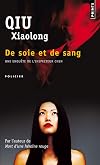
- De soie et de sang - Une enquête de l'inspecteur Chen
- Original publication date
- 2007
- People/Characters
- Chen Cao (Chief Inspector); Yu (Detective)
- Important places
- Shanghai, China
- Dedication
- To my elder brother, Xiaowei--
but for luck, what happened to him during the Cultural Revolution could have happened to me. - First words
- Running along West Huaihai Road, his breath foggy under the fading stars, Worker Master Huang counted himself as one of the earliest birds in Shanghai.
- Last words
- (Click to show. Warning: May contain spoilers.)I'm damned, Yu said, shaking his head like a rattle drum.
- Publisher's editor
- Keith Kahla
- Original language
- English
*Some information comes from Common Knowledge in other languages. Click "Edit" for more information.
Classifications
Statistics
- Members
- 529
- Popularity
- 56,751
- Reviews
- 19
- Rating
- (3.58)
- Languages
- 7 — English, Finnish, French, German, Italian, Norwegian (Bokmål), Spanish
- Media
- Paper, Ebook
- ISBNs
- 29
- ASINs
- 6