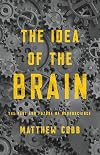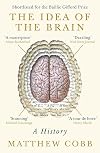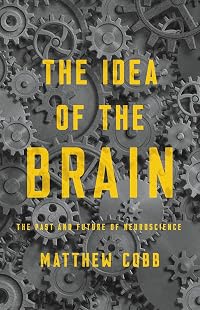
The Idea of the Brain: The Past and Future of Neuroscience
by Matthew Cobb
On This Page
Description
"For thousands of years, thinkers and scientists have tried to understand what the brain does. Yet, despite the astonishing discoveries of science, we still have only the vaguest idea of how the brain works. In The Idea of the Brain, scientist and historian Matthew Cobb traces how our conception of the brain has evolved over the centuries. Although it might seem to be a story of ever-increasing knowledge of biology, Cobb shows how our ideas about the brain have been shaped by each era's most show more significant technologies." -- Amazon.com show lessTags
Recommendations








Member Reviews
The Publisher Says: A powerful examination of what we think we know about the brain and why—despite technological advances—the workings of our most essential organ remain a mystery.
For thousands of years, thinkers and scientists have tried to understand what the brain does. Yet, despite the astonishing discoveries of science, we still have only the vaguest idea of how the brain works.
In The Idea of the Brain, scientist and historian Matthew Cobb traces how our conception of the brain has evolved over the centuries. Although it might seem to be a story of ever-increasing knowledge of biology, Cobb shows how our ideas about the brain have been shaped by each era's most significant technologies. Today we might think the brain is like a show more supercomputer. In the past, it has been compared to a telegraph, a telephone exchange, or some kind of hydraulic system. What will we think the brain is like tomorrow, when new technology arises? The result is an essential read for anyone interested in the complex processes that drive science and the forces that have shaped our marvelous brains.
I RECEIVED A DRC FROM THE PUBLISHER VIA NETGALLEY. THANK YOU.
My Review: The brain...the thing that is translating these geometric shapes on a screen into words, ideas, thoughts...is weirdly pulled apart and put together again in our age of tecnological marvels, yet lacking a paradigmatic metaphor. The many paradigms that we've fitted around our brains since we figured out the ancient system of thinking that had the heart at the center of intellect worked fine...until they broke trying to explain new data on brain function.
Well, you might think, so what? They're metaphors, not facts.
That's true as far as it goes. The role of a paradigmatic metaphor, like the best we have today of a supercomputer, isn't just to provide useful handles to grasp the still-elusive overarching explanation of what, how, and why the brain is and does. Thomas Kuhn, philosopher of science, said (in essence) that paradigms work until they don't and until new paradigms emerge, progress stalls.
That is where we stand now, atop a mountain of recently acquired data that blows up the supercomputer metaphor, but without another paradigmatic metaphor to shift to. We need, in short, another great leap forward like Darwin's theory of evolution was for millennia of accumulated biological data, to help us see how this immense pile of information can be turned into a fuller and more useful understanding of the brain and its processes.
While this is not the most fluffy and amusing read of 2023, it was deeply informative and very much an eye-opener. I had thought the neurologists were much farther behind the other sciences than they, in fact, are...much has been learned with the existence of fMRI machines and the technological like. The downside of these sorts of advances come when the private sector steps in to monetize the discoveries. They have no interest in helping people with the tech advances unless there's profit in it. The story of a severely epileptic woman whose life was completely changed by a brain implant being developed by a start-up, which then went bust, and the device (patent-protected) was permanently turned off, was particularly illustrative of the issue's costs.
Readable, informative, trenchant. Not easy to digest, but repays the effort put in with a very expanded view of whre science has come after its explosive beginnigs. Made me eager to see what comes next.
If, that is, I live that long...look how long it was between Linnaeus inventing the idea of species and Darwin explaining how they came to be in the first place. show less
For thousands of years, thinkers and scientists have tried to understand what the brain does. Yet, despite the astonishing discoveries of science, we still have only the vaguest idea of how the brain works.
In The Idea of the Brain, scientist and historian Matthew Cobb traces how our conception of the brain has evolved over the centuries. Although it might seem to be a story of ever-increasing knowledge of biology, Cobb shows how our ideas about the brain have been shaped by each era's most significant technologies. Today we might think the brain is like a show more supercomputer. In the past, it has been compared to a telegraph, a telephone exchange, or some kind of hydraulic system. What will we think the brain is like tomorrow, when new technology arises? The result is an essential read for anyone interested in the complex processes that drive science and the forces that have shaped our marvelous brains.
I RECEIVED A DRC FROM THE PUBLISHER VIA NETGALLEY. THANK YOU.
My Review: The brain...the thing that is translating these geometric shapes on a screen into words, ideas, thoughts...is weirdly pulled apart and put together again in our age of tecnological marvels, yet lacking a paradigmatic metaphor. The many paradigms that we've fitted around our brains since we figured out the ancient system of thinking that had the heart at the center of intellect worked fine...until they broke trying to explain new data on brain function.
Well, you might think, so what? They're metaphors, not facts.
That's true as far as it goes. The role of a paradigmatic metaphor, like the best we have today of a supercomputer, isn't just to provide useful handles to grasp the still-elusive overarching explanation of what, how, and why the brain is and does. Thomas Kuhn, philosopher of science, said (in essence) that paradigms work until they don't and until new paradigms emerge, progress stalls.
That is where we stand now, atop a mountain of recently acquired data that blows up the supercomputer metaphor, but without another paradigmatic metaphor to shift to. We need, in short, another great leap forward like Darwin's theory of evolution was for millennia of accumulated biological data, to help us see how this immense pile of information can be turned into a fuller and more useful understanding of the brain and its processes.
While this is not the most fluffy and amusing read of 2023, it was deeply informative and very much an eye-opener. I had thought the neurologists were much farther behind the other sciences than they, in fact, are...much has been learned with the existence of fMRI machines and the technological like. The downside of these sorts of advances come when the private sector steps in to monetize the discoveries. They have no interest in helping people with the tech advances unless there's profit in it. The story of a severely epileptic woman whose life was completely changed by a brain implant being developed by a start-up, which then went bust, and the device (patent-protected) was permanently turned off, was particularly illustrative of the issue's costs.
Readable, informative, trenchant. Not easy to digest, but repays the effort put in with a very expanded view of whre science has come after its explosive beginnigs. Made me eager to see what comes next.
If, that is, I live that long...look how long it was between Linnaeus inventing the idea of species and Darwin explaining how they came to be in the first place. show less
Brilliant. One of the best science books in my recent reading. Spans the whole story from the Greeks to the present, with deep insights into the difficulties, complexities and continuities in the research. The delicate and sometimes misguided balance between theory and evidential research, concluding with an essay on today's frontiers. Conclusions are rather pessimistic: we'll not get to the bottom of the problem, especially the nature and basis of consciousness in the foreseeable, if ever. Incidentally he does not attempt to define "consciousness". Intriguing how different metaphors have been applied at different times, steam engine, telephone exchange, computer - the last chapters very much about how the brain is NOT like a computer. show more Its complexity is mind-boggling if that term is allowed: millions of items , miles of connections in entities no bigger than a pinhead, and then add in their place in a body,, social group, environment. Matching the huge range of his themes with a light accessible style and even some unforced humour. Interesting details how big a part Crick has played, not so much in discoveries but in defining the problems and pointing to pathways. show less
Superb book about the history of our understanding of the mind, from classical times until scientific investigations in the last 300 years, until now. Also as a bonus, a clear-eyed review about his expectations for the future of this inquiry. Great science writing with a subtle, wry sense of humor.
One of the more difficult books I have read recently. Matthew Cobb credits the reader with more understanding of the fundamentals of the brain structure than I can honestly claim.
The pre-1950 sections of the book are interesting if fairly hard going for a neophyte. But the latter half of the discourse more than makes up for this and is fascinating.
Very few books have changed my view of a subject more profoundly and than The Idea Of The Brain. Recommendation enough!
The pre-1950 sections of the book are interesting if fairly hard going for a neophyte. But the latter half of the discourse more than makes up for this and is fascinating.
Very few books have changed my view of a subject more profoundly and than The Idea Of The Brain. Recommendation enough!
A superbly written history of metaphors surrounding the brain. Due to its short length necessarily not very in-depth. The best argument against the feasibility of uploading I've read.
Comprehensive Review of The Field. Cobb seems to do a spectacular job here of giving a general overview of neurotypical neuroscience, from the earliest ways man thought about his brain and cognition to the most current of state of the field in some situations - one citation in particular was from 2019! He doesn't really address neurological divergences at all, instead focusing on the brain as it is understood for most. But within what he decides to address, this book seemingly gives a very solid, very comprehensive overview of the actual science of the brain. Decently easy to follow as long as you're ready for an academic review, this book really does what it sets out to do, no more, no less. Very much recommended.
This is magnificent.
Members
- Recently Added By
Lists

Science: Health & Medical
100 works; 1 member

Books Read in 2024
4,623 works; 126 members
Author Information

14+ Works 769 Members
Matthew Cobb is in the Faculty of Life Sciences at the University of Manchester, where he lectures on animal behavior.
Some Editions
Awards and Honors
Classifications
Statistics
- Members
- 223
- Popularity
- 145,788
- Reviews
- 7
- Rating
- (4.13)
- Languages
- 5 — English, French, Italian, Portuguese, Spanish
- Media
- Paper, Audiobook, Ebook
- ISBNs
- 13
- ASINs
- 7