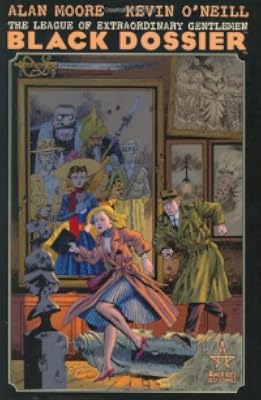
The League of Extraordinary Gentlemen: The Black Dossier
by Alan Moore (Author), Kevin O'Neill (Illustrator)
The League of Extraordinary Gentlemen (Volume 2.5)
On This Page
Description
In an alternate England in 1958, Mina Murray and Allan Quatermain seek the Black Dossier, which contains the history of the League of Extraordinary Gentlemen through the centuries, while fleeing from deadly secret agents.Tags
Recommendations





Member Recommendations

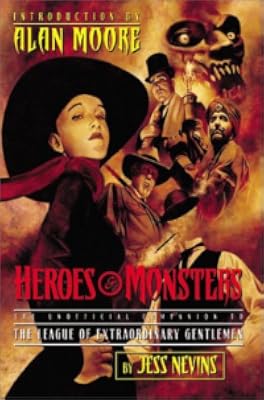
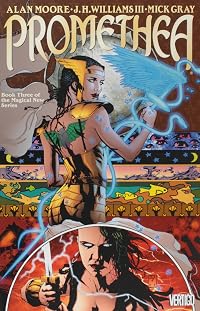
Impossible Territories: An Unofficial Companion to The League of Extraordinary Gentlemen by Jess Nevins
aethercowboy Impossible Territories is a book-length annotation to The League of Extraordinary Gentlemen: The Black Dossier.
Member Reviews
This has the best concept of all the latter-day LOEGs: in a post-postwar, post-Big-Brother-government (think if instead of the Attlee government a bunch of public schoolboys unleashed 1984), Mina Murray and Allan Quatermain (now immortal as a result of having bathed in the pool from Rider Haggard's She) do some cloak-and-dagger shit to get the dossier and find out the amazing history of the group of which they are a part (going back to Prospero, Gulliver, etc.), while on the run from Harry Lime and an evil James Bond and Miss Knight from The Avengers. It gets the grey period atmosphere just right and adds that soupçon of post-totalitarian trauma (I like the idea too of its not being a real evil world-system but just a pack of lies fed show more to the British for a decade or so; gives you sort of a new glimpse at the psychological reality of say the Hitler or Kim periods, which remade the world nearly as much for their subjects, nearly as fast). And the passages in Newspeak, giving us new valuable corpus data on that malignant language, are great, especially the warning "THIS WARN YOU" at the start of the dossier. The stories from the dossier themselves are a mixed bag and slow down the momentum; too often it's a pedantic crawl as you decide whether to give a shit about the various obscurities Moore is dragging in and head to the LOEG wikis to look 'em up or just press on, or a Fanny Hill sexy chapbook because modern sex is trashy and oldtimey sex is classy, right Alan Moore? Urgh. show less
Third in the League of Extraordinary Gentlemen series, this is a tour de force parading the breadth of culture of the two authors Alan Moore (writing) and Kevin O'Neill (illustration). It is also very self-indulgent and expects a lot from the reader.
The framing story sets Mina (survivor of an encounter with Dracula in Volume I) and Allan (Quatermain) in a glum early 1950s Britain just coming out of the wartime and post-war tyranny of a socialist state in a narrative that references 1984.
They recover a 'black dossier' of documents which purport to tell the history of the League in its many incarnations in time and in space (meaning witty German and French versions involved in the machinations around the origins of the First World show more War).
This becomes the excuse for a whole set of literary parodies and many other often cheeky treats, a few of them downright pornographic where O'Neill and Moore parody many popular cultural icons, including the iconic London Underground map and the wartime cartoon Jane.
It is almost too much of a rich feast. The parody of an American beatnik novel is literally unreadable (which is the joke) and Bertie Wooster's account of his experience alongside Gussie Fink-Nottle of dealing with his Aunt's dabbling with the Cult of Cthulhu is ... well, you get the picture.
At one level it is a romantic picture of a Britain that lasts in the imagination despite its national decline since the loss of its 'faery' nature with the death of Gloriana. At another it is the vehicle for an anarchic individualist assertion of the freedom to imagine, a very Moore theme.
There are innumerable 'in' jokes. James Bond is a slimy sexist government thug of weak intelligence. Sir Basildon Bond is Gloriana's 'intelligencer'. Fanny Hill's adventures with Gulliver and in the Venusberg are illustrated with stylish erotic parodies of Franz von Bayros' work.
But ultimately it gets ridiculous especially with the arrival of our heroes in a trans-dimensional faerie toyland on a flying ship captained by a Golliwog. This requires special 3D glasses to appreciate. Moore, as I do, will remember these as giveaways in the comics of our youth.
The magician Prospero (there is, of course, a bawdy lost Shakespearean work in the dossier) reepresents the final victory and primacy of magick and imagination over the prosaic reality of the grimy Britain of 'today' - probably actually 'today' today after the latest economic news.
Part of the comic's charm is that it can provide almost endless fun attempting to identify not only the obvious derivations from popular and high literature (such as the sex-shifting Orlando) but transpositions of name (so Dr Dee becomes both Prospero and Dr. Suttle).
All very clever, a work of immense labour and carefully constructed to fit into the universe of League comic books (there are six of them counting the Nemo trilogy), this is certainly worth enjoying in conjunction with the rest of the series. show less
The framing story sets Mina (survivor of an encounter with Dracula in Volume I) and Allan (Quatermain) in a glum early 1950s Britain just coming out of the wartime and post-war tyranny of a socialist state in a narrative that references 1984.
They recover a 'black dossier' of documents which purport to tell the history of the League in its many incarnations in time and in space (meaning witty German and French versions involved in the machinations around the origins of the First World show more War).
This becomes the excuse for a whole set of literary parodies and many other often cheeky treats, a few of them downright pornographic where O'Neill and Moore parody many popular cultural icons, including the iconic London Underground map and the wartime cartoon Jane.
It is almost too much of a rich feast. The parody of an American beatnik novel is literally unreadable (which is the joke) and Bertie Wooster's account of his experience alongside Gussie Fink-Nottle of dealing with his Aunt's dabbling with the Cult of Cthulhu is ... well, you get the picture.
At one level it is a romantic picture of a Britain that lasts in the imagination despite its national decline since the loss of its 'faery' nature with the death of Gloriana. At another it is the vehicle for an anarchic individualist assertion of the freedom to imagine, a very Moore theme.
There are innumerable 'in' jokes. James Bond is a slimy sexist government thug of weak intelligence. Sir Basildon Bond is Gloriana's 'intelligencer'. Fanny Hill's adventures with Gulliver and in the Venusberg are illustrated with stylish erotic parodies of Franz von Bayros' work.
But ultimately it gets ridiculous especially with the arrival of our heroes in a trans-dimensional faerie toyland on a flying ship captained by a Golliwog. This requires special 3D glasses to appreciate. Moore, as I do, will remember these as giveaways in the comics of our youth.
The magician Prospero (there is, of course, a bawdy lost Shakespearean work in the dossier) reepresents the final victory and primacy of magick and imagination over the prosaic reality of the grimy Britain of 'today' - probably actually 'today' today after the latest economic news.
Part of the comic's charm is that it can provide almost endless fun attempting to identify not only the obvious derivations from popular and high literature (such as the sex-shifting Orlando) but transpositions of name (so Dr Dee becomes both Prospero and Dr. Suttle).
All very clever, a work of immense labour and carefully constructed to fit into the universe of League comic books (there are six of them counting the Nemo trilogy), this is certainly worth enjoying in conjunction with the rest of the series. show less
Largely disappointing, but with some nuggets of gold. I find "The Black Dossier" improves a lot if read in chronological order (the frame story is set in 1958), following the first third of "Century" (set in 1910) and (to a lesser extent) the first two "Nemo" books. This, together with "The New Traveller's Almanac" in the back of "The League of Extraordinary Gentlement Vol. II", gives a lot of badly needed contextual information. Orlando is no longer a nobody to the reader, but an established part of the league. The Lovecraftian elements are now a natural continuation of Nemo I and Nemo II's expeditions. And the end with the Blazing World no longer feels quite as much out of nowhere, and is rather a reasonable tonal transition from the show more earlier stories to the more high concept later installments.
But that said, this is hardly a good story. There is the gist of one, a decent spy thriller story of betrayals and secrets that Quatermain and Murray find themselves in the middle of, but it drowns in the interspersed lenghty pages of the Dossier, and the trippy end sequence in the Blazing World that (even with the abovementioned contextual information) is not at all entertaining.
As for the Dossier documents themselves, they are -- understandably -- a very mixed bag. Each file in it will indubitably be much more entertaining and engrossing for a reader familiar with and (better) interested in the genre or property being pastiched. I personally loved Bertie Wooster's encounter with a Lovecraftian horror, for instance, and the insights into the original Victorian league's formation and Murray's activities between 1899 and the 1950s. Their fight with their French counterparts before World War One in particular captivated me, and I can't help but feel I'd much rather have had the comic version of that then the metaphysical 'what is the relationship between fiction and realituy' tangent that Moore jarringly in this frame story insists on pulling the narrative towards.
Other parts of the documents are -- to my subjective experience -- terrible. The stream-of-consciousness-style one I couldn't even get through, though I soldiered through everything else. But again, I'm sure most of this is someone's cup of tea, if they like and know the types of text being imitated and understand all the references. Though I suspect Moore's clear fascination with the pornographic aspect of human storytelling might get old for many (I know it did for me).
All in all, a very disappointing read if you're looking for a Volume III to follow up the splendid first two installments of this famous comic. But as a world resource book, it's impressive, and the gradual discovery of the recently-ended "Big Brother" IngSoc-regime in England through the notes in the margins and dialogue in the frame story is both interesting and chilling. The changes in time periods, genres, content and style also ensures that this, unlike endless geographical droning on in "The New Traveller's Almanac" (a natural comparison as it is the Dossier's closest counterpart in the entire saga), never becomes an insurmountable block of text. If you don't like one file, you have a new chance at the next.
And the way Moore takes James Bond down a few pegs without at all making him less competent is both amusing, cool and chilling. Had the story ended on that beat, rather than the self-indulgent Blazing World coda, I might have given the entire thing another star. show less
But that said, this is hardly a good story. There is the gist of one, a decent spy thriller story of betrayals and secrets that Quatermain and Murray find themselves in the middle of, but it drowns in the interspersed lenghty pages of the Dossier, and the trippy end sequence in the Blazing World that (even with the abovementioned contextual information) is not at all entertaining.
As for the Dossier documents themselves, they are -- understandably -- a very mixed bag. Each file in it will indubitably be much more entertaining and engrossing for a reader familiar with and (better) interested in the genre or property being pastiched. I personally loved Bertie Wooster's encounter with a Lovecraftian horror, for instance, and the insights into the original Victorian league's formation and Murray's activities between 1899 and the 1950s. Their fight with their French counterparts before World War One in particular captivated me, and I can't help but feel I'd much rather have had the comic version of that then the metaphysical 'what is the relationship between fiction and realituy' tangent that Moore jarringly in this frame story insists on pulling the narrative towards.
Other parts of the documents are -- to my subjective experience -- terrible. The stream-of-consciousness-style one I couldn't even get through, though I soldiered through everything else. But again, I'm sure most of this is someone's cup of tea, if they like and know the types of text being imitated and understand all the references. Though I suspect Moore's clear fascination with the pornographic aspect of human storytelling might get old for many (I know it did for me).
All in all, a very disappointing read if you're looking for a Volume III to follow up the splendid first two installments of this famous comic. But as a world resource book, it's impressive, and the gradual discovery of the recently-ended "Big Brother" IngSoc-regime in England through the notes in the margins and dialogue in the frame story is both interesting and chilling. The changes in time periods, genres, content and style also ensures that this, unlike endless geographical droning on in "The New Traveller's Almanac" (a natural comparison as it is the Dossier's closest counterpart in the entire saga), never becomes an insurmountable block of text. If you don't like one file, you have a new chance at the next.
And the way Moore takes James Bond down a few pegs without at all making him less competent is both amusing, cool and chilling. Had the story ended on that beat, rather than the self-indulgent Blazing World coda, I might have given the entire thing another star. show less
Having devoured the first and second League of Extraordinary Gentlemen books, I looked forward to this one hungrily for a year. Perhaps I looked forward to it too much; the antique pop culture references used to be gleeful, and generally supported the humour and characterisation; now, they've become long stretches of impenetrable text and they just get in the way. We scarcely glimpse Mina and Alan as we leap from Lovecraft to Beat, from Wodehouse to Fanny Hill.
The young Alan, especially, suffers from this. Except for one good line in the James Bond scene, he's really not given anything to do that reveals his Alan-ness; what is life like for him? What makes him more than a blonde square-jawed action hero? We don't know, and I was show more looking forward to finding out.
Actually, I enjoyed the Fanny Hill with the Beardsley-inspired art, the Wodehouse-Lovecraft pastiche was a laugh (although done before), and I loved the Pornsec Tijuana bible. I don't condemn Moore for the inside jokes - it's the author's right to do that, even if it does limit the audience - but as someone who was in on it, I didn't find it served the story.
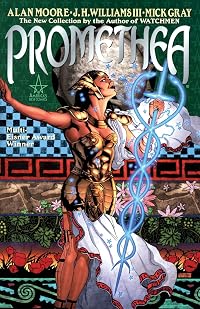
It reminded me of the long stretches of Promethea where we trudged through the whole Tarot deck. The art was absolutely transcendent, and sometimes the wonderful characters survived the paragraphs of occult exposition, but often as not it felt forced and dry.
Maybe I'm missing the point. Maybe someone else can read the whole Beat pastiche without their eyes glazing over. Maybe if I hadn't come to it wanting to know more about Mina and Alan, I would have enjoyed it more. I still think Moore's brilliant, and not everything he does has to be to my taste. show less
The young Alan, especially, suffers from this. Except for one good line in the James Bond scene, he's really not given anything to do that reveals his Alan-ness; what is life like for him? What makes him more than a blonde square-jawed action hero? We don't know, and I was show more looking forward to finding out.
Actually, I enjoyed the Fanny Hill with the Beardsley-inspired art, the Wodehouse-Lovecraft pastiche was a laugh (although done before), and I loved the Pornsec Tijuana bible. I don't condemn Moore for the inside jokes - it's the author's right to do that, even if it does limit the audience - but as someone who was in on it, I didn't find it served the story.
It reminded me of the long stretches of Promethea where we trudged through the whole Tarot deck. The art was absolutely transcendent, and sometimes the wonderful characters survived the paragraphs of occult exposition, but often as not it felt forced and dry.
Maybe I'm missing the point. Maybe someone else can read the whole Beat pastiche without their eyes glazing over. Maybe if I hadn't come to it wanting to know more about Mina and Alan, I would have enjoyed it more. I still think Moore's brilliant, and not everything he does has to be to my taste. show less
Moore returns with another chapter in his Grand Unified Theory of Literature, this time taking Mina and Allan through the post-Big Brother fifties and the psychedelic sixties.
Mina and Allan, now fugitives from the government are working to evade the pursuits of special agents Drummond, Jimmy Bond, and Emma Knight (later to be married to one Mr. Peel). Miraculously youthful, they've managed to procure the Black Dossier, which has chronicled League activity since time immemorial.
The Dossier jumps from one format to the next, each selecting the most appropriate media for its respective message, showing the forming of the Original League, Prospero's Men, as a lost Shakesperian folio (complete with Queen Gloriana!), and Mina and Allan's show more journeys with Doctor Sacks written as if by a certain beatnik.
Other chapters include a sequel to Fanny Hill, featuring her forays into the League alongside Gulliver, Dr. Syn, and the Scarlet Pimpernel & wife; a comic detailing the life of Orlando; a 1984-inspired Tijuana bible; several postcards from the League's travels; as well as a meet-up of Jeeves and Wooster and the Elder Gods.
While disjointed, this book is a must for those hungry for any scrap more of League they can get. Likewise, the regular narrative, in good, old-fashioned comic book form, drives the central league plot. While you could get by with just reading the comic parts, you'd be better off reading the whole book (and the Jess Nevins' analysis book) so you can fully appreciate the world that Moore has crafted using the bricks and mortars of entertainers before him. show less
Mina and Allan, now fugitives from the government are working to evade the pursuits of special agents Drummond, Jimmy Bond, and Emma Knight (later to be married to one Mr. Peel). Miraculously youthful, they've managed to procure the Black Dossier, which has chronicled League activity since time immemorial.
The Dossier jumps from one format to the next, each selecting the most appropriate media for its respective message, showing the forming of the Original League, Prospero's Men, as a lost Shakesperian folio (complete with Queen Gloriana!), and Mina and Allan's show more journeys with Doctor Sacks written as if by a certain beatnik.
Other chapters include a sequel to Fanny Hill, featuring her forays into the League alongside Gulliver, Dr. Syn, and the Scarlet Pimpernel & wife; a comic detailing the life of Orlando; a 1984-inspired Tijuana bible; several postcards from the League's travels; as well as a meet-up of Jeeves and Wooster and the Elder Gods.
While disjointed, this book is a must for those hungry for any scrap more of League they can get. Likewise, the regular narrative, in good, old-fashioned comic book form, drives the central league plot. While you could get by with just reading the comic parts, you'd be better off reading the whole book (and the Jess Nevins' analysis book) so you can fully appreciate the world that Moore has crafted using the bricks and mortars of entertainers before him. show less
Every time I pick up one of Moore's League books, I'm blown away. He somehow manages to make me simultaneously feel smart for all of the references I catch and stupid for all the ones I know I've missed. This mad notion of knitting together all of the fabled literary worlds and characters into one (mostly) coherent history shouldn't work, but it does.
This newest bit of League history has a whisper-thin plot, but that's really just an excuse to further flesh out this amazing world and to have terrific fun experimenting with different forms and styles. Some of these experiments work better than others: I find both the Beat novels and Lovecraft's work almost unreadable; combining the two (however cleverly) didn't help; on the other hand, show more if Jeeves and Bertie appeared in all of Lovecraft's stories, I'd read them a lot more frequently.
The package itself is amazing. Different art styles, different paper textures, a Tijuana Bible, an unbelievably gorgeous 3-D section (glasses are included); as an art object, it's beautiful. The fact that there actually is a story to hang it all on, however thin, is really just the icing on the cake.
NOTE: Those of you familiar with the previous volumes are no doubt also familiar with the redoutable Jess Nevins and his panel-by-panel annotations of those works. A book of annotations for The Black Dossier is forthcoming, but until then, you can get Jess's annotations and notes can get them here:
http://www.shsu.edu/~lib_jjn/dossier.html show less
This newest bit of League history has a whisper-thin plot, but that's really just an excuse to further flesh out this amazing world and to have terrific fun experimenting with different forms and styles. Some of these experiments work better than others: I find both the Beat novels and Lovecraft's work almost unreadable; combining the two (however cleverly) didn't help; on the other hand, show more if Jeeves and Bertie appeared in all of Lovecraft's stories, I'd read them a lot more frequently.
The package itself is amazing. Different art styles, different paper textures, a Tijuana Bible, an unbelievably gorgeous 3-D section (glasses are included); as an art object, it's beautiful. The fact that there actually is a story to hang it all on, however thin, is really just the icing on the cake.
NOTE: Those of you familiar with the previous volumes are no doubt also familiar with the redoutable Jess Nevins and his panel-by-panel annotations of those works. A book of annotations for The Black Dossier is forthcoming, but until then, you can get Jess's annotations and notes can get them here:
http://www.shsu.edu/~lib_jjn/dossier.html show less
In the first two tales of the League of Extraordinary Gentlemen, Alan Moore gave us delightful steampunk tales featuring characters drawn from the literature of the nineteenth and early twentieth centuries. In his new creation, he gives us the back story of his alternate universe, reaching back to the Iliad and the Book of Enoch and forward to the tales of Ian Fleming and George Orwell.
Moore's tale is set in 1958, with Wilhelmina Murray and Allan Quatermain searching out the Black Dossier documenting the history of the various incarnations of the League of Extraordinary Gentlemen, dating back to their original incarnation under Queen Gloriana I (an alternate Elizabeth) through their adventures after the Martian invasion, The tales take show more a number of forms, from a fragment of a lost Shakespeare play to a classic newspaper serial to a chapter from a beatnik novel. (The tale of Bertie Wooster encountering the horrors of the Cthulhu mythos had me laughing out loud.)
This kind of writing shows the essential absurdity of segregating science fiction and fantasy from classic literature. We've always had these tales of fantastic heroism; you could teach a great literature course by covering all the tales that surface in the League books and John Myers Myers’ Silverlock.
Warning for parents who might use this as bait to get their kids interested in the classics: real classic literature is often bawdy and explicit, and Moore doesn't shy away from this. If you don't want your kids reading Fanny Hill just yet, save this book until later. show less
Moore's tale is set in 1958, with Wilhelmina Murray and Allan Quatermain searching out the Black Dossier documenting the history of the various incarnations of the League of Extraordinary Gentlemen, dating back to their original incarnation under Queen Gloriana I (an alternate Elizabeth) through their adventures after the Martian invasion, The tales take show more a number of forms, from a fragment of a lost Shakespeare play to a classic newspaper serial to a chapter from a beatnik novel. (The tale of Bertie Wooster encountering the horrors of the Cthulhu mythos had me laughing out loud.)
This kind of writing shows the essential absurdity of segregating science fiction and fantasy from classic literature. We've always had these tales of fantastic heroism; you could teach a great literature course by covering all the tales that surface in the League books and John Myers Myers’ Silverlock.
Warning for parents who might use this as bait to get their kids interested in the classics: real classic literature is often bawdy and explicit, and Moore doesn't shy away from this. If you don't want your kids reading Fanny Hill just yet, save this book until later. show less
Members
- Recently Added By
Published Reviews
I’m past the point where it’s fun to read comics that feel like homework. The lengthy text sections, mimicking the styles of other, well-known writers, I skipped entirely, because they were overwhelming. I was quite pleased to see, when I went to read the annotations immediately afterwards, that Jess Nevins had done the same thing on one section.
added by lampbane
Lists

Books Read in 2008
335 works; 8 members

Banned or Challenged Books
400 works; 40 members
Author Information

Multiple award-winning author Alan Moore is universally considered the best writer of graphic novels in the medium's history. Among his many awards are the Hugo Award, the Bram Stoker Award, the Eisner Award, and the International Horror Guild Award

All Editions
Awards and Honors
Awards
Series

Belongs to Publisher Series
Work Relationships
Was inspired by
Has as a reference guide/companion
Common Knowledge
- Canonical title
- The League of Extraordinary Gentlemen: The Black Dossier
- Original title
- The League of Extraordinary Gentlemen: Black Dossier
- Original publication date
- 2007-11
- People/Characters
- Mina Murray (Wilhelmina Murray, Mina Harker); Allan Quatermain; Captain Nemo; James Bond (Jimmy Bond); Ishmael; Billy Bunter (show all 68); Mycroft Holmes; Orlando (Roland); Broad Arrow Jack; Emma Peel (Emma Night); Janni Dakkar; C. A. Rotwang; Orlando; Maria [Metropolis]; A. J. Raffles; Wilhelm II, German Kaiser and King of Prussia; Hugh 'Bulldog' Drummond; Aleister Crowley (Oliver Haddo); Prospero; Fanny Hill; Bertram Wilberforce Wooster (Bertie Wooster); Jeeves; Thomas Carnacki; George Edward Challenger; Robert Kim Cherry; Mrs. Cornelius; Jerry Cornelius; Catherine Cornelius; Frank Cornelius; Doctor Sax; Golliwogg; Dick Hannay; Dean Moriarty; John Knight; O'Brien (Gerald O'Brien); Plantagenet Palliser, Elder; Sal Paradise; Allan Quatermain, Jr.; Don Quixote de la Mancha; Scheharezade; Anne "Annie" Walker (né | e Beaumont); Harold Wharton; Big Brother; Monsieur Zenith; Brutus of Troy; Gog (Gogmagog); Magog (Gogmagog); Claudius; Merlin; Emperor Julian; Uther Pendragon; King Arthur; Morgana; Henry VIII, King of England; Oberon; Anne Boleyn; Johannes Suttle (Prospero); Edward Face; Jack Wilton; Basildon Bond; William Shakespeare; James VI and I, King of Scots and King of England; Adenoid Hynkel; Gloriana; Harry Lime; George Smiley; Gary Halliday; Robert the Robot
- Important places
- London, England, UK; Birmingham, England, UK; Blazing World; Berlin, Germany; Airstrip One, Oceania; New Troy, Albion (show all 11); Roman Empire; Germany; Q'umar; Greyfriars School; Arkham, Massachusetts, USA
- Important events
- World War I; World War II
- Publisher's editor
- Dunbier, Scott
Classifications
Statistics
- Members
- 1,509
- Popularity
- 15,341
- Reviews
- 40
- Rating
- (3.40)
- Languages
- 7 — English, Finnish, French, German, Italian, Spanish, Portuguese (Brazil)
- Media
- Paper, Ebook
- ISBNs
- 16
- ASINs
- 7