
Meridian
by Alice Walker
On This Page
Description
The second novel written by Alice Walker, preceding "The Color Purple" is a heartfelt and moving story about one woman's personal revolution as she joins the Civil Rights Movement. Set in the American South in the 1960s it follows Meridian Hill, a courageous young woman who dedicates herself heart and soul to her civil rights work, touching the lives of those around her even as her own health begins to deteriorate. Hers is a lonely battle, but it is one she will not abandon, whatever the show more costs. This is classic Alice Walker, beautifully written, intense, and passionate. show lessTags
Recommendations
















Member Reviews
[This is a review I wrote in 2008]
**Not an easy read, but courageous, heartfelt and very real.**
Alice Walker's second novel, 'Meridian' (published 1976), is huge in scope but well-orchestrated and written, and she compresses a 25-year span into just 242 pages.
'Meridian' is tricky to get into. It's not at all that clear what's what & who's who to begin with & it would be easy to put the book down without going quite far enough to hold your interest. Persevere though, and you are rewarded with snippets of Meridian's story - her struggle into adulthood, to self-awareness, public-awareness, and ultimately her struggles for civil rights.
Meridian, as a young 17-year-old - married, divorced, one baby son, all of which happened almost without show more her even realising - kind of unintentionally stumbles upon some civil rights activists in her home town in the deep South... and from there, as she awakens into a world she has been sheltered from during her childhood, her involvement gets deeper and deeper. Reading just a little about the author's own life, you can see it's impossible to separate book and author here, as a number of parallels with Alice Walker's life in the 60s and 70s run through the novel.
Parts of the story are revealed in a non-chronological way, with themes running through that tie all the threads together - about losing children, inter-racial stuggles both in friendship and marriage and outside of it, the tensions between love and friendship, violence and peace, and of course the very human struggle for human rights. There are a few more themes to contemplate besides these.
It's a powerful and enlightening novel. Personally, I couldn't get on with the ending. I don't want to give anything away, but it doesn't really do justice to the Meridian we've followed haphazardly throughout a 25 year span - not quite a satisfying conclusion to an otherwise excellent read. show less
**Not an easy read, but courageous, heartfelt and very real.**
Alice Walker's second novel, 'Meridian' (published 1976), is huge in scope but well-orchestrated and written, and she compresses a 25-year span into just 242 pages.
'Meridian' is tricky to get into. It's not at all that clear what's what & who's who to begin with & it would be easy to put the book down without going quite far enough to hold your interest. Persevere though, and you are rewarded with snippets of Meridian's story - her struggle into adulthood, to self-awareness, public-awareness, and ultimately her struggles for civil rights.
Meridian, as a young 17-year-old - married, divorced, one baby son, all of which happened almost without show more her even realising - kind of unintentionally stumbles upon some civil rights activists in her home town in the deep South... and from there, as she awakens into a world she has been sheltered from during her childhood, her involvement gets deeper and deeper. Reading just a little about the author's own life, you can see it's impossible to separate book and author here, as a number of parallels with Alice Walker's life in the 60s and 70s run through the novel.
Parts of the story are revealed in a non-chronological way, with themes running through that tie all the threads together - about losing children, inter-racial stuggles both in friendship and marriage and outside of it, the tensions between love and friendship, violence and peace, and of course the very human struggle for human rights. There are a few more themes to contemplate besides these.
It's a powerful and enlightening novel. Personally, I couldn't get on with the ending. I don't want to give anything away, but it doesn't really do justice to the Meridian we've followed haphazardly throughout a 25 year span - not quite a satisfying conclusion to an otherwise excellent read. show less
I wanted to like this book; I didn’t. I’ve had Alice Walker’s novels on my TBR list for a long time and decided to start with this one - her second. It was a good idea; it had potential; I think AW got in the way of her character Meridian and prevented her from being what she could be and the story from being the thoughtful, honest portrayal of one person’s experience of the civil rights movement in Mississippi that it wanted to be.
Alice Walker is not afraid to tackle some challenging subject matter in this book - such as human rights, black history, feminism, motherhood and love. There were parts that were amazingly insightful and heart rending, as seen through the almost saint like Meridian's eyes. She's a very human character - fallible, confused and capable of making bad choices but she possesses a calm, deep felt spirit that sets her apart from those around her.
Set in the American South during the civil rights movement it tells Meridians story as she falls in love, meets radical friends and becomes a mother. It's a coming of age story really but it also explores how the racism of the 60s and beyond affects those around her at a personal level and transforms show more their relationships - leaving deep scars for generations to come. The only issue was that the story as a coherent whole seemed to struggle under such a heavy weight of content. show less
Set in the American South during the civil rights movement it tells Meridians story as she falls in love, meets radical friends and becomes a mother. It's a coming of age story really but it also explores how the racism of the 60s and beyond affects those around her at a personal level and transforms show more their relationships - leaving deep scars for generations to come. The only issue was that the story as a coherent whole seemed to struggle under such a heavy weight of content. show less
Meridian, a young woman who has given up her son after her husband's desertion, becomes active in civil rights and attracted to Truman, who marries the white woman, Lynne. Truman is obsessed with Meridian but doesn't really see her. Lynne is equally blind to who Meridian and all Black people are. Not one of these characters is convincing. The book has things to say and, in the chapter titled Questions, states them quite well but is more a pile of matted string than a whole cloth.
Meridian Hill is a silent, eccentric, and determined woman who has held onto her strength and dignity despite the many hardships she has faced throughout her life. The events leading up to the opening chapters are dispersed throughout the novel in scattered, yet plausible flashbacks. Meridian's life is filled with many unique people and events that shape her into a seemingly worry free woman, the outcome being the opposite of what would normally be expected with her experiences.
The one thing that impassioned Meridian in her childhood was the mysticism of her Indian ancestry, a haunting love and power shared by both her father and her deceased grandmother, Feather Mae. The mysteries of her ancestry are furthered by her unforgettable show more ethereal experiences while in the coils of the Sacred Serpent, that incredible land phenomenon built thousands of years by Native Americans. Used as a Cherokee burial ground, an interesting family conflict in the novel rests on this hallowed land.
Alice Walker takes us through this book with an effective, poetic, and sweeping type of prose. The book spans Meridian's amazing life, from her time with her mother, Mrs. Hill, her time as a teenager with an ignorance about sex (attributed mostly to Mrs. Hill), and her life as a stoic, nearly certifiable single parent.
One of the interesting periods of Meridian's life takes place in Saxon College in Atlanta. This time of her life is especially turbulent, and filled with unique characters like Anne-Marion, the Sojourner, and the Wild Child, people that will live forever in Meridian's memory as those who were able to teach her things that Saxon's beloved professors did not.
These tumultuous years were preceded by an awareness of the Civil Rights movement. A bombing of a neighboring house brought Meridian to the door of a voting coalition office where she met Truman, a man with whom she has an on-and-off affair. Thought-provoking presentations of race and love are presented in this and other parts of this multi-faceted novel, with that unique tinge of magic that Walker brings to all her works.
Meridian moves from place to place in this novel, sprinkling little pieces of resolve into the minds of all the townspeople who were fortunate enough to be in her presence. Walker's rich protagonist presents many important issues in a subtle way, touching upon racism and prejudice, religion, and the right to human life. Meridian's endearing qualities will easily find a place in the hearts of Ms. Walker's readers. show less
The one thing that impassioned Meridian in her childhood was the mysticism of her Indian ancestry, a haunting love and power shared by both her father and her deceased grandmother, Feather Mae. The mysteries of her ancestry are furthered by her unforgettable show more ethereal experiences while in the coils of the Sacred Serpent, that incredible land phenomenon built thousands of years by Native Americans. Used as a Cherokee burial ground, an interesting family conflict in the novel rests on this hallowed land.
Alice Walker takes us through this book with an effective, poetic, and sweeping type of prose. The book spans Meridian's amazing life, from her time with her mother, Mrs. Hill, her time as a teenager with an ignorance about sex (attributed mostly to Mrs. Hill), and her life as a stoic, nearly certifiable single parent.
One of the interesting periods of Meridian's life takes place in Saxon College in Atlanta. This time of her life is especially turbulent, and filled with unique characters like Anne-Marion, the Sojourner, and the Wild Child, people that will live forever in Meridian's memory as those who were able to teach her things that Saxon's beloved professors did not.
These tumultuous years were preceded by an awareness of the Civil Rights movement. A bombing of a neighboring house brought Meridian to the door of a voting coalition office where she met Truman, a man with whom she has an on-and-off affair. Thought-provoking presentations of race and love are presented in this and other parts of this multi-faceted novel, with that unique tinge of magic that Walker brings to all her works.
Meridian moves from place to place in this novel, sprinkling little pieces of resolve into the minds of all the townspeople who were fortunate enough to be in her presence. Walker's rich protagonist presents many important issues in a subtle way, touching upon racism and prejudice, religion, and the right to human life. Meridian's endearing qualities will easily find a place in the hearts of Ms. Walker's readers. show less
Meridian Hill is a silent, eccentric, and determined woman who has held onto her strength and dignity despite the many hardships she has faced throughout her life. The events leading up to the opening chapters are dispersed throughout the novel in scattered, yet plausible flashbacks. Meridian's life is filled with many unique people and events that shape her into a seemingly worry free woman, the outcome being the opposite of what would normally be expected with her experiences.The one thing that impassioned Meridian in her childhood was the mysticism of her Indian ancestry, a haunting love and power shared by both her father and her deceased grandmother, Feather Mae. The mysteries of her ancestry are furthered by her unforgettable show more ethereal experiences while in the coils of the Sacred Serpent, that incredible land phenomenon built thousands of years by Native Americans. Used as a Cherokee burial ground, an interesting family conflict in the novel rests on this hallowed land.Alice Walker takes us through this book with an effective, poetic, and sweeping type of prose. The book spans Meridian's amazing life, from her time with her mother, Mrs. Hill, her time as a teenager with an ignorance about sex (attributed mostly to Mrs. Hill), and her life as a stoic, nearly certifiable single parent. One of the interesting periods of Meridian's life takes place in Saxon College in Atlanta. This time of her life is especially turbulent, and filled with unique characters like Anne-Marion, the Sojourner, and the Wild Child, people that will live forever in Meridian's memory as those who were able to teach her things that Saxon's beloved professors did not. These tumultuous years were preceded by an awareness of the Civil Rights movement. A bombing of a neighboring house brought Meridian to the door of a voting coalition office where she met Truman, a man with whom she has an on-and-off affair. Thought-provoking presentations of race and love are presented in this and other parts of this multi-faceted novel, with that unique tinge of magic that Walker brings to all her works.Meridian moves from place to place in this novel, sprinkling little pieces of resolve into the minds of all the townspeople who were fortunate enough to be in her presence. Walker's rich protagonist presents many important issues in a subtle way, touching upon racism and prejudice, religion, and the right to human life. Meridian's endearing qualities will easily find a place in the hearts of Ms. Walker's readers. show less
Not as well-structured as _The Color Purple_, but presents an interesting depiction of the way an individual's struggle for civil rights can take a huge emotional and physical toll on that person. You also can see Walker's gorgeous writing style begin to develop. One of my favorite last pages of any book ever.
Members
- Recently Added By
Lists

The Zora Canon
98 works; 4 members

Zora Canon
100 works; 6 members
Author Information

96+ Works 40,776 Members
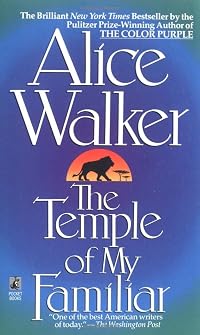
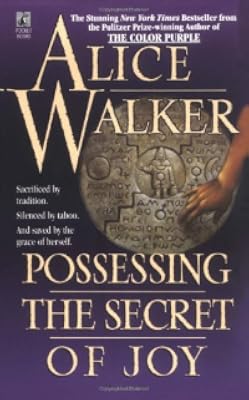
Alice Walker won the Pulitzer Prize and the American Book Award for her novel The Color Purple. Her other bestselling novels include By the Light of My Father's Smile, Possessing the Secret of Joy, and The Temple of My Familiar. She is also the author of two collections of short stories, three collections of essays, five volumes of poetry, and show more several children's books. Her books have been translated into more than two dozen languages. Born in Eaton, Georgia, Walker now lives in Northern California. Like so many characters in her fiction, Alice Walker was born into a family of sharecroppers in Eaton, Georgia. She began Spelman College on a scholarship and graduated from Sarah Lawrence College in 1965. While still in college, Walker became active in the civil rights movement and continued her involvement after she graduated, serving as a voter registration worker in Georgia. She also worked in a Head Start program in Mississippi and was on the staff of the New York City welfare department. She has lectured and taught at several colleges and universities and currently operates a publishing house, Wild Trees Press, of which she is a co-founder. Walker began her literary career as a poet, publishing Once: Poems in 1968. The collection reflects her experiences in the civil rights movement and her travels in Africa. Her second collection of poetry, Revolutionary Petunias and Other Poems (1973), is a celebration of the struggle against oppression and racism. In between these two collections, she published her first novel, The Third Life of Grange Copeland (1970), the story of Ruth Copeland, a young black girl, and her grandfather, Grange, who brutalizes his own family out of the frustrations of racial prejudice and his own sense of inadequacy. Walker's first collection of short stories, In Love and Trouble: Stories of Black Women (1973), established her special concern for the struggles, hardships, loyalties, and triumphs of black women, a powerful force in the rest of her fiction. Meridian (1976), her second novel, is the story of Meridian Hill, a civil rights worker. In her second collection of short stories, You Can't Keep A Good Woman Down (1981), Walker again portrays black women struggling against sexual, racial, and economic oppression. Walker's third novel, The Color Purple (1982), brought her the national recognition denied her earlier works. Through this story of the sharecropper Celie and the abuses she endures, Walker draws together the themes that have run through her earlier work into a concentrated and powerful attack on racism and sexism, and produces a triumphant celebration of the spirit and endurance of black women. The book received the Pulitzer Prize and was made into a successful film. Walker describes her most recent novel, The Temple of My Familiar (1989) as "a romance of the last 500,000 years." The book is a blend of myth and history revolving around three marriages. As the married couples tell their stories, they explore both their origins and the inner life of modern African Americans. (Bowker Author Biography) show less
Some Editions
Series
Belongs to Publisher Series
Rainbow pocketboeken (36)
Work Relationships
Is contained in
Has as a student's study guide
Common Knowledge
- Canonical title
- Meridian
- Original title
- Meridian
- Original publication date
- 1976
- People/Characters
- Truman Held; Meridian Hill
- Important places
- Chicokema, Georgia, USA; Georgia, USA
- Important events
- African-American Civil Rights Movement
- Epigraph
- I did not know then how much was ended. When I look back now... I can still see the butchered women and children lying heaped and scattered all along the crooked gulch as plain as when I saw them with eyes still young. And I ... (show all)can see that something else died there in the bloody mud, and was buried in the blizzard. A people's dream died there. It was a beautiful dream... the nation's hoop is broken and scattered. There is no center any longer, and the sacred tree is dead. -- Black Elk, Black Elk Speaks
- Dedication
- For Staughton Lynd and Maryam L. and for John Lewis the unsung
- First words
- Truman Held drove slowly into the small town of Chiokema as the two black men who worked at the station where he stopped for gas were breaking for lunch.
- Last words
- (Click to show. Warning: May contain spoilers.)He had a vision of Anne-Marion herself arriving, lost, someday, at the door, which would remain open, and wondered if Meridian knew that the sentence of bearing the conflict in her own soul which she had imposed on herself - and lived through - must now be borne in terror by all the rest of them.
Classifications
Statistics
- Members
- 1,436
- Popularity
- 16,458
- Reviews
- 15
- Rating
- (3.57)
- Languages
- 11 — Arabic, Danish, Dutch, English, Finnish, German, Italian, Norwegian, Portuguese, Swedish, Turkish
- Media
- Paper, Audiobook, Ebook
- ISBNs
- 44
- ASINs
- 15