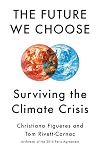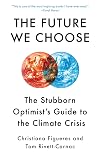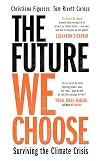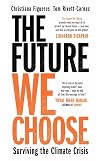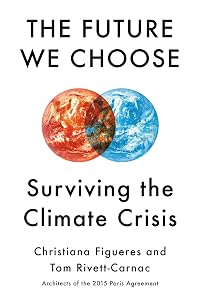
The Future We Choose: Surviving the Climate Crisis
by Christiana Figueres, Tom Rivett-Carnac
On This Page
Description
"In this cautionary but optimistic book, Figueres and Rivett-Carnac--the architects of the 2015 Paris Climate Change Agreement--tackle arguably the most urgent and consequential challenge humankind has ever faced: the world's changing climate and the fate of humanity. In The Future We Choose, the authors outline two possible scenarios for the planet. In one, they describe what life on Earth will be like by 2050 if we fail to meet the Paris targets for carbon dioxide emission reduction. In show more the other, they describe what it will take to create and live in a carbon neutral, regenerative world. They argue for confronting the climate crisis head on, with determination and optimism. How we all of us address the climate crisis in the next thirty years will determine not only the world we will live in but also the world we will bequeath to our children and theirs. The Future We Choose presents our options and tells us, in no uncertain terms, what governments, corporations, and each of us can and must do to fend off disaster"-- show lessTags
Recommendations



Member Reviews
'The Future We Choose' joined my to-read list due to positive goodreads reviews. I then bought a copy from the Edinburgh International Book Festival bookshop, as festival events whetted my appetite for a hopeful and inspiring book about action on climate change. Feeling in need of some optimism, I started reading it at the weekend. Unfortunately, while it is well-written and clearly structured, I did not get on well with it. I believe the reasons for that relate to me, the pandemic, and the content of the book itself in roughly equal measure. I will consider these three factors in reverse order.
Firstly, the book. It is short, covering a gigantic topic in just over 170 pages (plus notes and bibliography). There is a good bibliography at show more the end, much of which was familiar to me already. It is thus a high-level synthesis rather than a new perspective, likely intended for audiences who haven't read a book-length call to action on climate change before. The strongest and most interesting parts, in my view, described COP 21 and the process of securing the Paris Agreement. The authors were deeply involved with the negotiations and agreement at the Paris conference. Given how potentially powerful that agreement could prove, I found their account of it uplifting. Moreover, the book's explanation of the steps you can take to reduce your carbon footprint and how to sequence them are very clearly set out.
While I think this is a good book, the cover and endpaper quotes are hyperbole: 'one of the most inspiring books I've ever read', 'there could not be a more important book', etc. What is more significant is who these quotes come from. The latter is from Richard Branson, whose concern about climate change is such that he requested his airline be bailed out as the pandemic has significantly reduced demand for passenger flights. Other quotes are from William Hague, who was a cabinet member of a UK government that treated climate change mitigation measures as 'red tape' to be removed, and the CEO of Shell, who presumably provided his through gritted teeth. These endorsements reflect the difficult line that the book tries to walk: conveying the need for extremely radical change to tackle climate change while not scaring or offending anyone. The approach taken is thus to focus on individual experience and action, with very little critique of systems. Populist neo-fascist politics and social media fake news are criticised somewhat, but this is the view on capitalism:
I disagree almost entirely with this. A new economic model that genuinely prioritised the climate would not be capitalism. Possibly this paragraph is trying to avoid alarming people by stretching the definition of capitalism until it equals 'any economic system'? Fundamentally, though, capitalism is defined by the accumulation of capital. It is extractive rather than regenerative by its very nature and has been since it came into existence. To say that we have managed capitalism 'moderately well' is breath-taking in a book about the environmental catastrophes that threaten the survival of human civilisation, all of which are directly attributable to rapacious capitalism. Institutions such as law, taxation, and charity have facilitated this at various times and in various ways. I don't mean to dismiss them entirely, but treating them as sufficient to temper capitalism's destructiveness would be woefully naive. It's also shocking to speak of centuries of moderately well-managed capitalism without acknowledging slavery, a longstanding example of free enterprise supported by law.
Secondly, the pandemic undermines the intended optimistic message. How can politicians and individuals make climate change our first priority right now? We exist within global, regional, national, and local contexts constrained by a dangerous virus. I anticipate with huge interest and some dread the carbon emissions data for 2020. Interest because massive falls in flying, disruption of industry, and falls in other activities could cause falls in emissions; dread because I fear they will be insufficient and transient. Moreover, the data will be harder to collect and potentially less reliable this year. There is also the massive exacerbation of wealth inequality that the pandemic is causing, which is not only incredibly worrying in itself but will also have significant effects on politics and policy priorities. There is a calm certainty to the tone of 'The Future We Choose' that is unsuited to our chaotic and unpredictable reality. Apart from anything else, if and when Trump recovers from covid-19 will have a massive impact on the whole world. Feeling optimistic about the future and asserting influence over it are much more difficult now than they were last year. At the moment, certainly in the UK, it feels like this is coronavirus' world and we're just trying to survive in it. I don't imagine things are much better in many other countries, but do not know as I've been deliberately limiting my news access. Unfortunately Trump is impossible to avoid.
Finally, my more personal reasons for struggling with 'The Future We Choose'. The preceding points are of course related to my opinions and perceptions, however I also think my state of mind is incongruent with this book. This would probably also have been the case had I read it before the pandemic. 'The Future We Choose' talks about the importance of personal mindsets and individual action. While I agree that we can only work collectively if we each choose to do so, this emphasis on the individual seemed reductive. On the one hand, I genuinely do not feel capable of attaining the positive mindset presented here. If several courses of cognitive behavioural therapy haven't reduced my overwhelming fear, how could a couple of chapters on mindfulness, positivity, and radical regeneration? Naturally this book was not written specifically for those with quite intense anxiety. The principles are sound, I just really struggle to apply them. Now more than ever, I find it very difficult to feel anything about the future other than fear and dread.
On the other hand, the suggestions for action to reduce your personal carbon footprint underwhelmed me because I've already done the majority of them. Back in 2009 I made a plan to reduce my environmental impact: I stopped flying, got rid of my car, and began systematically evaluating everything I buy for environmental impact. Now I buy nearly all my clothes second-hand, or when that's not possible from ethical slow fashion companies. I'm a lifelong vegetarian and have reduced my consumption of dairy in favour of eggs, as well as convincing myself to eat boring kale because it grows in the UK. I buy my power from Ecotricity and use my central heating very sparingly, set at 17 or 18°C. I also talk about doing all of this with friends and family in an attempt to normalise it without preaching. (Except with my parents, who I straight up nagged until they got rid of their totally pointless second car.) I vote with the environment at the front of my mind. I'm not reciting all this to boast about it, but because none of it is remotely sufficient! There is so much that I have no control or influence over due to living in a profit-driven capitalist system. I think personal action is still worth taking, because it soothes my conscience a little, makes for a calmer and simpler life, and builds resilience. However it is not a substitute for systemic change and redistribution of wealth. For the past ten years I've tried to find a job in with some positive effect on the environment, and have totally failed. In these neoliberal times, academia and the public sector have similarly corporate priorities as the private sector, especially the former. I may be looking in the wrong places, but this book has nothing to say about considering climate change in the context of your career and working life. That seems like a serious omission, especially given the authors.
Unlike [b:This Is Not A Drill: An Extinction Rebellion Handbook|45308227|This Is Not A Drill An Extinction Rebellion Handbook|Extinction Rebellion|https://i.gr-assets.com/images/S/compressed.photo.goodreads.com/books/1559314992l/45308227._SY75_.jpg|70036425], 'The Future We Choose' did not give me hope that there's something collective, beyond green consumerism, that can bring about transformation. I cannot believe that a global catastrophe caused by capitalism and technology will be averted by more capitalism and more technology. Is that my anxiety talking, or it is realism? In times like this, what mental health questionnaires classify as illness can also appear a totally rational response to the global situation. However that is outside the scope of this book. show less
Firstly, the book. It is short, covering a gigantic topic in just over 170 pages (plus notes and bibliography). There is a good bibliography at show more the end, much of which was familiar to me already. It is thus a high-level synthesis rather than a new perspective, likely intended for audiences who haven't read a book-length call to action on climate change before. The strongest and most interesting parts, in my view, described COP 21 and the process of securing the Paris Agreement. The authors were deeply involved with the negotiations and agreement at the Paris conference. Given how potentially powerful that agreement could prove, I found their account of it uplifting. Moreover, the book's explanation of the steps you can take to reduce your carbon footprint and how to sequence them are very clearly set out.
While I think this is a good book, the cover and endpaper quotes are hyperbole: 'one of the most inspiring books I've ever read', 'there could not be a more important book', etc. What is more significant is who these quotes come from. The latter is from Richard Branson, whose concern about climate change is such that he requested his airline be bailed out as the pandemic has significantly reduced demand for passenger flights. Other quotes are from William Hague, who was a cabinet member of a UK government that treated climate change mitigation measures as 'red tape' to be removed, and the CEO of Shell, who presumably provided his through gritted teeth. These endorsements reflect the difficult line that the book tries to walk: conveying the need for extremely radical change to tackle climate change while not scaring or offending anyone. The approach taken is thus to focus on individual experience and action, with very little critique of systems. Populist neo-fascist politics and social media fake news are criticised somewhat, but this is the view on capitalism:
This new economic model will need better policies and strong institutions so that the great market forces of investment and entrepreneurialism can work towards regeneration instead of extraction. Finance and investment will play a key role. While we have managed capitalism moderately well over the centuries, with successful institutions such as law, taxation, and charity, we have not yet perfected it. Now is the time to do so.
I disagree almost entirely with this. A new economic model that genuinely prioritised the climate would not be capitalism. Possibly this paragraph is trying to avoid alarming people by stretching the definition of capitalism until it equals 'any economic system'? Fundamentally, though, capitalism is defined by the accumulation of capital. It is extractive rather than regenerative by its very nature and has been since it came into existence. To say that we have managed capitalism 'moderately well' is breath-taking in a book about the environmental catastrophes that threaten the survival of human civilisation, all of which are directly attributable to rapacious capitalism. Institutions such as law, taxation, and charity have facilitated this at various times and in various ways. I don't mean to dismiss them entirely, but treating them as sufficient to temper capitalism's destructiveness would be woefully naive. It's also shocking to speak of centuries of moderately well-managed capitalism without acknowledging slavery, a longstanding example of free enterprise supported by law.
Secondly, the pandemic undermines the intended optimistic message. How can politicians and individuals make climate change our first priority right now? We exist within global, regional, national, and local contexts constrained by a dangerous virus. I anticipate with huge interest and some dread the carbon emissions data for 2020. Interest because massive falls in flying, disruption of industry, and falls in other activities could cause falls in emissions; dread because I fear they will be insufficient and transient. Moreover, the data will be harder to collect and potentially less reliable this year. There is also the massive exacerbation of wealth inequality that the pandemic is causing, which is not only incredibly worrying in itself but will also have significant effects on politics and policy priorities. There is a calm certainty to the tone of 'The Future We Choose' that is unsuited to our chaotic and unpredictable reality. Apart from anything else, if and when Trump recovers from covid-19 will have a massive impact on the whole world. Feeling optimistic about the future and asserting influence over it are much more difficult now than they were last year. At the moment, certainly in the UK, it feels like this is coronavirus' world and we're just trying to survive in it. I don't imagine things are much better in many other countries, but do not know as I've been deliberately limiting my news access. Unfortunately Trump is impossible to avoid.
Finally, my more personal reasons for struggling with 'The Future We Choose'. The preceding points are of course related to my opinions and perceptions, however I also think my state of mind is incongruent with this book. This would probably also have been the case had I read it before the pandemic. 'The Future We Choose' talks about the importance of personal mindsets and individual action. While I agree that we can only work collectively if we each choose to do so, this emphasis on the individual seemed reductive. On the one hand, I genuinely do not feel capable of attaining the positive mindset presented here. If several courses of cognitive behavioural therapy haven't reduced my overwhelming fear, how could a couple of chapters on mindfulness, positivity, and radical regeneration? Naturally this book was not written specifically for those with quite intense anxiety. The principles are sound, I just really struggle to apply them. Now more than ever, I find it very difficult to feel anything about the future other than fear and dread.
On the other hand, the suggestions for action to reduce your personal carbon footprint underwhelmed me because I've already done the majority of them. Back in 2009 I made a plan to reduce my environmental impact: I stopped flying, got rid of my car, and began systematically evaluating everything I buy for environmental impact. Now I buy nearly all my clothes second-hand, or when that's not possible from ethical slow fashion companies. I'm a lifelong vegetarian and have reduced my consumption of dairy in favour of eggs, as well as convincing myself to eat boring kale because it grows in the UK. I buy my power from Ecotricity and use my central heating very sparingly, set at 17 or 18°C. I also talk about doing all of this with friends and family in an attempt to normalise it without preaching. (Except with my parents, who I straight up nagged until they got rid of their totally pointless second car.) I vote with the environment at the front of my mind. I'm not reciting all this to boast about it, but because none of it is remotely sufficient! There is so much that I have no control or influence over due to living in a profit-driven capitalist system. I think personal action is still worth taking, because it soothes my conscience a little, makes for a calmer and simpler life, and builds resilience. However it is not a substitute for systemic change and redistribution of wealth. For the past ten years I've tried to find a job in with some positive effect on the environment, and have totally failed. In these neoliberal times, academia and the public sector have similarly corporate priorities as the private sector, especially the former. I may be looking in the wrong places, but this book has nothing to say about considering climate change in the context of your career and working life. That seems like a serious omission, especially given the authors.
Unlike [b:This Is Not A Drill: An Extinction Rebellion Handbook|45308227|This Is Not A Drill An Extinction Rebellion Handbook|Extinction Rebellion|https://i.gr-assets.com/images/S/compressed.photo.goodreads.com/books/1559314992l/45308227._SY75_.jpg|70036425], 'The Future We Choose' did not give me hope that there's something collective, beyond green consumerism, that can bring about transformation. I cannot believe that a global catastrophe caused by capitalism and technology will be averted by more capitalism and more technology. Is that my anxiety talking, or it is realism? In times like this, what mental health questionnaires classify as illness can also appear a totally rational response to the global situation. However that is outside the scope of this book. show less
https://fromtheheartofeurope.eu/the-future-we-choose-the-stubborn-optimists-guid...
Published in 2020, and reflecting on decades of climate negotiations (Figueres was one of the key people behind the 2015 Paris Agreement), this is a surprisingly upbeat book, very clear about the scale of the climate crisis and the devastating consequences for humanity if we don’t get a grip on it, but also clear that there are things that can be done at national, local and individual levels which will all make a difference. Not preachy, very digestible.
Published in 2020, and reflecting on decades of climate negotiations (Figueres was one of the key people behind the 2015 Paris Agreement), this is a surprisingly upbeat book, very clear about the scale of the climate crisis and the devastating consequences for humanity if we don’t get a grip on it, but also clear that there are things that can be done at national, local and individual levels which will all make a difference. Not preachy, very digestible.
About 170 of the 240 pages are the actual text of the book; the rest is an appendix, a bibliography, and a list of further reading resources. And then within that actual text, I personally found very little to be helpful. I liked the intro and the part at the end that actually talked about the choices we could make and the changes we need to implement in our lives to survive the climate crisis, as the title says. I didn't like all of the "what if" scenarios and psychological self-analysis that preceded the action items in the book.
Your mileage may vary. I imagine there are some people who would get a lot more out of this book than I did. The subject is definitely important and worth reading about, but if this book doesn't inspire you to show more action, find one that will. It's too important a cause to get complacent about. show less
Your mileage may vary. I imagine there are some people who would get a lot more out of this book than I did. The subject is definitely important and worth reading about, but if this book doesn't inspire you to show more action, find one that will. It's too important a cause to get complacent about. show less
The new understanding established that reducing emissions is indeed a responsibility of every nation, for its own enlightened self-interest as well as for the benefit of the planet as a whole. The mindset shift and associated new language in the text – away from competition and towards shared winning, where everyone can gain from a new abundance without impinging on each other – unlocked the door to the global agreement that would be signed in Paris the following year.
A really inspiring book, which I would recommend everyone to read. It’s still not too late to save ourselves, if we cultivate a mindset of stubborn optimism and work together.
The good news is that economists increasingly consider the 17 Sustainable Development Goals show more to be sensible objectives. Advancing the SDG framework makes it absolutely possible for us to achieve sustainable growth, effect emissions reductions, and reduce poverty in consonance with one another in mutually reinforcing systems.
You can find the 17 goals at https://sdgs.un.org/goals show less
A really inspiring book, which I would recommend everyone to read. It’s still not too late to save ourselves, if we cultivate a mindset of stubborn optimism and work together.
The good news is that economists increasingly consider the 17 Sustainable Development Goals show more to be sensible objectives. Advancing the SDG framework makes it absolutely possible for us to achieve sustainable growth, effect emissions reductions, and reduce poverty in consonance with one another in mutually reinforcing systems.
You can find the 17 goals at https://sdgs.un.org/goals show less
It could be terrible, or it could be quite wonderful. It's up to us. Here is a roadmap to the ways of thinking and the practical steps required of us at this critical juncture.
El cambio climático es el problema más acuciante al que nos hemos enfrentado jamás. La forma en que lo abordemos en los próximos treinta años determinará absolutamente el mundo en el que viviremos y el legado que dejaremos a las futuras generaciones.
En este libro, Christiana Figueres y Tom Rivett-Carnac #los artífices del histórico Acuerdo de París# nos dibujan dos posibles escenarios y nos advierten de las catastróficas consecuencias de no hacer nada. Poderoso, divulgativo y optimista, Elfuturopordecidir nos ofrece las herramientas para enfrentar la crisis climática y nos muestra las opciones de cambio existentes para que, desde cualquier ámbito, podamos reconducir la situación.
En este libro, Christiana Figueres y Tom Rivett-Carnac #los artífices del histórico Acuerdo de París# nos dibujan dos posibles escenarios y nos advierten de las catastróficas consecuencias de no hacer nada. Poderoso, divulgativo y optimista, Elfuturopordecidir nos ofrece las herramientas para enfrentar la crisis climática y nos muestra las opciones de cambio existentes para que, desde cualquier ámbito, podamos reconducir la situación.
Jul 28, 2021Spanish
Ratings
Members
- Recently Added By
Lists

Climate Change
50 works; 1 member
Author Information

2 Works 320 Members
2 Works 322 Members
Awards and Honors
Awards
Common Knowledge
- Canonical title
- The Future We Choose: Surviving the Climate Crisis
Classifications
- Genres
- Science & Nature, Nonfiction, General Nonfiction
- DDC/MDS
- 363.738 — Society, government, & culture Social problems and social services Public Safety - Police, Crime Investigation Environmental Issues - Pollution, Recycling, Global Warming Pollution Pollutants by source
- LCC
- QC903 .F54 — Science Physics Physics Meteorology. Climatology
- BISAC
Statistics
- Members
- 317
- Popularity
- 100,128
- Reviews
- 6
- Rating
- (3.81)
- Languages
- 9 — Dutch, English, French, German, Italian, Polish, Portuguese, Spanish, Turkish
- Media
- Paper, Audiobook, Ebook
- ISBNs
- 24
- ASINs
- 3