On This Page
Description
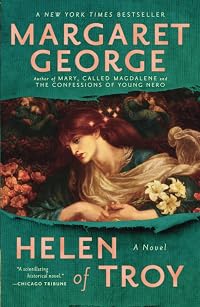
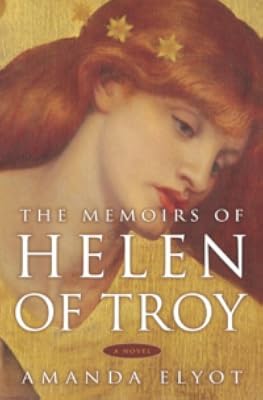
Married at a tender age to the Spartan king Menelaus, the beautiful Helen bears him a daughter and anticipates a passionless marriage before falling in love with the Trojan prince Paris, with whom she flees to Troy, with devastating consequences.Tags
Recommendations













Member Reviews
The story of Helen of Troy is one of those tales that everyone sort of knows generally without actually reading or watching it first-hand, as if we've taken it in via cultural osmosis (I've found the same to be true with the Star Wars movies and Moby Dick). We all somehow know that Helen was a pretty lady whose "face launched a thousand ships", and she caused a huge war involving some trickery called the Trojan horse. Pretty basic, but isn't it cool that a myth that built up around real events and real people who lived 3000 years ago, on a totally different continent, is still in our cultural consciousness? The answer is f yes.
What I liked best about the book was how it completely drew me into its world. The amount of detail in show more describing the places, the people, and their actions created a convincing reality for the story, and it felt good to just let go and lose myself in it. I've been reading a lot of non-fiction lately, so this was a good book for getting outside that mindset and do some reading just for the pure pleasure of a story.
Another thing I really liked about this story was finding out how many famous myths and heroes are connected to it, and through it to each other. It was like all these other myths were half of a puzzle's pieces, and the story of Helen of Troy is the other half that helps bind them all together into one.
The thing that drove me nuts about this book was the abundance of prophesies, and the fact that people would seem to fear them and yet act surprised when they came to pass. If they go to the trouble of seeking out prophesies, then why don't they believe them and accept that their actions can't alter anything? Also, way too many people in the book had prophetic powers, it sort of kills the magic of second sight if most people have it. show less
What I liked best about the book was how it completely drew me into its world. The amount of detail in show more describing the places, the people, and their actions created a convincing reality for the story, and it felt good to just let go and lose myself in it. I've been reading a lot of non-fiction lately, so this was a good book for getting outside that mindset and do some reading just for the pure pleasure of a story.
Another thing I really liked about this story was finding out how many famous myths and heroes are connected to it, and through it to each other. It was like all these other myths were half of a puzzle's pieces, and the story of Helen of Troy is the other half that helps bind them all together into one.
The thing that drove me nuts about this book was the abundance of prophesies, and the fact that people would seem to fear them and yet act surprised when they came to pass. If they go to the trouble of seeking out prophesies, then why don't they believe them and accept that their actions can't alter anything? Also, way too many people in the book had prophetic powers, it sort of kills the magic of second sight if most people have it. show less
This was the first book by Margaret George that I read and it was very enjoyable. The story of Helen is a well-known one but the myth surrounding her still remains - was she real or is this really only a story of "a face that launched a thousand ships" after all? Let's not even bring up the movie 'Troy' in this discussion either.
The story follows Helen, in her own perspective, from childhood through her marriage and to her meeting with Paris of Troy, their relationship, her leaving her husband, and the subsequent battle after her discovery. There is so much to the legend but overall George uses fantastical inclusions from Greek mythology to make the story more fiction than biography. I was under the impression this was a fictional show more retelling and when I discovered some were cataloging it as biography it surprised me. There isn't much left out and the imaginative additions are good.
The character of Helen at times is unlikeable. Her naivete and her selfishness in some parts really grate on the nerves. However, remembering that she was married as a child, bore a child herself before age 20 in the story, and then was in a loveless marriage to King Menelaus makes the reader believe her when she discovers passion in Paris' arms. Other characters who play a part in Helen's story are sometimes equally unlikeable. They treat Helen as a prize to win, a trophy to display, or a DID to protect. At points, you may want to scream for Helen to pick up a sword and swing it.
The writing is superb. It was one of the reasons I enjoyed the book so much. George writes clearly and I think brings the voice of Helen to the forefront of the story rather than making her simply a character amongst many who we read through; she's the doer rather than the lens (if that makes sense?).
I'd recommend it to readers who are used to a mixture of historical fantasy/fiction and who may have a knowledge of Greek myths and Homeric epic. While not necessary to read the book, it will be helpful.
*All thoughts and opinions are my own.* show less
The story follows Helen, in her own perspective, from childhood through her marriage and to her meeting with Paris of Troy, their relationship, her leaving her husband, and the subsequent battle after her discovery. There is so much to the legend but overall George uses fantastical inclusions from Greek mythology to make the story more fiction than biography. I was under the impression this was a fictional show more retelling and when I discovered some were cataloging it as biography it surprised me. There isn't much left out and the imaginative additions are good.
The character of Helen at times is unlikeable. Her naivete and her selfishness in some parts really grate on the nerves. However, remembering that she was married as a child, bore a child herself before age 20 in the story, and then was in a loveless marriage to King Menelaus makes the reader believe her when she discovers passion in Paris' arms. Other characters who play a part in Helen's story are sometimes equally unlikeable. They treat Helen as a prize to win, a trophy to display, or a DID to protect. At points, you may want to scream for Helen to pick up a sword and swing it.
The writing is superb. It was one of the reasons I enjoyed the book so much. George writes clearly and I think brings the voice of Helen to the forefront of the story rather than making her simply a character amongst many who we read through; she's the doer rather than the lens (if that makes sense?).
I'd recommend it to readers who are used to a mixture of historical fantasy/fiction and who may have a knowledge of Greek myths and Homeric epic. While not necessary to read the book, it will be helpful.
*All thoughts and opinions are my own.* show less
I'm afraid I'm going to take a slightly more critical angle than many reviewers here have done. First, the good stuff. Margaret George ambitiously sets out to retell Helen's story from beginning to end, which is no mean feat. She manages to marshal several different myth cycles into a coherent whole, which is an admirable achievement and shows the depth of her research. Unfortunately, however, this hefty novel lacks the grandeur and spirit I'd hoped for in a tale about the Trojan War. While the early part is enjoyable, dealing with the less familiar territory of Helen's childhood, the pacing and characterisation begin to struggle by the time we reach the period of the War itself - despite the fact that this is when all the great heroes show more turn up. (Homer himself, possibly foreseeing the pacing issues of a ten-year siege, just skipped straight to the good bits at the end.)
Unfortunately the book doesn't seem to be terribly interested in the War. The climactic moments, such as Achilles's clash with Hector, are presented in a very perfunctory fashion, and the novel seems more interested in Helen's and Paris's breathless romance going on behind the battlements. This romance element was a little too heavy for me: we're constantly told they're both beautiful, but neither of them is really given enough depth for us to feel the same obsessive interest in them. (The same is true of the secondary characters: even those who should raise strong passions, such as Hector or Achilles, feel one-dimensional.) Helen herself comes across as improbably naive, alternately consumed with desire for Paris and fretting like a schoolgirl about her popularity among the women of the Trojan royal family. Her erratic gift of foresight seems to be little more than a convenient plot device to make sure readers don't miss out on any good moments on the battlefield; and the gods are dealt with in a similarly indecisive way. Although Zeus and Aphrodite address Helen, and Oenone is a genuine water nymph, Apollo makes an appearance only as an object of worship, and his arrows are rationalised away as metaphors for the spread of the plague. It feels odd to be stranded in a middle ground where sometimes the gods are real and sometimes not - perhaps I would have felt more comfortable if the book had plumped either for one or the other.
All in all it's a strangely flat novel, which gives the impression of the Trojan War and its heroes being something of a sideshow for Helen's and Paris's doe-eyed scenes of mutual adoration. I would have enjoyed it more, probably, if I were more into historical romances, but unfortunately I felt it was something of a missed opportunity.
You can read my full review on my blog here:
http://theidlewoman.blogspot.co.uk/2013/09/helen-of-troy-margaret-george.html show less
Unfortunately the book doesn't seem to be terribly interested in the War. The climactic moments, such as Achilles's clash with Hector, are presented in a very perfunctory fashion, and the novel seems more interested in Helen's and Paris's breathless romance going on behind the battlements. This romance element was a little too heavy for me: we're constantly told they're both beautiful, but neither of them is really given enough depth for us to feel the same obsessive interest in them. (The same is true of the secondary characters: even those who should raise strong passions, such as Hector or Achilles, feel one-dimensional.) Helen herself comes across as improbably naive, alternately consumed with desire for Paris and fretting like a schoolgirl about her popularity among the women of the Trojan royal family. Her erratic gift of foresight seems to be little more than a convenient plot device to make sure readers don't miss out on any good moments on the battlefield; and the gods are dealt with in a similarly indecisive way. Although Zeus and Aphrodite address Helen, and Oenone is a genuine water nymph, Apollo makes an appearance only as an object of worship, and his arrows are rationalised away as metaphors for the spread of the plague. It feels odd to be stranded in a middle ground where sometimes the gods are real and sometimes not - perhaps I would have felt more comfortable if the book had plumped either for one or the other.
All in all it's a strangely flat novel, which gives the impression of the Trojan War and its heroes being something of a sideshow for Helen's and Paris's doe-eyed scenes of mutual adoration. I would have enjoyed it more, probably, if I were more into historical romances, but unfortunately I felt it was something of a missed opportunity.
You can read my full review on my blog here:
http://theidlewoman.blogspot.co.uk/2013/09/helen-of-troy-margaret-george.html show less
It's not like we don't know what's going to happen: Menelaus, Paris, Troy, the horse. It's in the how and the why that Margaret George spins an engrossing tale. What is it like to have "the face that launched a thousand ships"? To be perhaps the most famous adultress in history? To be a "survivor" (as Hector calls Helen) in the midst of terrible destruction? Homer leaves much about Helen to be read between the lines, and Margaret George takes up the challenge. She imagines a Helen who is competent and smart as well as beautiful. Where George falls is in her depiction of Paris. What is a woman like Helen doing with a drip like this? Far too much is dependent on Aphrodite's "favor"--it's hard for a reader to see the attraction otherwise, show more especially as the war grinds on. The author also relies a little too heavily on "potions" and second sight to carry the narrative through the war. But that said, the book pulls the reader along with its rich story and brings the Iliad alive for the modern day. show less
There are many different narratives of Helen of Troy, and there are many different Helens. Here Margaret George follows a fairly conservative version of the story. In this fictionalized "autobiography," she weaves together many tidbits of Helen found in Ancient writing to create a coherent story; tidbits not just from Homer, but other classical sources too. And as with her other novels, George puts a tremendous effort into research. In this book she uses a slightly formal tone of voice to add authenticity to the epic story. While I understand why the author made this choice, unfortunately, this tone keeps the characters at a distance. Some readers have complained about her including the Greek gods of mythology, but I vehemently show more disagree: they are integral to the story. Without them, the human character's motivation would collapse, and further, the gods were part of the Ancient versions of these stories and so firmly belong there.
Although it is long (over 638 pages), this book is not challenging. It's more of a vacation read that you can get swept up in for a few days. Or, if you're not in the mood for the classical Helen myths, this is a decent mainstream version. Of all the Helens, my favourites are still two from Euripides: Helen, where she is hidden in Egypt, and The Trojan Women, where she runs verbal circles around the other characters. show less
Although it is long (over 638 pages), this book is not challenging. It's more of a vacation read that you can get swept up in for a few days. Or, if you're not in the mood for the classical Helen myths, this is a decent mainstream version. Of all the Helens, my favourites are still two from Euripides: Helen, where she is hidden in Egypt, and The Trojan Women, where she runs verbal circles around the other characters. show less
Yesterday, before I read the last page of the book and the afterwords by the author, I was ready to rant and rave about how selfish and vapid Helen was and how ridiculous everyone seemed with their claims of seeing the future and being visited by gods every other day....then I learned that it's a good possibility that she never existed and is simply a myth. How can I get self-righteous with a myth?
But seriously, I couldn't feel any sympathy for Helen and Paris. They should have known better. Paris was 16 so he was probably letting his hormones do the talking but Helen was a grown woman.
She knew her brother-in-law was looking for a fight with Troy and so she runs away in the middle of the night with the Prince of Troy and was shocked show more that they would gather a vast army and invade? Please!
She left her daughter behind and she left her parents to deal with the humiliation and we're supposed to swoon over the great love affair? Whatever, Helen!
So, all ranting aside, this was a lovely read. Margaret George does an amazing job of transporting us back to a time that may or may not have existed. It seemed real to me.
She gave each character such distinct personalities that they all came alive.
However, the character of Helen and the authors interpretation of Cleopatra were very similar. I guess being queens of ancient lands, you'd imagine they'd have similar personalities or Margaret George has a formula for her ancient queens.
I've got her story of Mary of Magdelene on my TBR list. Surely, Mary's character will be different.
Bottom line: great read, enchanting writing. show less
But seriously, I couldn't feel any sympathy for Helen and Paris. They should have known better. Paris was 16 so he was probably letting his hormones do the talking but Helen was a grown woman.
She knew her brother-in-law was looking for a fight with Troy and so she runs away in the middle of the night with the Prince of Troy and was shocked show more that they would gather a vast army and invade? Please!
She left her daughter behind and she left her parents to deal with the humiliation and we're supposed to swoon over the great love affair? Whatever, Helen!
So, all ranting aside, this was a lovely read. Margaret George does an amazing job of transporting us back to a time that may or may not have existed. It seemed real to me.
She gave each character such distinct personalities that they all came alive.
However, the character of Helen and the authors interpretation of Cleopatra were very similar. I guess being queens of ancient lands, you'd imagine they'd have similar personalities or Margaret George has a formula for her ancient queens.
I've got her story of Mary of Magdelene on my TBR list. Surely, Mary's character will be different.
Bottom line: great read, enchanting writing. show less
My review for Margaret George's Helen of Troy is a hard one to write. Whether you are like me - knowing little of Helen beyond her "abduction" by Paris - or you know all the details of her story - I don't want to give you a long synopsis. If you are a newcomer to the tale, I won't spoil it for you, and if you are a Helen aficionado, I won't bore you with the details.
Described by Christopher Marlowe as the "face that launched a thousand ships," Helen of Troy is a captivating historical figure with a story that fascinates and intrigues us even today. In Margaret George's spellbinding Helen of Troy, the story of Helen is told through her eyes and experiences. George's incredible writing pulls the reader into the story, offering a show more first-hand account of Helen's day-to-day life.
Helen of Troy is simply stunning! I was mesmerized from the first sentence to the surprise (to me anyway) ending. Helen is portrayed with all her metaphorical warts, as a flawed and tortured woman, and Paris as a somewhat naïve young man yearning to prove himself. The larger-than-life "supporting" characters - Menelaus, Agamemnon, Odysseus, Achilles, and even the goddess Aphrodite - leapt off the pages, creating a multi-layered story that was credible and gripping.
Margaret George's glorious descriptions of the setting were simply beautiful and superbly written. Her words bring ancient Greece to vivid life, making Helen of Troy a highly readable recreation of the mythic story. This is the best book I've read all year, and I will definitely be looking to read more historical fiction from Margaret George in the future. show less
Described by Christopher Marlowe as the "face that launched a thousand ships," Helen of Troy is a captivating historical figure with a story that fascinates and intrigues us even today. In Margaret George's spellbinding Helen of Troy, the story of Helen is told through her eyes and experiences. George's incredible writing pulls the reader into the story, offering a show more first-hand account of Helen's day-to-day life.
Helen of Troy is simply stunning! I was mesmerized from the first sentence to the surprise (to me anyway) ending. Helen is portrayed with all her metaphorical warts, as a flawed and tortured woman, and Paris as a somewhat naïve young man yearning to prove himself. The larger-than-life "supporting" characters - Menelaus, Agamemnon, Odysseus, Achilles, and even the goddess Aphrodite - leapt off the pages, creating a multi-layered story that was credible and gripping.
Margaret George's glorious descriptions of the setting were simply beautiful and superbly written. Her words bring ancient Greece to vivid life, making Helen of Troy a highly readable recreation of the mythic story. This is the best book I've read all year, and I will definitely be looking to read more historical fiction from Margaret George in the future. show less
Members
- Recently Added By
Lists

Best historical fiction set in the ancient world
126 works; 40 members

Books Read in 2017
4,249 works; 129 members

The Trojan War
109 works; 13 members

Authors from the United States
245 works; 3 members

el
1,139 works; 1 member
Author Information

18+ Works 13,533 Members
Margaret George lives with her husband in Madison, Wisconsin.
Series

Work Relationships
Common Knowledge
- Canonical title
- Helen of Troy
- Original publication date
- 2006-07-26
- People/Characters
- Helen of Troy; Paris of Troy; Achilles; Agamemnon; Menelaus; Hermione (daughter of Menelaus & Helen) (show all 15); Penthesilea (as Penthesileia); Andromache; Hector; Cassandra; Priam; Hecuba; Clytemnestra; Oenone; Gelanor
- Important places
- Sparta, Greece; Troy
- Important events
- Trojan War
- Epigraph
- ...Troy, with walls still far from old
Had been destroyed, that noble, royal town
And many a man full worthy of renown
Had lost his life - that no man can gainsay -
And all for Helen, the wife of Menelay,
W... (show all)hen a thing's done, it may then be no other.
--John Lydgate, Troy Book, circa 1412-1420 - Dedication
- To my daughter, Alison Rachel, dear friend and companion
And to her grandmother, my mother, Margaret Dean, a last great Southern belle - First words
- Prologue: I flew back to Troy.
- Last words
- (Click to show. Warning: May contain spoilers.)"Paris, I come," I answered.
Classifications
Statistics
- Members
- 1,794
- Popularity
- 12,219
- Reviews
- 49
- Rating
- (3.68)
- Languages
- 5 — English, German, Korean, Portuguese, Spanish
- Media
- Paper, Audiobook, Ebook
- ISBNs
- 22
- ASINs
- 10