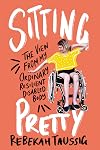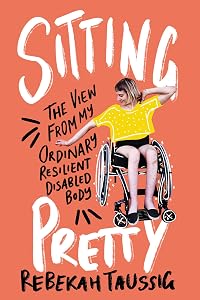
Sitting Pretty: The View from My Ordinary Resilient Disabled Body
by Rebekah Taussig
On This Page
Description
A memoir-in-essays from disability advocate and creator of the Instagram account @sitting_pretty Rebekah Taussig, processing a lifetime of memories to paint a beautiful, nuanced portrait of a body that looks and moves differently than most.Growing up as a paralyzed girl during the 90s and early 2000s, Rebekah Taussig only saw disability depicted as something monstrous (The Hunchback of Notre Dame), inspirational (Helen Keller), or angelic (Forrest Gump). None of this felt right; and as she show more got older, she longed for more stories that allowed disability to be complex and ordinary, uncomfortable and fine, painful and fulfilling.
Writing about the rhythms and textures of what it means to live in a body that doesn't fit, Rebekah reflects on everything from the complications of kindness and charity, living both independently and dependently, experiencing intimacy, and how the pervasiveness of ableism in our everyday media directly translates to everyday life.
Disability affects all of us, directly or indirectly, at one point or another. By exploring this truth in poignant and lyrical essays, Taussig illustrates the need for more stories and more voices to understand the diversity of humanity. Sitting Pretty challenges us as a society to be patient and vigilant, practical and imaginative, kind and relentless, as we set to work to write an entirely different story.
. show less
Tags
Recommendations







Member Reviews
Growing up as a paralyzed girl during the 90s and early 2000s, Rebekah Taussig only saw
disability depicted as something monstrous (The Hunchback of Notre Dame),
inspirational (Helen Keller), or angelic (Forrest Gump). None of this felt
right; and as she got older, she longed for more stories that allowed
disability to be complex and ordinary, uncomfortable and fine, painful and
fulfilling.
disability depicted as something monstrous (The Hunchback of Notre Dame),
inspirational (Helen Keller), or angelic (Forrest Gump). None of this felt
right; and as she got older, she longed for more stories that allowed
disability to be complex and ordinary, uncomfortable and fine, painful and
fulfilling.
This book stood out to me for its exceptional writing quality, bringing to life the personal scenes and explaining concepts with both clarity and profoundness. Taussig made many points that I'm already familiar with, but again and again her style of doing so took my breath away. I can easily see this book being enlightening for those encountering these ideas for the first time or being the book that finally makes it all click into place for someone who might be struggling to understand.
It was because of this that I was genuinely surprised by the chapter in which she relates her first experience of teaching a disability-focused class to high schoolers. I found myself nodding along as she made her first presentation, fully expecting the show more students to get that lightbulb moment. If this was a work of fiction, I'm guessing they would have. But the fact that they didn't reveals so much about our real world and the uphill battle disability advocates face. When life doesn't work the way it does in stories, when it doesn't even work the way it should, what can you do? How can a disabled teacher get a message about her own value as a person through to her most stubborn-minded students? Is it even possible to change such entrenched attitudes? This chapter alone was so powerful that I would recommend the book just for its sake, even if a potential reader was somehow completely uninterested in the rest of it.
But I really would recommend every single chapter of this book. Each one shared powerful stories that deserve to be heard, especially in a world that so often gets it completely wrong when it comes to disability representation. If disability representation is even thought of at all! I loved the way the author presented them, with honesty and insight and a recognition of her own flaws and limitations, her own humanity. If you're looking for a good memoir, add this one to your list. show less
It was because of this that I was genuinely surprised by the chapter in which she relates her first experience of teaching a disability-focused class to high schoolers. I found myself nodding along as she made her first presentation, fully expecting the show more students to get that lightbulb moment. If this was a work of fiction, I'm guessing they would have. But the fact that they didn't reveals so much about our real world and the uphill battle disability advocates face. When life doesn't work the way it does in stories, when it doesn't even work the way it should, what can you do? How can a disabled teacher get a message about her own value as a person through to her most stubborn-minded students? Is it even possible to change such entrenched attitudes? This chapter alone was so powerful that I would recommend the book just for its sake, even if a potential reader was somehow completely uninterested in the rest of it.
But I really would recommend every single chapter of this book. Each one shared powerful stories that deserve to be heard, especially in a world that so often gets it completely wrong when it comes to disability representation. If disability representation is even thought of at all! I loved the way the author presented them, with honesty and insight and a recognition of her own flaws and limitations, her own humanity. If you're looking for a good memoir, add this one to your list. show less
what was especially important for me to read in this book was about helping versus what's actually helpful, and one small gesture versus systemic change. the great example she gave was how if she can't reach the napkins at a coffee shop, the difference between someone handing her a napkin and someone figuring out a more accessible place to put the napkins so everyone can just reach them. that shouldn't have been so mind-blowing but honestly it was.
"The goal is not to avoid falling or needing help. The goal is to be seen, asked, heard, believed, valued as we are, allowed to exist in these exact bodies, invited to the party, and encouraged to dance however we want to."
"Mattresses, cups, and clothes exist because the human body has limits, show more and tools make surviving this planet a bit easier. Literally everything that's been built--every signpost and path out in nature, every building and bus in our cities, every doorknob and chair in your house--was made to accommodate somebody. We stop refining or expanding our accommodations only when we're satisfied that those we want at the party can get there." show less
"The goal is not to avoid falling or needing help. The goal is to be seen, asked, heard, believed, valued as we are, allowed to exist in these exact bodies, invited to the party, and encouraged to dance however we want to."
"Mattresses, cups, and clothes exist because the human body has limits, show more and tools make surviving this planet a bit easier. Literally everything that's been built--every signpost and path out in nature, every building and bus in our cities, every doorknob and chair in your house--was made to accommodate somebody. We stop refining or expanding our accommodations only when we're satisfied that those we want at the party can get there." show less
I don’t think I’ve ever called a book a 'must read’ before this one but that’s exactly what it is. It’s written for 'anyone on the outside, the margins', who wants 'stories that give language to their experience and for those who want to understand what being on the margins feels like'. The author is pictured on the cover in a wheelchair but the scope of disabilities she addresses is broad enough to include those that are invisible and even those that are temporary.
In writing this review I’m borrowing heavily on the passages I underlined – practically the whole book – because I don’t have the words to say how relatable and insightful it truly is. What I can say is that many parts of it resonated with my own show more experiences as a parent navigating the ‘special needs’ SSI/SSA/ACCCHS/Medicare/Medicaid/DES/HUD/accessible housing labyrinth. The book itself is very readable, fairly short, and well organized into eight essays that address issues ranging from kindness to accessibility and beyond. If you subscribe to Instagram you can learn more about the author and this book at @sitting_pretty or on her website at rebekahtaussig.com. show less
In writing this review I’m borrowing heavily on the passages I underlined – practically the whole book – because I don’t have the words to say how relatable and insightful it truly is. What I can say is that many parts of it resonated with my own show more experiences as a parent navigating the ‘special needs’
Rebekah Taussig had cancer when she was very young and, at the age of three, could no longer walk unaided. Still, she says proudly, "I felt talented and dreamed big." Taussig earned a PhD in disability studies and creative non-fiction. In addition, she became a teacher and passionate advocate for change in society's attitude towards the disabled. The Americans with Disabilities Act was passed in 1990, but Taussig is convinced that we still have a long way to go. In "Sitting Pretty," she tells us, "I believe there is a kinder, more supportive, creative version of us out there…." In addition, she emphasizes that physical barriers are not the only obstacles that the disabled face; the psychological obstacles can be equally daunting.
In show more her powerful memoir, "Sitting Pretty," Taussig reveals that her mom, dad, and five siblings did not coddle her. There was "no wallowing, no time for grieving, and definitely no whining." However, as she grew older, it became clear that blending in with her peers would be difficult. When she was invited to birthday parties and sleepovers, she often had the feeling that she was a weak and helpless burden. At her lowest ebb, Rebekah felt ashamed, stigmatized, erased, and misunderstood. Now she comes across as a smart, funny, resilient, and imaginative force of nature who brings a great deal to the table as a friend, romantic partner, educator, and activist.
The author's prose style is elegant, lyrical, and deeply moving. In a particularly poignant chapter, Taussig describes her yearning for physical, emotional, and economic independence. There are harsher passages, as well, in which she lambastes those who presume to know what is best for her and insist on giving her a hand when she is perfectly capable of managing by herself. We get it that she is annoyed at the many misguided men and women she encounters. However, Taussig's writing is most compelling when she employs humor, sincerity, and persuasion to educate those of us who are in need of a wake-up call. Her central theme, that disabled people have value and deserve to be treated with sensitivity and respect, is one that we should all take to heart. show less
This was an excellent read, both in content and execution. Taussig is a fantastic writer - reading her words was a pleasure, and I felt all the emotions with her as I journeyed through the book. As most really good nonfiction does, her work educated me and made me uncomfortable as she challenged me to think more deeply about the privilege I enjoy as a able bodied person. The chapter on kindness especially made me think and think again about my assumptions and biases, and will immediately change my actions in the future.
Really wonderful work - highly recommended!
Really wonderful work - highly recommended!
Rebekah Taussig’s memoir-in-essay processes Taussig’s lifetime growing up as a paralyzed girl during the 90s and 2000s. As a kid, she only really saw disability as something monstrous, inspirational, or angelic - nothing that matched who she was. As she got older, she longed for more stories that show disability in everyday life.
In her memoir, Taussig reflects on everything from complicated kindness, living both independently and dependently, intimacy, and ableism. Sitting Pretty challenges the reader to look at how disability affects us all, directly and indirectly.
This is an excellent read that’s part memoir, part disability equality and justice manifesto. Taussig shines the light on what it means to be disabled and how that can show more change overtime (like when I fell down a flight of cement stairs with a trash bin on top of me and nearly broke my foot - I was on crutches for a while and my foot gets weird pain when turned in certain ways. It’s weird, but I wouldn’t call myself disabled) and throughout history (ex. If we didn’t have glasses, how many of us would technically be considered disabled?).
Taussig is a native to the Kansas City area and I’m actually pretty curious about her take on a lot of our historical buildings around here. I’ve had this discussion with a patron of mine who is in a wheelchair and he has no access to specific buildings and due to the building being marked as “historical”, they won’t update their layout. He says it’s like yelling at a wall when talking to people about it.
Overall, I think a lot of abled bodied readers should pick this up so they can be challenged and maybe open their eyes up for a change in how they see disabled bodies. We as a society could be way more accommodating than we actually are. show less
In her memoir, Taussig reflects on everything from complicated kindness, living both independently and dependently, intimacy, and ableism. Sitting Pretty challenges the reader to look at how disability affects us all, directly and indirectly.
This is an excellent read that’s part memoir, part disability equality and justice manifesto. Taussig shines the light on what it means to be disabled and how that can show more change overtime (like when I fell down a flight of cement stairs with a trash bin on top of me and nearly broke my foot - I was on crutches for a while and my foot gets weird pain when turned in certain ways. It’s weird, but I wouldn’t call myself disabled) and throughout history (ex. If we didn’t have glasses, how many of us would technically be considered disabled?).
Taussig is a native to the Kansas City area and I’m actually pretty curious about her take on a lot of our historical buildings around here. I’ve had this discussion with a patron of mine who is in a wheelchair and he has no access to specific buildings and due to the building being marked as “historical”, they won’t update their layout. He says it’s like yelling at a wall when talking to people about it.
Overall, I think a lot of abled bodied readers should pick this up so they can be challenged and maybe open their eyes up for a change in how they see disabled bodies. We as a society could be way more accommodating than we actually are. show less
Members
- Recently Added By
Lists

Top Five Books of 2021
604 works; 180 members

Science: Health & Medical
100 works; 1 member

Books Read in 2021
5,361 works; 114 members

HarperCollins Publishers
144 works; 3 members
Author Information

3+ Works 338 Members
Rebekah Taussig, PhD, is a Kansas City writer and teacher with her doctorate in Creative Nonfiction and Disability Studies. She runs the Instagram platform @sitting_pretty, where she crafts "mini-memoirs" about her daily life. She lives in a tiny, old house with her fussy family of tender-hearted snugglers.
Awards and Honors
Common Knowledge
- Original publication date
- 2020
Classifications
- Genres
- Biography & Memoir, Nonfiction, General Nonfiction
- DDC/MDS
- 362.4 — Society, government, & culture Social problems and social services Social Welfare People with disabilites
- LCC
- RC406 .P3 .T38 — Medicine Internal medicine Internal medicine Neurosciences. Biological psychiatry. Neuropsychiatry Neurology. Diseases of the nervous system
- BISAC
Statistics
- Members
- 318
- Popularity
- 100,316
- Reviews
- 16
- Rating
- (4.40)
- Languages
- English
- Media
- Paper, Audiobook, Ebook
- ISBNs
- 9
- ASINs
- 2