On This Page
Description
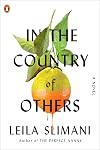
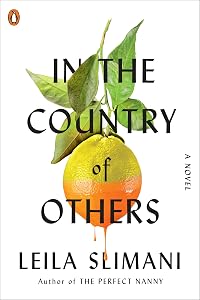
"In her first new novel since The Perfect Nanny launched her onto the world stage and won her acclaim for her "devastatingly perceptive character studies" (The New York Times Book Review), Leila Slimani draws on her own family's inspiring story for the first volume in a planned trilogy about race, resilience, and women's empowerment. Mathilde, a spirited young Frenchwoman, falls in love with Amine, a handsome Moroccan soldier in the French army during World War II. After the war, the couple show more settles in Morocco. While Amine tries to cultivate his family farm's rocky terrain, Mathilde feels her vitality sapped by the isolation, the harsh climate, the lack of money, and the mistrust she inspires as a foreigner. Left increasingly alone to raise her two children in a world whose rules she does not understand, and with her daughter taunted at school by rich French girls for her secondhand clothes and unruly hair, Mathilde goes from being reduced to a farmer's wife to defying the country's chauvinism and repressive social codes by offering medical services to the rural population. As tensions mount between the Moroccans and the French colonists, Amine finds himself caught in the crossfire: in solidarity with his Moroccan workers yet also a landowner, despised by the French yet married to a Frenchwoman, and proud of his wife's resolve but ashamed by her refusal to be subjugated. All of them live in the country of others--especially the women, forced to live in the land of men--and with this novel, Leila Slimani issues the first salvo in their emancipation"-- show lessTags
Recommendations































Member Reviews
Many contemporary novels deal with experiences in and with other cultures, but what is unusual about Leila Slimani's novel is, among other things, the direction of the emigration movement: her novel is set in the 1940s and is the first volume of a trilogy. In this book, she describes the life of her grandparents. Her young, vivacious grandmother Mathilde, newly married, moves with her husband, a Moroccan officer, to the so-called French ‘protectorate’. She quickly realises that even here she will not be freed from the ‘domestic duties’ she fled from. What's more, her husband soon turns out to be a real patriarch, and life in the Moroccan countryside is harder than she thought. Amine takes over the remote farm at the foot of the show more Atlas Mountains. He has precise ideas about how he wants to run it, but he lacks the financial means and the patience. Mathilde raises their two children and insists that their daughter Aïcha be educated at the French convent school. Aïcha is a highly intelligent girl, but she is unable to fit into the French “society” of her place of residence. She is also very sensitive. The family receives support only from a Hungarian Jewish gynaecologist who fled to Morocco with his young wife during the Second World War.
Furthermore, Mathilde and Amine have to contend with increasing racist discrimination both in France and in their new home – all the more so as the conflicts with the occupiers intensify due to the independence efforts.
Slimani tells the story simply, discreetly and with all the necessary nuance. She skilfully and deftly weaves social issues with personal ones. A novel that is ‘brilliant’ precisely because of its sobriety.
She describes everyday life during the 1940s and 1950s from the Moroccan perspective and that of the French community living there. The divide between the two societies could not be greater.
I am already very excited about the second volume. show less
Furthermore, Mathilde and Amine have to contend with increasing racist discrimination both in France and in their new home – all the more so as the conflicts with the occupiers intensify due to the independence efforts.
Slimani tells the story simply, discreetly and with all the necessary nuance. She skilfully and deftly weaves social issues with personal ones. A novel that is ‘brilliant’ precisely because of its sobriety.
She describes everyday life during the 1940s and 1950s from the Moroccan perspective and that of the French community living there. The divide between the two societies could not be greater.
I am already very excited about the second volume. show less
Read Around the World. Morocco.
In the Country of Others is a historical fiction by Moroccan author Leïla Slimani, set in Morocco in the 1940s and 1950s. It is the first book of a trilogy.
French Catholic Mathilde meets handsome Muslim Moroccan soldier Amine Belhaj in 1944 when he is stationed in Alsace fighting for the French in WWII. The two fall in love and after the war Mathilde moves from Strasbourg to Rabat, Morocco, to start what she envisages to be a romantic adventurous exotic life. The reality is somewhat different, and she struggles with the hot, dusty isolation and confines of her new life. On the one hand she is shunned by the French for marrying a Moroccan and the locals perceive her to be a foreigner. Amine shifts from show more being the romantic hero to a controlling, abusive workaholic determined to get ahead. He also is torn between his sympathies with his countrymen (including his brother Oman) who are pushing for independence and his loyalties to the French who he fought for.
Their daughter Aïcha also struggles at the Catholic school she attends with the cruelty of children towards those they perceive as different or other. Mathilde rages at the confines of her life and finally settles herself to giving medical aid to the villagers.
This book gives great insight into life in 1940s and 50s Morocco and the political climate of the time. My main problem was there was not one likeable character in the book. Mathilde varies from being petty and self absorbed to bizarre and almost deranged at times. Nonetheless, this was a worthwhile read but I’m not sure I’ll persist with the sequels. show less
In the Country of Others is a historical fiction by Moroccan author Leïla Slimani, set in Morocco in the 1940s and 1950s. It is the first book of a trilogy.
French Catholic Mathilde meets handsome Muslim Moroccan soldier Amine Belhaj in 1944 when he is stationed in Alsace fighting for the French in WWII. The two fall in love and after the war Mathilde moves from Strasbourg to Rabat, Morocco, to start what she envisages to be a romantic adventurous exotic life. The reality is somewhat different, and she struggles with the hot, dusty isolation and confines of her new life. On the one hand she is shunned by the French for marrying a Moroccan and the locals perceive her to be a foreigner. Amine shifts from show more being the romantic hero to a controlling, abusive workaholic determined to get ahead. He also is torn between his sympathies with his countrymen (including his brother Oman) who are pushing for independence and his loyalties to the French who he fought for.
Their daughter Aïcha also struggles at the Catholic school she attends with the cruelty of children towards those they perceive as different or other. Mathilde rages at the confines of her life and finally settles herself to giving medical aid to the villagers.
This book gives great insight into life in 1940s and 50s Morocco and the political climate of the time. My main problem was there was not one likeable character in the book. Mathilde varies from being petty and self absorbed to bizarre and almost deranged at times. Nonetheless, this was a worthwhile read but I’m not sure I’ll persist with the sequels. show less
The first volume of a proposed trilogy telling a family history on 20th century Morocco.
I found the early part of the book a little slow and fragmentary, but quickly started enjoying the writing and the content.
Like all good historical fiction, the reader feels privileged to gain an insight into another time, place and culture. The author is not didactic, but I learned much anyway. The characters are believable, and seem to be closely based on the author's family and connections.
I really enjoyed the book, and felt engaged with the family, and the country, as both move forward, with steps and missteps.
Looking forward to reading volume 2.
I found the early part of the book a little slow and fragmentary, but quickly started enjoying the writing and the content.
Like all good historical fiction, the reader feels privileged to gain an insight into another time, place and culture. The author is not didactic, but I learned much anyway. The characters are believable, and seem to be closely based on the author's family and connections.
I really enjoyed the book, and felt engaged with the family, and the country, as both move forward, with steps and missteps.
Looking forward to reading volume 2.
Written by author of “Lullaby” this is story of a young French woman who falls in love with a Moroccan soldier who is part of the liberating force in her village. Wanting to escape restricted village life she joins her husband in his native country. From then on she learns both how different the country and the role (options for) women is. Tempted not to return after a visit to her father’s funeral in France, she commits to her new life. In the Moroccan background the nationalist movement is growing in strength and violent action. Although trying to largely ignore what is going on around them, they are drawn in. As I read, I wondered if the family might be destroyed by the tumult around them, but the novel ends with them looking show more out on the impending chaos. show less
I'm not sure why I reserved this at the library; and I'm also not sure why I persisted with it when it was a bit of a slog to read. Was it because I'd never read anything set in Morocco before? Nope, I read four: Desert by Nobel Laureate JMG Le Clezio, translated by C. Dickson; The Storyteller of Marrakesh by Indian author Joydeep Roy-Battacharya; and two by Australian authors: Watch Out for Me by Sylvia Johnson, and Closer to Stone by Simon Cleary. Maybe it was because I thought it was time to read an author who was Moroccan?
The trouble is, it reads like the family history it is, turned into a rather long-winded novel. (There are 313 pages and this is only Volume One). The intent is worthy: Mathilde's struggle for self-determination in show more a patriarchal society is an analogy with Morocco's struggle against colonialism under the French. But it's a messy analogy because Mathilde is French, and thus her desire for freedom comes from her French background and the independence that she had in the Resistance. Her ideas about feminism and autonomy come from an 'external' culture, and the implications of this are amplified by the extensive and often brutal commentary about how backward Morocco was in the postwar period when the novel is set.
Odd bits of detail are disconcerting: puzzling irrelevances break up the flow of the writing for no apparent purpose. This paragraph prefaces Mathilde intervention in her niece Selma's rebellious behaviour.
Apart from the fact that this is a bad case of Tell Everything, why does Yasmine lift up her skirts, and what are we meant to infer from the sight of those curly hairs? And how does Yasmine from the doorstep cough her disgusting mucus into the well?
To read the rest of my review please visit https://anzlitlovers.com/2021/12/29/the-country-of-others-by-leila-slimani-trans... show less
The trouble is, it reads like the family history it is, turned into a rather long-winded novel. (There are 313 pages and this is only Volume One). The intent is worthy: Mathilde's struggle for self-determination in show more a patriarchal society is an analogy with Morocco's struggle against colonialism under the French. But it's a messy analogy because Mathilde is French, and thus her desire for freedom comes from her French background and the independence that she had in the Resistance. Her ideas about feminism and autonomy come from an 'external' culture, and the implications of this are amplified by the extensive and often brutal commentary about how backward Morocco was in the postwar period when the novel is set.
Odd bits of detail are disconcerting: puzzling irrelevances break up the flow of the writing for no apparent purpose. This paragraph prefaces Mathilde intervention in her niece Selma's rebellious behaviour.
When Mathilde reached the old hobnailed door, she grabbed the knocker and banged it twice, very hard. Yasmine opened it — she'd lifted up her skirts and Mathilde could see that her black calves were covered in curly hairs. It was almost ten in the morning but the house was quiet. She could hear the purring of the cats stretched out in the courtyard and the slop of the wet mop that the maid was using to clean the floor. Yasmine watched in astonishment as Mathilde took off her djellaba, tossed her headscarf onto a chair and ran upstairs. Yasmine coughed so hard that she spat a thick, greenish wad of mucus into the well. (p.90)
Apart from the fact that this is a bad case of Tell Everything, why does Yasmine lift up her skirts, and what are we meant to infer from the sight of those curly hairs? And how does Yasmine from the doorstep cough her disgusting mucus into the well?
To read the rest of my review please visit https://anzlitlovers.com/2021/12/29/the-country-of-others-by-leila-slimani-trans... show less
This is the first book in a planned trilogy. How exciting that I have 2 more books to read. Can’t wait. This book is a family saga of the Frenchwoman and the Arab/Moroccan. A mixed marriage in the time of political strife. Mathilde, the Frenchwoman has to navigate her new life in Morocco where the culture is so different than France. There is unhappiness which gradually turns to acceptance. The path of this transformation is the book and is definitely worth a read.
*** : L'Algérie des années 50 vue par une jeune française mariée à un algérien. A suivre.
Members
- Recently Added By
Lists

Best of French Literature
138 works; 27 members

Books Read in 2023
5,547 works; 145 members

Anticipated 2021 Reads
231 works; 7 members

Books Read in 2020
4,379 works; 124 members
Author Information

21+ Works 3,954 Members
Leila Slimani was in her native Morocco promoting her novel Adle, about a woman addicted to sex, when she began meeting women who confided the dark secrets of their sexual lives. In Morocco, adultery, abortion, homosexuality, prostitution, and sex outside of marriage are all punishable by law, and women have only two choices: They can be wives or show more virgins. In this fearless expos of the secrets and lies of women's intimate lives, Slimani combines vivid, often harrowing testimonies with her passionate and intelligent commentary to make a galvanizing case for a sexual revolution in the Arab world. show less
Some Editions
Awards and Honors
Awards
Distinctions
Notable Lists
Series

Belongs to Publisher Series
Gallimard, Folio (6943)
Common Knowledge
- Canonical title
- In the Country of Others
- Original title
- Les pays des autres
- Alternate titles
- The Country of Others (UK title) (UK title); Mathilde
- Original publication date
- 2020-06-02
- People/Characters
- Mathilde Belhaj; Amine Belhaj; Aïcha Belhaj; Selim Belhaj; Mouilala Belhaj; Selma Belhaj
- Important places
- Meknes, Morocco
- Epigraph
- The damnation of this word: miscegenation. Let us write it in giant letters on the page. ÉDOUARD GLISSANT, Poetic Intention
But his blood would not be quiet, let him save it. It would not be either one or the other and let his body save itself. Because the black blood drove him first to the negro cabin. And then the white blood drove him out of th... (show all)ere, as it was the black blood which snatched up the pistol and the white blood which would not let him fire it. WILLIAM FAULKNER, Light in August - Dedication
- In memory of Anne and Atika, whose freedom is a constant inspiration
To my beloved mother - First words
- The first time Mathilde visited the farm, she thought: It's too remote.
- Last words
- (Click to show. Warning: May contain spoilers.)Let them die.
- Original language
- French
Classifications
Statistics
- Members
- 559
- Popularity
- 52,926
- Reviews
- 18
- Rating
- (3.83)
- Languages
- 14 — Bosnian, Catalan, Danish, Dutch, English, Finnish, French, German, Italian, Polish, Portuguese, Spanish, Swedish, Turkish
- Media
- Paper, Audiobook, Ebook
- ISBNs
- 39
- ASINs
- 16