On This Page
Description
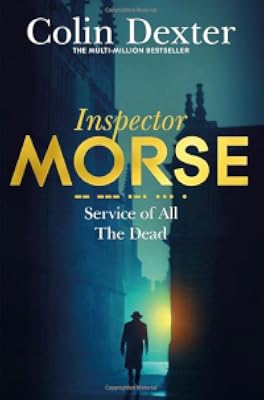
This time Inspector Morse brings the imposition on himself. He could have been vacationing in Greece instead of investigating a murder that the police have long since written off. But he finds the crime, the brutal killing of a suburban churchwarden, fascinating. In fact, he uncovers not one murder but two, for the fatal fall of St. Frideswides vicar from the church tower Morse reckons to be murder as well. And as he digs into the lives and unsanctified lusts of the late vicar's erring show more flock, the list of the dead grows longer. Not even the oddly appealing woman he finds scrubbing the church floor can compensate Morse for the trouble he's let himself in for. So, he has another pint, follows his hunches, and sets out to untangle the deadly business of homicide. show lessTags
Recommendations








Member Reviews
On staycation, Morse comes across the solved case of the murder of a churchwarden followed a few days later by the suicide of the Vicar of St. Frideswide's, assumed to be the murderer, but he feels something isn't right.
The trouble is that although I like Oxford setting and the fiendishly clever puzzles in these books, I've come to realise that despite the occasional flashes of erudition I don't actually like Morse himself very much. Yes, this is the 1970s but the spectacle of a middle-aged man who acts like a teenager who has just discovered the top shelf at the newsagent's is just too depressing.
The trouble is that although I like Oxford setting and the fiendishly clever puzzles in these books, I've come to realise that despite the occasional flashes of erudition I don't actually like Morse himself very much. Yes, this is the 1970s but the spectacle of a middle-aged man who acts like a teenager who has just discovered the top shelf at the newsagent's is just too depressing.
This is definitely the best Inspector Morse thus far, and it has an alarmingly high body count. Seriously, this should put Oxford in the top ten cities with the highest number of murders per capita, along with Miami, Midsomer, and Cabot Cove. This book alone has high murder, low murder, outdoor murder, underground murder, holy murder, heathen murder, planned murder, spontaneous murder, murder in the style of Hitchcock, murder homage to Agatha Christie, -- it's just full of dead bodies. The plot is well-crafted, and Morse and Lewis are well-drawn -- subtly without the garishly bold strokes of the early novels. Looking forward to the next case.
Interesting, enjoyable, perhaps needlessly-complicated mystery. Morse and Lewis are a good pair and I can see why this series has been so enduring on TV. I liked the final ambiguity of whether the vicar's fall from the tower was truly a suicide or a murder. This novel was about as homophobic as I would expect a novel of the 1970's to be, but the casual racism and sexism were way over the top for that period, and all of that cast a pall over the book.
The ever-tenacious and intractable Inspector Morse could be on vacation in Greece. In fact, he should be sailing happily around the Greek islands right now - taking his meticulously-planned and highly-anticipated moment of ease, sunning himself beside the rolling waves of the Aegean Sea. Instead, he is investigating a murder that the police have long since written off. Although, he really only has himself to blame this time.
But he finds the crime - the brutal killing of a suburban churchwarden - remarkably fascinating and extraordinarily difficult to solve. In fact, he believes that he's discovered not just one murder but two; for Inspector Morse suspects that the fatal fall of St. Frideswide's vicar from the church's bell tower is show more actually murder as well. And as he digs deeply into the private lives and the myriad unsanctified lusts of the late vicar's erring flock, the list of the dead only grows longer.
Not even the oddly appealing woman he finds scrubbing the floor of the church can properly compensate Inspector Morse for the imposition he has brought upon himself. Most especially not for the high risk of probable danger he's bound to get himself into. So he has another pint, follows his hunches, and settles in to untangle the deadly business of homicide...
I must say that I really enjoyed reading this book. I think that I may have several of Colin Dexter's books on my bookshelf, although this is the first one that I've read. In my opinion, this story was quintessentially English - the writing seemed to be slightly grandiose to me; maybe even a tad pompous. Although, I would say that my feelings are due in large part to Colin Dexter's writing style; Inspector Morse is probably meant to come across as supercilious and slightly overbearing.
I found the mystery itself to be rather convoluted as well, but still very intriguing for me to read. Overall, I found Service of All the Dead by Colin Dexter to be quite good and very enjoyable - I would give it a B+! show less
But he finds the crime - the brutal killing of a suburban churchwarden - remarkably fascinating and extraordinarily difficult to solve. In fact, he believes that he's discovered not just one murder but two; for Inspector Morse suspects that the fatal fall of St. Frideswide's vicar from the church's bell tower is show more actually murder as well. And as he digs deeply into the private lives and the myriad unsanctified lusts of the late vicar's erring flock, the list of the dead only grows longer.
Not even the oddly appealing woman he finds scrubbing the floor of the church can properly compensate Inspector Morse for the imposition he has brought upon himself. Most especially not for the high risk of probable danger he's bound to get himself into. So he has another pint, follows his hunches, and settles in to untangle the deadly business of homicide...
I must say that I really enjoyed reading this book. I think that I may have several of Colin Dexter's books on my bookshelf, although this is the first one that I've read. In my opinion, this story was quintessentially English - the writing seemed to be slightly grandiose to me; maybe even a tad pompous. Although, I would say that my feelings are due in large part to Colin Dexter's writing style; Inspector Morse is probably meant to come across as supercilious and slightly overbearing.
I found the mystery itself to be rather convoluted as well, but still very intriguing for me to read. Overall, I found Service of All the Dead by Colin Dexter to be quite good and very enjoyable - I would give it a B+! show less
The best Morse that I have read to date. This is a fast paced story where the solution to the mystery comes to one early in the book, only for it to be dismissed with many red herrings before the end.
In the hands of a less skilful writer, this story would fall flatter than any pancake, but Dexter knows exactly how to keep the plot racing along at such a break-neck pace that the reader simply does not have time to consider the unlikelihood of such a set of occurrences happening. for a magical couple of hours, one is transported to a land where the solution is assured and all will be well in the world once it is attained. Excellent entertainment.
In the hands of a less skilful writer, this story would fall flatter than any pancake, but Dexter knows exactly how to keep the plot racing along at such a break-neck pace that the reader simply does not have time to consider the unlikelihood of such a set of occurrences happening. for a magical couple of hours, one is transported to a land where the solution is assured and all will be well in the world once it is attained. Excellent entertainment.
Still undecided on the Morse series four books in. The writing is good, particularly the dialogue, but Dexter continues his smug extended explanation of the mystery at the end and it's just a very long "Here's all the things which were vaguely hinted at, but which you couldn't have worked out" session which kills the momentum dead for the last 10% of the book. The casual racism in this one (a short encounter with someone described as a "Chinaman" who literally says "Me verree sorree") is a painful reminder of the story's 1979 vintage although apart from that it feels thoroughly modern.
Insp. Morse novel set in England
twists + turns really don't know until end — then still — glasses in pocked — underlined in red!
This time Inspector Morse brings the imposition on himself. He could have been vacationing in Greece instead of investigating a murder that the police have long since written off. But he finds the crime--the brutal killing of a suburban churchwarden--fascinating. In fact, he uncovers not one murder but two, for the fatal fall of St. Frideswides vicar from the church tower Morse reckons to be murder as well. And as he digs into the lives and unsanctified lusts of the late vicar's erring flock, the list of the dead grows longer. Not even the oddly appealing woman he finds scrubbing the church floor can show more compensate Morse for the trouble he's let himself in for. So he has another pint, follows his hunches, and sets out to untangle the deadly business of homicide. . . . show less
twists + turns really don't know until end — then still — glasses in pocked — underlined in red!
This time Inspector Morse brings the imposition on himself. He could have been vacationing in Greece instead of investigating a murder that the police have long since written off. But he finds the crime--the brutal killing of a suburban churchwarden--fascinating. In fact, he uncovers not one murder but two, for the fatal fall of St. Frideswides vicar from the church tower Morse reckons to be murder as well. And as he digs into the lives and unsanctified lusts of the late vicar's erring flock, the list of the dead grows longer. Not even the oddly appealing woman he finds scrubbing the church floor can show more compensate Morse for the trouble he's let himself in for. So he has another pint, follows his hunches, and sets out to untangle the deadly business of homicide. . . . show less
Members
- Recently Added By
Published Reviews
ThingScore 50
Tricky Mr. Dexter is again a tad too tricky for his own good in this fourth case involving Inspector Morse. It begins beautifully--40 pages setting up the potentially explosive situations among people attached to Oxford's Church of St. Frideswide. Then, however, Dexter jumps forward in time--as moody Morse, on semi-vacation, starts looking into the casualties that have indeed ensued at St. show more Frideswide's: though the characters are fine, the atmosphere perfect, and Morse darkly intriguing, one can only concur when the local magistrate says: "Doesn't all this seem to you an extraordinarily complicated business, Inspector?" It is indeed, and only those partial to super-contrived crime puzzles will fully enjoy the benefits of Dexter's wry, cool, quintessentially British talents. show less
added by Roycrofter
Lists

British Mystery
469 works; 14 members

Crime Writers' Association Daggers
76 works; 4 members

Detective Stories
343 works; 5 members

Books Read in 2016
4,666 works; 197 members
Author Information

124+ Works 18,844 Members
Norman Colin Dexter was born in Stamford, Lincolnshire, England on September 29, 1930. He received a bachelor's degree in classics in 1953 and a master's degree in 1958 at from Christ's College, Cambridge University. He taught classics for many years, but growing deafness forced him to retire in 1966. For the next two decades, he was the senior show more assistant secretary at the Oxford Delegacy of Local Examinations. He retired in 1988 to become a full-time writer. He was best known for creating the character Chief Inspector Morse. The Inspector Morse series began in 1975 with Last Bus to Woodstock and ended in 1999 with The Remorseful Day. The books were adapted into the television series Inspector Morse, which ran from 1987 to 2000. Dexter won the British Crime Writers' Gold Dagger Award for The Wench is Dead in 1989 and again in 1992 for The Way Through the Woods. He received the organization's lifetime achievement award, the Diamond Dagger, in 1997. He also wrote Cracking Cryptic Crosswords: A Guide to Solving Cryptic Crosswords in 2010. He died on March 21, 2017 at the age of 86. (Bowker Author Biography) show less
Some Editions
Awards and Honors
Awards
Series

Belongs to Publisher Series
Work Relationships
Is contained in
Common Knowledge
- Canonical title
- Service of All the Dead
- Original title
- Service of All the Dead
- Original publication date
- 1979
- People/Characters
- Inspector Morse; Sergeant Lewis
- Important places
- Oxford, Oxfordshire, England, UK; Oxfordshire, England, UK
- Related movies
- Inspector Morse: Service of All the Dead (1987 | IMDb)
- Epigraph
- I had rather be a doorkeeper in the house of my God: than to dwell in the tents of ungodliness
- Dedication
- For John Poole
- First words
- Limply the Reverend Lionel Lawson shook the last smoothly gloved hand, the slim hand of Mrs. Emily Walsh-Atkins, and he knew that the pews in the old church behind him were now empty.
- Quotations
- Having looked that problem squarely in the face, let us now pass on.
“We’re in, Meredith,” shouted Lewis from the depths. (It is said when "one succeeds in getting into a place...just before closing time." The origin is "a music-hall sketch 'The Baliff' (or 'Moses and Son'), performed by... (show all) Fred Kitchen, the leading comedian of Fred Karno's company, and first produced in 1907. The phrase was used each time a baliff and his assistant looked like gaining entrance to a house.'" From
"Dictionary of Catch Phrases: American and British from the Sixteenth Century to the Present Day" by Eric Partridge.
"Do you mind me asking you how old you are, Mrs. Walsh-Atkins?"
"Can you keep a secret, Inspector?"
"Yes."
"So can I," she whispered. - Last words
- (Click to show. Warning: May contain spoilers.)"I'll tell you afterwards," said Morse quietly, as his fingers lingered lightly on the zip at the back of her brightly patterned summer dress.
- Disambiguation notice*
- This book contains an excerpt from the hardcover edition of Death Is Now My Neighbor (c1996) by Colin Dexter.This excerpt has been set for the edition only and mya not reflect the final content of the hardcover edition.
*Some information comes from Common Knowledge in other languages. Click "Edit" for more information.
Classifications
Statistics
- Members
- 1,106
- Popularity
- 22,967
- Reviews
- 32
- Rating
- (3.78)
- Languages
- 12 — Danish, Dutch, English, Finnish, French, German, Italian, Norwegian (Bokmål), Norwegian, Slovenian, Spanish, Swedish
- Media
- Paper, Audiobook, Ebook
- ISBNs
- 52
- ASINs
- 17