On This Page
Description
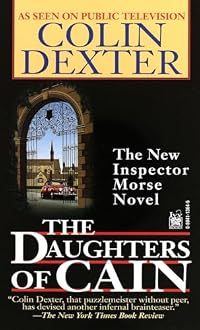
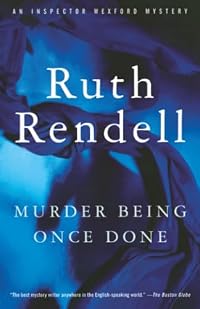
It was Chief Superintendent Strange's opinion that too little progress had been made by the Thames Valley Police since the discovery of a corpse in a North Oxford flat. The victim had been killed by a single stab wound to the stomach. Yet the police had no weapon, no suspect, no motive. But within days of taking over the investigation, Chief Inspector Morse and Detective Sergeant Lewis uncover startling new information about the life and death of the victim, Dr. Felix McClure, late of Wolsey show more College, Oxford. The trail leads directly to a staircase in Wolsey College, and in particular to a former "Scout" there, one Edward Brooks-who disappears following the theft of a knife from the Pitt Rivers Museum. Then another body is discovered and suddenly Morse finds himself with too many suspects, including Brooke's long-suffering wife, his stepdaughter, and an enigmatic schoolmistress. Although each, it seems, has an unimpeachable, and unbreakable, alibi. show lessTags
Recommendations






Member Reviews
Dexter’s Chief Inspector Morse has appeared in a fine TV series which we were watching in an Islington row house next to the below-ground level kitchen, when the kitchen popped from an overheated pan. No, it turned out to be smash-and-grab, since we’d foolishly left the shutters open, my wife’s purse visible on the table with keys to the Aston Martin parked on the front garden. Except there were no keys, still in the study on the first floor (US, 2nd), since I was too worried to drive it, drove their English Ford Escort instead.
Morse on TV was not aging as he is in this book, putting his trousers on while sitting, reluctant to drive after a couple brews, planning in fact his retirement, though he continues drinking a few pints show more before going home for Glenfiddich; Morse clims, “I am the only man in Oxford who gets more sober the more he drinks”(241). Colin Dexter in this novel may also be different—can’t find the four others I read on my shelf to compare. (This I bought used for £1 in the 90's.)
This novel repeatedly notes what is NOT said or done: “what was Ellie Smith trying to tell him…or what she was trying not to tell him”(283); Morse’s boss Strange, “How’re things going, Morse?” “Progressing, sir,” Strange looked at him sourly, “You mean they’re not progressing?” (293); “Her thoughts concentrated on what she could have told him, or rather on what she could never have told him”(381); “but the thought was not translated into words”(52).
Dexter describes the narrator, himself, as a chronicler; and indeed, he refers to months, days and times often, and often to begin a chapter. But Dexter also writes with, forgive me, dexter-ity. Say, his metaphors, “the concertina’d Escort” or “had taken some of the cream from Lewis’s eclair”(273), and also his latinate words to suggest Morse’s Oxford education: dactylloscopy (fingerprint-study) , dolichocephalic (long-faced).
Much connects with my personal life, visiting Oxford over the years—my bio of Giordano Bruno in the university library, shelved in a tunnel to Radcliffe Camera—and since my sister-in-law’s finishing a Ph.D. there. She first told us the local name of Tolkien and CS Lewis’s pub, The Bird and Baby, where he drinks Burton’s Ale (188). The avenue “of St Giles forks into the Woodstock Road to the left and the Banbury Road to the right (up which our usual B&B can be found) (111). But even the mention of Father Brown, which we now watch weekly on TV, where Chesterton said the best place to conceal a corpse, a battlefield (356).
The murders in this book are victim and murderer; but is it still murder when you kill the murderer? Three women align to oppose the abuser of two of them, but almost everyone the Chief Inspector interviews lies, copiously. In one early case, Morse summarizes Mrs Wynne-Wilson, “She’s a Walter Mitty sort of woman. She lives in a world of fantasy. She tells herself so many times—tells others so many times— that she thinks they’re true. And for her they are true”(39). Residents of the U.S. in 2020 boast a president very like this Mrs.
BTW, each of the 71 chapters has a fine epigraph, ranging from local notebooks to Catullus in Latin (whom I have translated), Dickens, the Bible and Housman: "And like a skylit water stood/ The bluebells in the azure wood."(Ch.9, p44) show less
Morse on TV was not aging as he is in this book, putting his trousers on while sitting, reluctant to drive after a couple brews, planning in fact his retirement, though he continues drinking a few pints show more before going home for Glenfiddich; Morse clims, “I am the only man in Oxford who gets more sober the more he drinks”(241). Colin Dexter in this novel may also be different—can’t find the four others I read on my shelf to compare. (This I bought used for £1 in the 90's.)
This novel repeatedly notes what is NOT said or done: “what was Ellie Smith trying to tell him…or what she was trying not to tell him”(283); Morse’s boss Strange, “How’re things going, Morse?” “Progressing, sir,” Strange looked at him sourly, “You mean they’re not progressing?” (293); “Her thoughts concentrated on what she could have told him, or rather on what she could never have told him”(381); “but the thought was not translated into words”(52).
Dexter describes the narrator, himself, as a chronicler; and indeed, he refers to months, days and times often, and often to begin a chapter. But Dexter also writes with, forgive me, dexter-ity. Say, his metaphors, “the concertina’d Escort” or “had taken some of the cream from Lewis’s eclair”(273), and also his latinate words to suggest Morse’s Oxford education: dactylloscopy (fingerprint-study) , dolichocephalic (long-faced).
Much connects with my personal life, visiting Oxford over the years—my bio of Giordano Bruno in the university library, shelved in a tunnel to Radcliffe Camera—and since my sister-in-law’s finishing a Ph.D. there. She first told us the local name of Tolkien and CS Lewis’s pub, The Bird and Baby, where he drinks Burton’s Ale (188). The avenue “of St Giles forks into the Woodstock Road to the left and the Banbury Road to the right (up which our usual B&B can be found) (111). But even the mention of Father Brown, which we now watch weekly on TV, where Chesterton said the best place to conceal a corpse, a battlefield (356).
The murders in this book are victim and murderer; but is it still murder when you kill the murderer? Three women align to oppose the abuser of two of them, but almost everyone the Chief Inspector interviews lies, copiously. In one early case, Morse summarizes Mrs Wynne-Wilson, “She’s a Walter Mitty sort of woman. She lives in a world of fantasy. She tells herself so many times—tells others so many times— that she thinks they’re true. And for her they are true”(39). Residents of the U.S. in 2020 boast a president very like this Mrs.
BTW, each of the 71 chapters has a fine epigraph, ranging from local notebooks to Catullus in Latin (whom I have translated), Dickens, the Bible and Housman: "And like a skylit water stood/ The bluebells in the azure wood."(Ch.9, p44) show less
I always found Inspector Morse somewhat offputting in the TV series but in this book, where the reader is privy to his inner thoughts, he is much more likeable.
Morse and Lewis are called in to take over a murder investigation when the previous investigator has to take time off to be with his ill wife. Dr. Felix McClure, a retired Oxford don, was stabbed and died of the single wound. However, the murder weapon was not on the premises and was not found in a sweep of surrounding residences. Morse, although ill, fairly quickly decides the likely murderer is one Edward Brooks who used to be a cleaner in the same college McClure was a don. However, by the time he has enough evidence to question him, Edward has disappeared. Is Edward dead? show more If so, who killed him? And where is that murder weapon? Morse has one of his flashes of brilliance and manages to tie up the case. But alas he loses the fair maid in the bargain.
I thought this was a pretty decent murder mystery and I loved the epigrams at the start of each chapter. One especially seemed apt since I read this book on a day I was home from work due to being sick with some kind of virus: I enjoy convalescence; it is the part that makes the illness worth while. (George Bernard Shaw) p. 209 show less
Morse and Lewis are called in to take over a murder investigation when the previous investigator has to take time off to be with his ill wife. Dr. Felix McClure, a retired Oxford don, was stabbed and died of the single wound. However, the murder weapon was not on the premises and was not found in a sweep of surrounding residences. Morse, although ill, fairly quickly decides the likely murderer is one Edward Brooks who used to be a cleaner in the same college McClure was a don. However, by the time he has enough evidence to question him, Edward has disappeared. Is Edward dead? show more If so, who killed him? And where is that murder weapon? Morse has one of his flashes of brilliance and manages to tie up the case. But alas he loses the fair maid in the bargain.
I thought this was a pretty decent murder mystery and I loved the epigrams at the start of each chapter. One especially seemed apt since I read this book on a day I was home from work due to being sick with some kind of virus: I enjoy convalescence; it is the part that makes the illness worth while. (George Bernard Shaw) p. 209 show less
In one of the best of the Inspector Morse series, author Colin Dexter juggles several intricate plot lines, keeping the reader totally absorbed in each subplot and, especially, in the lives of the characters before he deftly brings them all together in a satisfying ending.
A former Oxford professor, Dr. Felix McClure, is found stabbed to death in his flat. Inspector Morse and his faithful Watson, Sergeant Lewis, are assigned the case. The two discover a suspicious connection between McClure and a ne'er-do-well named Ted Brooks, who himself vanishes suddenly. As you'd expect from the title, the cast of suspects is almost exclusively female, and Dexter does a fantastic job of probing the passions that drive women to murder.
Interestingly show more enough, the most perplexing question is not so much whodunit as howdunit, and the solution that Dexter provides is very tricky, and very clever. You'd be hard-pressed, though, to find a writer plays more fairly with clues; all the information necessary to deduce the solution is there, albeit hidden in plain sight.
An excellent read. show less
A former Oxford professor, Dr. Felix McClure, is found stabbed to death in his flat. Inspector Morse and his faithful Watson, Sergeant Lewis, are assigned the case. The two discover a suspicious connection between McClure and a ne'er-do-well named Ted Brooks, who himself vanishes suddenly. As you'd expect from the title, the cast of suspects is almost exclusively female, and Dexter does a fantastic job of probing the passions that drive women to murder.
Interestingly show more enough, the most perplexing question is not so much whodunit as howdunit, and the solution that Dexter provides is very tricky, and very clever. You'd be hard-pressed, though, to find a writer plays more fairly with clues; all the information necessary to deduce the solution is there, albeit hidden in plain sight.
An excellent read. show less
Colin Dexter has a way with words, and the cleverness in his writing outpaced my expectations. This is the first Morse novel I've read and I expect I'll be picking up the rest in short order. I wouldn't bother if the writing were not a cut above the typical mystery fare.
The biggest incongruity between the books and the ITV serieses is that Morse smokes in the books (and the Lancia and porn in earlier books). This later book is less jarring, except the smoking, and fits in with your mental-television image of Morse. He is erudite, lovesick, a drinker, and snappy to Lewis. Ornery. This one is a good little mystery, with interesting characters. The television version makes the young Ellie a wonderful person, the old hooker-with-a-heart-of-gold trope, and she's stunningly a high class call girl. In the book she's a definite fallen woman, a daughter of Cain (and Eve) indeed, with nose rings and colored hair. Common, to use a British put-down/description. A good story set in 1990s Oxford, with curmudgeonly show more Morse and affable, put-upon Lewis chugging through another case. Good all around. show less
As a fan of the TV series starring John Thaw I had hoped to enjoy this novel more than I did. I realised after buying it that it is late in the set of novels and therefore Morse is in decline, accelerating the process by being unable to give up smoking and drinking despite having to spend a few days in hospital due to an exacerbated chest infection. The plot is rather convoluted featuring two murders, one leading on from another, and with one of the victims being so unlikeable that you end up rooting for the murderers to get away with it.
Structurally the author's erudition is on display with apposite quotations heading up each of the chapters. I found the old style of narrative where there is an omniscient author who occasionally show more intrudes very obviously into the text, together with the constant head hopping whereby we are told what every character in a scene is thinking, rather off putting. Also Morse is made rather unlikeable himself in this novel with even Lewis looking askance at him at one point. Afterwards I viewed the TV adaptation and found it had been considerably streamlined and the whole subplot of Morse's ill health and decline towards a projected retirement in a couple of years omitted. Of course there are a lot more episodes than novels so the character could not be killed off so quickly on TV. On the whole though, some of the more questionable and unconvincing parts of the novel such as Morse's reciprocated and unrequited love with the prostitute daughter of one character were well advisedly excised from the TV version with no loss as far as I was concerned. All in all, I would rate this at 3 stars. show less
Structurally the author's erudition is on display with apposite quotations heading up each of the chapters. I found the old style of narrative where there is an omniscient author who occasionally show more intrudes very obviously into the text, together with the constant head hopping whereby we are told what every character in a scene is thinking, rather off putting. Also Morse is made rather unlikeable himself in this novel with even Lewis looking askance at him at one point. Afterwards I viewed the TV adaptation and found it had been considerably streamlined and the whole subplot of Morse's ill health and decline towards a projected retirement in a couple of years omitted. Of course there are a lot more episodes than novels so the character could not be killed off so quickly on TV. On the whole though, some of the more questionable and unconvincing parts of the novel such as Morse's reciprocated and unrequited love with the prostitute daughter of one character were well advisedly excised from the TV version with no loss as far as I was concerned. All in all, I would rate this at 3 stars. show less
There are distinct signs that Colin Dexter is getting a trifle tired of Morse: not just in the obvious references to the great detective's numbered days within the force, but also within the rather slow and plodding build up to the action.
Rather like a firework in the rain, this book threatens to fizzle out but, eventually, in the final 100 pages bursts into life to become a rather good book. Unusually, for Morse, this is not really a whodunnit but rather a 'how did they do it' and to keep the oddities flowing, Dexter writes about the little people of Oxford, for once and a domestic to boot.
Whilst not Morse at his best, still a worthwhile read.
Rather like a firework in the rain, this book threatens to fizzle out but, eventually, in the final 100 pages bursts into life to become a rather good book. Unusually, for Morse, this is not really a whodunnit but rather a 'how did they do it' and to keep the oddities flowing, Dexter writes about the little people of Oxford, for once and a domestic to boot.
Whilst not Morse at his best, still a worthwhile read.
Members
- Recently Added By
Lists

British Mystery
469 works; 14 members

Books Read in 2016
4,666 works; 197 members
Author Information

123+ Works 18,803 Members
Norman Colin Dexter was born in Stamford, Lincolnshire, England on September 29, 1930. He received a bachelor's degree in classics in 1953 and a master's degree in 1958 at from Christ's College, Cambridge University. He taught classics for many years, but growing deafness forced him to retire in 1966. For the next two decades, he was the senior show more assistant secretary at the Oxford Delegacy of Local Examinations. He retired in 1988 to become a full-time writer. He was best known for creating the character Chief Inspector Morse. The Inspector Morse series began in 1975 with Last Bus to Woodstock and ended in 1999 with The Remorseful Day. The books were adapted into the television series Inspector Morse, which ran from 1987 to 2000. Dexter won the British Crime Writers' Gold Dagger Award for The Wench is Dead in 1989 and again in 1992 for The Way Through the Woods. He received the organization's lifetime achievement award, the Diamond Dagger, in 1997. He also wrote Cracking Cryptic Crosswords: A Guide to Solving Cryptic Crosswords in 2010. He died on March 21, 2017 at the age of 86. (Bowker Author Biography) show less
Series

Work Relationships
Common Knowledge
- Canonical title
- The Daughters of Cain
- Original title
- The daughters of Cain
- Alternate titles*
- Die Leiche am Fluss
- Original publication date
- 1994-11-11
- People/Characters
- Inspector Morse; Sergeant Lewis; Edward Brooks; Ellie Smith; Brenda Brooks; Julia Stevens (show all 8); Kevin Costyn; Dr. Felix McClure
- Important places
- University of Oxford, Oxford, Oxfordshire, England, UK; Oxford, Oxfordshire, England, UK; Oxfordshire, England, UK
- Related movies
- Inspector Morse: The Daughters of Cain (1996 | IMDb)
- Epigraph
- Oxford is the Latin quarter of Cowley
(Anon)
Prolegomena:
Natales grate numeras?
(Do you count your birthdays with gratitude?)
(Horace, Epistles II)
Chapter 1:
Pension: generally understood to mean monies grudgingly bestowed on aging hirelings after a lifetime of occasional devotion to duty
(Small's Enlarged English Dictionary, 12th Edition)
Chapter 2:
Like the sweet apple which reddens upon the topmost bough,
A-top on the topmost twig -- which the pluckers forgot somehow --
Forgot it not, nay, but got it not, for none could get it till now
(D. G. Ros... (show all)setti, Translations from Sappho)
Chapter 3:
Myself when young did eagerly frequent
Doctor and Saint, and heard great Argument
About it and about: but evermore
Came out by the same Door as in I went
(Edward Fitzgerald, The Rubaiyat of Omar K... (show all)hayyam)
Chapter 4:
Krook chalked the letter upon the wall -- in a very curious manner, beginning with the end of the letter, and shaping it backward. It was a capital letter, not a printed one. "Can you read it?" he asked me with ... (show all)a keen glance
(Charles Dickens, Bleak House)
Chapter 5:
O quid solutis est beatius curis,
Cum mens onus reponit, ac peregrino
Labore fessi venimus larem ad nostrum,
Desideratoque acquiescimus lecto?
(What bliss! First spot the house -- and then
... (show all)Flop down -- on one's old bed again)
(Catullus, 31)
Chapter 6:
Envy and idleness married together beget curiosity
(Thomas Fuller, Gnomologia)
Chapter 7:
For 'tis in vain to think or guess
At women by appearances
(Samuel Butler, Hudibras)
Chapter 8:
Caeli, Lesbia nostra, Lesbia illa,
Illa Lesbia, quom Catullus unam
Plus quam se atque suos amavit omnes,
Nunc in quadriviis et angiportis
Glubit magnanimi Remi nepotes
(Catullus, Poems L... (show all)VII)
Chapter 9:
And like a skylit water stood
The bluebells in the azured wood
(A. E. Housman, A Shropshire Lad, XLI)
Chapter 10:
A long time passed -- minutes or years -- while the two of us sat there in silence. Then I said something, asked something, but he didn't respond. I looked up and saw the moisture running down his face
(Edua... (show all)rdo Galeano, The Book of Embraces)
Chapter 11:
You; my Lady, certainly don't dye your hair to deceive the others, nor even yourself; but only to cheat your own image a little before the looking-glass
(Luigi Pirandello, Henry IV)
Chapter 12:
To run away from trouble is a form of cowardice, and while it is true that the suicide braves death, he does it not for some noble object but to escape some ill
(Aristotle, Nicomachean Ethics)
Chapter 13:
Whatever crazy sorrow saith,
No life that breathes with human breath
Has ever truly longed for death
(Alfred, Lord Tennyson, The Two Voices)
Chapter 14:
Everyone can master a grief but he who has it
(Shakespeare, Much Ado About Nothing)
Chapter 15:
Say, for what were hop-yards meant
Or why was Burton built on Trent?
Oh many a peer of England brews
Livelier liquor than the Muse,
And malt does more than Milton can
To justify God's ways to man... (show all)
(A. E. Housman, A Shropshire Lad, LXII)
Chapter 16:
And sidelong glanced, as to explore,
In meditated flight, the door
(Sir Walter Scott, Rokeby)
Chapter 17:
Examination: trial; test of knowledge and, as also may be hoped, capacity; close inspection (especially med.)
(Small's Enlarged English Dictionary, 1812 Edition)
Chapter 18:
Dead flies cause the ointment of the apothecary to send forth a stinking savour: so doth a little folly him that is in reputation for wisdom and honor
(Ecclesiastes, ch. 10, v. 1)
Chapter 19:
The true index of a man's character is the health of his wife
(Cyril Connolly)
Chapter 20:
When you live next to the cemetery,
you cannot weep for everyone
(Russian proverb)
Chapter 21:
Hate is the consequence of fear; we fear something before we hate it. A child who fears becomes an adult who hates
(Cyril Connolly, The Unquiet Grave)
Chapter 22:
We all wish to be of importance in one way or another
(Ralph Waldo Emerson, Journals)
Chapter 23:
One night I contrived to stay in the Natural History Museum, hiding myself at closing time in the Fossil Invertebrate Gallery, and spending an enchanted night alone in the museum, wandering from gallery to gall... (show all)ery with a flashlight
(Oliver Sacks, The Observer, January 9, 1994)
Chapter 24:
Cruelty is, perhaps, the worst kind of sin. Intellectual cruelty is certainly the worst kind of cruelty
(G. K. Chesterton, All Things Considered)
Chapter 25:
The older I grow, the more I distrust the familiar doctrine that age brings wisdom
(H. L. Mencken)
Chapter 26:
Three may keep a secret if two of them are dead
(Benjamin Franklin)
Chapter 27:
Men will pay large sums to whores
For telling them they are not bores
(W. H. Auden, New Year Letter
Chapter 28:
I do not love thee, Doctor Fell,
The reason why I cannot tell,
But this one thing I know full well:
I do not love thee, Doctor Fell
(Thomas Brown, I Do Not Love Thee, Doctor Fell)
Chapter 29:
My predestinated lot in life, alas, has amounted to this: a mens not particularly sana in a corpore not particularly sano
(Viscount Mumbles, Reflections on My Life)
Chapter 30:
Randolph, you're not going to like this, but I was in bed with your wife
(Murder Ink: Alibis we never want to hear again)
Chapter 31:
There is nothing which has yet been contrived by man by which so much happiness is produced as by a good tavern
(Samuel Johnson, Obiter Dictum, March 21, 1776)
Chapter 32:
These are, as I began, cumbersome ways
to kill a man. Simpler, direct and much more neat
is to see he is living somewhere in the middle
of the twentieth century, and leave him there
(Edwin Brock,
Chapter 33:
It is an inexorable sort of festivity -- in September 1914 they tried to cancel it, but the Home Secretary himself admitted that he was powerless to do so
(Jan Morris, Oxford)
Chapter 34:
The gaudy, blabbing, and remorseful day
Is crept into the bosom of the sea
(Shakespeare, Henry IV, Part II)
Chapter 35:
In me there dwells
No greatness, save it be some far-off touch
Of greatness to know well I am not great
(Alfred, Lord Tennyson, Lancelot and Elaine)
Chapter 36:
Is this a dagger which I see before me,
The handle towards my hand?
(Shakespeare, Macbeth)
Chapter 37:
I enjoy convalescence; it is the part that makes the illness worth while
(George Bernard Shaw)
Chapter 38:
The museum has retained much of its Victorian character. Painstakingly hand-written labels can still be found attached to some of the artefacts in the crammed black cases there
(The Pitt Rivers Museum, A ... (show all)Souvenir Guide)
Chapter 39:
Yes
You have come upon the fabled lands where myths
Go when they die
(James Fenton, "The Pitt Rivers Museum")
Chapter 40:
Thursday is a bad day. Wednesday is quite a good day. Friday is an even better one. But Thursday, whatever the reason, is a day on which my spirit and my resolution, are at their lowest ebb. Yet even worse is a... (show all)ny day of the week upon which, after a period of blessed idleness, I come face to face with the prospect of a premature return to my labours
(Diogenes Small, Autobiography)
Chapter 41:
His failing powers disconcerted him, for what he would do with women he was unsure to perform, and he could rarely accept the appearance of females who thought of topics other than coitus
(Peter Champ... (show all)kin, The Sleeping Life of Aspern Williams)
Chapter 42:
You can lead a whore to culture
but you can't make her think
(Attributed to Dorothy Parker)
Chapter 43:
The scenery in the play was beautiful, but the actors got in front of it
(Alexander Woollcott)
Chapter 44:
No small art is it to sleep: it is necessary to keep awake all day for that purpose
(Frederick Nietzsche)
Chapter 45:
Keep careful watch too on the moral wants of your patients, which may cause them to tell untruths about things prescribed -- and things proscribed
(Corpus Hippocraticum)
Chapter 46:
I once knew a person who spoke in dialect with an accent
(Irvin Cobb)
Chapter 47:
Given a number which is a square, when can we write it as the sum of two other squares?
(Diophantus, Arithmetic)
Chapter 48:
It'll do him good to lie there unconscious for a bit. Give his brain a rest
(N. F. Simpson, One-Way Pendulum)
Chapter 49:
I sometimes wonder which would be nicer -- an opera without an interval, or an interval without an opera
(Ernest Newman, Berlioz, Romantic and Classic)
Chapter 50:
There is not so variable a thing in nature as a lady's headdress: within my own memory I have known it rise and fall above thirty degrees
(Joseph Addison, The Spectator)
Chapter 51:
Needles and pins, needles and pins
When a man marries his trouble begins
(Old nursery rhyme)
Chapter 52:
I said this was fine utterance and sounded well though it could have been polished and made to mean less
(Peter Champkin, The Sleeping Life of Aspern Williams)
Chapter 53:
"Jo, my poor fellow!"
"I hear you, sir, in the dark, but I'm a-gropin' -- a-gropin' -- let me catch hold of your hand."
"Jo, can you say what I say?"
"I'll say anythink as you say, sir, for I know it's... (show all) good."
"OUR FATHER."
"Our Father! -- yes, that's wery good, sir!"
(Charles Dickens, Bleak House)
Chapter 54:
Cambridge has espoused the river, has opened its arms to the river, has built some of its finest Houses alongside the river. Oxford has turned its back on the river, for only at some points downstream from Foll... (show all)y Bridge does the Isis glitter so gloriously as does the Cam
(J. J. Smithfield-Waterstone, Oxford and Cambridge: A Comparison)
Chapter 55:
It's a strong stomach that has no turning
(Oliver Herford)
Chapter 56:
He could not be a lighterman or river-carrier; there was no clue to what he looked for, but he looked for something with a most intent and searching gaze
(Charles Dickens, Our Mutual Friend)
Chapter 57:
Karl Popper teaches that knowledge is advanced by the positing and testing of hypotheses. Countless hypotheses, I believe, are being tested at once in the unconscious mind; only the winning shortlist is handed ... (show all)to our consciousness
(Matthew Paris, The Times, March 7, 1994)
Chapter 58:
Now faith is the substance of things hoped for, the evidence of things not seen
(Hebrews, ch. 11, v. 1)
Chapter 59:
St. Anthony of Egypt (c. 251-356 AD): hermit and founder of Christian monastecism. An ascetic who freely admitted to being sorely beset by virtually every temptation, and most especially by sexual temptation. T... (show all)radition has it that he frequently invited a nightly succession of naked women to parade themselves in front of him as he lay, hands manacled behind his back, in appropriately transparent but not wholely claustrophobic sacking
(Simon Small, An Irreverent Survey of the Saints)
Chapter 60:
When the Himalayan peasant meets the he-bear in his pride,
He shouts to scare the monster, who will often turn aside.
But the she-bear thus accosted rends the peasant tooth and nail.
For the female of ... (show all)the species is more deadly than the male
(Rudyard Kipling, The Female of the Species)
Chapter 61:
The total amount of undesired sex endured by women is probably greater in marriage than in prostitution
(Bertrand Russell, Marriage and Morals)
Chapter 62:
dactyloscopy (n): the examination of fingerprints (Early Twentieth Century)
(The New Shorter Oxford English Dictionary)
Chapter 63:
Fingerprints do get left at crime scenes. Even the craftiest of perpetrators sometimes forget to wipe up everywhere
(Murder Ink, Incriminating Evidence)
Chapter 64:
Gestalt (n): chiefly Psychol. An integrated perceptual structure or unity conceived as functionally more than the sum of its parts
(The New Shorter Oxford Dictionary)
Chapter 65:
Behold, I shew you a mystery
(St. Paul, I Corinthians, ch. 15, v. 51)
Chapter 66:
The mind is its own place, and in itself
Can make a heaven of hell, a hell of heaven
(John Milton, Paradise Lost, Book I)
Chapter 67:
We can prove whatever we want to; the only real difficulty is to know what we want to prove
(Emile Chartier, Système de beaux arts)
Chapter 68:
She turned away, but with the autumn weather
Compelled my imagination many days,
Many days and many hours
(T. S. Eliot, La Figlia che Piange)
Chapter 69:
Amongst the tribes of Central Australia, every person has, besides a personal name which is in common use, a secret name which was bestowed upon him or her soon after birth, and which is known to none but the f... (show all)ully initiated
(James Frazer, The Golden Bough)
Chapter 70:
Then grief forever after; because forever after nothing less would ever do
(J. G. F. Potter, Anything to Declare?)
Epilogue:
Life is a progress from want to want, not from enjoyment to enjoyment
(Samuel Johnson, in Boswell's The Life of Samuel Johnson) - Dedication
- For the staff of the Pitt Rivers Museum, Oxford, with my gratitude to them for their patient help.
- First words
- On Mondays to Fridays it was fifty-fifty whether the postman called before Julia Stevens left for school.
- Quotations
- Women set apart from the rest of their kind by the sign of the murderer - by the mark of Cain.
- Last words
- (Click to show. Warning: May contain spoilers.)And above all else in Morse's life there remains the searching out of Ellie Smith, since as a police officer that is his professional duty and, as a man, his necessary purpose.
- Original language
- English
*Some information comes from Common Knowledge in other languages. Click "Edit" for more information.
Classifications
Statistics
- Members
- 1,344
- Popularity
- 17,736
- Reviews
- 20
- Rating
- (3.75)
- Languages
- 11 — Danish, Dutch, English, Finnish, French, German, Italian, Norwegian (Bokmål), Slovenian, Spanish, Swedish
- Media
- Paper, Audiobook, Ebook
- ISBNs
- 57
- ASINs
- 19