On This Page
Description
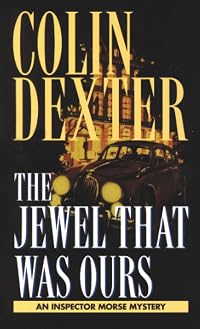
An Inspector Morse Mystery. The case seems so simple that Inspector Morse deems it beneath his notice. A wealthy, elderly American tourist has a heart attack in her room at Oxford's luxurious Randolph Hotel. Missing from the scene is the lady's handbag, which contained the Wolvercote Tongue, a priceless jewel that her late husband had bequeathed to the Ashmolean Museum just across the street. Morse proceeds to spend a great deal of time thinking-and drinking-in the hotel's bar, certain the show more solution is close at hand, until conflicting stories, suspicious doings, and a real murder convince him otherwise. show lessTags
Recommendations








Member Reviews
Morse is out of the hospital and less interesting, but this may be my second-favorite Morse book. First, his relationship with Lewis is well established and works really well here. Second, a tour group of elderly Americans are central to the mystery and leads to some interesting commentary on the idea of “Americans” versus the likeability of actual Americans. Finally, there’s just some funny stuff about tourism in Oxford I can relate to. Really the mystery takes a back door to the story and the characters in this novel, and I like that
My first Inspector Morse book ...! It certainly won't be my last. I normally prefer my crime and deteictive fiction to be of the 'hardboiled' American type but this was a great change from their frenetic pace with plenty of well rounded, described characters, great dialogue between them and a mystery worthy of Morse's (as one reviewer called it) drink-fuelled brain.
A tour bus full of Americans arrive at Oxford, one of their members is donating a priceless artefact to a local museum, but when she ends up dead, the jewel is stolen and the curator also ends up dead they got more than the travel brochure promised them. Full of red herrings, twists and turns and seemingly endless dead ends (sometimes quite literally) in his investigations it show more is no wonder Morse can often be found in a pub. show less
A tour bus full of Americans arrive at Oxford, one of their members is donating a priceless artefact to a local museum, but when she ends up dead, the jewel is stolen and the curator also ends up dead they got more than the travel brochure promised them. Full of red herrings, twists and turns and seemingly endless dead ends (sometimes quite literally) in his investigations it show more is no wonder Morse can often be found in a pub. show less
Pretty happy with this one. A tour bus full of Americans (with interesting back stories) pulls into Oxford to hear tourist talks, but a wife gets dead right away and a jewel (that was to be donated to the Ashmolean Museum) is stolen! Later, a philandering museum director is also killed- must be related, right? Morse and Lewis are on it. Morse also gets cozy with an overly friendly, overly lush Oxford sophisticated lady... .and she is a pretty pleasant time for all. My first Morse and i was struck repeatedly by close resemblances to my favorite Joyce Porter, Inspector Dover. Yes, Dover is certainly played for more laughs (constant) and he has a hostile relationship with his sergeant ... but Morse is also likely to jump to unsupportable show more conclusions and is often toying with his sergeant and constantly accepting free drinks / food from him too. In short- lots!!!! but .. happily they are both good, so there is space for Morse as well as Dover. show less
The Wolvercote Tongue is stolen and several interested parties die but, all likely suspects appear to have unbreakable alibis. This was one of my favourite stories from the televised Morse so, I was particularly interested to see how it faired in its intended novel form: the answer, even better. Reading the Morse books in order allows one to appreciate the improvement from book to book, with almost no exception. Characters, whilst perhaps not entirely real, are somehow believable and the improbable twists in the plot which would leave a real detective floundering at square one, are conquered by a sleuth on par with Holmes, Poirot and the greats of detective fiction.
Eruditely written, this is a first class read!
Eruditely written, this is a first class read!
Morse doesn't always get it right. Sometimes he gets to the point of actually charging a suspect before he realises that he's got it wrong. In fact Lewis thinks that Morse creates scenarios before he looks at the facts. But somehow he gets some elements right and then he plucks something else out of left field, and somehow it all fits.
We listen carefully, just as Lewis does, and eventually Morse persuades us.
We have really been enjoying this set of audio books narrated superbly by Samuel West.
We listen carefully, just as Lewis does, and eventually Morse persuades us.
We have really been enjoying this set of audio books narrated superbly by Samuel West.
THE JEWEL THAT WAS OURS (Inspector Morse #9) 1981, by Colin Dexter is yet another in an all too small collection of superlative mysteries. Set in Oxford, England, this outing has a bus full of American tourists, a death, the theft of a priceless artifact, and no possibility of a rational solution. Until Morse arrives that is. And in his fashion he manages to not only pull the thread of the mystery free, but does so in his own elegant fashion.
While we can still visit Morse through the books and the television shows (Morse and Endeavour), I certainly miss the anticipation of a new thriller on the shelves.
Alas.
While we can still visit Morse through the books and the television shows (Morse and Endeavour), I certainly miss the anticipation of a new thriller on the shelves.
Alas.
A very interesting and well-written mystery as well as more about Morse's character. I didn't pick up much of the clues, I was pretty clueless, but I enjoyed reading it thoroughly. Which is about all I can possibly ask of a book right now.
Members
- Recently Added By
Lists

Detective Stories
343 works; 5 members

Books Read in 2021
5,361 works; 113 members
Author Information

125+ Works 18,844 Members
Norman Colin Dexter was born in Stamford, Lincolnshire, England on September 29, 1930. He received a bachelor's degree in classics in 1953 and a master's degree in 1958 at from Christ's College, Cambridge University. He taught classics for many years, but growing deafness forced him to retire in 1966. For the next two decades, he was the senior show more assistant secretary at the Oxford Delegacy of Local Examinations. He retired in 1988 to become a full-time writer. He was best known for creating the character Chief Inspector Morse. The Inspector Morse series began in 1975 with Last Bus to Woodstock and ended in 1999 with The Remorseful Day. The books were adapted into the television series Inspector Morse, which ran from 1987 to 2000. Dexter won the British Crime Writers' Gold Dagger Award for The Wench is Dead in 1989 and again in 1992 for The Way Through the Woods. He received the organization's lifetime achievement award, the Diamond Dagger, in 1997. He also wrote Cracking Cryptic Crosswords: A Guide to Solving Cryptic Crosswords in 2010. He died on March 21, 2017 at the age of 86. (Bowker Author Biography) show less
Some Editions
Series

Belongs to Publisher Series
Unionsverlag Taschenbuch (840)
Work Relationships
Is contained in
Common Knowledge
- Canonical title
- The Jewel That Was Ours
- Original title
- The jewel that was ours
- Alternate titles*
- Tod für Don Juan
- Original publication date
- 1991
- People/Characters
- Inspector Morse; Sergeant Lewis
- Important places
- Oxford, Oxfordshire, England, UK; Oxfordshire, England, UK
- Related movies
- Inspector Morse: The Wolvercote Tongue (1987 | IMDb)
- Epigraph
- Espied the god with gloomy soul
The prize that in the casket lay,
Who came with silent tread and stole
The jewel that was ours away
(Lilian Cooper, 1904-1981)
(Chapter 1)
It is not impossible to become bored in the presence of a mistress
(Stendhal)
(Chapter 2)
For the better cure of vice they think it necessary to study it, and the only efficient study is through practice
(Samuel Butler)
(Chapter 3)
"Oh, come along, Mole, do!" replied the Rat cheerfully, still plodding along.
"Please stop, Ratty!" pleaded the poor Mole, in anguish of heart. "You don't understand! It's my home! My old home! I'v... (show all)e just come across the smell of it, and it's close by here, really quite close. And I must go to it"
(Kenneth Grahame, The Wind in the Willows)
(Chapter 4)
"The cockroach Blatella germanica," it was observed darkly in 1926, "was at one time recorded as present in the Randolph Hotel kitchen"
(Jan Morris, Oxford)
(Chapter 5)
All saints can do miracles, but few can keep a hotel
(Mark Twain, Notebook)
(Chapter 6)
There are worse occupations in this world than feeling a woman's pulse
(Laurence Sterne, A Sentimental Journey)
(Chapter 7)
Almost all modern architecture is farce
(Diogenes Small (1797-1812), Reflections)
(Chapter 8)
Madame, appearing to imbibe Gin and It in roughly equal measures, yet manages to exude more of the gin than of the "it"
(Hugh Sykes-Davies, Obiter Dicta)
(Chapter 9)
Often I have wished myself dead, but well under my blanket, so that neither death nor man could hear me
(George Lichtenberg)
(Chapter 10)
A foolish consistency is the hobgoblin of little minds
(Ralph Waldo Emerson, Essays)
(Chapter 11)
History, n. An account mostly false, of events mostly unimportant, which are brought about by rulers mostly knaves, and soldiers mostly fools
(Ambrose Bierce, The Devil's Dictionary)
(Chapter 12)
Water taken in moderation cannot hurt anybody
(Mark Twain)
(Chapter 13)
Solvitur ambulando
(The problem is solved by walking around)
(Latin proverb)
(Chapter 14)
It is only shallow people who do not judge by appearances. The true mystery of the world is the visible, not the invisible.
(Oscar Wilde)
(Chapter 15)
The best-laid schemes o' mice and men
Gang aft a-gley,
And lea'e us nought but grief and pain
For promised joy
(Robert Burns, To a Mouse)
(Chapter 16)
As you go through, you see the great scientists, scholars, and statesmen; the thinkers, writers, actors, monarchs, and martyrs who are part of Oxford's history. By passing this doorway, you have a glimpse of ... (show all)the people whom Oxford has moulded, and many of whom have, in their turn, gone on to help mould the world
(Lord Jenkins of Hillhead, The Oxford Story)
(Chaper 17)
Clever people seem not to feel the natural pleasure of bewilderment, and are always answering questions when the chief relish of a life is to go on asking them
(Frank Moore Colby)
(Chapter 18)
In the police-procedural, a fair degree of realism is possible, but it cannot be pushed too far for fear that the book might be as dull as the actual days of a policeman
(Julian Symons, Bloody Murder... (show all))
(Chapter 19)
At Oxford nude bathing was, and sometimes still is, indulged in, which used to cause mutual embarrassment when ladies passed by in boats
(Marilyn Yurdan, Oxford: Town and Gown)
(Chapter 20)
The moon jellyfish
like a parachute in air
sways under the waves
(Basil Swift, Collected Haiku)
(Chapter 21)
You did not come,
And marching time drew on, and wore me numb
(Thomas Hardy, A Broken Appointment)
(Chapter 22)
Duty is what one expects from others; it is not what one does oneself
(Oscar Wilde, A Woman of No Importance)
(Chapter 23)
Yet the first bringer of unwelcome news
Hath but a losing office
(Shakespeare, King Henry IV, Part 2)
(Chapter 24)
There are several good protections against temptations, but the surest is cowardice
(Mark Twain, Following the Equator)
(Chapter 25)
Going by railroad I do not consider as travelling at all; it is merely being "sent" to a place, and very little different from becoming a parcel
(John Ruskin, Modern Painters)
(Chapter 26)
Wilt thou have this Woman to thy wedded wife, to live together after God's ordinance in the holy estate of Matrimony? Wilt thou love her, comfort her, honour and keep her in sickness and in health; and, forsa... (show all)king all others, keep thee only unto her, so long as ye both shall live?
(Book of Common Prayer, Solemnization of Matrimony)
(Chapter 27)
It is a matter of regret that many low, mean suspicions turn out to be well founded
(Edgar Watson Howe, Ventures in Common Sense)
(Chapter 28)
Myself when young did eagerly frequent
Doctor and Saint, and heard great Argument
About it and about: but evermore
Came out by the same Door as in I went
(Edward FitzGerald, The Rubaiyat)
(Chapter 29)
There are an awful lot of drunks about these days. It wouldn't really surprise me if you turned out to be one yourself
(Martin Amis, Other People)
(Chapter 30)
Precision of communication is important, more important than ever, in our era of hair-trigger balances, when a false, or misunderstood word may create as much disaster as a sudden thoughtless act
(James ... (show all)Thurber, Lanterns and Lances)
(Chapter 31)
There is much virtue in a window. It is to a human being as a frame is to a painting, as a proscenium to a play
(Max Beerbohm, Mainly on the Air)
(Chapter 32)
Man has such a predilection for systems and abstract deductions that he is ready to distort the truth intentionally; he is ready to deny the evidence of his senses in order to justify his logic
(Dostoevs... (show all)ky, Notes from Underground)
(Chapter 33)
If you are afraid of loneliness, don't marry
(Chekhov)
(Chapter 34)
Thou hast committed--
Fornication; but that was in another country,
And besides, the wench is dead
(Christopher Marlowe, The Jew of Malta)
(Chapter 35)
Just a song at twilight
When the lights are low
And the flick'ring shadows
Softly come and go . . .
(From the English Song Book)
(Chapter 36)
Their meetings made December June
(Tennyson)
(Chapter 37)
Sic, ne perdiderit, non cessat perdere lusor
(To recoup his losses, the gambler keeps on backing the losers)
(Ovid, Ars Amatoria)
(Chapter 38)
The west yet glimmers with some streaks of day:
Now spurs the lated traveller apace
To gain the timely inn
(Shakespeare, Macbeth)
(Chapter 39)
I feel like I done when Slipper Sun
Romped 'ome a winner at 30 to 1
(A. P. Herbert, Derby Day)
(Chapter 40)
He
That kills himself to avoid misery, fears it,
And, at the best, shows but a bastard valour
(Philip Massinger, The Maid of Honour)
(Chapter 41)
Light thickens and the crow makes wing to the rooky wood
(Shakespeare, Macbeth)
(Chapter 42)
No one came
On the bare platform
(Edward Thomas, Adlestrop)
(Chapter 43)
As usual he was offering explanations for what other people had not even noticed as problems
(Bryan Magee, Aspects of Wagner)
(Chapter 44)
"When my noble and learned brother gives his Judgment, they're to be let go free," said Krook, winking at us again. "And then," he added, whispering and grinning, "if that ever was to happen -- which it won't... (show all) -- the birds that have never been caged would kill 'em."
(Dickens, Bleak House)
(Chapter 45)
Perchance my too much questioning offends
(Dante, Purgatorio)
(Chapter 46)
I do love to note and to observe
(Jonson, Volpone)
(Chapter 47)
Some circumstantial evidence is very strong -- as when you find a trout in the milk
(Henry Thoreau, unpublished manuscript)
(Chapter 48)
Darkness is more productive of sublime ideas than light
(Edmund Burke, On the Sublime and Beautiful)
(Chapter 49)
Where water, warm or cool, is
Good for gout -- at Aquae Sulis
(Graffito in the Pump Room, Bath, c. 1760)
(Chapter 50)
During late visits to Stinsford in old age he would often visit the unmarked grave of Louisa Harding
(Thomas Hardy, The Early Life of Thomas Hardy)
(Chapter 51)
At day's end you came,
and like the evening sun,
left an afterglow
(Basil Swift, Collected Haiku)
(Chapter 52)
Rigid, the skeleton of habit alone upholds the human frame
(Virginia Woolf, Mrs. Dalloway)
(Chapter 53)
And summed up so well that it came to far more
Than the witnesses ever had said
(Lewis Carroll, The Barrister's Dream)
(Chapter 54)
Either what woman having ten pieces of silver, if she lose one piece, doth not light a candle, and sweep the house, and seek diligently till she find it?
(St. Luke, ch. 15, v. 8)
(Chapter 55)
In great affairs we ought to apply ourselves less to creating chances than to profiting from those that offer
(La Rochefoucauld, Maxims)
(Chapter 56)
And as the smart ship grew
In stature, grace, and hue,
In shadowy silent distance grew the Iceberg too
(Thomas Hardy, The Convergence of the Twain)
(Chapter 57)
What's in a name? that which we call a rose
By any other name would smell as sweet
(Shakespeare, Romeo and Juliet)
(Chapter 58)
. . . that the fair field
Of Enna, where Proserpin gathring flowrs
Her self a fairer Flowre by gloomie Dis
Was gathered, which cost Ceres all that pain
To seek her through the world . . .
(Jo... (show all)hn Milton, Paradise Lost, Book IV)
(Chapter 59)
Je ne regrette rien
(French song)
(Chapter 60)
Accipe fraterno multum manantia fletu,
Aque in perpetuum, frater, ave aque vale
(Catullus, Poem CI) - Dedication
- For my wife, Dorothy
- First words
- The red-seal Brut Imperial Moët & Chandon stood empty on the top of the bedside table to her left; empty like the champagne glass next to it, and like the champagne glass on the table at the other side of the bed.
- Quotations
- "I'm not thinking at all -- not for the minute," replied Morse loftily. "I am deducing -- deducing the possibilities. When I've done that, I shall begin to think."
- Last words
- (Click to show. Warning: May contain spoilers.)The score was one-all.
- Blurbers
- Lovesey, Peter; Gash, Jonathan
- Original language
- English
*Some information comes from Common Knowledge in other languages. Click "Edit" for more information.
Classifications
Statistics
- Members
- 1,155
- Popularity
- 21,813
- Reviews
- 25
- Rating
- (3.64)
- Languages
- 12 — Danish, Dutch, English, Estonian, Finnish, French, German, Italian, Norwegian (Bokmål), Norwegian, Spanish, Swedish
- Media
- Paper, Audiobook, Ebook
- ISBNs
- 60
- UPCs
- 1
- ASINs
- 15