On This Page
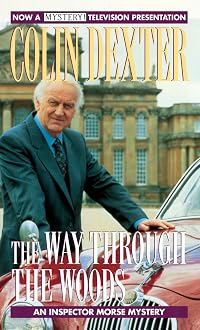
Description
Fiction. Mystery. Suspense. Thriller. HTML:"Cunning...Your imagination will be frenetically flapping its wings until the very last chapter."THE WASHINGTON POST BOOK WORLD
Morse is enjoying a rare if unsatisfying holiday in Dorset when the first letter appears in THE TIMES. A year before, a stunning Swedish student disappeared from Oxfordshire, leaving behind a rucksack with her identification. As the lady was dishy, young, and traveling alone, the Thames Valley Police suspected foul play. show more But without a body, and with precious few clues, the investigation ground to a halt. Now it seems that someone who can hold back no longer is composing clue-laden poetry that begins an enthusiastic correspondence among England's news-reading public. Not one to be left behind, Morse writes a letter of his own—and follows a twisting path through the Wytham Woods that leads to a most shocking murder. show less
Tags
Recommendations





Member Reviews
I could pretty much copy and paste the review of the last Morse one here. This one is good and irritating in just the same ways, again with the good outweighing the irritating to a large degree. I suppose this is exactly what you want from a series: reassuring predictability.
The main manifest difference between this one and the last is the setting. Where that was effectively a historical mystery, this one is set in the (then) present, as Morse investigates the disappearance of a Swedish student last seen wandering around near Oxford. The plot unfolds in a way that conveniently allows both protagonist and author the chance to indulge their interests in seamy, seedy things, and prompts the contemporary reader to boggle at the lengths to show more which people would go in the early 1990s to access pornography. I could perhaps have done with a bit less of all that.
The present-day setting also makes it much more apparent just how contrived the novel is. All novels are contrivances, of course, but there’s no real attempt here to hide it: we are very much being treated to a display of how clever both protagonist and author are, not at all to anything like a realistic police procedural, whatever the nods in that direction. Again, this is both irritating and good; irritating because nobody likes a show-off, good because the puzzle and the contrivance really are quite clever. Perhaps I’ll end up re-reading all the Morses, though perhaps not in a binge.
Minor notes for one’s own clever-clogs satisfaction: (a) both this Morse and the last make passing reference to Uppsala—does this happen in every Morse?; (b) one of the smart-alec epigraphs is wrongly attributed. Nothing more satisfying than correcting a clever-clogs. show less
The main manifest difference between this one and the last is the setting. Where that was effectively a historical mystery, this one is set in the (then) present, as Morse investigates the disappearance of a Swedish student last seen wandering around near Oxford. The plot unfolds in a way that conveniently allows both protagonist and author the chance to indulge their interests in seamy, seedy things, and prompts the contemporary reader to boggle at the lengths to show more which people would go in the early 1990s to access pornography. I could perhaps have done with a bit less of all that.
The present-day setting also makes it much more apparent just how contrived the novel is. All novels are contrivances, of course, but there’s no real attempt here to hide it: we are very much being treated to a display of how clever both protagonist and author are, not at all to anything like a realistic police procedural, whatever the nods in that direction. Again, this is both irritating and good; irritating because nobody likes a show-off, good because the puzzle and the contrivance really are quite clever. Perhaps I’ll end up re-reading all the Morses, though perhaps not in a binge.
Minor notes for one’s own clever-clogs satisfaction: (a) both this Morse and the last make passing reference to Uppsala—does this happen in every Morse?; (b) one of the smart-alec epigraphs is wrongly attributed. Nothing more satisfying than correcting a clever-clogs. show less
On a beaucoup salué les demoiselles anglaises, reines du crime feutré, toutes trop bien élevées pour être honnêtes, si merveilleusement troublantes avec leur air de n'y pas toucher ; aujourd'hui, c'est un Anglais qui vient nous séduire. Il ne raffole pas du thé, mais préfère la bière et le whisky. Il fait des mots croisés, lit Thomas Hardy, ne bouge pas d'Oxford et manque de candeur. Entre donc en scène l'inspecteur Morse. Colin Dexter nous offre là un personnage charmeur comme un héros victorien qui aurait oublié ses inhibitions. L'inspecteur Morse débrouille péniblement ses enquêtes et croise des dames parfois dangereuses, souvent meurtries, toujours déjantées et gracieuses. On est très bien avec l'inspecteur show more Morse. Un doigt - non cinq - d'alcool, des pensées un tantinet lubriques, des souvenirs de livres et l'étrangeté de la vie. Bienvenue au club des ' Grands détectives '. show less
You never know with Morse: three times the case is solved. Each ending feels right but, the criminal is not apprehended until the last few pages.
Not a sparklingly brilliant case but, a good solid whodunnit which, with my poor memory, I shall happily re-read in a few months! Interestingly, the character of Morse is becoming more like the TV persona: the maroon jag has turned up and the more base of Morse's traits have disappeared into the background. It would be interesting to know who is leading whom, certainly this is a less rounded figure; he writes poetry, strsses the classical music and has intentions only for the amour propre.
Not a sparklingly brilliant case but, a good solid whodunnit which, with my poor memory, I shall happily re-read in a few months! Interestingly, the character of Morse is becoming more like the TV persona: the maroon jag has turned up and the more base of Morse's traits have disappeared into the background. It would be interesting to know who is leading whom, certainly this is a less rounded figure; he writes poetry, strsses the classical music and has intentions only for the amour propre.
Three stars for the characters and the mystery, which, in suitable murder mystery terminology, are the bones that Colin Dexter left for the television series to flesh out. The other two stars belong to John Thaw, who made Dexter's male fantasy of a pompous, elitist, slightly pervy detective human and likeable. The screen version of 'The Way Through The Woods' is far superior: the denouement is centred around Lewis and Morse, instead of trailing off in a wordy, self-congratulatory speech; the secondary characters are believable and realistic, instead of mere devices (and this despite Dexter's creative writing class approach to backstory); and more importantly, Morse is shown as fallible and considerate of others. Plus, the nauseous and show more less than credible James Bond element of the detective's persona is toned down - he flirts with the stock 'unsuitable older lady', but does not simultaneously pull the new coroner! Dexter is less than subtle when describing his detective's effortless success with the opposite sex - every woman finds him incredibly attractive, and if they don't act on it, they comment on his good looks and strange charm! Please!
The central concept and creation of the characters does belong to Dexter, for which he receives due credit, but the books are a poor second to the adaptation. show less
The central concept and creation of the characters does belong to Dexter, for which he receives due credit, but the books are a poor second to the adaptation. show less
Pretty great Morse mystery. Begins with Morse on vacation and hitting it off with a smarty married lady who has lots of affairs and is rather abrasive. Still... the attraction is strong until it turns out she is a little too wildly friendly and is dropped unceremoniously from Morse and the book (left an odd taste). In any case, the vacation is interrupted by an odd letter to the Times about a year old murder case from back home. Puzzling it out, turns out Morse is put back on the case (!!) and starts chipping away at the sordid affair of the wandering beautiful blonde swedish girl (presumed murdered). Great read!
The Way Through the Woods is the tenth book in Colin Dexter's Chief Inspector Morse mystery series. As always, the book centers around the cranky but brilliant Chief Inspector and his long-suffering (but adoring) partner Sergeant Lewis. With settings in Oxfordshire and Dorset, and of course many pubs and taverns in both areas, this one has the oddly-matched duo investigating a "cold case" that had been abandoned by the detectives originally on the job - a case involving the disappearance of a young Swedish woman on holiday in England.
When lovely tourist Karin Eriksson disappeared after visiting Oxford on a summer day just one year ago, Morse insisted that the girl had been murdered. But with no body found, and very little evidence to show more prove his theory, the case was ultimately recorded as a missing persons incident and allowed to fade away, unsolved. Now twelve months later, while Morse is on a rare holiday trip to Lyme Regis, a cryptic anonymous letter appears in the London Times, containing a strange poem that may or may not be a key to what actually happened to the missing girl. Of course, being a consummate puzzle solver, Morse is able to decode the poem and use it to have the case reopened. He and Lewis revisit all the witnesses and go over all the old territory. And in a very unusual turn of events, they're aided in their investigations by letters sent to the newspaper by private citizens with their own ideas about what clues the poem might contain. But with all the twists and turns along the way, can we even depend on those letters and letter-writers to be what they claim?
As usual, there's quite a lot of humor on display here, although much of it very dark humor. And Dexter includes plenty of interesting characters and an abundance of suspects for Morse to wade through. Also as usual, Morse manages to "solve" the case several times before the final conclusion is reached. All in all, a very satisfying outing for Morse and Lewis, and one of my favorites in the series.
A slightly expanded version of this review appears on my blog:
http://jlshall.blogspot.com/2009/04/review-way-through-woods.html show less
When lovely tourist Karin Eriksson disappeared after visiting Oxford on a summer day just one year ago, Morse insisted that the girl had been murdered. But with no body found, and very little evidence to show more prove his theory, the case was ultimately recorded as a missing persons incident and allowed to fade away, unsolved. Now twelve months later, while Morse is on a rare holiday trip to Lyme Regis, a cryptic anonymous letter appears in the London Times, containing a strange poem that may or may not be a key to what actually happened to the missing girl. Of course, being a consummate puzzle solver, Morse is able to decode the poem and use it to have the case reopened. He and Lewis revisit all the witnesses and go over all the old territory. And in a very unusual turn of events, they're aided in their investigations by letters sent to the newspaper by private citizens with their own ideas about what clues the poem might contain. But with all the twists and turns along the way, can we even depend on those letters and letter-writers to be what they claim?
As usual, there's quite a lot of humor on display here, although much of it very dark humor. And Dexter includes plenty of interesting characters and an abundance of suspects for Morse to wade through. Also as usual, Morse manages to "solve" the case several times before the final conclusion is reached. All in all, a very satisfying outing for Morse and Lewis, and one of my favorites in the series.
A slightly expanded version of this review appears on my blog:
http://jlshall.blogspot.com/2009/04/review-way-through-woods.html show less
This series, so skilfully narrated by Samuel West, just gets better and better.
The novels really are "academic" crime fiction. The plots are never straight forward, and the actual plots do differ a little from the television series. And, as I've said before, Morse is a little different in a number of ways from the character that John Thaw created for television.
Morse is presented warts and all, at times adamantly sure he is correct when he is absolutely wrong. He is a womaniser, definitely a bachelor, not particularly healthy.
I remembered the basic plot of this book but that didn't reduce my enjoyment of it.
If you want a reading project for 2020 then you could do worse than reading the Morse series from beginning to end, either in show more print, or as an audio. I have added the complete list for you at the bottom of this post. My recommendation is to read them in order.
BTW this is the one where Max the pathologist is replaced by Laura Hobson after Max dies from a massive heart attack. show less
The novels really are "academic" crime fiction. The plots are never straight forward, and the actual plots do differ a little from the television series. And, as I've said before, Morse is a little different in a number of ways from the character that John Thaw created for television.
Morse is presented warts and all, at times adamantly sure he is correct when he is absolutely wrong. He is a womaniser, definitely a bachelor, not particularly healthy.
I remembered the basic plot of this book but that didn't reduce my enjoyment of it.
If you want a reading project for 2020 then you could do worse than reading the Morse series from beginning to end, either in show more print, or as an audio. I have added the complete list for you at the bottom of this post. My recommendation is to read them in order.
BTW this is the one where Max the pathologist is replaced by Laura Hobson after Max dies from a massive heart attack. show less
Members
- Recently Added By
Lists

British Mystery
469 works; 14 members

Crime Writers' Association Daggers
76 works; 4 members

Books Read in 2014
2,343 works; 89 members

Read in 2014
334 works; 11 members

Books Read in 2021
5,361 works; 114 members
Author Information

124+ Works 18,844 Members
Norman Colin Dexter was born in Stamford, Lincolnshire, England on September 29, 1930. He received a bachelor's degree in classics in 1953 and a master's degree in 1958 at from Christ's College, Cambridge University. He taught classics for many years, but growing deafness forced him to retire in 1966. For the next two decades, he was the senior show more assistant secretary at the Oxford Delegacy of Local Examinations. He retired in 1988 to become a full-time writer. He was best known for creating the character Chief Inspector Morse. The Inspector Morse series began in 1975 with Last Bus to Woodstock and ended in 1999 with The Remorseful Day. The books were adapted into the television series Inspector Morse, which ran from 1987 to 2000. Dexter won the British Crime Writers' Gold Dagger Award for The Wench is Dead in 1989 and again in 1992 for The Way Through the Woods. He received the organization's lifetime achievement award, the Diamond Dagger, in 1997. He also wrote Cracking Cryptic Crosswords: A Guide to Solving Cryptic Crosswords in 2010. He died on March 21, 2017 at the age of 86. (Bowker Author Biography) show less
Awards and Honors
Awards
Distinctions
Notable Lists
Series

Belongs to Publisher Series
Work Relationships
Common Knowledge
- Canonical title
- The Way Through the Woods
- Original title
- The way through the woods
- Alternate titles*
- Finstere Gründe
- Original publication date
- 1992
- People/Characters
- Endeavour Morse (Inspector); Robert Lewis (Sergeant)
- Important places
- Oxford, Oxfordshire, England, UK; Blenheim Palace, Oxfordshire, England, UK; Wytham Woods, Oxfordshire, England, UK; Lyme Regis, Dorset, England, UK; Dorset, England, UK; Oxfordshire, England, UK
- Related movies
- Inspector Morse: The Way through the Woods (1995 | IMDb)
- Epigraph
- Weather and rain have undone it again,
And now you would never know
There was once a road through the woods
Before they planted the trees.
It is underneath the coppice and heath
And the thin anemones.
Only t... (show all)he keeper sees
That, where the ring-dove broods,
And the badgers roll at ease,
There was once a road through the woods.
From The Way Through the Woods
by Rudyard Kipling
(Prolegomenon)
Though your sins be as scarlet, they shall be whiter, yea whiter, than snow
(Isaiah ch. 1, v.18)
Whereof one cannot speak, thereof one must be silent
(Wittgenstein, Philosophical Inves... (show all)tigations)
(Chapter 1)
A perpetual holiday is a good working definition of Hell
(George Bernard Shaw)
(Chapter 2)
Mrs. Austen was well enough in 1804 to go with her husband and Jane for a holiday to Lyme Regis. Here we hear Jane's voice speaking once again in cheerful tones. She gives the news about lodgings and servants, ... (show all)about new acquaintances and walks on the Cobb, about some enjoyable sea bathing, about a ball at the local Assembly Rooms
(David Cecil, A Portrait of Jane Austen)
(Chapter 3)
Have you noticed that life, real honest-to-goodness life, with murders and catastrophes and fabulous inheritances, happens almost exclusively in the newspapers?
(Jean Anouilh, The Rehearsal)
(Chapter 4)
The morning is wiser than the evening
(Russian proverb)
(Chapter 5)
[none]
(Chapter 6)
. . . and hence through life
Chasing chance-started friendships
(Samuel Taylor Coleridge, "To the Revd. George Coleridge")
(Chapter 7)
I read the newspaper avidly. It is my one form of continuous fiction
(Aneurin Bevan, quoted in The Observer, 3 April 1960)
(Chapter 8)
[none]
(Chapter 9)
And I wonder how they should have been together!
(T. S. Eliot, La Figlia Che Piange)
(Chapter 10)
Mrs. Kidgerbury was the oldest inhabitant of Kentish Town, I believe, who went out charing, but was too feeble to execute her conceptions of that art
(Charles Dickens, David Copperfield)
(Chapter 11)
Nec scit qua sit iter
(He knows not which is the way to take)
(Ovid, Metamorphoses II)
(Chapter 12)
Sigh out a lamentable tale of things,
Done long ago, and ill done
(John Ford, The Lover's Melancholy)
(Chapter 13)
He that reads and grows no wiser seldom suspects his own deficiency, but complains of hard words and obscure sentences, and asks why books are written which cannot be understood
(Samuel Johnson, The Idle... (show all)r)
(Chapter 14)
Only the keeper sees
That, where the ring-dove broods,
And the badgers roll at ease,
There was once a road through the woods
(Rudyard Kipling, The Way Through the Woods)
(Chapter 15)
At the very smallest wheel of our reasoning it is possible for a handful of questions to break the bank of our answers
(Antonio Machado, Juan de Mairena)
(Chapter 16)
Between 1871 and 1908 he published twenty volumes of verse, of little merit
("Alfred Austin", The Oxford Companion to English Literature, edited by Margaret Drabble)
(Chapter 17)
[none]
(Chapter 18)
A "strange coincidence" to use a phrase
By which such things are settled now-a-days
(Lord Byron, Don Juan)
(Chapter 19)
I like to have a thing suggested rather than told in full. When every detail is given, the mind rests satisfied, and the imagination loses the desire to use its own wings
(Thomas Aldrich, Leaves from a N... (show all)otebook)
(Chapter 20)
When I complained of having dined at a splendid table without hearing one sentence worthy to be remembered, he [Dr. Johnson] said, "There is seldom any such conversation"
(James Boswell, The Life of Samu... (show all)el Johnson)
(Chapter 21)
It is only the first bottle that is expensive
(French proverb)
(Chapter 22)
It is a Definition-and-Letter-Mixture puzzle, each clue consists of a sentence which contains a definition of the answer and a mixture of the letters
(Don Manley, Chambers Crossword Manual)
(Chapter 23)
On another occasion, he was considering how best to welcome the postman, for he brought news from a world outside ourselves. I and he agreed to stand behind the front door at the time of his arrival and to ask... (show all) him certain questions. On that day, however, the postman did not come
(Peter Champkin, The Sleeping Life of Aspern Williams)
(Chapter 24)
The Grantor leaves the guardianship of the Woodlands to the kindly sympathy of the University . . . The University will take all reasonable steps to preserve and maintain the woodlands and will use them for th... (show all)e instruction of suitable students and will provide facilities for research
(Extract from the deed under which Wytham Wood was acquired by the University of Oxford on 4 August 1942 as a gift from Col. ffennell[sic])
(Chapter 25)
For wheresoever the carcase is, there will be the eagles gathered together
(St. Luke ch. 24, v. 28)
(Chapter 26)
Science is spectrum analysis: art is photosynthesis
(Karl Kraus, Half Truths One and a Half Truths)
(Chapter 27)
It was a maxim with Foxey -- our revered father, gentlemen -- "Always suspect everybody"
(Charles Dickens, The Old Curiosity Shop)
(Chapter 28)
Be it ever so humble there's no place like home for sending one slowly crackers
(Diogenes Small, Obiter Dicta)
(Chapter 29)
Every roof is agreeable to the eye, until it is lifted; then we find tragedy and moaning women, and hard-eyed husbands
(Ralph Waldo Emerson, Experience)
(Chapter 30)
A man's bed is his resting place, but a woman's is often her rack
(James Thurber, Further Fables for Our Time)
(Chapter 31)
The background reveals the true being of the man or thing. If I do not possess the background, I make the man transparent, the thing transparent
(Juan Jiménez, Selected Writings)
(Chapter 32)
And Apollo gave Sarpedon dead to be borne by swift companions, to Death and Sleep, twin brethren, who bore him through the air to Lycia, that broad and pleasant land
(Homer, Iliad, xvi)
(Chapter 33)
What is a committee? A group of the unwilling, picked from the unfit, to do the unnecessary
(Richard Harkness, New York Herald Tribune, 15 June, 1960)
(Chapter 34)
The newly arrived resident in North Oxford is likely to find that although his next door neighbour has a first-class degree from some prestigious university this man is not quite so clever as his wife
(C... (show all)ountry Living, January 1992)
(Chapter 35)
Doing business without advertising is like winking at a girl in the dark. You know what you are doing, but nobody else does
(Steuart [sic] Henderson Britt, New York Herald Tribune, 30 October, 1956)
(Chapter 36)
Nine tenths of the appeal of pornography is due to the indecent feelings concerning sex which moralists inculcate in the young; the other tenth is physiological, and will occur in one way or another whatever t... (show all)he state of the law may be
(Bertrand Russell, Marriage and Morals)
(Chapter 37)
To be buried while alive is, beyond question, the most terrifying of those extremes which has ever fallen to the lot of mere mortality
(Edgar Allan Poe, Tales of Mystery and Imagination)
(Chapter 38)
Men are made stronger on realization that the helping hand they need is at the end of their own right arm
(Sidney J. Phillips, speech, July 1953)
(Chapter 39)
In a world in which duty and self-discipline have lost out to hedonism and self-satisfaction, there is nothing like closing your eyes and going with the flow. At least in a fantasy, it all ends happily ever af... (show all)ter
(Edwina Currie, The Observer, 23 February, 1992)
(Chapter 40)
Then the little Hiawatha
Learned of every bird its language,
Learned their names and all their secrets
(Henry Wadsworth Longfellow, The Song of Hiawatha)
(Chapter 41)
Little by little the agents have taken over the world. They don't do anything, they don't make anything -- they just stand their and take their cut
(Jean Giradoux, The Madwoman of Chaillot)
(Chapter 42)
To some small extent these Greek philosophers made use of observation, but only spasmodically until the time of Aristotle. Their legacy lies elsewhere: in their astonishing powers of deductive and inductive re... (show all)asoning
(W. K. C. Guthrie, The Greek Philosophers)
(Chapter 43)
It is not the criminal things which are hardest to confess, but those things of which we are ashamed
(Rousseau, Confessions)
(Chapter 44)
Impressions there may be which are fitted with links and which may catch hold on each other and may render some sort of coalescence possible
(John Livingstone Lowes, The Road to Xanadu)
(Chapter 45)
His addiction to drinking caused me to censure Aspern Williams for a while, until I saw as true that wheels must have oil unless they run on nylon bearings. He could stay still and not want oil, or move -- if ... (show all)he could overcome the resistance
(Peter Champkin, The Waking Life of Aspern Williams)
(Chapter 46)
A fool sees not the same tree that a wise man sees
(William Blake, The Marriage of Heaven and Hell)
(Chapter 47)
Yonder, lightening other loads,
The seasons range the country roads,
But here in London streets I ken
No such helpmates, only men
(A. E. Housman, A Shropshire Lady)
(Chapter 48)
Players, Sir! I look on them as no better than creatures set upon tables and joint stools to make faces and produce laughter, like dancing dogs
(Samuel Johnson, The Life of Samuel Johnson)
(Chapter 49)
An association of men who will not quarrel with one another is a thing which never yet existed, from the greatest confederacy of nations down to a town-meeting or a vestry
(Thomas Jefferson, Letters)
(Chapter 50)
There is but one truly serious philosophical problem, and that is suicide. Judging whether life is or is not worth living amounts to answering the fundamental question of philosophy
(Albert Camus, The My... (show all)th of Sisyphus)
(Chapter 51)
He that is down needs fear no fall,
He that is low, no pride
(John Bunyan, The Pilgrim's Progress)
(Chapter 52)
Everything comes if a man will only wait
(Benjamin Disraeli, Tancred)
(Chapter 53)
As we passed through the entrance archway, Randolph said with pardonable pride, "This is the finest view in England"
(Lady Randolph Churchill, on her first visit to Blenheim)
(Chapter 54)
Michael Stich (W. Germany) beat Boris Becker (W. Germany) 6-4, 7-6, 6-4
(Result of the Men's Singles Championship at Wimbledon, 1991)
(Chapter 55)
Thanatophobia (n): a morbid dread of death, or (sometimes) of the sight of death: a poignant sense of human mortality, almost universal except amongst those living on Olympus
(Small's English Dict... (show all)ionary)
(Chapter 56)
The west yet glimmers with some streaks of day:
Now spurs the lated traveller apace
To gain the timely inn
(Shakespeare, Macbeth)
(Chapter 57)
FALSTAFF: We have heard the chimes at midnight, Master Shallow.
SHALLOW: That we have, that we have, that we have; in faith, Sir John, we have
(Shakespeare, Henry IV, Part 2)
(Chapter 58)
He who asks the questions cannot avoid the answers
(Cameroonian proverb)
(Chapter 59)
This is the reason why mothers are more devoted to their children than fathers: it is that they suffer more in giving them birth and are more certain that they are their own
(Aristotle, Nicomachean Ethic... (show all)s)
(Chapter 60)
Music and women I cannot but give way to, whatever my business is
(Samuel Pepys, Diary)
(Chapter 61)
A reasonable probability is the only certainty
(Edgar Watson Howe, Country Town Sayings)
(Chapter 62)
The one charm of marriage is that it makes a life of deception absolutely necessary for both parties
(Oscar Wilde, The Picture of Dorian Gray)
(Chapter 63)
All that's left to happen
Is some deaths (my own included).
Their order, and their manner,
Remain to be learnt
(Philip Larkin, Collected Poems)
(Chapter 64)
The lips frequently parted with the murmur of words. She seemed to belong rightly to a madrigal
(Thomas Hardy, The Return of the Native)
(Chapter 65)
How strange are the tricks of memory, which often hazy as a dream about the most important events, religiously preserve the merest trifles
(Sir Richard Burton, Sind Revisited)
(Chapter 66)
As when that divelish yron engin, wrought
In deepest Hell, and framd by furies skill,
With windy nitre and quick sulphur fraught,
And ramd with bollett rownd, ordaind to kill,
Conceiveth fyre
(E... (show all)dmund Spenser, The Faerie Queene)
(Chapter 67)
Scire volunt secreta domus, ataque inde timeri
(They watch for household secrets hour by hour
And feed therefrom their appetite for power)
(Juvenal, Satire III)
(Chapter 68)
The Light of Lights
Looks always on the motive, not the deed,
The Shadow of Shadows on the deed alone
(W. B. Yeats, The Countess Cathleen)
(Chapter 69)
Just as every person has his idiosyncrasies, so has every typewriter
(Handbook of Office Maintenance, 9th edition)
(Epilogue)
Life never presents us with anything which may not be looked upon as a fresh starting point, no less than as a termination
(André Gide, The Counterfeiters) - Dedication
- To Brian Bedwell
- First words
- "I must speak to you."
- Quotations
- "Morse may be an idiot, you're right. But he's never been a fool."
- Last words
- (Click to show. Warning: May contain spoilers.)"No, I don't think we do."
*Some information comes from Common Knowledge in other languages. Click "Edit" for more information.
Classifications
Statistics
- Members
- 1,394
- Popularity
- 16,985
- Reviews
- 24
- Rating
- (3.83)
- Languages
- 14 — Czech, Danish, Dutch, English, Finnish, French, German, Icelandic, Italian, Norwegian (Bokmål), Norwegian, Slovenian, Spanish, Swedish
- Media
- Paper, Audiobook, Ebook
- ISBNs
- 58
- ASINs
- 16