On This Page
Description
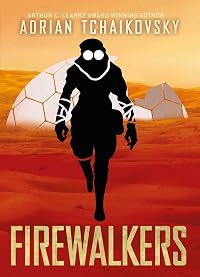
Firewalkers Are Brave.Firewalkers Are Resourceful.
Firewalkers Are Expendable.
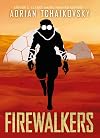
The Earth is burning. Nothing can survive at the Anchor; not without water and power. But the ultra-rich, waiting for their ride off the dying Earth? They can buy water. And thanks to their investment, the sun can provide power.
But someone has to repair the solar panels when they fail, down in the deserts below.
Kids like Mao, and Lupé, and Hotep; kids with brains and guts but no hope.
The Firewalkers.
.
Tags
Recommendations

















Member Reviews
A novella that punches above its weight, delivering a well-imagined, skilfully revealed future where a young and poor underclass of 'Firewalkers' risk their lives to service the global billionaire elite as they prepare to escape a dying Earth and leave the rest of us to burn.
My experience with Adrienne Tchaikovsky's books is mixed. I loved his standalone 'Dogs Of War' novel about genetically enhanced animals being used as soldiers but I couldn't get into his very popular 'Children Of Time' series.
I decided to try 'Firewalkers' because I wanted to see how Tchaikovsky handled the novella ( the book is 165 pages) and because it spoke to a topical theme: the very wealthy insulating themselves from the consequences of the environmental show more collapse that they have become wealthy by accelerating. I'm certain that the people funding Climate Change Denial see climate change as an opportunity to winnow the world's population while strengthening their own wealth and privilege.
I admired how much Adrian Tchaikovsky packed into this novella without ever making me feel that he was taking short-cuts or force-feeding me info dumps. He skilfully unpacks an Earth that is burning at the equator and drowning everywhere else; an Earth that has spent three generations of the poor and the desperate working to enable the mega-rich to flee the planet in huge luxury spaceships; an Earth where young Firewalkers head out into the killing heat to service the solar panels that keep the rich in air-conditioned luxury as they wait to take the space elevator up to their heaven in the sky.
The world-building is very well done. Everything feels real and depressingly plausible. It's not a future I'd want to be part of but I can see it coming. William Gibson is reputed to have said, 'The future is already here, it's just not very evenly distributed.' Tchaikovsky's future is definitely already here. It's in the burning of the rainforest in Brazil and the mining of diamonds in Africa and the refugees fleeing across the world. What Tchaikovsky does is make those things the 'new normal' of the future and imagine the attitudes and behaviours of the people born into it who know they can't fix the planet and they can't leave it either.
The FIrewalkers' trip out into the dead desert is a great piece of road-trip writing. It's high on tension and has great visuals. It's full of dangerous things that are never quite what they appear to be and which hint at either total disaster or a possible way out.
I liked the fact that Tchaikovsky didn't sugar-coat the Firewalkers' choices wrap them in some kind of heroic nobility. He shows how little chance they have of surviving and how much they're willing to do to keep breathing.
The ending was grimly satisfying. It also left a lot of tantalising possibilities about what might happen next.
The only weakness in the novella was that one of the main characters, a woman Firewalker with a passion for fixing things who is important to the plot, was very lightly drawn. Still, that's the kind of trade-off you may have to make to fit all of this into a novella.
I recommend listening to the audiobook version which is wonderfully performed by Adjoa Andoh. show less
Group sffbc buddy read March 4 2024
Starts slow, like just another grim dystopia, which I do not like. Then the mysteries got interesting, and then the characters, and then the ray of hope at the end, and boom it was over. Still not my thing, hence the three star rating... but I do recommend it if you're interested.
"... the unit of life is not the organism but the environment." Hm. Something to think about. I think that's right, given how intertwined & interdependent everything is, on a species level.
"The future was bright, in the same way that the sun was bright, and the Firewalker knew better than anyone how easily the sun could kill you."
Starts slow, like just another grim dystopia, which I do not like. Then the mysteries got interesting, and then the characters, and then the ray of hope at the end, and boom it was over. Still not my thing, hence the three star rating... but I do recommend it if you're interested.
"... the unit of life is not the organism but the environment." Hm. Something to think about. I think that's right, given how intertwined & interdependent everything is, on a species level.
Even though I have read only a small percentage of Adrian Tchaikovsky’s works, I can see from this limited sample that his imagination can take very different roads from one book to the next, and Firewalkers is a prime example of this.
In a not-so-distant future in which climatic changes have wrought havoc on Earth, the planet is divided between areas where floods from the melting icecaps are submerging most of the land, and areas - like the equatorial belt - where desertification and rising temperatures have transformed once lush jungles into arid wastelands. The equator is still a sought-after location, though, because it’s the place where the anchor points for space elevators have been built, bringing people to the safety and show more comfort of the huge ships in construction. That is, those who can afford it, which is only a privileged few. The others try to eke a meager existence by servicing the crumbling infrastructure that supports the anchor and elevator and the arrays of solar panels feeding energy to them.
In one such settlements live the three main characters of the story, young people whose job is to cross the scorching, dusty desert to service and repair the solar panels located in distant areas that were once inhabited and have now been abandoned to the encroaching sands. These Firewalkers, so called because their young bodies are better suited to withstand the broiling heat of the desert, regularly endure the extreme environmental conditions to earn the relatively higher pay such jobs can bring in, risking their lives each time to provide for themselves and their families.
Nguyēn Sun Mao is the descendant of Vietnamese refugees escaped from the floods that obliterated their country and he’s the point man of the group; Lupé is of African descent and represents the engineering genius in the team, as she is able to repair or jerry-rig practically anything; then there is Hotep, so called because she protects her fair complexion under mummy-like bandages, and she is the technical expert. The three of them have been working together for some time and forged a successful unit, so that they are often given the more difficult assignments - and the most dangerous of course.
This latest assignment brings them toward a rarely - if ever - explored area, one where what remains of the palatial mansions of the rich crumbles under heat and neglect, and where unknown dangers, and even monstrous creatures are rumored to dwell. The three Firewalkers’ journey soon evolves into the search for clues to unveil a mystery, and in the discovery that something does indeed lurk in the deep desert, but it’s nothing they would have ever imagined. The story takes on a sort of quest-like flavor, with our heroes facing known and unknown perils as we get to know their personalities and quirks, while being shown how the world we know has been changed by the damage humanity inflicted on it.
The ground crunched lifeless beneath his feet […] the sun the head of a white hot rivet driven in by some celestial smith.
The story’s main focus is on Mao, a boy in his late teens possessed with the maturity of a far older man, because the kind of life he and his crewmates lead tends to burn people away at an accelerated rate: there is little room for hope in this world, and yet we see him try to do his best in the worst of circumstances, trying to take some pride in what he does and exhibiting a natural, if laid back, quality of leadership that brings his two companions to trust him and abide by his decisions no matter how uncertain and dangerous the path. Maybe because
[…] it was Mao who had most experience walking on the surface of an alien world, even if it was Earth.
Lupé, as befitting an engineer - even one as self-taught as she is - is both efficient and business-like, never allowing dangers, either real or imagined, to get between her and the machinery she is repairing or adjusting. As the one in her family with the best-paying job, her young shoulders are burdened by the weight of keeping them as comfortable as possible, and she translates this responsibility to her traveling mates as well: there is one scene in which she keeps servicing their transport’s life support even as some problem approaches, and we see her keeping up the work with the steadiness of a much more seasoned veteran, something that is both admirable and heartbreaking.
And last, but not least, Hotep: she is the wild card of the group in that she was born in space as one of the privileged, but was sent down to Earth - literally discarded - by parents who could not bear her psychological problems and quirky, non-conformed behavior. Her prickly character, like the bandages she wears, is a way of masking the deep pain of abandonment, the resentment at the sheer, heartless injustice and betrayal she was subjected to. It’s through Hotep’s situation that we can perceive the cruel divide in Earth’s people, because if her parents hardly flinched at condemning their own daughter to a short life of hardships and suffering without a qualm, what about the few privileged that could escape from the dying planet and are living in comfort and luxury while the rest of the population slowly dies of heat, thirst and diminishing food?
The themes developed in this story are of course climate and environmental changes, and the social upheavals following them, but there are other elements that are equally intriguing, like the construction of the massive ships in Earth orbit - probably more arcologies than mere vessels - and the space elevators connecting them to the surface. What I found truly fascinating are the remains of the previous civilization - our actual civilization, I believe - and the way the protagonists observe them as though they were relics from a more distant past, and that they are unable to connect with for lack of common references. There are several instances in which Mao & Co. talk about tv shows from the past - still being aired - and how the people depicted in there, their way of life, look more alien than extraterrestrial creatures: this, more than anything else shows us readers how our world has changed from the present conditions.
Firewalkers is a dense book indeed, in the sense that it holds many concepts in a relatively small number of pages, and that’s its only flaw from my point of view: this kind of story should have deserved more space to “breathe” and fulfill its amazing potential. For this same reason, the ending felt to me somewhat abrupt and less satisfying than I would have expected from the initial buildup, but still it was an engrossing read, and a further incentive to explore Adrian Tchaikovsky’s other works. show less
In a not-so-distant future in which climatic changes have wrought havoc on Earth, the planet is divided between areas where floods from the melting icecaps are submerging most of the land, and areas - like the equatorial belt - where desertification and rising temperatures have transformed once lush jungles into arid wastelands. The equator is still a sought-after location, though, because it’s the place where the anchor points for space elevators have been built, bringing people to the safety and show more comfort of the huge ships in construction. That is, those who can afford it, which is only a privileged few. The others try to eke a meager existence by servicing the crumbling infrastructure that supports the anchor and elevator and the arrays of solar panels feeding energy to them.
In one such settlements live the three main characters of the story, young people whose job is to cross the scorching, dusty desert to service and repair the solar panels located in distant areas that were once inhabited and have now been abandoned to the encroaching sands. These Firewalkers, so called because their young bodies are better suited to withstand the broiling heat of the desert, regularly endure the extreme environmental conditions to earn the relatively higher pay such jobs can bring in, risking their lives each time to provide for themselves and their families.
Nguyēn Sun Mao is the descendant of Vietnamese refugees escaped from the floods that obliterated their country and he’s the point man of the group; Lupé is of African descent and represents the engineering genius in the team, as she is able to repair or jerry-rig practically anything; then there is Hotep, so called because she protects her fair complexion under mummy-like bandages, and she is the technical expert. The three of them have been working together for some time and forged a successful unit, so that they are often given the more difficult assignments - and the most dangerous of course.
This latest assignment brings them toward a rarely - if ever - explored area, one where what remains of the palatial mansions of the rich crumbles under heat and neglect, and where unknown dangers, and even monstrous creatures are rumored to dwell. The three Firewalkers’ journey soon evolves into the search for clues to unveil a mystery, and in the discovery that something does indeed lurk in the deep desert, but it’s nothing they would have ever imagined. The story takes on a sort of quest-like flavor, with our heroes facing known and unknown perils as we get to know their personalities and quirks, while being shown how the world we know has been changed by the damage humanity inflicted on it.
The ground crunched lifeless beneath his feet […] the sun the head of a white hot rivet driven in by some celestial smith.
The story’s main focus is on Mao, a boy in his late teens possessed with the maturity of a far older man, because the kind of life he and his crewmates lead tends to burn people away at an accelerated rate: there is little room for hope in this world, and yet we see him try to do his best in the worst of circumstances, trying to take some pride in what he does and exhibiting a natural, if laid back, quality of leadership that brings his two companions to trust him and abide by his decisions no matter how uncertain and dangerous the path. Maybe because
[…] it was Mao who had most experience walking on the surface of an alien world, even if it was Earth.
Lupé, as befitting an engineer - even one as self-taught as she is - is both efficient and business-like, never allowing dangers, either real or imagined, to get between her and the machinery she is repairing or adjusting. As the one in her family with the best-paying job, her young shoulders are burdened by the weight of keeping them as comfortable as possible, and she translates this responsibility to her traveling mates as well: there is one scene in which she keeps servicing their transport’s life support even as some problem approaches, and we see her keeping up the work with the steadiness of a much more seasoned veteran, something that is both admirable and heartbreaking.
And last, but not least, Hotep: she is the wild card of the group in that she was born in space as one of the privileged, but was sent down to Earth - literally discarded - by parents who could not bear her psychological problems and quirky, non-conformed behavior. Her prickly character, like the bandages she wears, is a way of masking the deep pain of abandonment, the resentment at the sheer, heartless injustice and betrayal she was subjected to. It’s through Hotep’s situation that we can perceive the cruel divide in Earth’s people, because if her parents hardly flinched at condemning their own daughter to a short life of hardships and suffering without a qualm, what about the few privileged that could escape from the dying planet and are living in comfort and luxury while the rest of the population slowly dies of heat, thirst and diminishing food?
The themes developed in this story are of course climate and environmental changes, and the social upheavals following them, but there are other elements that are equally intriguing, like the construction of the massive ships in Earth orbit - probably more arcologies than mere vessels - and the space elevators connecting them to the surface. What I found truly fascinating are the remains of the previous civilization - our actual civilization, I believe - and the way the protagonists observe them as though they were relics from a more distant past, and that they are unable to connect with for lack of common references. There are several instances in which Mao & Co. talk about tv shows from the past - still being aired - and how the people depicted in there, their way of life, look more alien than extraterrestrial creatures: this, more than anything else shows us readers how our world has changed from the present conditions.
Firewalkers is a dense book indeed, in the sense that it holds many concepts in a relatively small number of pages, and that’s its only flaw from my point of view: this kind of story should have deserved more space to “breathe” and fulfill its amazing potential. For this same reason, the ending felt to me somewhat abrupt and less satisfying than I would have expected from the initial buildup, but still it was an engrossing read, and a further incentive to explore Adrian Tchaikovsky’s other works. show less
The first review on GR! :)
I was pretty thrilled to get the copy on Netgalley. So much so that I had to read it the same day. Am I nuts? Or am I just a Firewalker at heart?
Gritty, depressing, and like a Hobbsian nightmare, these people live in a hothouse city on life support, barely kept alive because it is the base and the tether to the orbiting space station. Its people barely scrape by while the Roach Motel that takes in all the dignitaries and the rich are kept in Air Conditioned luxury.
Sounds rather familiar. Doesn't it? Well, Firewalkers are the ragged teams of poverty-ridden go-getters that fix the things that not even the robots can fix. They are the ones that get things working, but they're expendable and most of these young show more kids never come back from the near-apocalyptic desert surrounding the town.
The context is emotionally painful and takes up a large portion of the character building, but it's when the novella takes off into the wild that I was most thrilled.
I loved the tight team. I LOVED all the discoveries. No spoilers, but damn, Tchaikovsky has a huge fascination with creepy crawlies and programmed personalities, no?
The adventure is large, the stakes larger, and the end was super satisfying. I'm super glad I got my greedy hands on it.
'Nuff said. show less
I was pretty thrilled to get the copy on Netgalley. So much so that I had to read it the same day. Am I nuts? Or am I just a Firewalker at heart?
Gritty, depressing, and like a Hobbsian nightmare, these people live in a hothouse city on life support, barely kept alive because it is the base and the tether to the orbiting space station. Its people barely scrape by while the Roach Motel that takes in all the dignitaries and the rich are kept in Air Conditioned luxury.
Sounds rather familiar. Doesn't it? Well, Firewalkers are the ragged teams of poverty-ridden go-getters that fix the things that not even the robots can fix. They are the ones that get things working, but they're expendable and most of these young show more kids never come back from the near-apocalyptic desert surrounding the town.
The context is emotionally painful and takes up a large portion of the character building, but it's when the novella takes off into the wild that I was most thrilled.
I loved the tight team. I LOVED all the discoveries. No spoilers, but damn, Tchaikovsky has a huge fascination with creepy crawlies and programmed personalities, no?
The adventure is large, the stakes larger, and the end was super satisfying. I'm super glad I got my greedy hands on it.
'Nuff said. show less
Let’s assume we fail to check our glide toward climate degradation and global warming. Adrian Tchaikovsky envisions a dark fate for us in this dystopian fantasy. Most of equatorial Africa is desert with dangerously high temperatures and clear risks for skin cancer. The rest of the planet has its own bad stuff, but he doesn’t delve into them. Artificial intelligence (AI) is advanced but on the verge of being out of control. Power and water are at a premium. There are food shortages with people resorting to eating variously flavored insects. Those who can afford it, leave for space and the rest must remain below to struggle with the wreckage and suffer. Class inequality is the inevitable outcome.
Ankara Achouka is a settlement whose show more sole purpose is to provide an anchor for an elevator designed to lift the best people to a comfortable existence on the orbiting Grand Celeste. Three teens, Mao, Lupé, and Hotep, are enlisted to go into the deserted lands to solve a power shortage issue. The plot is a classical road trip with lots of danger and plenty of suspense that ultimately ends in the discovery of a rogue AI operation.
Tchaikovsky juggles tension and the usual banter that one expects in books about buddies on the road with a veneer of ideas about the links between climate degradation, class and the dangers of runaway technology. On the whole, the story is well crafted, and a diverting read. However, it seems to be lacking in the heft that these topics demand. Tchaikovsky offers no clear solutions to these existential problems. Instead he gives us a facile zero-sum game. show less
Ankara Achouka is a settlement whose show more sole purpose is to provide an anchor for an elevator designed to lift the best people to a comfortable existence on the orbiting Grand Celeste. Three teens, Mao, Lupé, and Hotep, are enlisted to go into the deserted lands to solve a power shortage issue. The plot is a classical road trip with lots of danger and plenty of suspense that ultimately ends in the discovery of a rogue AI operation.
Tchaikovsky juggles tension and the usual banter that one expects in books about buddies on the road with a veneer of ideas about the links between climate degradation, class and the dangers of runaway technology. On the whole, the story is well crafted, and a diverting read. However, it seems to be lacking in the heft that these topics demand. Tchaikovsky offers no clear solutions to these existential problems. Instead he gives us a facile zero-sum game. show less
Not bad, but I didn't really connect to any of the characters, the whole thing felt a bit sterile and stand-offish. It reminded me a lot of Hugh Howey's Sand books, which were just as bleak but a lot more visceral and compelling.
As with many of her readings, Adjoa Andoh really needs to tone down the outrageous accents, it's just too much, and detracts from the storytelling.
As with many of her readings, Adjoa Andoh really needs to tone down the outrageous accents, it's just too much, and detracts from the storytelling.
Short novel about Mao and his crew: Firewalkers who go out into the desert that humans have made of the equator, maintaining the solar panels that bring power (and preserve water) to the port that takes the wealthy off-planet so they can escape the dying. The precariat around them hangs on for scraps. But with the solar panels failing at a much greater rate than normal, the Firewalkers are sent to find and fix the problem—and discover much more than they expected. If your deus ex machina wants to kill all the wealthy to stop their hoarding, should you go along?
Members
- Recently Added By
Lists

2021 Hugo Eligible Novels
37 works; 14 members

Books Read in 2023
5,638 works; 147 members

Books Read in 2025
4,128 works; 98 members

Library Fantasy/Science Fiction
159 works; 2 members
Author Information

133+ Works 27,969 Members
Adrian Tchaikovsky is a British fantasy and science fiction author, born on June 14, 1972 in Woodhall Spa, Lincolnshire. He studied Zoology and Psychology at the University of Reading. His career focus changed to law and has worked as a Legal Executive in both Reading and Leeds. He's the author of the Shadows of the Apt series, and his standalone show more novel Children of Time is the winner of the 2016 Arthur C Clarke Award for Best Science Fiction Novel. (Bowker Author Biography) show less
Series

Work Relationships
Is contained in
Common Knowledge
- Canonical title
- Firewalkers
- Original publication date
- 2020
Classifications
Statistics
- Members
- 163
- Popularity
- 201,372
- Reviews
- 11
- Rating
- (3.64)
- Languages
- Catalan, English
- Media
- Paper, Audiobook, Ebook
- ISBNs
- 4
- ASINs
- 2