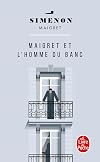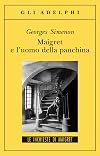
On This Page
Description
Mondays are nobody's favorite day, but when Maigret's week begins with a corpse found stabbed to death in a Parisian alley, the Inspector immediately sees a flaw. Murders are rarely committed on Mondays. That clue, along with the victim's strange recent behavior, leads Maigret to the cause of this nasty crime-and reveals the tale of a deadly marriage.Tags
Recommendations
















































Member Reviews
The weather in Paris in late autumn, as Inspector Maigret probes the murder of Louis Thouret, is dull, damp and stolid--much like the characters in _Maigret and the Man on the Bench_ and, indeed, much like the novel itself. Maigret's investigation takes him into contact with personalities so weighted down by their numbing lives that his frequent visits into little cafes and bars for a drink or two while he does his detecting (couldn't do that on _Law and Order_!) seems as much an escape from their dreariness as from the sodden weather. Unfortunately, I sometimes felt I had to put the book down and take a break as well. The investigation itself is quite plodding and without much drama--much like real-life police work, I imagine, but in show more this case, "real-life" equals "boring." The writing reflects this, too--carefully crafted, very spare, no useless diversions, and while it can be quite effective (Maigret himself is a maximum personality via a minimum words) and sometimes even lovely, it offers no relief from the drudgery of the story, merely enhancing it.
_Maigret and the Man on the Bench_ would be an unfortunate introduction to Simenon's Inspector (as it was, in a way, for me, having read some Maigrets many years ago, but remembering almost nothing about them), since generally he's far more interesting a read. When you consider just how many Maigret stories there are, it isn't suprising that they aren't all gems (how many of Agatha Christie's mysteries are less-than-memorable variations on a theme?), but this one is wearisome. Three stars. show less
_Maigret and the Man on the Bench_ would be an unfortunate introduction to Simenon's Inspector (as it was, in a way, for me, having read some Maigrets many years ago, but remembering almost nothing about them), since generally he's far more interesting a read. When you consider just how many Maigret stories there are, it isn't suprising that they aren't all gems (how many of Agatha Christie's mysteries are less-than-memorable variations on a theme?), but this one is wearisome. Three stars. show less
The mystery in Maigret and the Man on the Bench does not rise to much, but readers won’t care. The 41st novel’s main focus is the imperative to carve out a little of bit of freedom when one is bullied for years and years. Louis Touret’s social-climbing, hectoring wife checks his wallet, hectors him for being a lowly warehouse foreman, even supervises his socks and ties. But it turns out that the worm has turned, and that everything his disapproving wife, sisters-in-law and brothers-in-law think they know about Touret isn’t true. Like Maigret, you will be secretly cheering on Touret for finding a window of freedom and happiness before his untimely end. I read the novel in one sitting. Highly recommended.
A fairly undemanding, but enjoyable Maigret — the Commisaire's investigation this time centres on a series of leisurely interviews aimed at unravelling the life of the apparently unremarkable Louis Thuret, a man who goes to work every morning and returns to his wife in the suburbs on the same train every night, but has nonetheless somehow managed to get himself stabbed to death in an alleyway in the middle of the afternoon. As always with Simenon, there's a lot of attention to the detail of everyday life: the big questions have less to do with "who did it?" than with when and where to have lunch, whether or not to wear galoshes, whether or not to sit down and risk getting rainwater on the witness's furniture, etc. And of course we are show more once again made to reflect on the line, much finer than we like to think, dividing crime from respectable lower-middle-class life. show less
Murders usually do not happen on a Monday. And yet, on this Monday, October 19, a man is found dead in an alley. It looks almost like a regular mugging gone wrong and yet when Maigret and his team start investigating, they realize that things do not add up - the dead man's wife claims that the shoes he is wearing don't belong to her husband and the job he supposedly worked at had not existed for the last few years. So in order to find out who killed him, Maigret first need to find out what happened to that man in the years before he died - because it looks like the man lived a double life - one in the suburbs during the nights and weekends with the wife and one somewhere else during the working days.
The mystery of why the man had the show more double life is a lot more interesting than the murder itself. As with a lot of these novels, it is as much a novel of murder and crime as it is of France at the time of writing - maybe some characters are exaggerated but the background feels real. As for the murderer - I'd usually consider the way they were introduced a cheat by a crime novelist but here it works - we may meet them for the first time when they are revealed as the killer but there are enough hints before that to know that this person exists and is a possibility.
Overall an enjoyable entry in the series. And Maigret's sparring with the examining magistrate Judge Coméliau is as amusing as usual (although this is one part of the novel that probably reads better if you read the novels in order - there is a lot of back history there). show less
The mystery of why the man had the show more double life is a lot more interesting than the murder itself. As with a lot of these novels, it is as much a novel of murder and crime as it is of France at the time of writing - maybe some characters are exaggerated but the background feels real. As for the murderer - I'd usually consider the way they were introduced a cheat by a crime novelist but here it works - we may meet them for the first time when they are revealed as the killer but there are enough hints before that to know that this person exists and is a possibility.
Overall an enjoyable entry in the series. And Maigret's sparring with the examining magistrate Judge Coméliau is as amusing as usual (although this is one part of the novel that probably reads better if you read the novels in order - there is a lot of back history there). show less
I really wish this book hadn't ended badly.
I was charmed as I read, intrigued by the mystery, diverted by all the odd people Maigret meets and interviews over the course of his investigation. It opens with a murder, and much of the book is about piecing together the victim's double life: by evening, Louis was a henpecked shopkeeper, by day aimless, free-spirited, and happy.
The mystery of Louis' murder is tied closely to the mystery of what, exactly, he did with his seemingly empty days. We find out at the start that the factory where Louis claimed to work had shut down three years earlier, that Louis hadn't found a new job, yet the paychecks he brought home to his family never halted; in fact, his income had increased.
Maigret, the show more Chief Inspector, is one of the Great Detectives - listed alongside the likes of Sherlock and Poirot - so I was eager to get to know him. I can't imagine a more likable detective than Maigret. He spends most of the book wandering in and out of various bars and restaurants. He hops in for a bit to eat, or a quick aperitif, before and after every interview. He brings some of his informants little presents when he stops by, he's careful about dripping rain on a freshly waxed floor, he calls his wife when he's going to be working late.
And while Maigret gets to the bottom of things, he's not a monomaniac. He gets bored of his case and decides to work on something else for a while - more than once. He rolls his eyes and sighs internally when overeager underlings try to pull heroic stunts. He delegates.
The problem is that for all the interesting, well-chosen details, for all the sympathy Simenon made me feel for Louis, this is a detective novel where the author did not play fair with the clues.
When Maigret named 'whodunit', the audience did not have enough information to make a correct deduction.The killer, in fact, is never introduced as a character - we never hear his name even once until the moment when he is revealed as the killer. He isn't mentioned or referred to; he doesn't exist at all, until the very end, when all of a sudden he's our guy. And he never appears in a scene. Simenon loses a lot of points from me for that; one of the pleasures of reading Maigret and the Man on the Boulevard was feeling like I was in competent hands, along for the ride with Maigret, gathering clues. The ending was a total let down; it felt like a betrayal.
The book was such a straight mystery that I can't really forgive Simenon for cheating. So while I enjoyed the book, while I'd happily read another, even, I'm knocking it down to three for failing as a mystery. (Also for being $10, because that's crazy).
As a final note: I really, really wished I had read this in the original French - and, in fact, I don't think I would read another Maigret in English. The translation is fine, but the language is clean and on the spare side. Every detail is interesting and well chosen - from a writer's standpoint, that might be the most interesting thing about this novel. In any case, it's simple enough to be a fun, easy read in French; the perfect thing to keep a foot in, as it were. (And that just leaves me with the task of figuring out how to get French language ebooks onto my Kindle? Simenon doesn't seem to have reached the Public Domain yet - he's not on Project Gutenberg, anyhow). show less
I was charmed as I read, intrigued by the mystery, diverted by all the odd people Maigret meets and interviews over the course of his investigation. It opens with a murder, and much of the book is about piecing together the victim's double life: by evening, Louis was a henpecked shopkeeper, by day aimless, free-spirited, and happy.
The mystery of Louis' murder is tied closely to the mystery of what, exactly, he did with his seemingly empty days. We find out at the start that the factory where Louis claimed to work had shut down three years earlier, that Louis hadn't found a new job, yet the paychecks he brought home to his family never halted; in fact, his income had increased.
Maigret, the show more Chief Inspector, is one of the Great Detectives - listed alongside the likes of Sherlock and Poirot - so I was eager to get to know him. I can't imagine a more likable detective than Maigret. He spends most of the book wandering in and out of various bars and restaurants. He hops in for a bit to eat, or a quick aperitif, before and after every interview. He brings some of his informants little presents when he stops by, he's careful about dripping rain on a freshly waxed floor, he calls his wife when he's going to be working late.
And while Maigret gets to the bottom of things, he's not a monomaniac. He gets bored of his case and decides to work on something else for a while - more than once. He rolls his eyes and sighs internally when overeager underlings try to pull heroic stunts. He delegates.
The problem is that for all the interesting, well-chosen details, for all the sympathy Simenon made me feel for Louis, this is a detective novel where the author did not play fair with the clues.
When Maigret named 'whodunit', the audience did not have enough information to make a correct deduction.
The book was such a straight mystery that I can't really forgive Simenon for cheating. So while I enjoyed the book, while I'd happily read another, even, I'm knocking it down to three for failing as a mystery. (Also for being $10, because that's crazy).
As a final note: I really, really wished I had read this in the original French - and, in fact, I don't think I would read another Maigret in English. The translation is fine, but the language is clean and on the spare side. Every detail is interesting and well chosen - from a writer's standpoint, that might be the most interesting thing about this novel. In any case, it's simple enough to be a fun, easy read in French; the perfect thing to keep a foot in, as it were. (And that just leaves me with the task of figuring out how to get French language ebooks onto my Kindle? Simenon doesn't seem to have reached the Public Domain yet - he's not on Project Gutenberg, anyhow). show less
Maigret investigates the stabbing in an alley of an unassuming man leading a double life, despised by his wife and family, held in affection by past co-workers and acquaintances. The mystery of how he funded this life forms a principle strand of Maigret's enquiries.
Cold, torrential, late-autumnal rain and humid, overheated rooms infuse the atmosphere, with the inspector brooding ruefully on the "quiet desperation" of the lives he encounters.
Cold, torrential, late-autumnal rain and humid, overheated rooms infuse the atmosphere, with the inspector brooding ruefully on the "quiet desperation" of the lives he encounters.
Maigret is called to see the body of a man stabbed in the back in a narrow Parisian alleyway. The man seems utterly unremarkable, so why would anyone bother to stab him? Maigret's digging uncovers a timid husband who was too afraid to tell his wife he had long ago lost his job, a bratty daughter who has little regard for her parents and an elderly brothel keeper.
This was my first Simenon and I really liked going with Maigret and his team of young inspectors all over Paris. They can't spot a cafe or brassiere without needing a little drink and where to lunch is planned with care. I have just one complaint and I've had to knock half a star off because of it.
The whole affair wraps up with a person who isn't even a character in the book. show more Really. I went back wondering if it had been a very minor character that I had forgotten about, but nope. Not there. Just a name at the end. Weird.
I'll read more from Simenon, and I'll have a lot of choices as he wrote over two hundred books. show less
This was my first Simenon and I really liked going with Maigret and his team of young inspectors all over Paris. They can't spot a cafe or brassiere without needing a little drink and where to lunch is planned with care. I have just one complaint and I've had to knock half a star off because of it.
The whole affair wraps up with a person who isn't even a character in the book. show more Really. I went back wondering if it had been a very minor character that I had forgotten about, but nope. Not there. Just a name at the end. Weird.
I'll read more from Simenon, and I'll have a lot of choices as he wrote over two hundred books. show less
Members
- Recently Added By
Lists

French Books
102 works; 15 members

EU Fiction: 1950-2022
223 works; 70 members

Mustich's 1000 Books to Read Before You Die: A Life Changing List
1,001 works; 19 members

Books Read in 2024
4,727 works; 128 members

Reading LIst
648 works; 1 member
Author Information

1,331+ Works 63,071 Members
The prolific Belgian-born writer Georges Simenon produced hundreds of fictional works under his own name and 17 pseudonyms, in addition to more than 70 books about Inspector Maigret, long "the favorite sleuth of highbrow detective-story readers" (SR). More than 50 "Simenons" have been made into films. In addition to his mystery stories, he wrote show more what he called "hard" books, the serious psychological novels numbering well over 100. The autobiographical Pedigree, set in his native town of Liege, is perhaps his finest work. The publication of Simenon's intimate memoirs also attracted considerable attention. Simenon himself once said that he would never write a "great novel." Yet Gide called him "a great novelist, perhaps the greatest and truest novelist we have in French literature today," and Thornton Wilder (see Vol. 1) found that Simenon's narrative gift extends "to the tips of his fingers." The following are some of Simenon's novels, exclusive of the Maigret detective stories, that are in print. (Bowker Author Biography) Georges Simenon was born on February 13, 1903 in Liege, Belgium. He wrote more than 200 fiction works under 16 different pseudonyms. His first book, The Case of Peter the Lent led to 80 more of the like including the main character, Inspector Maigret. He published over 400 books that were translated into 50 different languages and sold by the millions. He also wrote psychological novels, including The Man Who Watched the Train Go By. He died on September 4, 1989 in Lausanne. (Bowker Author Biography) show less
Some Editions
Awards and Honors
Series

Belongs to Publisher Series
Work Relationships
Common Knowledge
- Canonical title
- Maigret and the Man on the Boulevard
- Original title
- Maigret et l'homme du banc
- Alternate titles
- Maigret and the Man on the Bench; The Man on the Boulevard
- Original publication date
- 1953 (French) (French); 1975 (first English translation) (first English translation)
- People/Characters
- Jules Maigret; Albert Lapointe; André Lucas; Albert Janvier; Louis Thouret; Louise Maigret (show all 22); Inspector Santoni; Inspector Neveu; Emilie Thouret; Monique Thouret; Jeanne Magnin; Mademoiselle Léonie; Monsieur Saimbron; Examining Magistrate Coméliau; Albert Jorisse; Monsieur Magnin; Céline Landin; Mariette Gibon; Antoinette Machère; Joseph Moers; Jef Schrameck; Félix
- Important places
- Paris, France; 36 Quai des Orfèvres, Paris, Île-de-France, France; Boulevard Richard-Lenoir, Paris, France; Boulevard Saint-Martin, Paris, France; Juvisy-sur-Orge, Île-de-France, France; Brasserie Dauphine, Paris, France
- Related movies
- Murder on Monday (1962 | IMDb); Maigret et l'homme du banc (1973 | IMDb); Maigret et l'homme du banc (1993 | IMDb); Megre i chelovek na skameyke (1973 | IMDb)
- First words
- For Maigret the date was easy to remember, as it was his sister-in-law's birthday: 19 October.
- Last words
- (Click to show. Warning: May contain spoilers.)"Shall we go to bed?"
- Blurbers
- Banville, John; Knight, India; Barnes, Julian; Spark, Muriel; Wilson, A. N.; Gray, John (show all 9); Brookner, Anita; Faulkner, William; Gide, André
- Original language
- French
- Canonical DDC/MDS
- 843.914
- Disambiguation notice*
- In the French original,
Maigret et l'homme du banc (1953).
Variously published in English as:
(i) Maigret and the Man on the Boulevard (1975) (trans. Eileen Ellenbogen) whic... (show all)h was also issued as: (ii) Maigret and the Man on the Bench (1975), and as (iii) The Man on the Boulevard (2003); and
(iv) Maigret and the Man on the Bench (trans. David Watson) (2017).
*Some information comes from Common Knowledge in other languages. Click "Edit" for more information.
Classifications
Statistics
- Members
- 667
- Popularity
- 43,231
- Reviews
- 23
- Rating
- (3.71)
- Languages
- 15 — Catalan, Danish, Dutch, English, Finnish, French, German, Hungarian, Italian, Norwegian (Bokmål), Farsi/Persian, Portuguese, Spanish, Swedish, Thai
- Media
- Paper, Audiobook, Ebook
- ISBNs
- 50
- ASINs
- 23