On This Page
Description
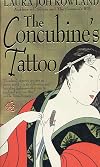
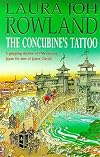
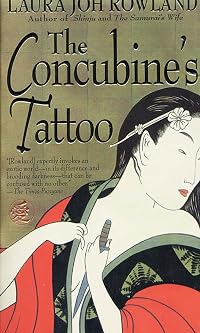
A shogun's concubine dies in 17th century Japan, poisoned by the ink she used to tattoo her private parts. As he investigates the murder, Inspector Sano Ichiro is drawn into a world of intrigue among the shogun's women. By the author of The Way of the Traitor.Tags
Recommendations



















Member Reviews
While women have played always played a prominent part of Sano Ichiro's world and mysteries, they take center stage in this volume. The Concubine's Tattoo at last elevates this series to what it is capable of being: an in-depth look at Japanese society for all walks of life. Not only must Sano solve the mystery of the murdered courtesan, he must also grapple with how the world he has taken for granted treats the people it deems less than. It's a compelling novel full of larger-than-life characters who are relatable across time and cultures.
After stalling for two books, Sano finally marries Ueda Reiko, the daughter of the local magistrate. He is looking forward to a quiet home life with a docile wife, but what he gets is someone as show more brave, as stubborn, and as intelligent as himself. The two clash almost immediately as Reiko is determined to help him solve the murder. However, it's not just chauvinism that prevents Sano from letting Reiko help. He knows how dangerous the work can be, and he's still haunted by the death of one of his assistants from the first book. He won't let that happen to Reiko, but he's unable to fully articulate that fear of his.
Reiko is a wonderful character, if a bit naive, but that's to be expected considered her upbringing. For his part, Sano's newest case opens his eyes to how society affects women. His investigation into Harume's life, her mother's, and those of the other concubines reveals to him how limited their options are, and how some of their talents are utterly wasted by their positions. While I doubt Sano is now a model feminist, his transformation is believable, and the novel does an excellent job of breaking down women's roles, something that is largely ignored. This extends beyond the women's roles to those of the eta, a class of 'undesirable' people who have lurked throughout the novels. Readers finally learn more about them, and we see along with Sano, how samurai society has imprisoned everyone in a rigid hierarchy.
Part of Sano's process to solve the mysteries is to go through the victim's life, and I particularly enjoyed learning about Harume's. There were so many twists. Just when you think you've figured it out, there's conflicting evidence. The characters of the Miyagi clan, Lady Ichiteru, Lady Keisho-In enliven the novel. Even the evil chamberlain Yanagisawa gets a new dimension in this novel that is both heartbreaking and justified. You feel just a tinge of pity for him before watching in horror as he ruins it for himself.
A word of caution: this novel is just as graphic and sexual as the previous two books, particularly since this is dealing with the world of concubines, and sexual politics is the name of the game. There are many scenes of coercion, some assault, sweet unions, and then some out-there stuff. Some folks might be uncomfortable reading these scenes while others might just be plain weirded out. There's definitely a lot to wade through, so keep that in mind.
Even with that warning, I still think this is one of the stronger books in the series thus far. The sex scenes are all about power - who has it, who lacks it, who wants it - and I think they're more purposeful than they have been in the past. Overall, it's a great mystery and a fascinating look at 17th century Japanese society that I have to recommend this book. show less
After stalling for two books, Sano finally marries Ueda Reiko, the daughter of the local magistrate. He is looking forward to a quiet home life with a docile wife, but what he gets is someone as show more brave, as stubborn, and as intelligent as himself. The two clash almost immediately as Reiko is determined to help him solve the murder. However, it's not just chauvinism that prevents Sano from letting Reiko help. He knows how dangerous the work can be, and he's still haunted by the death of one of his assistants from the first book. He won't let that happen to Reiko, but he's unable to fully articulate that fear of his.
Reiko is a wonderful character, if a bit naive, but that's to be expected considered her upbringing. For his part, Sano's newest case opens his eyes to how society affects women. His investigation into Harume's life, her mother's, and those of the other concubines reveals to him how limited their options are, and how some of their talents are utterly wasted by their positions. While I doubt Sano is now a model feminist, his transformation is believable, and the novel does an excellent job of breaking down women's roles, something that is largely ignored. This extends beyond the women's roles to those of the eta, a class of 'undesirable' people who have lurked throughout the novels. Readers finally learn more about them, and we see along with Sano, how samurai society has imprisoned everyone in a rigid hierarchy.
Part of Sano's process to solve the mysteries is to go through the victim's life, and I particularly enjoyed learning about Harume's. There were so many twists. Just when you think you've figured it out, there's conflicting evidence. The characters of the Miyagi clan, Lady Ichiteru, Lady Keisho-In enliven the novel. Even the evil chamberlain Yanagisawa gets a new dimension in this novel that is both heartbreaking and justified. You feel just a tinge of pity for him before watching in horror as he ruins it for himself.
A word of caution: this novel is just as graphic and sexual as the previous two books, particularly since this is dealing with the world of concubines, and sexual politics is the name of the game. There are many scenes of coercion, some assault, sweet unions, and then some out-there stuff. Some folks might be uncomfortable reading these scenes while others might just be plain weirded out. There's definitely a lot to wade through, so keep that in mind.
Even with that warning, I still think this is one of the stronger books in the series thus far. The sex scenes are all about power - who has it, who lacks it, who wants it - and I think they're more purposeful than they have been in the past. Overall, it's a great mystery and a fascinating look at 17th century Japanese society that I have to recommend this book. show less
In addition to being a great 17th century Japanese murder mystery The Concubine's Tattoo is a commentary on honor and relationships. Sano Ichiro is the shogun's investigator who has recently celebrated an arranged marriage. In both his professional and personal life Sano must balance a code of conduct that is morally, politically and, of course, honorably sound. Sano's latest case (on the night of his wedding no less) is the murder of the shogun's favorite concubine. Entwined in this murder are complications concerning an heir, long standing cultural differences and rivalries. Rowland displays Sano's progress on the case through the eyes of Sano's new wife Reiko, his enemy Chamberlain Yanagisawa, his partner Hirata, and Sano himself as show more well as many other fascinating characters. One of the best enjoyments of Rowland's book is her vivid, descriptive use of imagery. The details are so sensuous and alluring. They exquisitely cater to all five senses. Here are two quotes I particularly liked, "Her voice was a husky murmur that insinuated its way into Hirata's mind like a dark, intoxicating smoke" (p 86), and "The cold air had a lung-saturating dampness" (p 166). show less
With The Concubine’s Tattoo this series is fast becoming riveting reading, offering a sublime blend of historical fact and entertaining fiction around life in ancient Japan for our inimitable Samurai detective. In fact, I am not sure what enthralled most: the intricate detail of the brutal reality of daily life in this era, the gripping mystery surrounding the concubine’s murder or the clever means the author uses to fuse the two – regardless, all combine for a most absorbing tale.
The book begins with the marriage ceremony between Sōsakan Sano Ichirō and Lady Ueda Reiko finally taking place, after Sano returns triumphantly, at the end of the last book, from Nagasaki. The success of this arranged marriage is sorely tried, from show more the very beginning, when the shogun’s newest concubine, Harume, disrupts the celebration by dramatically appearing on the scene suffering convulsions and then dying, just as the service ends. Fearing an epidemic the shogun orders Sano to investigate the death, regardless of the fact that it is his marriage feast and the joy of his pending honeymoon and holiday are now denied. With the ensuing enquiry, Sano and his chief retainer Hirata are drawn into the explosive realm of the women’s quarters in Edo castle, and into the dangerous games at play in this world – revealing a society abhorrent to the detective; in its attitudes to women, in its social structure and the underlying decay inherent in the echelons of power. For, as he scrutinises the many suspects, as he assesses the multitude of additional sub-plots coalescing around the concubine’s death, Sano realises that if he missteps, he risks not only his life but also the life of his beautiful bride.
This story could possibly be classified as morbidly fascinating – at times the frank and florid description of the day-to-day lives of the many characters, from so different a period to today, makes for somewhat unpleasant reading. Yet the apparent faithful depiction of the times, along with genuine realism, offsets any likely discomfort. This book retains the flavour and colourful portrayal of 17th century Japan, as in previous instalments, but Sano’s character is now much more robust, and his decisions and interactions are much more decisive - he has matured well into his role, as have many of the other inhabitants of his world. And while this book will intimidate many with its blunt, intimate specifics of the sexual nature of the period, I found the story holding an undeniable veracity in the author’s attempt to depict a truthful portrait of a cruel but cultured civilisation.
This tale intrigued me from beginning to end – the historical interpretations smoothly juxtaposing with the well-rounded characters until more of this delightful story unfolds. Laura Joh Rowland dances as delicately and purposely through her exquisite premise as a well-trained samurai fights, and with as much skill - hers improving steadily with each experience, and I expect, with each new book. Something to look forward to…
(Jan 26, 2009) show less
The book begins with the marriage ceremony between Sōsakan Sano Ichirō and Lady Ueda Reiko finally taking place, after Sano returns triumphantly, at the end of the last book, from Nagasaki. The success of this arranged marriage is sorely tried, from show more the very beginning, when the shogun’s newest concubine, Harume, disrupts the celebration by dramatically appearing on the scene suffering convulsions and then dying, just as the service ends. Fearing an epidemic the shogun orders Sano to investigate the death, regardless of the fact that it is his marriage feast and the joy of his pending honeymoon and holiday are now denied. With the ensuing enquiry, Sano and his chief retainer Hirata are drawn into the explosive realm of the women’s quarters in Edo castle, and into the dangerous games at play in this world – revealing a society abhorrent to the detective; in its attitudes to women, in its social structure and the underlying decay inherent in the echelons of power. For, as he scrutinises the many suspects, as he assesses the multitude of additional sub-plots coalescing around the concubine’s death, Sano realises that if he missteps, he risks not only his life but also the life of his beautiful bride.
This story could possibly be classified as morbidly fascinating – at times the frank and florid description of the day-to-day lives of the many characters, from so different a period to today, makes for somewhat unpleasant reading. Yet the apparent faithful depiction of the times, along with genuine realism, offsets any likely discomfort. This book retains the flavour and colourful portrayal of 17th century Japan, as in previous instalments, but Sano’s character is now much more robust, and his decisions and interactions are much more decisive - he has matured well into his role, as have many of the other inhabitants of his world. And while this book will intimidate many with its blunt, intimate specifics of the sexual nature of the period, I found the story holding an undeniable veracity in the author’s attempt to depict a truthful portrait of a cruel but cultured civilisation.
This tale intrigued me from beginning to end – the historical interpretations smoothly juxtaposing with the well-rounded characters until more of this delightful story unfolds. Laura Joh Rowland dances as delicately and purposely through her exquisite premise as a well-trained samurai fights, and with as much skill - hers improving steadily with each experience, and I expect, with each new book. Something to look forward to…
(Jan 26, 2009) show less
The Concubine’s Tattoo by Laura Joh Rowland is the fourth book in her series set in 17th century Japan. I find these books are an interesting way to learn of this exotic land. The book opens with Sano Ichiro’s wedding which is interrupted as he is needed by the Shogun to investigate the death of a concubine.
Sano’s marriage is off to a rocky start as his new bride, Reiko, makes clear her desire to be involved in his work. While he believes his role is to protect his wife and shield her from life‘s unpleasant side, as the case develops he comes to a better understanding of how little power or independence women have. By allowing his wife some leeway, he is also able to open doors in the investigation that were closed to him.
As show more Sano conducts his investigation he becomes deeply involved in the daily life of the Shogun’s court, with jealous retainers trying to increase their influence, rigid samurai who cling to the traditional ways, and courtiers who involve themselves in any number of petty quarrels and sexual liasons. Of course, his long time rival, Chamberlain Yanagisawa sees this as an opportunity to discredit him and bring about his downfall.
I enjoy reading about this time period and the author includes rich historical details, great characters and some very twisted political schemes that enhance the mystery. show less
Sano’s marriage is off to a rocky start as his new bride, Reiko, makes clear her desire to be involved in his work. While he believes his role is to protect his wife and shield her from life‘s unpleasant side, as the case develops he comes to a better understanding of how little power or independence women have. By allowing his wife some leeway, he is also able to open doors in the investigation that were closed to him.
As show more Sano conducts his investigation he becomes deeply involved in the daily life of the Shogun’s court, with jealous retainers trying to increase their influence, rigid samurai who cling to the traditional ways, and courtiers who involve themselves in any number of petty quarrels and sexual liasons. Of course, his long time rival, Chamberlain Yanagisawa sees this as an opportunity to discredit him and bring about his downfall.
I enjoy reading about this time period and the author includes rich historical details, great characters and some very twisted political schemes that enhance the mystery. show less
A lushly told historical whodunit set in 17th century Japan, centered around the investigations of the Shogun's top private investigator, Inspector Sano. Part of a larger series, it is full of court intrigue and the complexities of Japanese society at multiple levels. It is very sexy, and gets into some kinky stuff so if you're embarrassed about that stuff you may want to try another author. A little plodding for my taste, and somewhat predictable, but the characters were enjoyable and the historical details were decadent.
I like the main character, the mystery was interesting. However, political machinations, whether historical or current, leave me cold.
The relationship between the detective and his new wife was very unsatisfactory. After two meetings that both ended in slammed doors or screaming, I don't buy it that (in addition to being sexually aroused), the two began to fall in love. Two brief arguments and two days of (arranged) marriage do not a convincing couple make. If the author wanted to pull in the "they hate each other until they realize that they love each other" plotline, she should have picked up a few of the paperback mass-market romance novels. Those formulaic novels have that plotline down to a science.
I didn't see the necessity of show more all the sex or almost-sex; much of it would not have been missed if the author had just stuck to the character development and untangling the mystery. (Yes, there were places where it was useful to the story and no, I don't complain every time I read sex in a novel.)
And while I'm grousing - pick a language and stick with it. If the story is told in English, then don't throw in Japanese expressions and translate them. Use daimyo and let us figure it out, if you must, but for the love of Mike, stop writing "sumimasen - excuse me". Yes, we're intelligent enough to figure out after the FIRST time that 'sumimasen' might mean 'excuse me'. Or better yet - just write excuse me instead of "translating" it numerous times throughout the book. The word and its translation (again) don't add anything to the story and it's not consistent throughout the book - the characters say 'yes' an awful lot in the book, why isn't it written "Hai - yes"?
The underlying story, adventure and relationship had great potential; unfortunately the occasional satisfying glimmers were dulled by writing that tried to be too clever. show less
The relationship between the detective and his new wife was very unsatisfactory. After two meetings that both ended in slammed doors or screaming, I don't buy it that (in addition to being sexually aroused), the two began to fall in love. Two brief arguments and two days of (arranged) marriage do not a convincing couple make. If the author wanted to pull in the "they hate each other until they realize that they love each other" plotline, she should have picked up a few of the paperback mass-market romance novels. Those formulaic novels have that plotline down to a science.
I didn't see the necessity of show more all the sex or almost-sex; much of it would not have been missed if the author had just stuck to the character development and untangling the mystery. (Yes, there were places where it was useful to the story and no, I don't complain every time I read sex in a novel.)
And while I'm grousing - pick a language and stick with it. If the story is told in English, then don't throw in Japanese expressions and translate them. Use daimyo and let us figure it out, if you must, but for the love of Mike, stop writing "sumimasen - excuse me". Yes, we're intelligent enough to figure out after the FIRST time that 'sumimasen' might mean 'excuse me'. Or better yet - just write excuse me instead of "translating" it numerous times throughout the book. The word and its translation (again) don't add anything to the story and it's not consistent throughout the book - the characters say 'yes' an awful lot in the book, why isn't it written "Hai - yes"?
The underlying story, adventure and relationship had great potential; unfortunately the occasional satisfying glimmers were dulled by writing that tried to be too clever. show less
Decent mystery, but definitely not a page-turner. The stakes are reasonably high, so it passes with an "OK." The really interesting part is to see the details of the Shogun's court and get a slight glimpse into Samurai society. When it boils down to it, it's more of a political-intrigue novel than a mystery. Maybe if I had read the other books in the series, I would have been more invested in the characters, but I think the main problem was I was expecting a tight whodunnit and got a semi-historic novel instead.
Members
- Recently Added By
Lists

Stories set on Island Country of Japan
18 works; 3 members
Author Information

30+ Works 7,643 Members
Historical mystery author Laura Joh Rowland writes the popular Sano Ichiro series, which is set in 17th-century feudal Japan and features a samurai detective protagonist. Before becoming a full-time writer, Rowland held several positions in chemistry, microbiology, and engineering. She studied at the University of Michigan and earned a B.S. in show more Microbiology and a Master's degree in Public Health. (Bowker Author Biography) show less
Some Editions
Series

Common Knowledge
- Canonical title
- The Concubine's Tattoo
- Original title
- The concubine's tattoo
- Original publication date
- 1998-12-01
- People/Characters
- Sano Ichiro; Lady Ueda Reiko; Hirata; Lady Harume; Tokugawa Tsunayoshi
- Important places
- Japan; Tokyo, Honshū, Japan
- Dedication
- To Pamela Gray Ahearn,
With appreciation - First words
- "It is my privilege to open this ceremony in which Sosakan San Ichiro and Lady Ueda Reiko shall be united in marriage before the gods."
- Last words
- (Click to show. Warning: May contain spoilers.)Reiko squeezed his hand, her eyes sparkled with mischief. "And partners," she added.
Classifications
Statistics
- Members
- 671
- Popularity
- 42,951
- Reviews
- 11
- Rating
- (3.61)
- Languages
- 8 — Catalan, Czech, English, French, German, Greek, Hungarian, Spanish
- Media
- Paper, Ebook
- ISBNs
- 18
- ASINs
- 5