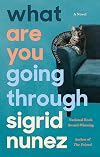
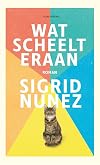
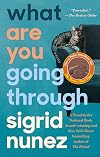
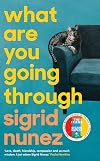
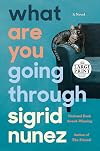
What Are You Going Through
by Sigrid Nunez
On This Page
Description
"A woman describes a series of encounters she has with various people in the ordinary course of her life: an ex she runs into by chance at a public forum, an Airbnb owner unsure how to interact with her guests, a stranger who seeks help comforting his elderly mother, a friend of her youth now hospitalized with terminal cancer. In each of these people the woman finds a common need: the urge to talk about themselves and to have an audience to their experiences. The narrator orchestrates this show more chorus of voices for the most part as a passive listener, until one of them makes an extraordinary request, drawing her into an intense and transformative experience of her own. In What Are You Going Through, Nunez brings wisdom, humor, and insight to a novel about human connection and the changing nature of relationships in our times. A surprising story about empathy and the unusual ways one person can help another through hardship, her book offers a moving and provocative portrait of the way we live now"-- show lessTags
Recommendations
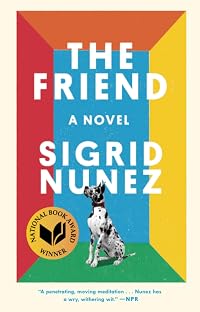















Member Reviews
I found What You Are Going Through to be a moving and oddly comforting revery of a novel about life and its travails, longing, loneliness, and dignity in the face of death. Nunez writes from what I found to be a place of empathy and wonder about the things life throws at people and the ways in which we cope with those things, or don't, as the case may be. For the first half or so of the book, Nunez takes us through a several encounters she has (to quote the description on the back of my paperback edition) during the course of a day, or sometimes retrieves from her memory, and provides brief windows into their lives. For example, we have an older woman growing more and more reclusive, and her adult son, who is trying his best to care for show more her and keep her interested in life. The narrator knows them only because she's been neighbors with the woman for years, though they have barely spoken, and because she begins to have conversations with the son. The way that Nunez makes all of these encounters come to life is through realistic and believable detail. No one in the novel has a name. They are "the woman," "the man," "my friend," "my ex-." It would seem that this tactic would make the people and their circumstances distant and be somewhat off-putting in the reading. I found instead that it helped make their situations universal, at the same time Nunez's specificity otherwise brought her people alive on the page, even when they make but the briefest appearances.
Even the title's lack of a concluding question mark is, somehow, a leveler, though Nunez includes the mark when explaining the phrase's origin:
In the book's second half, Nunez expands her theme by focusing in, for the most part, on her narrator's experiences with a friend from college who asks for her help. Our narrator agrees, and as the two women, now late in life, explore all of these elements of life, but very close up, and with daily discoveries, both depressing and uplifting.
At any rate, I haven't done the novel justice but I highly recommend the book to anyone who enjoys fiction that doesn't necessarily rely on plot. There are also some brief, terrific side roads taken. Or, anyway, what at first seem like side roads but in fact fold seamlessly into the themes of the novel as a whole. In talking about sexism in publishing and in reading, for example, the narrator describes Ingeborg Bachmann, who wrote a wonderful collection of five longish short stories called (in English) [Three Paths to the Lake]. (Coincidentally, I read this collection many years ago.)
I'll just end with one more quote:
Nunez, of course, has written many novels, including [The Friend], which won the National Book Award. This is the first of her novels I've read, but I'll certainly be catching up on her works soon. Also, What Are You Going Through was made into the movie The Room Next Door, Pedro Almodovar's first English language film, in 2024. show less
Even the title's lack of a concluding question mark is, somehow, a leveler, though Nunez includes the mark when explaining the phrase's origin:
What are you going through? When Simone Weil said that being able to ask this question was what love of one's neighbor truly meant, she was writing in her native French. And in French the great question sounds quite different: Quel set ton torment?
In the book's second half, Nunez expands her theme by focusing in, for the most part, on her narrator's experiences with a friend from college who asks for her help. Our narrator agrees, and as the two women, now late in life, explore all of these elements of life, but very close up, and with daily discoveries, both depressing and uplifting.
At any rate, I haven't done the novel justice but I highly recommend the book to anyone who enjoys fiction that doesn't necessarily rely on plot. There are also some brief, terrific side roads taken. Or, anyway, what at first seem like side roads but in fact fold seamlessly into the themes of the novel as a whole. In talking about sexism in publishing and in reading, for example, the narrator describes Ingeborg Bachmann, who wrote a wonderful collection of five longish short stories called (in English) [Three Paths to the Lake]. (Coincidentally, I read this collection many years ago.)
You write ladies' novels, correct? said the novelist to his female colleague.
Oh what dark neck of the woods have we entered here.
The Bachmann story, "Three Paths to the Lake," appears in her collection Three Paths to the Lake, which was published in 1972, a year before she died of burns suffered in a fire. Five stories. Five women, each one suffering from some form of emotional turmoil, each one feeling trapped, isolated, anxious, and confused about her place in patriarchal society, and struggling for a language to express what she's going through.
George Balanchine said, If you put a group of men on the stage, you have a group of men, but if you put a group of women on the stage you have the whole world.
If you put a group of women in a book, you have "women's fiction." To be shunned by almost all male readers and no few female ones as well.
I'll just end with one more quote:
Jesus, you know, it wasn't supposed to happen like this. Even if it strikes me now has having been inevitable. But doesn't love always feel just so: destined, no matter how unexpected, no matter how improbable.
Nunez, of course, has written many novels, including [The Friend], which won the National Book Award. This is the first of her novels I've read, but I'll certainly be catching up on her works soon. Also, What Are You Going Through was made into the movie The Room Next Door, Pedro Almodovar's first English language film, in 2024. show less
"No matter how hard we try to put the most important things into words,it is always like toe-dancing in clogs."
"There are two kinds of people in the world: those who, upon seeing someone else suffering, think, That could happen to me, and those who think That will never happen to me. The first kind of people help us to endure; the second kind make life hell."
How far would you go to help a friend? For example, if a friend was diagnosed with terminal cancer and planned suicide, would you stay with her during her last weeks if she didn't involve you with her actual death? Sigrid Nunez tackles this question in her latest novel, "What are you going through" and examines themes of friendship, empathy, loss, death, and dignity.
The story, told show more by a nameless narrator, depicts her relationship with her unnamed friend as her cancer diagnosis shifts. The two women, both writers, were very close in their youth but, while retaining contact, drifted apart. The first half of the book chronicles the narrator's initial visit: her time at the hospital, the airb&b at which she stays, her reading, observations, and most importantly, her attendance at a lecture given by her ex on the world's inevitable demise due to climate change.
In the second half of the book, the unnamed narrator moves from a wry observer to an initially hesitant participant as she decides to grant her friend's request. Their remaining time together, while sad, is also marked with humor, compassion, and shared moments of intimacy. What are you going through is a finely crafted story of considerable depth. Highly recommend. show less
"There are two kinds of people in the world: those who, upon seeing someone else suffering, think, That could happen to me, and those who think That will never happen to me. The first kind of people help us to endure; the second kind make life hell."
How far would you go to help a friend? For example, if a friend was diagnosed with terminal cancer and planned suicide, would you stay with her during her last weeks if she didn't involve you with her actual death? Sigrid Nunez tackles this question in her latest novel, "What are you going through" and examines themes of friendship, empathy, loss, death, and dignity.
The story, told show more by a nameless narrator, depicts her relationship with her unnamed friend as her cancer diagnosis shifts. The two women, both writers, were very close in their youth but, while retaining contact, drifted apart. The first half of the book chronicles the narrator's initial visit: her time at the hospital, the airb&b at which she stays, her reading, observations, and most importantly, her attendance at a lecture given by her ex on the world's inevitable demise due to climate change.
In the second half of the book, the unnamed narrator moves from a wry observer to an initially hesitant participant as she decides to grant her friend's request. Their remaining time together, while sad, is also marked with humor, compassion, and shared moments of intimacy. What are you going through is a finely crafted story of considerable depth. Highly recommend. show less
I finished "What Are You Going Through" by Sigrid Nunez early this morning and it is such a finely written book. I love how her writing style jumps around between characters, time, and often simply wanders off to a vaguely, or a seemingly totally divorced subject, much like how many of us live our lives. I won’t describe exactly how she does it (if I even could), but she eventually brings all these disjointed people and things together, in a very insightful, trippy, and clever way.
When I was only a third of the way through the book, I was ready to give it my top rating. The book is, as NPR said, “A penetrating, moving meditation on loss, comfort, memory, what it means to be a writer today, and various forms of love and friendship show more …. Nunez has a wry, withering wit.”
Yep, loss of memory and a loss of people, that fits me well at this point in my life. Through books, the news, and movies, I experience so many different stories and thoughts, and all I want to do is share them with my late wife, Vicky, just like I did for more than thirty years. Replacing love and comfort with grief and loneliness is sometimes crippling.
I found myself addicted to Nunez’s writing style and the way she eventually weaves the different threads together into something profound. Her writing seamlessly connects with the emotions and the intellect.
In the book a dying woman is telling about all the encounters in her everyday life, encounters where she detects a common theme reflected in her close friends and complete strangers. These people (maybe all people), have a common need, they want to talk about themselves and to find an audience willing to listen. We all need some connections for our life to have meaning.
A review of this book mentioned empathy and our deep desire for some emotional comfort in our lives, and that struck me as so true. Two other words come to my mind concerning this book, wisdom and a sly humor. The book has many fascinating discussions concerning death, companionship, and life. Nunez is quickly becoming one of my favorite writers on the scene today. show less
When I was only a third of the way through the book, I was ready to give it my top rating. The book is, as NPR said, “A penetrating, moving meditation on loss, comfort, memory, what it means to be a writer today, and various forms of love and friendship show more …. Nunez has a wry, withering wit.”
Yep, loss of memory and a loss of people, that fits me well at this point in my life. Through books, the news, and movies, I experience so many different stories and thoughts, and all I want to do is share them with my late wife, Vicky, just like I did for more than thirty years. Replacing love and comfort with grief and loneliness is sometimes crippling.
I found myself addicted to Nunez’s writing style and the way she eventually weaves the different threads together into something profound. Her writing seamlessly connects with the emotions and the intellect.
In the book a dying woman is telling about all the encounters in her everyday life, encounters where she detects a common theme reflected in her close friends and complete strangers. These people (maybe all people), have a common need, they want to talk about themselves and to find an audience willing to listen. We all need some connections for our life to have meaning.
A review of this book mentioned empathy and our deep desire for some emotional comfort in our lives, and that struck me as so true. Two other words come to my mind concerning this book, wisdom and a sly humor. The book has many fascinating discussions concerning death, companionship, and life. Nunez is quickly becoming one of my favorite writers on the scene today. show less
What Are You Going Through, Sigrid Nunez’s follow-up to her National Book Award winning novel The Friend, describes the emotionally fraught journey of an unnamed middle-aged female narrator (a writer and intellectual) through a minefield of human relationships. The narrator seems to attract people who crave an audience, who need (with, it seems, biological urgency) to tell their stories, and these become the narrator’s story. Central to the novel is the narrator’s friend who has cancer. The narrator is in town to visit her friend, in hospital receiving treatment. On the first evening of her visit, after spending the afternoon in the hospital, she attends a lecture given by a man—her ex, though, coyly, she does not immediately show more disclose this detail—pertaining to climate change and the state of the environment. His message is grim: that the damage inflicted by humanity is irredeemable and irreversible, and, since there is no hope, humanity’s only responsible choice is to alter its current behaviour in ways that will mitigate the pain and suffering of future generations. In subsequent chapters we learn that the friend’s treatments succeed, that her survival seems likely. But later the cancer returns, and she is given a terminal diagnosis. Once again, the narrator visits, and this is when the friend makes a stunning request: will the narrator help her to die? The narrator’s account includes descriptions of encounters with other people who are facing life-changing decisions and various difficulties related to aging and infirmity—in particular, an elderly woman in her building, a distrustful chronic complainer who refuses to make concessions to physical decline. It would be reasonable to imagine a novel built around notions of death and dying would be gloomy, but What Are You Going Throughis the product of a writer whose ironic outlook permeates a lively, fast-moving narrative that focuses broadly on the modern human condition. Much of the discourse in the novel is refreshingly blunt—Nunez’s characters say what they mean. After all, when you’re dying, who has time to prevaricate? With death and dying as its focus, What Are You Going Through raises profound questions about life and living and does so in an entertaining manner. This is fiction with a huge heart. Nothing short of a triumph. show less
Life, the narrator of Sigrid Nunez’ book might say, is the saddest story ever told. It always ends the same way. Inevitably. The only thing that differentiates the stories is what we do in life, what we go through. Here, although her concern is directed toward what her dying friend is going though, it is the narrator herself whose life we briefly share. We learn of her dying friend and her friend’s plan for suicide (there is a disquieting conflation in the text with “euthanasia”). That her friend co-opts her into assisting at least logistically with her plan is perhaps the worst thing that she could do to a “friend”. But there is something egocentrically needy about the prospective suicide that brings her to ignore what her show more friend is going through. Inevitably (perhaps) plans go awry both pathetically and bathetically (literally, since a bath overflows flooding the house they are renting for the planned action). And so the narrator is given plenty of opportunity for reflection upon her friend, upon herself and her ex, and upon writing in its different guises (both the narrator and her friend are writers). Which might suggest that one of the most important things that one goes through in life, in any life, just might be said reflections and thoughts. And what better to convey what one does, of this kind, than through writing (and subsequently through reading).
Sigrid Nunez presents a narrator with a calm demeanour and a dry wit. Certainly life hasn’t always been rosy for her. And her friends, whether they are lovers or not, aren’t the easiest of people to deal with. But the narrator abides. Or rather, upon her reflection she presents the calmness of the detached observer (who can say how she responds in the moment). It makes for compelling reading. And the insights provided, both direct and oblique, are gently accommodated. I like it, even when I’m not entirely warm to the scenario.
Gently recommended. show less
Sigrid Nunez presents a narrator with a calm demeanour and a dry wit. Certainly life hasn’t always been rosy for her. And her friends, whether they are lovers or not, aren’t the easiest of people to deal with. But the narrator abides. Or rather, upon her reflection she presents the calmness of the detached observer (who can say how she responds in the moment). It makes for compelling reading. And the insights provided, both direct and oblique, are gently accommodated. I like it, even when I’m not entirely warm to the scenario.
Gently recommended. show less
A resonant, powerful, and unconventional novel, which barely possesses a plot. The writing is clean and unpretentious. Nunez writes about difficult truths and one of the most difficult experiences: accompanying a dying person. There really are times when nothing we can say or nothing others can say to us can make a situation better. I found this an intense reading experience, and, short as the book is, I was relieved to reach the end. The reader is committed to and endures the experience, much as the narrator does.
A couple of quotations from the novel:
“We talk glibly about finding the right words, but about the most important things, those words we never find. We put the words down as they must be put down, one after the other, but show more that is not life, that is not death, one word after the other, no, that is not right at all. No matter how hard we try to put the most important things into words, it is always like toe-dancing in clogs.”
“how hard it was for people to accept reality” show less
A couple of quotations from the novel:
“We talk glibly about finding the right words, but about the most important things, those words we never find. We put the words down as they must be put down, one after the other, but show more that is not life, that is not death, one word after the other, no, that is not right at all. No matter how hard we try to put the most important things into words, it is always like toe-dancing in clogs.”
“how hard it was for people to accept reality” show less
What You Are Going Through, published in 2020, is a meandering account of an unnamed narrator who is helping to negotiate the final months of a close friend debating when to take her own life as she copes with a terminal cancer diagnosis. As the narrator learns in the weeks that follow, dying is like “toe-dancing in clogs.” Her account highlights the importance of empathy, the cost of friendship, and the entwined moments of happy recollections and the daily indignities that disease brings.
While the topic may seem a grim one, I never found it so in this book. Instead, it shows how we continue to appreciate the gifts life brings us, even with diminished returns. Woven into the plot are the narrator’s interactions with the life show more stories of people she encounters daily, be it an ex-husband giving a lecture about the fact that climate change has doomed the generations that will follow us, or her absorbing accounts of a neighbor’s coping with failing mental capabilities. It is a story that highlights the importance of interaction with “ships that pass us in the night,” no matter how brief the encounters.
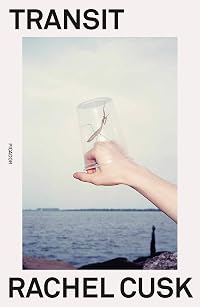
Throughout the novel, the narrator grudgingly gives up personal details of her own life. By the end of the story, the bits and pieces she provides fuse into a picture of someone whom the reader understands and sympathizes with. In reading Nunez’s book, I was reminded of Rachel Cusk’s “Outline Trilogy,” which explored a similar format of story telling. That trilogy wowed me, and this book proved just as compelling a read. While one might expect What You Are Going Through to be a depressing undertaking, it proves in fact to be a discourse on the insistence of life, even when the odds are heavily weighed against it. show less
While the topic may seem a grim one, I never found it so in this book. Instead, it shows how we continue to appreciate the gifts life brings us, even with diminished returns. Woven into the plot are the narrator’s interactions with the life show more stories of people she encounters daily, be it an ex-husband giving a lecture about the fact that climate change has doomed the generations that will follow us, or her absorbing accounts of a neighbor’s coping with failing mental capabilities. It is a story that highlights the importance of interaction with “ships that pass us in the night,” no matter how brief the encounters.
Throughout the novel, the narrator grudgingly gives up personal details of her own life. By the end of the story, the bits and pieces she provides fuse into a picture of someone whom the reader understands and sympathizes with. In reading Nunez’s book, I was reminded of Rachel Cusk’s “Outline Trilogy,” which explored a similar format of story telling. That trilogy wowed me, and this book proved just as compelling a read. While one might expect What You Are Going Through to be a depressing undertaking, it proves in fact to be a discourse on the insistence of life, even when the odds are heavily weighed against it. show less
Members
- Recently Added By
Lists

Writers as Characters in Fiction
120 works; 19 members

Netgalley Reads
468 works; 3 members

Books Read in 2020
4,379 works; 124 members

Books Read in 2021
5,361 works; 114 members
Author Information

12+ Works 4,658 Members
Awards and Honors
Awards
Distinctions
Notable Lists
Work Relationships
Has the adaptation
Common Knowledge
- Canonical title
- What Are You Going Through
- Original title
- What Are You Going Through
- Original publication date
- 2020
- Related movies
- The Room Next Door (2024 | IMDb)
- First words
- I went to hear a man give a talk.
- Last words
- (Click to show. Warning: May contain spoilers.)What does it matter if I failed.
Classifications
Statistics
- Members
- 624
- Popularity
- 46,757
- Reviews
- 30
- Rating
- (3.86)
- Languages
- 7 — Dutch, English, French, German, Polish, Portuguese, Spanish
- Media
- Paper, Audiobook, Ebook
- ISBNs
- 23
- ASINs
- 11