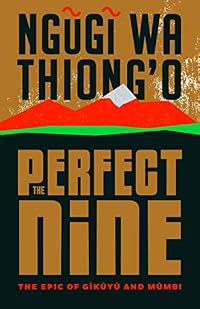
The Perfect Nine: The Epic of Gĩkũyũ and Mũmbi
by Ngugi wa'Thiong'o
On This Page
Description
Longlisted for the 2021 International Booker Prize A dazzling, genre-defying novel in verse from the author Delia Owens says "tackles the absurdities, injustices, and corruption of a continent" Ngũgĩ wa Thiong'o's novels and memoirs have received glowing praise from the likes of President Barack Obama, the New Yorker, the New York Times Book Review, The Guardian, and NPR; he has been a finalist for the Man International Booker Prize and is annually tipped to win the Nobel Prize for show more Literature; and his books have sold tens of thousands of copies around the world. In his first attempt at the epic form, Ngũgĩ tells the story of the founding of the Gĩkũyũ people of Kenya, from a strongly feminist perspective. A verse narrative, blending folklore, mythology, adventure, and allegory, The Perfect Nine chronicles the efforts the Gĩkũyũ founders make to find partners for their ten beautiful daughters--called "The Perfect Nine" --and the challenges they set for the 99 suitors who seek their hands in marriage. The epic has all the elements of adventure, with suspense, danger, humor, and sacrifice. Ngũgĩ's epic is a quest for the beautiful as an ideal of living, as the motive force behind migrations of African peoples. He notes, "The epic came to me one night as a revelation of ideals of quest, courage, perseverance, unity, family; and the sense of the divine, in human struggles with nature and nurture." show lessTags
Recommendations










Member Reviews
Retelling creation myths can be tricky - trying to retell them for local audience needs to find a way not to offend, trying to retell them for global audience can fall flat when the story is not well known. Ngũgĩ wa Thiong'o chose to retell the Gĩkũyũ people of Kenya's myths in the form of an epic poem and then to translate it himself into English. And somewhere between the format and the translation, something got lost.
The poem was written and initially published in the Kikuyu/Gikuyu language. It was written for a local audience - for people who grew up with the language and the shared culture and knew the original legends (and probably had heard at least a few versions of it). Translating this kinds of works is extremely hard show more and sometimes the writer is the best person to translate when they know the second language well enough - as is the case here. But that can backfire a bit - because Ngũgĩ wa Thiong'o knows his language and culture, he never stops to think if something needs a culture-translation as well. Novels and stories are easier in that regard - there is enough space to explain and create the needed bridges. Poetry, even free verse one, is different. Especially when it heavily relies on allusions and other literary devices. The way to solve that is usually to add translator notes or author notes - explain the legend, explain some of the culture. Especially in the case when the culture is as different from the Western ones and when, even in our very technological 21st century, finding information online about this culture is not that easy.
Ngũgĩ wa Thiong'o adds a 2 pages introduction which tells the base of the legend... and that's it. If there was a book written in the last years that needed notes, that was it.
Not that it does not work as a poem - you do not need to understand every single thing to understand what is happening. Once upon a time, there were a man and a woman. They went through some challenges and made a family - and had 10 daughters. When they came of age, men came to ask for their hands and they had to proof how serious they are so they are allowed to marry a girl and become the patriarch of one of the peoples' tribes. There is a play on the numbers here - the original legend has 9 sisters, the perfect nine here are actually 10 because one of the sister's history is a bit different. 9 will remain important across the poem (and 7 seems to be showing up in bad situations - I would have a note on the numbers and their meaning in the culture). Some of the challenges for the grooms-to-be are mundane, some are supernatural (there are a lot of ogres in this mythology). Men die, men give up, men behave badly. Until 10 remain. Cue weddings, children, more heartbreak and the end of the story, mirroring the beginning. Some of the parts work better as poetry than others; some sound almost like prose which had been spaced weirdly (but then a lot of modern poetry feels like that to me).
The story is straight forward but its beauty is in the details. And that's where the English translation fails a bit. Most of the daughters have more 2 different names (one has 3 - one used only once when she is listed and another 2 used any other time she is mentioned, including when she is introduced) and it is never clear why or what the names really mean - we learn some of the backstory of some names but I cannot stop thinking that these make a LOT more sense in their own language. And I am sure a lot of the story details pinged on something in the soul of a person who had grown up in the culture - the way my culture's local legends can do it for me when I listen to them. I hope that one day there will be annotated version of this book (or that someone will add some notes on a later edition) - maybe some of the failures of the book will actually clear out when the background is there.
The book was part of the 2021 Man Booker International Prize Longlist and I can see why - it is different and it kinda works. But I suspect that who wrote it also played a role. It was my introduction to Ngũgĩ wa Thiong'o and as it was his first foray into epic poetry, it was probably not the best possible one. I plan to read more of him - he had been on my radar for awhile. And despite its problems, I am glad to have read this one. show less
The poem was written and initially published in the Kikuyu/Gikuyu language. It was written for a local audience - for people who grew up with the language and the shared culture and knew the original legends (and probably had heard at least a few versions of it). Translating this kinds of works is extremely hard show more and sometimes the writer is the best person to translate when they know the second language well enough - as is the case here. But that can backfire a bit - because Ngũgĩ wa Thiong'o knows his language and culture, he never stops to think if something needs a culture-translation as well. Novels and stories are easier in that regard - there is enough space to explain and create the needed bridges. Poetry, even free verse one, is different. Especially when it heavily relies on allusions and other literary devices. The way to solve that is usually to add translator notes or author notes - explain the legend, explain some of the culture. Especially in the case when the culture is as different from the Western ones and when, even in our very technological 21st century, finding information online about this culture is not that easy.
Ngũgĩ wa Thiong'o adds a 2 pages introduction which tells the base of the legend... and that's it. If there was a book written in the last years that needed notes, that was it.
Not that it does not work as a poem - you do not need to understand every single thing to understand what is happening. Once upon a time, there were a man and a woman. They went through some challenges and made a family - and had 10 daughters. When they came of age, men came to ask for their hands and they had to proof how serious they are so they are allowed to marry a girl and become the patriarch of one of the peoples' tribes. There is a play on the numbers here - the original legend has 9 sisters, the perfect nine here are actually 10 because one of the sister's history is a bit different. 9 will remain important across the poem (and 7 seems to be showing up in bad situations - I would have a note on the numbers and their meaning in the culture). Some of the challenges for the grooms-to-be are mundane, some are supernatural (there are a lot of ogres in this mythology). Men die, men give up, men behave badly. Until 10 remain. Cue weddings, children, more heartbreak and the end of the story, mirroring the beginning. Some of the parts work better as poetry than others; some sound almost like prose which had been spaced weirdly (but then a lot of modern poetry feels like that to me).
The story is straight forward but its beauty is in the details. And that's where the English translation fails a bit. Most of the daughters have more 2 different names (one has 3 - one used only once when she is listed and another 2 used any other time she is mentioned, including when she is introduced) and it is never clear why or what the names really mean - we learn some of the backstory of some names but I cannot stop thinking that these make a LOT more sense in their own language. And I am sure a lot of the story details pinged on something in the soul of a person who had grown up in the culture - the way my culture's local legends can do it for me when I listen to them. I hope that one day there will be annotated version of this book (or that someone will add some notes on a later edition) - maybe some of the failures of the book will actually clear out when the background is there.
The book was part of the 2021 Man Booker International Prize Longlist and I can see why - it is different and it kinda works. But I suspect that who wrote it also played a role. It was my introduction to Ngũgĩ wa Thiong'o and as it was his first foray into epic poetry, it was probably not the best possible one. I plan to read more of him - he had been on my radar for awhile. And despite its problems, I am glad to have read this one. show less
This was a shockingly quick read! A modern retelling of the origin of the Gĩkũyũ people in epic verse. Listen, I am sure that there were references and themes I missed her, but overall I found this very accessible and enjoyable.
In the original, ten suitors (nine plus one, the perfect nine?) showed up just in time to marry the nine (ten?) daughters and found the ten clans. But where did the ten suitors come from? In this tale, Thiong'o imagines hundreds of men setting out from their homes, inspired by tales of the legendary beauty of the girls. Ninety-nine make it to the mountain that is their home. This is the story of the tests and the quests that prove the worth of the suitors. But of course, the daughters are more beautiful, more show more just, more capable, more talented, more brave... in fact, by the end we only know the name of one of the suitors, until the rest are named as a part of their marriage rites.
An intriguing read! Thiong'o is a prolific writer, I will have to look up some of his other books! show less
In the original, ten suitors (nine plus one, the perfect nine?) showed up just in time to marry the nine (ten?) daughters and found the ten clans. But where did the ten suitors come from? In this tale, Thiong'o imagines hundreds of men setting out from their homes, inspired by tales of the legendary beauty of the girls. Ninety-nine make it to the mountain that is their home. This is the story of the tests and the quests that prove the worth of the suitors. But of course, the daughters are more beautiful, more show more just, more capable, more talented, more brave... in fact, by the end we only know the name of one of the suitors, until the rest are named as a part of their marriage rites.
An intriguing read! Thiong'o is a prolific writer, I will have to look up some of his other books! show less
I do like the solemn tone with which classic epics begin, such as in the Iliad, the Odyssey, or even the older Gilgamesh epic. Thiong'o was also clearly inspired by these models. What he offers is nothing less than an African version of such a mythical story: equally solemn and elaborate, with continuous repetitive elements, references to higher powers, poetic effects, and a beautiful epic ending. So you can safely call this book a kind of African 'origin' epic, built around the patriarchs Gĩkũyũ and Mũmbi who want to select a suitable man for their 10 daughters. But then things go wrong in my opinion: the more than 100 'suiters' who present themselves (a clear nod to the Odyssey) rather predictably have to undergo all kinds of show more tests, in this case with terrible ogres. This middle piece is more like a children's adventure story. Also, the very clear moralistic undertone (100% woke) reminds of a children's book. Only at the end does Thiong'o resumes the epic-mythical tone. So, this book certainly has some appeal, but I don't think it's completely successful. On a side note, I was surprised by the author’s adherence to the myth of Bantu-origin in Ancient Egypt. show less
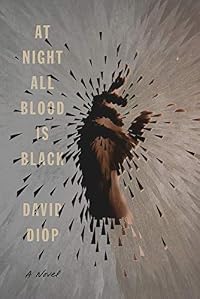
This is the second book I've read from this year's International Booker nominee list. (The other book I read was At Night All Blood is Black by David Diop.)
I think this would actually be a quite fascinating story to hear/watch as told by a griot.
If you like origin & mythology tales, this is one for you. I enjoyed it.
A side note/comparison of the two International Booker nominees I've read: At Night All Blood is Black had a lot of symbolism regarding dualities. In my review of that book, I commented on the symbolism of the hands in the story & of the use of the left (dirty) vs. right (clean) hands by the "chocolat" soldiers to carry the rifles (weapon of the colonizer) vs. machetes (tools of home). In The Perfect Nine: The Epic of show more Gĩkũyũ and Mũmbi, the first wedding gift given is:
So, it just further emphasizes the duality of a gun being a weapon of war while a machete is a tool of cultivating growth/tool of sustenance. And an important gift, at that, since it was the first gift given.
I very much enjoyed reading these two contenders together to explore contrasts & comparisons. They are very different books, though, & At Night All Blood is Black may not appeal as much to everyone (thoughtful but quite grim) whereas The Perfect Nine: The Epic of Gĩkũyũ and Mũmbi is a more universal tale. show less
I think this would actually be a quite fascinating story to hear/watch as told by a griot.
If you like origin & mythology tales, this is one for you. I enjoyed it.
A side note/comparison of the two International Booker nominees I've read: At Night All Blood is Black had a lot of symbolism regarding dualities. In my review of that book, I commented on the symbolism of the hands in the story & of the use of the left (dirty) vs. right (clean) hands by the "chocolat" soldiers to carry the rifles (weapon of the colonizer) vs. machetes (tools of home). In The Perfect Nine: The Epic of show more Gĩkũyũ and Mũmbi, the first wedding gift given is:
"Enabling the Beginning of a New Home
Two machetes, tools for cultivating land, were the first gifts."
So, it just further emphasizes the duality of a gun being a weapon of war while a machete is a tool of cultivating growth/tool of sustenance. And an important gift, at that, since it was the first gift given.
I very much enjoyed reading these two contenders together to explore contrasts & comparisons. They are very different books, though, & At Night All Blood is Black may not appeal as much to everyone (thoughtful but quite grim) whereas The Perfect Nine: The Epic of Gĩkũyũ and Mũmbi is a more universal tale. show less
This epic is the first work of fiction by Ngũgĩ wa Thiong'o since his acclaimed novel Wizard of the Crow (2004), and it describes the creation of the Gĩkũyũ people in the area surrounding Mount Kenya. Gĩkũyũ (Man) and Mũmbi (Woman) met there, and had 10 daughters, one of whom, Warigia, was born lame, and the young women came to be known as The Perfect Nine. Their beauty, prowess and deeds were made known throughout the surrounding lands, and 99 young men came from different tribes to see the women, and seek their hands in marriage. After they arrived they were informed by Gĩkũyũ and Mũmbi that their daughters would not agree to accompanying their new husbands to their villages; instead, they would choose which of the 99 men show more they would marry, and after doing so they would create a matriarchal society where they lived, which was to be led by their parents. The men who agreed to this challenge were also told that they, and the Perfect Nine, would have to embark on a mission to find Mwengeca, the king of human-eating ogres, wrestle him, and capture the hair in the middle of his tongue, a cure all which will grant Warigia the ability to walk.
Ngũgĩ puts down on paper the long and oft told story of the Gĩkũyũ people, of which he is a member, in an tale that does not compare with his best novels, but it is an interesting and informative read. show less
Ngũgĩ puts down on paper the long and oft told story of the Gĩkũyũ people, of which he is a member, in an tale that does not compare with his best novels, but it is an interesting and informative read. show less
Longlisted for the 2021 Booker International
This book is the author's telling of the Gikuyu (my setup will not let me put tildes over i and u) people's origin story, from a feminist perspective. Is it? I have no idea. I have not heard/read the traditional story. This version certainly centers the 10 daughters (the perfect nine) who created the clans of the Gikuyu.
This telling is interesting--it is in verse. Each of the the daughters has a particular strength, which they use during their quest with the 99 men seeking their hands in marriage. I marked the pages with the daughters' names, which is right before the section with their strengths. But I got confused between there and the end, where names shift and spelling vary. I don't know show more if this is a grammar issue (as in Latin, where name endings change depending on certain variables). It might be considered [book:The Odyssey|1381]-esque, but really it reminded me more of [book:Monkey: The Journey to the West|100237] (which I admit I lost to the library and did not finish). Quests! Ogres! Puzzles! Tricks! Competition! Some give up, others stick it out.
This was an entertaining and quick read. I have not read any of Ngugi's other work, and would like to read a novel. Is this Booker International-worthy? Personally I don't think so. It is based on a traditional tale, it is short and enjoyable but also very YA-friendly (as it should be, if it is based on a traditional oral origin story).
Great chapter separator pages, but they also make this book seem longer than it is. show less
This book is the author's telling of the Gikuyu (my setup will not let me put tildes over i and u) people's origin story, from a feminist perspective. Is it? I have no idea. I have not heard/read the traditional story. This version certainly centers the 10 daughters (the perfect nine) who created the clans of the Gikuyu.
This telling is interesting--it is in verse. Each of the the daughters has a particular strength, which they use during their quest with the 99 men seeking their hands in marriage. I marked the pages with the daughters' names, which is right before the section with their strengths. But I got confused between there and the end, where names shift and spelling vary. I don't know show more if this is a grammar issue (as in Latin, where name endings change depending on certain variables). It might be considered [book:The Odyssey|1381]-esque, but really it reminded me more of [book:Monkey: The Journey to the West|100237] (which I admit I lost to the library and did not finish). Quests! Ogres! Puzzles! Tricks! Competition! Some give up, others stick it out.
This was an entertaining and quick read. I have not read any of Ngugi's other work, and would like to read a novel. Is this Booker International-worthy? Personally I don't think so. It is based on a traditional tale, it is short and enjoyable but also very YA-friendly (as it should be, if it is based on a traditional oral origin story).
Great chapter separator pages, but they also make this book seem longer than it is. show less
Longlisted for the International Booker Prize 2021
This was one of the books that most interested me on the International Booker list, but it is not an easy one to assess or review.
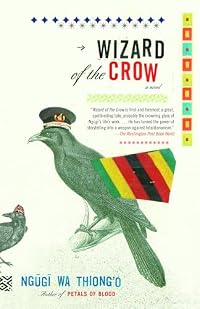
I have read three of Ngũgĩ's previous novels - [b:The River Between|22571513|The River Between|Ngũgĩ wa Thiong'o|https://i.gr-assets.com/images/S/compressed.photo.goodreads.com/books/1422811764l/22571513._SY75_.jpg|478785], [b:A Grain of Wheat|229507|A Grain of Wheat|Ngũgĩ wa Thiong'o|https://i.gr-assets.com/images/S/compressed.photo.goodreads.com/books/1348617176l/229507._SY75_.jpg|822355] and [b:Wizard of the Crow|57485|Wizard of the Crow|Ngũgĩ wa show more Thiong'o|https://i.gr-assets.com/images/S/compressed.photo.goodreads.com/books/1421903577l/57485._SY75_.jpg|848502]. All of those impressed me more, and he is undoubtedly a very versatile writer, but I suspect that to appreciate The Perfect Nine properly you have to understand the place of these origin myths in the culture of the Gĩkũyũ people - I think it is the stories that matter rather than the style, which is straightforward verse written in rather plain language. Like the extraordinary surreal epic Wizard of the Crow, this book was originally written in the Gĩkũyũ language and then translated by the author.
An enjoyable read, but I am probably not the best person to review it. show less
This was one of the books that most interested me on the International Booker list, but it is not an easy one to assess or review.
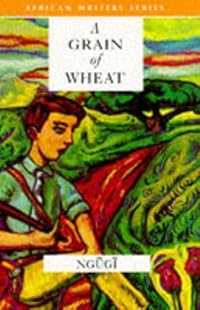
I have read three of Ngũgĩ's previous novels - [b:The River Between|22571513|The River Between|Ngũgĩ wa Thiong'o|https://i.gr-assets.com/images/S/compressed.photo.goodreads.com/books/1422811764l/22571513._SY75_.jpg|478785], [b:A Grain of Wheat|229507|A Grain of Wheat|Ngũgĩ wa Thiong'o|https://i.gr-assets.com/images/S/compressed.photo.goodreads.com/books/1348617176l/229507._SY75_.jpg|822355] and [b:Wizard of the Crow|57485|Wizard of the Crow|Ngũgĩ wa show more Thiong'o|https://i.gr-assets.com/images/S/compressed.photo.goodreads.com/books/1421903577l/57485._SY75_.jpg|848502]. All of those impressed me more, and he is undoubtedly a very versatile writer, but I suspect that to appreciate The Perfect Nine properly you have to understand the place of these origin myths in the culture of the Gĩkũyũ people - I think it is the stories that matter rather than the style, which is straightforward verse written in rather plain language. Like the extraordinary surreal epic Wizard of the Crow, this book was originally written in the Gĩkũyũ language and then translated by the author.
An enjoyable read, but I am probably not the best person to review it. show less
Members
- Recently Added By
Published Reviews
In his 2016 memoir of his student days at Uganda’s Makerere University, the Kenyan writer Ngugi wa Thiong’o reflects on his particular place inside of history: “I entered Makerere in 1959, a colonial subject, and left in 1964, a citizen of an independent Kenya.” Educated in Shakespeare and Conrad, the writer bore what he understood as an almost moral responsibility to define show more contemporary African literature. show less
added by Rakketytam
The oldest stories ever told are the myths about creation itself, and how the first humans came to be. For the past three years, the 82-year-old Kenyan writer Ngugi wa Thiong'o, who is among the world's greatest living storytellers, has been at work on one of the most beguiling of origin myths.
added by Rakketytam
Lists

Economist Books of the Year 2020
41 works; 5 members

Top Five Books of 2022
736 works; 272 members
Author Information

68+ Works 7,439 Members
Novelist, playwright, and essayist, Ngugi wa Thiong'o was born in Kenya on January 5, 1938. He received a B.A. in English from Makerere University College in Kampala, Uganda in 1963. He is Kenya's best-known writer and one of East Africa's most outspoken social critics. His first novel, Weep Not, Child (1964), was a penetrating account of the Mau show more Mau uprising (a tribal revolt that occurred in colonial Kenya) and was the first English-language novel by an East African. Two subsequent works, The River Between (1965) and A Grain of Wheat (1967), are sensitive novels about the Kikuyu people caught between the old and the new Africa. One of his major concerns has been the lack of reading materials in native African languages. In an attempt to bring literature to African peasants and workers, he wrote and produced the play I Will Marry When I Want (1977) in his native Kikuyu language. The play, which shows the exploitation of Kikuyu workers and peasants, attracted a large audience of poor Kenyans. It also led to Ngugi's arrest and imprisonment. After his release from prison, he went into exile and is currently living in the United States. His other works include Detained (1981); Decolonising the Mind: The Politics of Language in African Literature (1986); and Matigari (1987). He received the 2001 Nonino International Prize for Literature. In 2006, Random House published his first new novel in nearly two decades, Wizard of the Crow. (Bowker Author Biography) show less
Some Editions
Awards and Honors
Awards
Notable Lists
Common Knowledge
- Canonical title
- The Perfect Nine: The Epic of Gĩkũyũ and Mũmbi
- Original title
- Kenda Mũiyũru
- Original publication date
- 2018
- People/Characters
- Gĩkũyũ; Mũmbi; Wanjirũ; Wambũi; Wanjikũ; Wangũi (show all 14); Waithĩra; Njeri [Gĩkũyũ and Mũmbi]; Mwĩthaga; Wairimũ; Wangarĩ; Warigia; Kĩhara; Mwengeca
- Important places
- Kenya
- First words
- I will tell the tale of Gĩkũyũ and Mũmbi
And their daughters, the Perfect Nine,
Matriarchs of the House of Mũmbi,
Founders of their nine clans,
Progenitors of a nation. - Quotations
- "Is there anything more blessed than peace?"
To harm plants and animals without good cause was to harm life.
Never kill an animal unless in defense of self or to satisfy hunger.
And if one uproots a tree, one must plant another to replace it.
"Never fight over a man." - Last words
- (Click to show. Warning: May contain spoilers.)"If you do that,
We are together with you
Now and all the days, life without end." - Original language
- Gĩkũyũ
Classifications
- Genre
- Poetry
- DDC/MDS
- 305.8963954 — Society, Government, and Culture Social sciences, sociology & anthropology Social group - Age, Gender, Ethnicity Ethnic and national groups Other ethnic and national groups Africans and people of African descent; Blacks of African origin People who speak, or whose ancestors spoke, Niger-Congo languages Nguni Peoples
- LCC
- DT433.545 .K55 .N4813 — History of Europe, Asia, Africa and Oceania Africa History of Africa Eastern Africa Kenya Ethnography
- BISAC
Statistics
- Members
- 157
- Popularity
- 207,594
- Reviews
- 10
- Rating
- (3.60)
- Languages
- English, French
- Media
- Paper, Audiobook, Ebook
- ISBNs
- 8
- ASINs
- 4