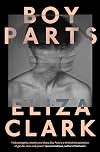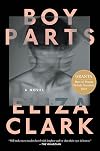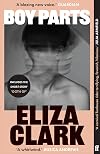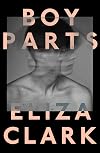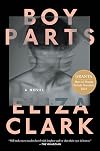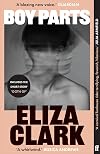
Boy Parts
by Eliza Clark
On This Page
Description
An incendiary debut novel from a brash new talent-a pitch-black comedy, both shocking and hilarious, which fearlessly explores sexuality and gender roles in the twenty-first century. "Hallucinogenic, electric and sharp, Boy Parts is a whirlwind exploration of gender, class, and power."-Jessica Andrews, author of Saltwater Exiled from the art world and on sabbatical from her dead-end bar job, Irina obsessively takes explicit photographs of the average-looking men she persuades to model for show more her, scouted from the streets of Newcastle. But her talent has not gone unnoticed, and Irina is invited to display her work at a fashionable London gallery. It is a chance to revive her career and escape from the rut of drugs, alcohol, and extreme cinema she's fallen into. Yet the news instead triggers a self-destructive tailspin, centered around Irina's consuming relationship with her best friend, and a shy young man from her local supermarket who has attracted her attention. . . . show lessTags
Recommendations
















Member Reviews
Eliza Clark's "She's Always Hungry" was one of my favourite reads of last year, and this (her debut novel) also blew me away, although it is very much not a book for everyone.
It is about Irina, a fine art photographer, who had a brief period of notoriety after her graduation show, but is now back in her home town - working in a skeezy bar and selling even more skeezy photos to wealthy customers. For her photos, she picks up men in the street, sets up a time for them to come to her studio, then directs their every move while she takes photos, gradually making them do sexualised and degrading things.
At first it seems that Irina is getting off on all this, but eventually I decided that she had no idea what she actually liked - it's just show more that her life (and experience of men) has turned her into someone brittle, cynical and manipulative - who scorns anyone who tries to look after her, and thinks that all relationships are about power so you might as well be the one on the top. This all started when as a teenager she was groomed and seduced by a teacher, something she describes matter-of-factly. ‘I mean, it just happens, doesn’t it? Practically a rite of passage.’
But something weird has started to happen - she's no stranger to violent sex but she starts to imagine that during it she has done some real serious damage to whatever man it is that she is with. Does this also come from something in her past?
I thought this was an incredibly sharp and powerful read, even though Clark couldn't quite bring it all together at the end.
Being mistaken for a Manic Pixie Dream Girl has served me well over the years. I’d go out disguised in a non-threatening sundress and flat sandals, slouching and leaning heavily on my left hip, shrinking myself down to a less intimidating height. Drop a niche interest here, and a little sass there, and they eat me up, every single time. show less
It is about Irina, a fine art photographer, who had a brief period of notoriety after her graduation show, but is now back in her home town - working in a skeezy bar and selling even more skeezy photos to wealthy customers. For her photos, she picks up men in the street, sets up a time for them to come to her studio, then directs their every move while she takes photos, gradually making them do sexualised and degrading things.
At first it seems that Irina is getting off on all this, but eventually I decided that she had no idea what she actually liked - it's just show more that her life (and experience of men) has turned her into someone brittle, cynical and manipulative - who scorns anyone who tries to look after her, and thinks that all relationships are about power so you might as well be the one on the top. This all started when as a teenager she was groomed and seduced by a teacher, something she describes matter-of-factly. ‘I mean, it just happens, doesn’t it? Practically a rite of passage.’
But something weird has started to happen - she's no stranger to violent sex but she starts to imagine that during it she has done some real serious damage to whatever man it is that she is with. Does this also come from something in her past?
I thought this was an incredibly sharp and powerful read, even though Clark couldn't quite bring it all together at the end.
Being mistaken for a Manic Pixie Dream Girl has served me well over the years. I’d go out disguised in a non-threatening sundress and flat sandals, slouching and leaning heavily on my left hip, shrinking myself down to a less intimidating height. Drop a niche interest here, and a little sass there, and they eat me up, every single time. show less
The deliciously named "Boy Parts" isn't the worst novel I've ever read, but it's far from the most pleasant. It's a prurient, drug-sodden, occasionally violent tour through the ruins of post-Brexit Britain and its shallow, money-driven contemporary art scene. Sometimes it reads like Brett Easton Ellis's "American Psycho." Sometimes it reads like that feature that Vice magazine -- which once ran a profile on the book's main character -- occasionally ran in which young people all over the English-speaking world described their nights out in detail and reported exactly how much they had spent on drink, drugs, and food. Blushing it isn't. If I hadn't been looking for exactly this sort of fun, guilty read, I'd probably complain. But that show more still doesn't mean that it's a good book.
I never took a film class in college, and I'm not a very visually oriented person, but one thing I do think that "Boy Parts gets right is the question of gaze. Irina, our beautiful, cold-hearted, and potentially talented main character is a former rising art star and a professional photographer who makes her living straddling the worlds of art and porn. She has a website and a social media presence, and most of her clients are anonymous, which should tell you everything you need to know about her work. Still, I'm glad to say that Clark goes deeper when she didn't necessarily have to. I don't know how much experience the author has with photography, but Irina seems to have the photographer's eye, and she's is good at describing how this works. Irina, for all faults, is an effective critic of her own pictures. She's honest about what she likes and doesn't like about her own work and what art she considers worthwhile and what she considers good for nothing but shock value. The author's descriptions of Irina's photo sessions are written with the precision you'd expect from a high-quality martial-arts fight scene. These are the scenes where "Boy Parts" seems to transcend its subject matter and turn into a pretty good novel about the artistic process.
Irina's behavior when it comes to the subjects of her photos is something else entirely. Her interest is almost wholly confined to the male form, and she approaches her subjects in public places: pubs, supermarkets, buses. Even if you like the fellahs, your taste might not match up with hers, as she likes them young, thin, delicate and vulnerable. These descriptions fairly ooze carnal longing, but Irina even takes the time to comment on men who she doesn't find terribly comely, an unexpected reversal of the constantly roving male gaze. What's more, Irina is also quite aware of how often the men look at her and how they're likely to react. Tall, conventionally attractive, and impeccably stylish, Irina is keenly aware of how much her looks can get her, and how close she is to losing them. In "Boy Parts", judgment constantly operates in both directions at the same time. Irina has -- some might demand a trigger warning here, but this entire novel is a big trigger warning -- chronic body image issues, but they often seem tied not to her self-perception but to her fears that an extra centimeter or three round the hips might damage her social standing. Sadly, I'm not sure that this aspect of the book is particularly far-fetched.
I can't say that for much of the rest of it, though. Irina is, to put it very mildly, not a nice person, and, regardless of whatever positive qualities "Boy Parts" might have, this gets rather tiresome after a while. Rini, whom one of the book's characters describes as a "reptile" at one point, may indeed have genuine psychopathic tendencies, but the problem with psychopaths -- both real and imaginary -- is that they're not terribly interesting. You can't make a meal out of nothing, and Clark makes it pretty clear that Irina's being consumed by a howling emptiness. Do some fun, shocking, and entertainingly gory things happen along the way? Oh, I suppose. But I had to push myself to finish this one, and I'm not sure I'd recommend it. Unless you like reading for shock value, as I admit I occasionally do. In that case, go right ahead and pick this one up. You'll likely find exactly what you're looking for. show less
I never took a film class in college, and I'm not a very visually oriented person, but one thing I do think that "Boy Parts gets right is the question of gaze. Irina, our beautiful, cold-hearted, and potentially talented main character is a former rising art star and a professional photographer who makes her living straddling the worlds of art and porn. She has a website and a social media presence, and most of her clients are anonymous, which should tell you everything you need to know about her work. Still, I'm glad to say that Clark goes deeper when she didn't necessarily have to. I don't know how much experience the author has with photography, but Irina seems to have the photographer's eye, and she's is good at describing how this works. Irina, for all faults, is an effective critic of her own pictures. She's honest about what she likes and doesn't like about her own work and what art she considers worthwhile and what she considers good for nothing but shock value. The author's descriptions of Irina's photo sessions are written with the precision you'd expect from a high-quality martial-arts fight scene. These are the scenes where "Boy Parts" seems to transcend its subject matter and turn into a pretty good novel about the artistic process.
Irina's behavior when it comes to the subjects of her photos is something else entirely. Her interest is almost wholly confined to the male form, and she approaches her subjects in public places: pubs, supermarkets, buses. Even if you like the fellahs, your taste might not match up with hers, as she likes them young, thin, delicate and vulnerable. These descriptions fairly ooze carnal longing, but Irina even takes the time to comment on men who she doesn't find terribly comely, an unexpected reversal of the constantly roving male gaze. What's more, Irina is also quite aware of how often the men look at her and how they're likely to react. Tall, conventionally attractive, and impeccably stylish, Irina is keenly aware of how much her looks can get her, and how close she is to losing them. In "Boy Parts", judgment constantly operates in both directions at the same time. Irina has -- some might demand a trigger warning here, but this entire novel is a big trigger warning -- chronic body image issues, but they often seem tied not to her self-perception but to her fears that an extra centimeter or three round the hips might damage her social standing. Sadly, I'm not sure that this aspect of the book is particularly far-fetched.
I can't say that for much of the rest of it, though. Irina is, to put it very mildly, not a nice person, and, regardless of whatever positive qualities "Boy Parts" might have, this gets rather tiresome after a while. Rini, whom one of the book's characters describes as a "reptile" at one point, may indeed have genuine psychopathic tendencies, but the problem with psychopaths -- both real and imaginary -- is that they're not terribly interesting. You can't make a meal out of nothing, and Clark makes it pretty clear that Irina's being consumed by a howling emptiness. Do some fun, shocking, and entertainingly gory things happen along the way? Oh, I suppose. But I had to push myself to finish this one, and I'm not sure I'd recommend it. Unless you like reading for shock value, as I admit I occasionally do. In that case, go right ahead and pick this one up. You'll likely find exactly what you're looking for. show less
This book is a lot. I don’t even know where to start. It tackles so many themes—trauma, how the abused can become the abuser, the under-recognized abuse of men by women, how far people will go in the name of art, blurred lines of consent, the morality of feminism, self-esteem, dissociation… I could go on.
The main character’s descent into chaos and delusion is somehow both slow and fast. Watching her spiral, tormenting everyone around her (especially men) while not giving a f*ck was wild. It’s written in a way I’ve never seen before. The commentary on pretty privilege and the male gaze is so sharp, how these things let her get away with anything, and how aware she is of that power. No one really cares what she does, good or show more bad, and that’s kind of the point.
Honestly, it would’ve been a 5-star read, but it took me a minute to adjust to the writing style. The British slang and sentence structure threw me off at first, but once I got into it my god. This is a masterpiece, just in a very different way. show less
The main character’s descent into chaos and delusion is somehow both slow and fast. Watching her spiral, tormenting everyone around her (especially men) while not giving a f*ck was wild. It’s written in a way I’ve never seen before. The commentary on pretty privilege and the male gaze is so sharp, how these things let her get away with anything, and how aware she is of that power. No one really cares what she does, good or show more bad, and that’s kind of the point.
Honestly, it would’ve been a 5-star read, but it took me a minute to adjust to the writing style. The British slang and sentence structure threw me off at first, but once I got into it my god. This is a masterpiece, just in a very different way. show less
The critical scuttlebutt surrounding the 2020 publication of Eliza Clark's debut novel, "Boy Parts," included frequent references to Brett Easton Ellis' "American Psycho." Having struggled through both novels, I would say that the comparison is well-taken, although not perfectly precise. The overwrought clichés trotted out for Ellis' book ("transgressive!" "shocking!" "deliciously depraved!") have also been applied to "Boy Parts:" sometimes, the professional critics sing in wearisome harmony.
There is some basis for the critics' rapture, however: the two books do have a number of things in common. A genuinely sociopathic protagonist? Check. A contrived, wearisome catalog of brand names and popular musicians, used as an easy way of show more establishing place and time? Check. (Ellis' novel was universally acknowledged to be a dark indictment of America in the 1980s; Ms. Clark's is supposed to portray contemporary London and Newcastle.) Secondary characters who are decent and (pardon the expression) normal, and are horribly misused by the protagonist? Check: to wit, Patrick Bateman's secretary, or the cashier at Tesco in "Boy Parts." (This young man is arguably the most appealing and sympathetic character in either novel.) A preoccupation with sexual psychopathy? Check, although, to her credit, Ms. Clark's novel is nowhere near as detailed or obnoxious as Mr. Ellis.'
To say more, to outline the plot, would be a waste of time. The book is riddled with "woke" jargon (including the word "woke," used without irony), whereas Ellis' book dealt with a strata of society unconcerned with such things. The major plot difference is the protagonist: instead of Patrick Bateman's Wall Street elitist, "Boy Parts" offers us Irina, a twentysomething "feminist" artist whose exploitative photographs of sad, often tortured men are enjoying a wave of popularity among aficionados of "fetish porn." (Think Robert Mapplethorpe, one of Irina's idols.) She is a false friend, an impossible lover, and a public nuisance.
But, in her single deviation from the Bateman character's persona, she is not a "serial killer." Staging, and recording, acts of sexual humiliation and agony are her preoccupations, not murder per se. But the dissimilarity ends there. She shares one other quality with Patrick Bateman: she's just plain boring. Once the shock value is removed from their characterizations, there's nothing left. A sideshow geek from the cheapest of carnivals would undoubtedly have more substance.
Eliza Clark is being hailed as the next big thing, or one of the next big things, in contemporary fiction. Perhaps she will be: she is not without talent, and her "woke" weltanschauung is certainly the hallmark of postmodernist fiction. I'm sure she could do far better than "Boy Parts" (which is damning with faint praise), and I sincerely hope she tries.
Not recommended. show less
There is some basis for the critics' rapture, however: the two books do have a number of things in common. A genuinely sociopathic protagonist? Check. A contrived, wearisome catalog of brand names and popular musicians, used as an easy way of show more establishing place and time? Check. (Ellis' novel was universally acknowledged to be a dark indictment of America in the 1980s; Ms. Clark's is supposed to portray contemporary London and Newcastle.) Secondary characters who are decent and (pardon the expression) normal, and are horribly misused by the protagonist? Check: to wit, Patrick Bateman's secretary, or the cashier at Tesco in "Boy Parts." (This young man is arguably the most appealing and sympathetic character in either novel.) A preoccupation with sexual psychopathy? Check, although, to her credit, Ms. Clark's novel is nowhere near as detailed or obnoxious as Mr. Ellis.'
To say more, to outline the plot, would be a waste of time. The book is riddled with "woke" jargon (including the word "woke," used without irony), whereas Ellis' book dealt with a strata of society unconcerned with such things. The major plot difference is the protagonist: instead of Patrick Bateman's Wall Street elitist, "Boy Parts" offers us Irina, a twentysomething "feminist" artist whose exploitative photographs of sad, often tortured men are enjoying a wave of popularity among aficionados of "fetish porn." (Think Robert Mapplethorpe, one of Irina's idols.) She is a false friend, an impossible lover, and a public nuisance.
But, in her single deviation from the Bateman character's persona, she is not a "serial killer." Staging, and recording, acts of sexual humiliation and agony are her preoccupations, not murder per se. But the dissimilarity ends there. She shares one other quality with Patrick Bateman: she's just plain boring. Once the shock value is removed from their characterizations, there's nothing left. A sideshow geek from the cheapest of carnivals would undoubtedly have more substance.
Eliza Clark is being hailed as the next big thing, or one of the next big things, in contemporary fiction. Perhaps she will be: she is not without talent, and her "woke" weltanschauung is certainly the hallmark of postmodernist fiction. I'm sure she could do far better than "Boy Parts" (which is damning with faint praise), and I sincerely hope she tries.
Not recommended. show less
I came to this book knowing very little about it bar a couple of snippets people had shared and I am immensely glad for that experience. If you like very dark comedies with twists and turns that leave you wondering what is going on, stop reading this review and go and pick up a copy.
Did you ever have that one friend when you were in your twenties who seemed to have it all. Talented, beautiful, single-minded, and did not give a shit what anyone else thought of her?
Boy Parts tells the story of Irina, a photographer who takes explicit fetish photographs of the men she scouts on the streets of Newcastle. She picks normal looking men, men who others wouldn’t find attractive enough to photograph. She uses her body and sexuality to get what show more she wants and manipulates the people around her (her best friend included) into giving it to her along with the power over them that she craves.
In the opening pages we meet her hungover and struggling through a day at her part-time bar job when she is assaulted by the mother of one of the men she has photographed (who turns out not to be as old as he said)... things don’t get better from there.
Clarke weaves a very careful spell with Irina. She is harsh, difficult to be around and self centered. I instantly liked her but as the story unfolded it became difficult to trust what Irina is telling us. Brutal attacks and memories are presented in the hazy half light of drugs, alcohol and a lack of evidence to the point that we cannot tell what is real or what is imagined. In preparing for an upcoming exhibition Irina goes back through her archive and in doing so gives us a timeline - of sorts - to her spiraling memories and mental health. We begin to question everything.
A very dark, difficult and gory read at time so beware if that is not your thing but a remarkable debut novel from a voice to watch in the future. show less
Did you ever have that one friend when you were in your twenties who seemed to have it all. Talented, beautiful, single-minded, and did not give a shit what anyone else thought of her?
Boy Parts tells the story of Irina, a photographer who takes explicit fetish photographs of the men she scouts on the streets of Newcastle. She picks normal looking men, men who others wouldn’t find attractive enough to photograph. She uses her body and sexuality to get what show more she wants and manipulates the people around her (her best friend included) into giving it to her along with the power over them that she craves.
In the opening pages we meet her hungover and struggling through a day at her part-time bar job when she is assaulted by the mother of one of the men she has photographed (who turns out not to be as old as he said)... things don’t get better from there.
Clarke weaves a very careful spell with Irina. She is harsh, difficult to be around and self centered. I instantly liked her but as the story unfolded it became difficult to trust what Irina is telling us. Brutal attacks and memories are presented in the hazy half light of drugs, alcohol and a lack of evidence to the point that we cannot tell what is real or what is imagined. In preparing for an upcoming exhibition Irina goes back through her archive and in doing so gives us a timeline - of sorts - to her spiraling memories and mental health. We begin to question everything.
A very dark, difficult and gory read at time so beware if that is not your thing but a remarkable debut novel from a voice to watch in the future. show less
Eliza Clarke made the news around the launch of Boy Parts (Influx Press) this summer with the quote: “I'm from Newcastle and working class. To publishers, I'm diverse…”. In her 26 years Eliza has worked for Mslexia magazine in her native Newcastle, received a grant from New Writing North to develop her creative writing, and studied at Chelsea College of Art in London. This her first novel, and what an entertaining, brassy ride it is! Its main figure is Irina who asks boys she meets to model for her as she takes their explicit and taboo photographs in the hope of constructing a gallery project which could be the making of her but is always likely to be dynamited by her own actions. Irina is massively flawed and self-defeating but show more she’s perversely engaging, definitely alternative and never boring. The dedication is “For my mother and father. Please don’t read this.” which gives you a clue as to its edginess, but this is also a confident and punchy debut novel and Eliza Clark is one to watch. show less
This is somewhat like a female/British version of American Psycho. Its violent, unpleasant and graphic, but also funny. Irina is a very unlikeable central character but all the more entertaining for it. It also reminded me a little of Ottessa Moshfegh in its griminess. The relationship with her 'friend' is especially funny/awful. Its definitely not something everyone would enjoy and is not for the squeamish, but if you're OK with fairly graphic sex and violence then this is for you.
Members
- Recently Added By
Published Reviews
ThingScore 100
The exploration of sexuality and power dynamics is unapologetic and what does drive this book. It pushes past conventions and comfort zones and creates a platform that asks you to examine and be suspicious of beauty, exploitation and authenticity of art and life.
If you are in search of a challenging read that explores sexuality and its power dynamics, and challenges your assumptions about art show more and beauty, Boy Parts is a must listen. Eliza Clark has crafted a bold narrative that forces you to think about what it means to make queer art today.... Full Review... show less
If you are in search of a challenging read that explores sexuality and its power dynamics, and challenges your assumptions about art show more and beauty, Boy Parts is a must listen. Eliza Clark has crafted a bold narrative that forces you to think about what it means to make queer art today.... Full Review... show less
added by Almatar
Lists

sad girl books
51 works; 3 members

books featured on the book struggles twt
97 works; 2 members

el
1,139 works; 1 member
Author Information

3 Works 1,397 Members
Awards and Honors
Common Knowledge
- Canonical title
- Boy Parts
- Original publication date
- 2020
Classifications
Statistics
- Members
- 782
- Popularity
- 35,697
- Reviews
- 23
- Rating
- (3.75)
- Languages
- English, Portuguese, Spanish
- Media
- Paper, Audiobook, Ebook
- ISBNs
- 14
- ASINs
- 6