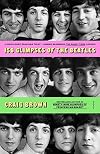
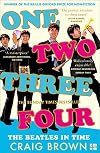
One Two Three Four: The Beatles in Time
by Craig Brown
On This Page
Description
John Updike compared them to 'the sun coming out on Easter morning'. Bob Dylan introduced them to drugs. Muhammad Ali called them 'little sissies'. No one remained unaffected by the music of the Beatles. As Queen Elizabeth II observed on her golden wedding anniversary, 'Think what we would have missed if we had never heard the Beatles.' This book traces the chance fusion of the four key elements that made of the Beatles: fire (John), water (Paul), air (George) and earth (Ringo). It also show more tells the bizarre and often unfortunate tales of the disparate and colourful people within their orbit, among them Yoko Ono, the Maharishi, Aunt Mimi, the con artist Magic Alex, their psychedelic dentist John Riley and their failed nemesis, Det. Sgt Norman Pilcher. show lessTags
Recommendations













Member Reviews
A vastly entertaining, eclectic, round the houses biography of The Beatles and their meteoric rise to fame. I'm not really a Beatles fan and Craig Brown's ode to the Fab Four is over 600 pages long, but I enjoyed every page!
The author's acknowledgments could fill a library, from Hunter Davies to Len Garry from The Quarrymen, yet his style is so quirky - and the chapters so brief - that the regurgitated timeline feels more like a series of random anecdotes instead. In between the potted biographies and standard Beatles milestones - drug references in songs, rumours of Paul's death, Yoko Ono - there are also quirky 'what if?' chapters and A LOT about the teenage fans. In fact, Brown is so irreverent at times that he almost had me show more believing that The Beatles were merely the first boy band, like Westlife or One Direction. So many obnoxious teenage girls - no wonder the four of them gave up touring!
I can't speak for dedicated Beatles fans, but this is a great introduction for others like myself, who like the music but can still learn something new from a fresh take on John, Paul, George and Ringo (and Brian!) show less
The author's acknowledgments could fill a library, from Hunter Davies to Len Garry from The Quarrymen, yet his style is so quirky - and the chapters so brief - that the regurgitated timeline feels more like a series of random anecdotes instead. In between the potted biographies and standard Beatles milestones - drug references in songs, rumours of Paul's death, Yoko Ono - there are also quirky 'what if?' chapters and A LOT about the teenage fans. In fact, Brown is so irreverent at times that he almost had me show more believing that The Beatles were merely the first boy band, like Westlife or One Direction. So many obnoxious teenage girls - no wonder the four of them gave up touring!
I can't speak for dedicated Beatles fans, but this is a great introduction for others like myself, who like the music but can still learn something new from a fresh take on John, Paul, George and Ringo (and Brian!) show less
It took me a long time to read this book - so long, in fact, I went back to the beginning and started it again, reading most of the first half twice. It has an interesting framework - 150 vignettes, many of which are very thinly connected, told in a roughly but not entirely chronological order - that contributes to it being both a little addictive and a little easy to forget once you put it down. It's a sort of attention-deficit writing; you can practically hear the "WHOOSH" from the TV series Lost as it veers backward, forward, and sideways in time.
It also takes a while to fully recognize what Brown's doing, or perhaps one might say the nature of his implicit thesis. This is a book about celebrity - about how it elevates normal, show more everyday people, changes how other people react to them, makes them into people they never would have been. Most of all, it's about the flame of celebrity and the peripheral figures who get their wings burnt by it. That's interesting - I'm not sure it's 650 pages of interesting, though.
Many of the vignettes revolve around specific people, and several of them will be familiar to stalwart fans, especially in the second half of the book: the Maharishi, "Magic" Alex, the policeman who broke up the rooftop concert, and of course, Yoko. The more surprising stories show up toward the beginning of the book, including anecdotes I've never read from Hamburg, encounters with Noel Coward and Malcolm Muggeridge, and some of the Beatles' earliest public appearances as chart-toppers. It's all very readable and often related in a cheerful, quirky tone that fits the cover design. The longer you go on, though, the more of a picture of destruction and chaos builds, including some openly seedy chapters that veer toward tabloid journalism (I'm thinking specifically of the second Ronnie Spector section). It's a strange book in that you often feel drawn to read it but feel just that little bit unclean afterward.
As others have also pointed out, Brown also gives the National Trust and their "preservation" of the Beatle homes a right kicking - not entirely unjustified, but the sneering sarcasm in those chapters, and a couple others involving his tourist adventures, is laid on very thick.
At the end of the day I'm not totally sure what to make of One Two Three Four. It makes a worthwhile point, and I think it's good reading if you're a fan of the Beatles and you know a few (but not all) of these stories - you'll learn more about what happened to Jimmie Nicol, for instance. Some of the vignettes are really funny, like the letters received by Ringo from fangirls, and some of them are joyous, like the multiple perspectives that combine to tell the story of the Beatles on Ed Sullivan. The book ultimately trends toward melancholy, though - it's hard to get around the point he makes about Brian Epstein in the framing story, for instance - and while I'm in no way suggesting a book needs to stay cheerful and upbeat all the time, it feels like an awful lot of pages to reinforce a position that's pretty obvious by half the way through. show less
It also takes a while to fully recognize what Brown's doing, or perhaps one might say the nature of his implicit thesis. This is a book about celebrity - about how it elevates normal, show more everyday people, changes how other people react to them, makes them into people they never would have been. Most of all, it's about the flame of celebrity and the peripheral figures who get their wings burnt by it. That's interesting - I'm not sure it's 650 pages of interesting, though.
Many of the vignettes revolve around specific people, and several of them will be familiar to stalwart fans, especially in the second half of the book: the Maharishi, "Magic" Alex, the policeman who broke up the rooftop concert, and of course, Yoko. The more surprising stories show up toward the beginning of the book, including anecdotes I've never read from Hamburg, encounters with Noel Coward and Malcolm Muggeridge, and some of the Beatles' earliest public appearances as chart-toppers. It's all very readable and often related in a cheerful, quirky tone that fits the cover design. The longer you go on, though, the more of a picture of destruction and chaos builds, including some openly seedy chapters that veer toward tabloid journalism (I'm thinking specifically of the second Ronnie Spector section). It's a strange book in that you often feel drawn to read it but feel just that little bit unclean afterward.
As others have also pointed out, Brown also gives the National Trust and their "preservation" of the Beatle homes a right kicking - not entirely unjustified, but the sneering sarcasm in those chapters, and a couple others involving his tourist adventures, is laid on very thick.
At the end of the day I'm not totally sure what to make of One Two Three Four. It makes a worthwhile point, and I think it's good reading if you're a fan of the Beatles and you know a few (but not all) of these stories - you'll learn more about what happened to Jimmie Nicol, for instance. Some of the vignettes are really funny, like the letters received by Ringo from fangirls, and some of them are joyous, like the multiple perspectives that combine to tell the story of the Beatles on Ed Sullivan. The book ultimately trends toward melancholy, though - it's hard to get around the point he makes about Brian Epstein in the framing story, for instance - and while I'm in no way suggesting a book needs to stay cheerful and upbeat all the time, it feels like an awful lot of pages to reinforce a position that's pretty obvious by half the way through. show less
150 Glimpses of the Beatles by Craig Brown is probably one of the most fun books I've read about the Fab Four.
If you're of a certain age (which I am, and which most people simply call old) you grew up watching and listening to the Beatles. I can remember hearing the news of what most of us had guessed, the break up of the Beatles, when I was 12 and trying to hide my tears. I had all of their albums, both US and UK releases (benefit of being in a military family) and as the years went on I read all of the major publications about them and most of the minor, often horrible, publications. I was lucky enough to have met 2 of them, though it was little more than an introduction and only memorable to me. I mention all this to make a point, show more namely that as time has passed, it has been hard to separate how I thought of their career at the time and how it now seems like such a coherent narrative. The more we read the more we incorporate our memories into the prevailing "story of the Beatles."
This book is less a narrative than a collection of, well, glimpses. Some involve one or all of the group directly, some only peripherally, but all reflect on what they meant to their fans, the history of rock n roll, and even popular culture as a whole. If you can bracket your knowledge of them while reading this, forget the things you know and the things you think you know, and just experience them in these fragments, I think you'll find something similar to what living in the moment was like in those days.
A lot of the information here is not new, some are people's reflections so are new to us. But if, rather than play the annoying "I knew all this stuff already" game, you just read and reflect from whatever your connections to them were/are, I think you'll enjoy this. Don't make this a "I'm a bigger fan than you" thing either, there is no single "biggest fan" so get over it. Just remember the joy and happiness you experienced when you were living the moments in your life that they and their music touched. If you want to play a game, play the what if game, what if they had... So many wonderful possibilities but the flip of the coin might have had them tarnishing their legacy. But the disappointment (for fans and music lovers) of an early break up, relatively early deaths, feuds that might not have had to be so enduring, what if...
I recommend this to any Beatles fan, even the ones who can't resist pretending they know everything about them. If you sometimes grow tired of the narrative (I begin getting sad right around the time of Revolver when I read books that cover their history chronologically) and just want to remember the good times and memories, by all means grab this book.
Reviewed from a copy made available by the publisher via NetGalley. show less
If you're of a certain age (which I am, and which most people simply call old) you grew up watching and listening to the Beatles. I can remember hearing the news of what most of us had guessed, the break up of the Beatles, when I was 12 and trying to hide my tears. I had all of their albums, both US and UK releases (benefit of being in a military family) and as the years went on I read all of the major publications about them and most of the minor, often horrible, publications. I was lucky enough to have met 2 of them, though it was little more than an introduction and only memorable to me. I mention all this to make a point, show more namely that as time has passed, it has been hard to separate how I thought of their career at the time and how it now seems like such a coherent narrative. The more we read the more we incorporate our memories into the prevailing "story of the Beatles."
This book is less a narrative than a collection of, well, glimpses. Some involve one or all of the group directly, some only peripherally, but all reflect on what they meant to their fans, the history of rock n roll, and even popular culture as a whole. If you can bracket your knowledge of them while reading this, forget the things you know and the things you think you know, and just experience them in these fragments, I think you'll find something similar to what living in the moment was like in those days.
A lot of the information here is not new, some are people's reflections so are new to us. But if, rather than play the annoying "I knew all this stuff already" game, you just read and reflect from whatever your connections to them were/are, I think you'll enjoy this. Don't make this a "I'm a bigger fan than you" thing either, there is no single "biggest fan" so get over it. Just remember the joy and happiness you experienced when you were living the moments in your life that they and their music touched. If you want to play a game, play the what if game, what if they had... So many wonderful possibilities but the flip of the coin might have had them tarnishing their legacy. But the disappointment (for fans and music lovers) of an early break up, relatively early deaths, feuds that might not have had to be so enduring, what if...
I recommend this to any Beatles fan, even the ones who can't resist pretending they know everything about them. If you sometimes grow tired of the narrative (I begin getting sad right around the time of Revolver when I read books that cover their history chronologically) and just want to remember the good times and memories, by all means grab this book.
Reviewed from a copy made available by the publisher via NetGalley. show less
150 extremely readable anecdotes, observations and digressions about the Beatles, set out in a broadly chronological order allowing the reader to form their own mental image and impressions from this collage of stories and a few pictures.
Chapters 4 and 6 detail the author’s trips to the childhood homes of Paul and John, which are now owned by the National Trust (a heritage charity). As has been remarked elsewhere, these are really strange chapters about protective attitude of the two guides who showed Brown around the properties to the information they provided. At this point Brown would have been better off describing the properties more fully, as although they would have been clear to visualise for most British readers, as there show more are still thousands of similar properties in the UK, this will not necessarily have be the case for non-British readers.
Brown uses a strange “what if?” structure of “b” endings to some of his chapters considering how history would have been different if some outcome had changed, for example chapter 9 posits the idea that Paul might not have befriended George and introduced him to the band, if Paul had not been held back a year at school after failing a Latin exam. There is also a chapter imagining if Gerry and the Pacemakers became the biggest stars, and the Beatles a tribute act, with Ringo going off to own a chain of hairdressers. These are to show the contingency of life, rather than its inevitability, but then that’s life.
There are many humorous anecdotes well told which had me leaving the room as I was annoying my better half.. Chapter 55 about Ringo is delightful and hilarious, with quotes such as:
Alone of all the Beatles, Ringo possessed no talent for composing. But one day, in a sudden flash of inspiration, the germs of a song entered his head, as if from nowhere. He worked on the song for three hours, and presented it to the other three the next day. After an awkward silence, they felt obliged to point out that it had already been written and recorded by Bob Dylan.
I am not sure that there is anything original in this book, but having never read about the Beatles before, and always having had their music as the background of my musical life (born too late to hear them “fresh“), I found this hugely informative and generally enjoyable. Just sometimes the author’s personality shows through, and it can be mean spirited, which takes the shine off the book as a whole. show less
Chapters 4 and 6 detail the author’s trips to the childhood homes of Paul and John, which are now owned by the National Trust (a heritage charity). As has been remarked elsewhere, these are really strange chapters about protective attitude of the two guides who showed Brown around the properties to the information they provided. At this point Brown would have been better off describing the properties more fully, as although they would have been clear to visualise for most British readers, as there show more are still thousands of similar properties in the UK, this will not necessarily have be the case for non-British readers.
Brown uses a strange “what if?” structure of “b” endings to some of his chapters considering how history would have been different if some outcome had changed, for example chapter 9 posits the idea that Paul might not have befriended George and introduced him to the band, if Paul had not been held back a year at school after failing a Latin exam. There is also a chapter imagining if Gerry and the Pacemakers became the biggest stars, and the Beatles a tribute act, with Ringo going off to own a chain of hairdressers. These are to show the contingency of life, rather than its inevitability, but then that’s life.
There are many humorous anecdotes well told which had me leaving the room as I was annoying my better half.. Chapter 55 about Ringo is delightful and hilarious, with quotes such as:
Alone of all the Beatles, Ringo possessed no talent for composing. But one day, in a sudden flash of inspiration, the germs of a song entered his head, as if from nowhere. He worked on the song for three hours, and presented it to the other three the next day. After an awkward silence, they felt obliged to point out that it had already been written and recorded by Bob Dylan.
I am not sure that there is anything original in this book, but having never read about the Beatles before, and always having had their music as the background of my musical life (born too late to hear them “fresh“), I found this hugely informative and generally enjoyable. Just sometimes the author’s personality shows through, and it can be mean spirited, which takes the shine off the book as a whole. show less
One Two Three Four by Craig Brown (Fourth Estate), is just the perfect combo of the funniest and most pointedly accurate observer and diarist around focusing on the best Band ever to have graced the planet. It is often witty, poignant in places, with the author being gobsmacked on occasions and critical where required. It vividly paints a picture of both its time and the seismic nature of The Beatles’ impact and the overnight redundancy it imposed on those who had held the stage before. This book is a jaunty ride and very often enlightening for non-experts in the subject - the 600+ pages are flying past. If you are a fan of either author or subject you will enjoy this; if a lover of both, you are in for a real treat.
Prolific British satirist and journalist Brown provides a very personal retrospective / history of The Fab Four by dipping into various points of their story through a series of histories, anecdotes, speculations, introspection, and sidebars. The personal stories are interwoven with examination of their cultural and psychological impact on both close associates and fans. Brown’s 150 entries tend to focus on the bookends of the Beatles’ stories, the early days in Liverpool, the rise of Beatlemania, and the later Apple days skipping over the touring days to some extent; but that doesn’t detract from the books overall effect of emphasizing just how startlingly quick and game-changing the impact of The Beatles was over just a few show more short years. show less
For someone who doesn't read celebrity autobiographies, I worried this book was going to be a slog...and I have learned that there are things you're better off not knowing about stars you enjoy. I was wrong about this book; less autobiography than tidbits of trivia and other things of more importance, working it's way through the evolutionary path that led to the creation of the Fab Four, and wound further on to their break up. The author writes well, in an engaging manner, and it is an easy read, even though quite long. The format makes it easy, too, since it's broken into small chapters (150 of them), and you can put it down to turn off the light without having to slog forward for pages and pages to find a stopping point. And while it show more does discuss the...quirks...sexually and in drug use, it isn't done in a manner that is the usual turn off for someone who doesn't find that stuff interesting. It's a side note, not prurient in the writing, and most of the book is concerned with the group and their doings. The final chapter, moving backward from Brian Epstein's funeral to his first meeting with the Beatles, is a nice wrap up. show less
Members
- Recently Added By
Lists

Recommend the 20 best books you've read in the last five years
2,168 works; 606 members

Economist Books of the Year 2020
41 works; 5 members

Non-Fiction Worth Reading
1,015 works; 255 members

Books Read in 2021
5,361 works; 113 members

Best 21st Century Books (So Far)
670 works; 86 members

Top Five Books of 2023
767 works; 317 members

Music Journalism and Biography
56 works; 1 member
Author Information

21+ Works 1,783 Members
Craig Edward Moncrieff Brown is an English satirist and critic who is best known for his parodies in the British News Magazine, Private Eye. He attended Eton and Bristol University and became a freelance journalist in London. He was a columnist, sketchwriter, and restaurant critic for publications such as: The Tatler, The Spectator, The Times, and show more The Sunday Telegraph. He also writes comedy shows such as the television hit "Norman Ormal", and the radio show "This is Craig Brown". In 2018 he won the James Tait Black Memorial Prize in the biography category for his biography of Princess Margaret, Countess of Snowdon, Ma'am Darling: 99 Glimpses of Princess Margaret. His other title's include: The Lost Diaries, One on One, and The Tony Years. (Bowker Author Biography) show less
Awards and Honors
Awards
Distinctions
Common Knowledge
- Canonical title
- One Two Three Four: The Beatles in Time
- Alternate titles
- 150 Glimpses of the Beatles
- People/Characters
- John Lennon; Paul McCartney; George Harrison; Ringo Starr; Brian Epstein; Diana A. (show all 283); Gloria A.; Norma A.; Douglas Adams; Muhammad Ali; Kingsley Amis; Jeffrey Archer; Al Aronowitz; Jane Asher; Margaret Asher; Peter Asher; Richard Asher; Neil Aspinall; Stephen Bailey; Beryl Bainbridge; Julia Baird; Brigitte Bardot; Tony Barrow; Lionel Bart; Klaus Baruck; Tony Benn; Estelle Bennett; Veronica Bennett; Harry Benson; Leonard Bernstein; Mona Best; Pete Best; Roag Best; Cilla Black; Peter Blake; John Blunt; Harry Boleti; Pattie Boyd; Michael Braun; Tony Bramwell; Richard Branson; Charlie Brill; Benjamin Britten; Eleanor Bron; Craig Brown; Gordon Brown; Peter Brown; William F. Buckley; Eric Burdon; Anthony Burgess; William S. Burroughs; Rab Butler; Jimmy Cannon; Leslie Cavendish; Roz Chast; Eric Clague; Maureen Cleave; Melanie Coe; Alma Cogan; John Cohen; Paul Cole; Ray Coleman; Sid Coleman; Cressida Connolly; Ray Connolly; Aaron Copeland; Elvis Costello; Noel Coward; Anthony Cox; Hunter Davies; Dave Dee; William Deeds; Bernard Delfont; Steve Denaut; Pamela des Barres; George Dickson; Marlene Dietrich; Richard Di Lello; Donovan; Terry Doran; John Dunbar; John Dykins (Bobby); Bob Dylan; Elizabeth II, Queen of the United Kingdom; Elizabeth Bowes-Lyon, Queen Consort of the United Kingdom; Gloria Emerson; Geoff Emmerick; Clive Epstein; Queenie Epstein; Mal Evans; Marianne Faithfull; Horst Fascher; Joe Glannery; John Fogerty; Tom Fogerty; Tina Foster; David Frost; Joan G.; Judie Garland; Len Garry; Dizzy Gillespie; Allen Ginsberg; Albert Goldman; Annabel Goldsmith; Glenn Gould; Mikhail Gorbachev; Frank Gorshin; Billy Graham; Linda Grant; Katie Green; Eric Griffiths; Robert Grosvenor, 5th Duke of Westminster; Erich Gruenberg; Rolf Harris; Emma P. Harrisberg; Edward Heath; Winifred Henderson; Jimi Hendrix; Tom Hibbert; Emrys Hughes; Chris Hutchins; Chrissie Hynde; Toshi Ichiyanagi; Stephen Isserlis; Donna J.; Stella J.; Mick Jagger; Ian James; Dot Jarlett; Billy Joel; Jonson B. Johnson; Paul Johnson; Sue Johnston; Brian Jones; Pauline Jones; Lilly K.; Larry Kane; Christine Keeler; Freda Kelly; Greg Kihn; Astrid Kirchherr; Allen Klein; Tim Knox; Bruno Koschmider; Janet L.; Philip Larkin; Timothy Leary; Fran Lebowitz; Alfred Lennon; Cynthia Lennon; Julia Lennon; Julian Lennon; Richard Lester; Robert Lipsyte; Sonny Liston; Joseph Lockwood; Lulu; Evelyn M.; Maxine M.; Sylvia M.; Harold Macmillan; Maharishi Mahesh Yogi; Rex Makin; Charles Manson; Alexis Mardas; Princess Margaret, Countess of Snowdon; Beverley Markovitz; Gerry Marsden; George Martin; Brian Matthew; Mitzi McCall; Jim McCartney; Mary McCartney; Angela McGowan; Ross McManus; George Méliès; Barry Miles; Spike Milligan; Ray Millward; Gordon Mitchell; Bernard Law Montgomery; James Montgomery; Keith Moon; Margaret Morel; Robert Morley; Sheridan Morley; Jan Morris; Bruce Morrow; Louis Mountbatten, Earl Mountbatten of Burma; Malcolm Muggeridge; Iris Murdoch; Graham Nash; Chas Newby; Jimmy Nicholl; Philip Norman; Chris O'Dell; Yoko Ono; David Ormsby-Gore, Lord Harlech; Joe Orton; Suzie P.; Richard Pape; Tom Parker; Ken Partridge; Joanne Petersen; Tom Petty; Norman Pilcher; Robert Precht; Elvis Presley; Priscilla Presley; Vladimir Putin; Rodney Pybus; Joe Queenan; Joan Quennell; Cliff Richard; Keith Richards; Katie Riggins; John Riley; Lillian Roby; Dick Roe; Bob Rogers; Erma S.; Mikhail Safonov; Tony Sanchez; Walter Shenson; Francie Schwartz; Carolyn See; Joel Soroka; Helen Shapiro; Pete Shotton; Wallis Simpson; Frank Sinatra; Jeanne Deckers (The Singing Nun); Bill Smith; Mimi Smith; Norman Smith; Phil Spector; Fritz Spiegel; Victor Spinetti; Bob Spitz; Bruce Springsteen; Alvin Stardust; Maureen Starkey Tigrett; Freddie Starr; Peter Stringfellow; Theodore Strongin; Sukarno; Ed Sullivan; Stuart Sutcliffe; Stevie T.; Alistair Taylor; Derek Taylor; Margaret Thatcher; Sylvia Lloyd Thomas; Vicky Tiel; J. R. R. Tolkien; Kenneth Tynen; John Updike; Léo Valentin; Ivan Vaughan; Fred Veil; Jürgen Vollmer; Harriet W.; Nigel Walley; Ruby Wax; Nat Weiss; Manfred Weissleder; Colin Welch; Ken Wharfe; Allan Williams; Kenneth Williams; Ann Wilson; Brian Wilson; Harold Wilson; Lynn Wilson; Tom Wolfe; Bob Wooler; Winifred Z.; Michael Zuk; Colin (a tour guide); Jaime (a tour guide); Joe (a tour guide); Peter (a tour guide); Sylvia (a tour guide)
- Important places
- Liverpool, England, UK; Hamburg, Germany; London, England, UK; Bangor, Gwynedd, Wales, UK; Weybridge, Surrey, England, UK; Miami, Florida, USA (show all 13); Los Angeles, California, USA; New York, New York, USA; San Francisco, California, USA; Washington, D.C., USA; Rishikesh, India; The Cavern Club; Liverpool John Lennon Airport, Liverpool, England, UK
- Important events
- World War Two (1939 | 1945); Liverpool Blitz (1940 | 1942); Assassination of John F. Kennedy (1963-11-22); UK general election (1964); Tate–LaBianca murders (1969-08)
- Epigraph
- In five score summers! All new eyes /
New minds, new modes, new foods, new wise; /
New woes to weep, new joys to prize; /
With nothing left of me and you /
In that live century's vivid view /
Beyond a pinch of... (show all) dust or two; /
A century which, if not sublime, /
Will show, I doubt not, at its prime /
A scope above this blinkered time.
-From "1967" by Thomas Hardy (written in 1867)
What a remarkable fifty years they have been for the world ... Think what we would have missed if we had never heard the Beatles.
-Queen Elizabeth II, speaking in November 1997 at a celebration of her golden wedding anniv... (show all)ersary - Dedication
- For Frances, Silas, Tallulah, and Tom
- First words
- One.
One. Two. Three. Four. In their neat black suits and ties, Brian Epstein and his personal assistant, Alistair Taylor, make their way down the nineteen steep steps to the sweaty basement on Mathew Street. - Original language
- English
- Canonical DDC/MDS
- 782.421660922
- Canonical LCC
- ML421.B4
Classifications
- Genres
- Music, Nonfiction, Biography & Memoir, General Nonfiction, History
- DDC/MDS
- 782.421660922 — Arts & recreation Music Vocal Music, Singing Secular forms of vocal music Songs General principles and musical forms Traditions of secular songs {genres} Rock songs modified standard subdivisions History, geographic treatment, biography Biography Collected biography
- LCC
- ML421 .B4 — Music Literature on music Literature on music History and criticism Biography
- BISAC
Statistics
- Members
- 375
- Popularity
- 83,206
- Reviews
- 16
- Rating
- (4.21)
- Languages
- 7 — Dutch, English, French, German, Russian, Spanish, Swedish
- Media
- Paper, Audiobook, Ebook
- ISBNs
- 13
- ASINs
- 5