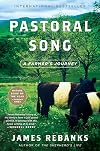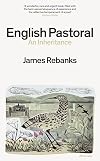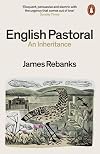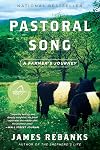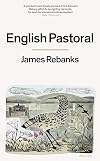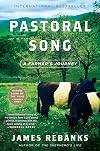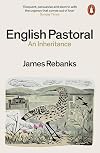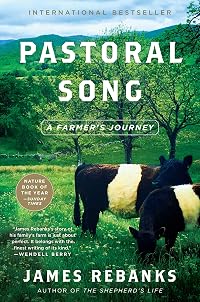
Pastoral Song: A Farmer's Journey
by James Rebanks
On This Page
Description
The acclaimed chronicle of the regeneration of one family's traditional English farmNATIONAL BESTSELLER * Winner of the Wainwright Prize for Nature Writing * Named "Nature Book of the Year" by the Sunday Times * New York Times Editors' Choice * Shortlisted for the Orwell Prize and the Royal Society of Literature's Ondaatje Prize * A BEST BOOK OF THE YEAR: Sunday Times, Financial Times, New Statesman, Independent, Telegraph, Observer, and Daily Mail
"Superbly written and deeply insightful, show more the book captivates the reader until the journey's end." — Wall Street Journal
The New York Times bestselling author of The Shepherd's Life profiles his family's farm across three generations, revealing through this intimate lens the profound global transformation of agriculture and of the human relationship to the land.
As a boy, James Rebanks's grandfather taught him to work the land the old way. Their family farm in England's Lake District hills was part of an ancient agricultural landscape: a patchwork of crops and meadows, of pastures grazed with livestock, and hedgerows teeming with wildlife. And yet, by the time James inherited the farm, it was barely recognizable. The men and women had vanished from the fields; the old stone barns had crumbled; the skies had emptied of birds and their wind-blown song.
Hailed as "a brilliant, beautiful book" by the Sunday Times (London), Pastoral Song (published in the United Kingdom under the title English Pastoral) is the story of an inheritance: one that affects us all. It tells of how rural landscapes around the world were brought close to collapse, and the age-old rhythms of work, weather, community and wild things were lost. And yet this elegy from the northern fells is also a song of hope: of how, guided by the past, one farmer began to salvage a tiny corner of England that was now his, doing his best to restore the life that had vanished and to leave a legacy for the future.
This is a book about what it means to have love and pride in a place, and how, against all the odds, it may still be possible to build a new pastoral: not a utopia, but somewhere decent for us all.
[Published in the United Kingdom as English Pastoral.]
. show less
Tags
Recommendations








Member Reviews
A beautifully written intellectual contemplation on the changes in farming in Britain over the course of a recent lifetime. I found this particularly interesting as a contrast to the book by his wife -- which sometimes puzzled and frustrated me because their relationship is very much one where the husband/farmer/shepherd is out on the land and not at all engaged with home life, cooking, children. Their relationship clearly works for their family, and is somewhat fascinating to me.
Anyway, this book is also about relationships -- between Rebanks and his grandfather, father, community, land, animals. I love where his observations and thoughts have taken him. I found his arguments for the rewilding of cultivated land compelling -- that show more farming is meant to be part of the natural web and is also always going to be a compromise as we struggle with burgeoning populations and the demand for cheap food. Still, he is developing his land to incorporate more biodiversity, to encourage the natural run of rivers, to restore hedges and wetlands. It's a beautiful thing, and somehow having the crushing amount of constant work to balance against his wife's point of view explains a lot. They work as a team to nurture different part of their lives. I am so inspired by this book to try and understand and nurture the small land that is in my care. It's a powerful message, and I hope that many farmers see and embrace it as well in whatever capacity they can. show less
Anyway, this book is also about relationships -- between Rebanks and his grandfather, father, community, land, animals. I love where his observations and thoughts have taken him. I found his arguments for the rewilding of cultivated land compelling -- that show more farming is meant to be part of the natural web and is also always going to be a compromise as we struggle with burgeoning populations and the demand for cheap food. Still, he is developing his land to incorporate more biodiversity, to encourage the natural run of rivers, to restore hedges and wetlands. It's a beautiful thing, and somehow having the crushing amount of constant work to balance against his wife's point of view explains a lot. They work as a team to nurture different part of their lives. I am so inspired by this book to try and understand and nurture the small land that is in my care. It's a powerful message, and I hope that many farmers see and embrace it as well in whatever capacity they can. show less
A thoroughly engaging memoir of the author's personal journey to becoming a proud inheritor of the family fell farm in England's Lake District, and his exploration of what that does--and ought--to mean in the 21st century. A cautiously optimistic assessment of how badly we have screwed up our relationship with the land and its other inhabitants in the quest to feed Earth's human population, and how we might change that. The US Midwest is Rebanks' ultimate paradigm for misguided land use, but UK commercial farming comes up smelling like acidic green muck as well.
My main take from this is a recognition that the problem of modern agriculture and the growing movement for ecological farming practices is not just a United States phenomenon. While the habitat, society, and politics in England are different from America, I was still able to appreciate Rebanks' writing about his journey as a farmer. At times he may get a little bit on a soapbox, but he writes eloquently and passionately and, I hope, can convert his readers.
Some sections that were particularly interesting to me included his description of the difference between cattle and sheep in terms of how they affect the fields. The cattle he raised were a traditional breed developed to "endure our cold and wet winters" and "know how to find enough show more to eat in the toughest of times"; their hoofprints in the wet ground provide habitat which helps orchids spread; they have "patchier grazing" than sheep, which creates microhabitats supporting a wider variety of plants and used by curlews and other ground nesting birds. (p.242) He pays attention to the birds, and feels that their increasing presence as he's changed his farming practices are an affirmation that he's doing it right.
He writes about the skills and nature awareness his children are learning by being an integral part of the farm. He is working for a more balanced future which they will be a part of. He writes of the mistakes he's made, the lessons learned--from his father, from his older neighbors, from observing the effects on the land itself. He has noticed that nature is messy, always changing, affected by storms, disease, rot and decay; and that all of these create unique niches. (p. 256)
This book can hold its own among the new American writings on sustainable farming. show less
Some sections that were particularly interesting to me included his description of the difference between cattle and sheep in terms of how they affect the fields. The cattle he raised were a traditional breed developed to "endure our cold and wet winters" and "know how to find enough show more to eat in the toughest of times"; their hoofprints in the wet ground provide habitat which helps orchids spread; they have "patchier grazing" than sheep, which creates microhabitats supporting a wider variety of plants and used by curlews and other ground nesting birds. (p.242) He pays attention to the birds, and feels that their increasing presence as he's changed his farming practices are an affirmation that he's doing it right.
He writes about the skills and nature awareness his children are learning by being an integral part of the farm. He is working for a more balanced future which they will be a part of. He writes of the mistakes he's made, the lessons learned--from his father, from his older neighbors, from observing the effects on the land itself. He has noticed that nature is messy, always changing, affected by storms, disease, rot and decay; and that all of these create unique niches. (p. 256)
This book can hold its own among the new American writings on sustainable farming. show less
The pace and structure of this book reflects in some ways the life Rebanks has lived: to get to the beauty and the joy, you have do a lot of hard, dirty, slogging work. It is to Rebanks's credit that he makes it worth it. Raised at the cusp of an agricultural revolution, he learns much of "the old way" of farming: small in scale, mixing livestock and crops, and integrating them into a whole, from his granddad. His own dad struggles to keep it going, but faces unbearable pressure from the new, competitive, commercial, technology-driven ways. When James steps in to take over, he has to choose, and this is the story of what he chose and why.
First he tells the story of his grandfather and his own education as a boy, learning and absorbing show more how it's done, and has been literally for hundreds of years. This is an often lyrical, sometimes nostalgic, classic rural-memoir stuff that the Brits have done well for generations. It's slow-paced, sometimes verges on "heartwarming," and could have used some editing as it meanders on for many pages. But it sets the stage. The second part explains how it all went to hell, with machinery and toxic chemicals and a ferocious and distorted market, forcing farmers to "feed the world" instead of their families and community, with the consequent poisoning and disruption of the soil, animals wild and domesticated, the plants, towns, families and farmers. In the third - and to my mind, the best, part is when James makes his choice to turn back, to aim for health of his farm, his animals, his soil, his earth. He had a bit of a head start, as his own family traditions had not gone so far down the modern road as to be irretrievable. A soil scientist is delighted to tell him his analysis shows his soil is still the healthiest in his district. He also has a university education and a profession that pays the bills (he is an expert advisor to Unesco), as he flatly acknowledges that farming the way he would like to means you will go bankrupt. Period. Some environmentalists would say he should give it up and let his 185 acres simply go wild. But even on his hill farm, it's probably too late to just walk away. So he tries to strike a balance, helping streams revert to natural courses, planting thousands of trees, rotating his pastures and plantings, scheduling mowing around nesting birds, and tweaking his livestock (sheep and cattle) by bringing in hardier, sturdier, more versatile breeds who will graze the weeds, churn the soil, drop healthy fertilizing manure, and cope with conditions as they are in the fells with less need for drugs, stabling, and other interventions. The final passage is one of great beauty: he and his youngest daughter out in the meadow as a barn owl swoops and dives and swirls in the falling dusk. There is a barn it can live in safely, there are unpoisoned fields where the mice and voles it is hunting can live, and where his animals feed and fertilize and work the soil to support them all. Rebanks's goal is not a wilderness, but a healthy farm. And we need more of those. show less
First he tells the story of his grandfather and his own education as a boy, learning and absorbing show more how it's done, and has been literally for hundreds of years. This is an often lyrical, sometimes nostalgic, classic rural-memoir stuff that the Brits have done well for generations. It's slow-paced, sometimes verges on "heartwarming," and could have used some editing as it meanders on for many pages. But it sets the stage. The second part explains how it all went to hell, with machinery and toxic chemicals and a ferocious and distorted market, forcing farmers to "feed the world" instead of their families and community, with the consequent poisoning and disruption of the soil, animals wild and domesticated, the plants, towns, families and farmers. In the third - and to my mind, the best, part is when James makes his choice to turn back, to aim for health of his farm, his animals, his soil, his earth. He had a bit of a head start, as his own family traditions had not gone so far down the modern road as to be irretrievable. A soil scientist is delighted to tell him his analysis shows his soil is still the healthiest in his district. He also has a university education and a profession that pays the bills (he is an expert advisor to Unesco), as he flatly acknowledges that farming the way he would like to means you will go bankrupt. Period. Some environmentalists would say he should give it up and let his 185 acres simply go wild. But even on his hill farm, it's probably too late to just walk away. So he tries to strike a balance, helping streams revert to natural courses, planting thousands of trees, rotating his pastures and plantings, scheduling mowing around nesting birds, and tweaking his livestock (sheep and cattle) by bringing in hardier, sturdier, more versatile breeds who will graze the weeds, churn the soil, drop healthy fertilizing manure, and cope with conditions as they are in the fells with less need for drugs, stabling, and other interventions. The final passage is one of great beauty: he and his youngest daughter out in the meadow as a barn owl swoops and dives and swirls in the falling dusk. There is a barn it can live in safely, there are unpoisoned fields where the mice and voles it is hunting can live, and where his animals feed and fertilize and work the soil to support them all. Rebanks's goal is not a wilderness, but a healthy farm. And we need more of those. show less
Rebanks' family have been fell (hill) farmers in Cumbria in the north of England since 1400-something. It's mind-boggling to think of belonging so truly to a particular spot on earth.
This book is best when he is simply describing his farm, and his grandfather, and his father. The past two generations began to 'modernize', 'get big or get out', mow down hedgerows, specialize, feed silage rather than hay, and above all apply synthetic fertilizers. These things degrade the land and ultimately the farmers themselves. Rebanks is now trying to rejuvenate his farm by going back to the old ways, and the even older ways of setting nature back to rights in certain areas. He thus has to supplement his reduced farm income by selling books; and I'm show more only too happy to help him along in the endeavor. show less
This book is best when he is simply describing his farm, and his grandfather, and his father. The past two generations began to 'modernize', 'get big or get out', mow down hedgerows, specialize, feed silage rather than hay, and above all apply synthetic fertilizers. These things degrade the land and ultimately the farmers themselves. Rebanks is now trying to rejuvenate his farm by going back to the old ways, and the even older ways of setting nature back to rights in certain areas. He thus has to supplement his reduced farm income by selling books; and I'm show more only too happy to help him along in the endeavor. show less
I was a farm boy, from generations of farmers, and though didn't grow up to be a farmer, that upbringing shaped me in ways I'm still discovering. And now I'm a steward of the land in my own way, as an avocation, working to improve the habitat and diversity of the lands I manage. So much of this book really resonated with me, and reflects how I think about how humans have interacted with the landscape in recent generations. A brilliant piece of writing here.
"This is about farmers like us in our tens of thousands across the country and around the world, and why we did the things we did, and what some of us are now trying to do to make it right. The last 40 years on the land were revolutionary and disrupted all that had gone before forshow more
thousands of years, a radical and ill-thought-through experiment that was conducted in our fields. I lived through those years, I was a witness. The more we learn about this change, the more unease and anger we feel about what farming has become our society was created by this farming, but yet we increasingly distrusted."show less
Mr. Rebanks lyrically described three types of farming: traditional, which he learned as a child from his grandfather; industrial (for lack of a better word), whih nearly brioje his family; and sustainable, which he practices with assistance from environmental scientists. He makes a compelling argument for farming in small hioldings with an eye to how to work with the native animals, plants and topography.
Members
- Recently Added By
Lists

Books Read in 2021
5,361 works; 114 members

2022 Notable Books for Adults
25 works; 3 members
Author Information

7 Works 2,205 Members
Some Editions
Awards and Honors
Awards
Distinctions
Common Knowledge
- Canonical title*
- Pastorale : nalatenschap van een schaapherder
- Original title
- English Pastoral: An Inheritance
- Alternate titles
- Pastoral Song
- Original publication date
- 2020
- Important places
- Cumbria, England, UK
- Epigraph
- Pastoral, Late Middle English, from Latin patoralis
Adjective
1) Of or pertaining to shepherds; hence, relating to rural life and scenes.
2) Relating to the care of souls.
Noun
1) A poem describing the... (show all) life and manners of shepherds; a poem in which the speakers assume the character of shepherds; an idyl. - Dedication
- For Helen, with all my love
- First words
- The black-headed gulls follow in our wake as if we are a little fishing boat out at sea.
- Quotations
- was it the farmer's jog to care for curlews? Ho much was a curlew worth? (p,160)
To reject farming wholesale is a mistake: the field is the base layer on which our entire civilization is built....The fact that this clearance probably occurred so long ago means we forget this harsh ecological truth and alm... (show all)ost think of fields as a natural phenomenon. But a field is not a natural thing...(p.165)
...a farm swallows you up, takes everyting you have, and then asks for more. It is also an exercise in humility: you can't do it alone. (p.249)
Restoring the countryside...is about building strong new rural communities that respect both the old and the new. (p.251)
...there is a very thin line between idealism and bullshit. (p.207)
...ecological challenge is how to make productive farms much better places for nature. (p.209)
...he had shown a little farm boy and girl that you could make something new from something broken. (p.211)
A...farm like ours is always going to be primarily a livestock grazing farm; it is part of the 3/ or so of the British landscape that is unsuitable for growing crops. Yet we still have bills to pay... (p.212)
...the uplands were historically the livestock nursery for the lowland areas; huge numbers of sheep and cattle were needed to make plant-based farming possible, and it made sense to produce many of these on the lowest value m... (show all)arginal land. (p.247)
Leviticus 19...When you reap the harvest of your land, you shall not reap to the very edges of your field, or gather the gleanings of your harvest...you shall leave them for the poor and the alien...(p.167)
"nature" isn't something that just lives around my fields...it lives within the fields as well, in the soil and in the sward...When we despair and reduce our world view to black and white--"farming' is bad, "nature" is good--... (show all)we lose sight of vital distinctions and nuances.(p.269)
What it means to be a good farmer evolves from genration to generation. (p.268) - Last words
- (Click to show. Warning: May contain spoilers.)This is my inheritance to my children. This is my love.
- Blurbers
- Morrison, Blake; Glover, Julian; Maddonald, Helen; Berry, Wendell
- Original language
- English
*Some information comes from Common Knowledge in other languages. Click "Edit" for more information.
Classifications
Statistics
- Members
- 540
- Popularity
- 55,261
- Reviews
- 15
- Rating
- (4.25)
- Languages
- 5 — Chinese, Danish, Dutch, English, German
- Media
- Paper, Audiobook, Ebook
- ISBNs
- 21
- ASINs
- 7