The Liar's Dictionary
by Eley Williams
On This Page
Description
"Peter Winceworth, a disaffected Victorian lexicographer, inserts false entries into a dictionary - violating and subverting the dictionary's authority - in an attempt to assert some sense of individual purpose and artistic freedom. In the present day, Mallory, a young overworked and underpaid intern employed by the dictionary's publishing house, is tasked with uncovering these entries before the work is digitised. As the novel progresses and their narratives combine, as Winceworth imagines show more who will find his fictional words in an unknown future and Mallory discovers more about the anonymous lexicographer's life through the clues left in his fictitious entries, both discover how they might negotiate the complexities of an absurd, relentless, untrustworthy, hoax-strewn, undefinable life.Braiding together contemporary and historical narratives, the novel explores themes of trust, agency and creativity, celebrating the rigidity, fragility and absurdity of language."--Provided by publisher. show lessTags
Recommendations




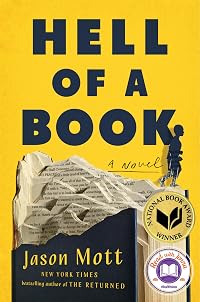
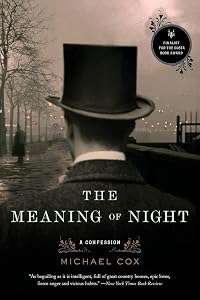
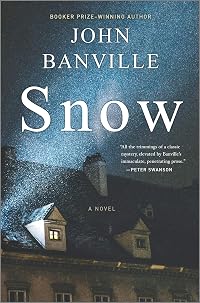

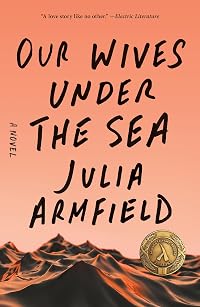


Member Recommendations
Member Reviews
This book has two storylines: In the early twentieth century, a social outcast works for Swansby's Encyclopedic Dictionary, writing definitions for words while tolerating bullying from his coworkers. He falls in love with a coworker's fiancée, and Wodehouse-worthy hijinks ensue. Meanwhile, in the current day, a young woman gets an internship at the same dictionary, which was never finished and is a financial failure, so she and the owner are digitizing it as a last effort to keep it alive. In the process, they discover that the dictionary is full of fake words. The intern is madly in love with her girlfriend, but is also in the closet and struggling with her public identity.
Both storylines take place over a few chaotic days, giving the show more book a frenetic energy. Williams' writing is utterly brilliant - I literally laughed out loud in the preface. The book toys with language and words in delightful ways.
As much as I adored this book, and as much fun as I had reading it, the end didn't quite come together as neatly as I wanted it to. I wish the characters had been able to make the connection between the two storylines. show less
Both storylines take place over a few chaotic days, giving the show more book a frenetic energy. Williams' writing is utterly brilliant - I literally laughed out loud in the preface. The book toys with language and words in delightful ways.
As much as I adored this book, and as much fun as I had reading it, the end didn't quite come together as neatly as I wanted it to. I wish the characters had been able to make the connection between the two storylines. show less
Scrumptious, delightful. I had to actively slow myself down as I read it; it would have been easy to gobble up in a day or two. Reminds me in some ways of Confessions of the Fox by Jordy Rosenberg, the questioning of language and authority and the ways queerness is entirely load-bearing in the way the novel asks such questions. And how much room they both devote to play...
A logophile’s delight, and also a charming love story with endearing characters. Two awkward misfits, one in the past and one in the present, whose stories overlap as they work at Swansby House on Swansby’s New Encyclopaedic Dictionary, discover what’s important in life. I’m glad I read this as an ebook because I could easily look up words in the online dictionary and, especially, google the mountweazels, which constitute the heart of the story.
The preface is perfection. If I were Eley Williams, I could die happy, knowing I’d left the world a better place.
The preface is perfection. If I were Eley Williams, I could die happy, knowing I’d left the world a better place.
Delightful, delicious, daffy, dazzling– well, you get the idea. Readers who loved Mark Dunn’s ‘Ella Minnow Pea’ and Kory Stamper’s 'Word by Word’ will likewise devour ‘The Liar’s Dictionary’ with great relish.
There is a plot here – more or less. Two plots, to be precise, intertwining across a century and anchored by a never-quite-completed dictionary. One thread involves the purposeful insertion of mountweazels (look it up) and the other involves an attempt to locate and expunge them from the soon-to-be digitized version. There’s also a connecting thread of throwing off the traces of classism and conformity, and of having the courage to embrace one’s true self, along with a couple of love stories – one more show more successful than the other.
But let’s be honest here. This work is mostly an excuse to revel in words. Exquisite, exuberant, effervescent words, spilling off the page and snapping in the atmosphere like the bubbles from the finest Champagne. This reviewer begs the reader to not spoil the vintage by keeping a dictionary at hand. Just imbibe and enjoy. One might, via context, be able to puzzle out the meaning of mimolette, corymb, zugzwang, and pelike (and some in fact are presented gratis). If not, so what? It’s still a party in print, and it won’t even leave the reader with a hangover.
What more could one ask? show less
There is a plot here – more or less. Two plots, to be precise, intertwining across a century and anchored by a never-quite-completed dictionary. One thread involves the purposeful insertion of mountweazels (look it up) and the other involves an attempt to locate and expunge them from the soon-to-be digitized version. There’s also a connecting thread of throwing off the traces of classism and conformity, and of having the courage to embrace one’s true self, along with a couple of love stories – one more show more successful than the other.
But let’s be honest here. This work is mostly an excuse to revel in words. Exquisite, exuberant, effervescent words, spilling off the page and snapping in the atmosphere like the bubbles from the finest Champagne. This reviewer begs the reader to not spoil the vintage by keeping a dictionary at hand. Just imbibe and enjoy. One might, via context, be able to puzzle out the meaning of mimolette, corymb, zugzwang, and pelike (and some in fact are presented gratis). If not, so what? It’s still a party in print, and it won’t even leave the reader with a hangover.
What more could one ask? show less
Creating a dictionary at the end of the 19th century was no easy task--dozens of workers toiled away, traveling and researching to write meticulous definitions on index cards they collected as they worked through all the words one letter at a time. In The Liar’s Dictionary by Eley Williams, Peter Winceworth labors at Swansby’s New Encyclopaedic Dictionary, so bored with his job and life that he fabricates a lisp to provoke his co-workers as he tackles the letter S. He also enjoys making up words to counter the tedium (i.e. relectoblivious (adj.), accidentally rereading a phrase or line due to lack of focus or desire to finish) and secretly inserts them into the book. Flash forward to modern-day London, we find Mallory similarly show more toiling in boredom at the same Swansby’s trying to find all of Winceworth’s mountweazels (it’s a word...look it up) before her boss finally publishes Swansby’s online. The action moves back and forth between the two characters as they navigate their way through the dictionary and a strange few days of their lives.
The Liar’s Dictionary is about love, creativity, and finding yourself, but first and foremost it is an homage to words and the people who love them. Nearly every paragraph includes an interesting and obscure word, the characters (both modern and not) banter with funny references and pun-filled witticism and the action revolves around the words themselves. If wordplay, British humor, or the need to look up definitions every few minutes will make you crazy, then this may not be the book for you--but at a slim 200 pages, it may work for almost anyone. I adored every minute of it and highly recommend it. show less
The Liar’s Dictionary is about love, creativity, and finding yourself, but first and foremost it is an homage to words and the people who love them. Nearly every paragraph includes an interesting and obscure word, the characters (both modern and not) banter with funny references and pun-filled witticism and the action revolves around the words themselves. If wordplay, British humor, or the need to look up definitions every few minutes will make you crazy, then this may not be the book for you--but at a slim 200 pages, it may work for almost anyone. I adored every minute of it and highly recommend it. show less
In alternating chapters set nearly a century apart, two sets of loves are chronicled. The first involves Peter, a falsely lisping lexicographer working on the letter ’S’ for Swansby’s Encyclopaedic Dictionary, and Sophia, a free-spirited Russian distantly related to the Tsar. The other love is between Mallory, working a long-term internship to digitize Swansby’s unfinished dictionary and Mallory’s love, Pip, who works at a coffee shop, doodles on her digits, and, as opposed to Mallory, is fully forthright about being out. The chapters are organized alphabetically with either real or mountweazel definitions of words from the dictionary. It is a clever structure that offers up the opportunity for a series of sometimes comic, show more sometimes painfully sweet set-pieces.
So far, so charming, but does a larger narrative arc emerge? Eventually, perhaps, but the two storylines remain fully separated and only loosely parallel. However, just as you begin to think that it’s all just a bit of contrived fun (with added wordplay), you may find yourself actually caring about each of these characters in their separate stories. That took me by surprise. Perhaps romance trumps cynicism after all.
Gently recommended for word lovers and those who enjoy a sweet read that isn’t necessarily saccharine. show less
So far, so charming, but does a larger narrative arc emerge? Eventually, perhaps, but the two storylines remain fully separated and only loosely parallel. However, just as you begin to think that it’s all just a bit of contrived fun (with added wordplay), you may find yourself actually caring about each of these characters in their separate stories. That took me by surprise. Perhaps romance trumps cynicism after all.
Gently recommended for word lovers and those who enjoy a sweet read that isn’t necessarily saccharine. show less
"I always disliked the expression sticks and stones may break my bones but words can never hurt me. It is one of the least useful ways of understanding one another, or how words work."
A novel for people who love language and who perhaps experience a sensation of being on the outside of the human confraternity looking in. It is equal parts whimsical and profound, and split into alternating timelines centering on a late 19th century failed effort to create an encyclopedic dictionary a la the Oxford English Dictionary.
It is 1899 and Peter Winceworth has spent the past five years working on the letter S for the dictionary, scrivening and researching among 100 other lexicographers. A socially awkward and lonely man, he faked a lisp to win show more his interviewer's sympathy and get the job and has kept up the mask and shield since. He notes the gaps in the English language that mirror the gaps in his own life and invents words to fill them, such as when he thinks "there really should be a specific word associated with the effects of drinking an excess of alcohol. The headaches, the seething sense of paranoia - language seemed the poorer for not having one." [Google's ngram viewer shows "hangover" didn't come into notable use until around 1910, while Wiktionary points to 1904 for its first use in this sense].
It is also the current day and Mallory is the sole employee of the dictionary's inheritor, working on a project to digitize the never completed dictionary while updating definitions as appropriate. An anonymous caller makes daily threats, angry that the dictionary has redefined "marriage" following the resolution of the contemporary debate around that institution. She is in a long term relationship with her partner Pip but has not come out as a lesbian, holding up a mask and shield for her true self. She learns that many "mountweazels", or invented words, have been inserted amongst the legitimate words by someone originally working on the project, and she and Pip start working to ferret them out.
Winceworth has his world shaken up when a fellow lexicographer, who hails from the aristocracy and essentially funds the whole enterprise, returns from a year in Russia "researching" word origins with his new fiancee, Sophia Slivkovna, who is evidently engaged in a nebulous agenda of her own. Miss Slivkovna builds a sympathetic rapport with Winceworth, who feels so seen that he completely forgets to lisp when with her. As he falls for her in a hopeless infatuation, he becomes more disengaged from the dictionary's real project and into the creation of his own.
The two storylines are brought to conclusions that lead the characters into opportunities to more fully realize their true selves, and to embrace those words that fully reflect themselves. Words, this novel argues, are powerful things, and we create them as we create ourselves. show less
A novel for people who love language and who perhaps experience a sensation of being on the outside of the human confraternity looking in. It is equal parts whimsical and profound, and split into alternating timelines centering on a late 19th century failed effort to create an encyclopedic dictionary a la the Oxford English Dictionary.
It is 1899 and Peter Winceworth has spent the past five years working on the letter S for the dictionary, scrivening and researching among 100 other lexicographers. A socially awkward and lonely man, he faked a lisp to win show more his interviewer's sympathy and get the job and has kept up the mask and shield since. He notes the gaps in the English language that mirror the gaps in his own life and invents words to fill them, such as when he thinks "there really should be a specific word associated with the effects of drinking an excess of alcohol. The headaches, the seething sense of paranoia - language seemed the poorer for not having one." [Google's ngram viewer shows "hangover" didn't come into notable use until around 1910, while Wiktionary points to 1904 for its first use in this sense].
It is also the current day and Mallory is the sole employee of the dictionary's inheritor, working on a project to digitize the never completed dictionary while updating definitions as appropriate. An anonymous caller makes daily threats, angry that the dictionary has redefined "marriage" following the resolution of the contemporary debate around that institution. She is in a long term relationship with her partner Pip but has not come out as a lesbian, holding up a mask and shield for her true self. She learns that many "mountweazels", or invented words, have been inserted amongst the legitimate words by someone originally working on the project, and she and Pip start working to ferret them out.
Winceworth has his world shaken up when a fellow lexicographer, who hails from the aristocracy and essentially funds the whole enterprise, returns from a year in Russia "researching" word origins with his new fiancee, Sophia Slivkovna, who is evidently engaged in a nebulous agenda of her own. Miss Slivkovna builds a sympathetic rapport with Winceworth, who feels so seen that he completely forgets to lisp when with her. As he falls for her in a hopeless infatuation, he becomes more disengaged from the dictionary's real project and into the creation of his own.
slivkovnion (n.), a daydream, briefly
Mammonsomniate (v.), to dream that money might make anything possible
The two storylines are brought to conclusions that lead the characters into opportunities to more fully realize their true selves, and to embrace those words that fully reflect themselves. Words, this novel argues, are powerful things, and we create them as we create ourselves. show less
Members
- Recently Added By
Lists

Top Five Books of 2021
604 works; 181 members

Top Five Books of 2022
736 works; 272 members

The Guardian Books of the Year 2020
126 works; 8 members

Five star books
1,767 works; 110 members

Books Read in 2022
5,168 works; 114 members

Books Read in 2021
5,361 works; 114 members

World Books
51 works; 4 members
Author Information

5+ Works 1,221 Members
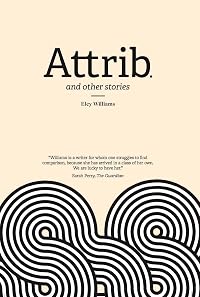
Eley Williams is an editor, lecturer, tutor, and writer. She earned her doctorate from Royal College, University of London, where she currently teaches creative writing and children's literature. She is also co-editor of fiction at 3:AM magazine and assists the independent publishers Copy Press. Her work has been published in Ambit, Night & Day, show more The Dial, and Structo. Her awards include the Christopher Tower Poetry Prize in 2005 and, the James Tait Black Prize for fiction in 2018, for her collection, Attrib. and Other Stories. (Bowker Author Biography) show less
Some Editions
Awards and Honors
Awards
Distinctions
The Guardian Book of the Day (2020-07-14)
Common Knowledge
- Canonical title
- The Liar's Dictionary
- Original title
- The Liar's Dictionary
- Original publication date
- 2020
- People/Characters
- Peter Winceworth; Mallory; David Swansby; Pip; Sophia
- Epigraph
- novel (n.), a small tale, generally of love from Samuel Johnson’s Dictionary of the English Language (1755) jung ftak (n.), a Persian bird, the male of which had only one wing, on the right side, and the female only one win... (show all)g, on the left side; instead of the missing wings, the male had a hook of bone, and the female an eyelet of bone, and it was by uniting hook and eye that they were enabled to fly – each, when alone, had to remain on the ground from Webster’s Twentieth Century Dictionary of the English Language (1943)
- Dedication
- for Nell, too marvellous for words
- First words
- Let us imagine you possess a perfect personal dictionary.
- Quotations
- "All of the cards that contained/made-up/
words were written in a quite different type of fountain pen." - Last words
- (Click to show. Warning: May contain spoilers.)auroflorous (adj.), to escape at night, usually with a renewed sense of purpose(s). Obsolete
- Blurbers
- Greer, Andrew Sean; Dreyer, Benjamin
- Original language
- English
Classifications
Statistics
- Members
- 969
- Popularity
- 27,253
- Reviews
- 47
- Rating
- (3.54)
- Languages
- English, Italian, Spanish
- Media
- Paper, Audiobook, Ebook
- ISBNs
- 20
- ASINs
- 5