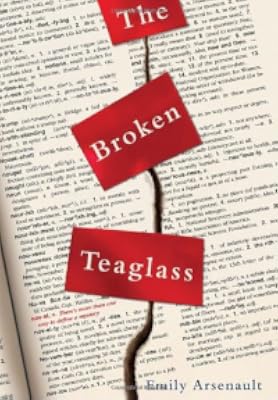
The Broken Teaglass
by Emily Arsenault
On This Page
Description
While flirting with each other to ease the boredom of working as dictionary updaters, Billy Webb and Mona Minot discover that someone has been lacing their dictionary files with clues to a long-unsolved murder.Tags
Recommendations




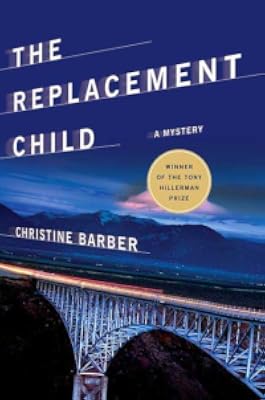
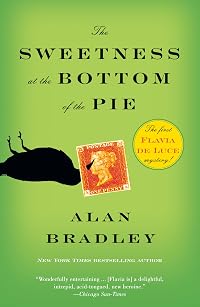
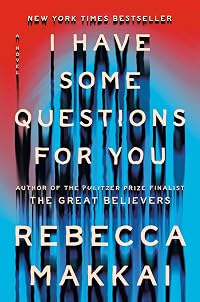
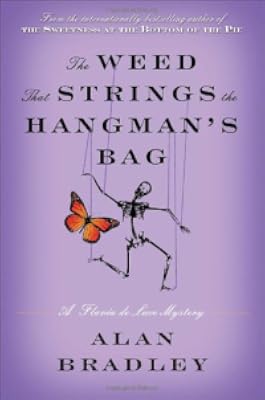
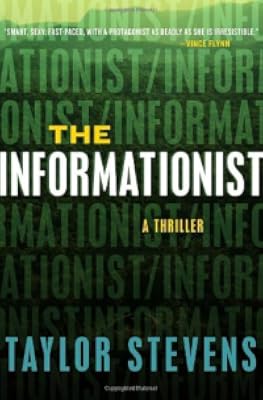
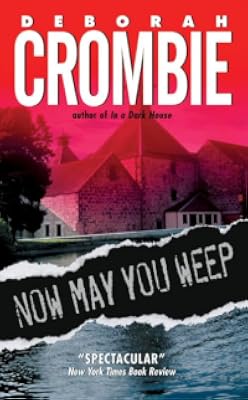
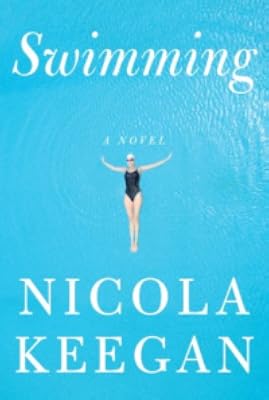
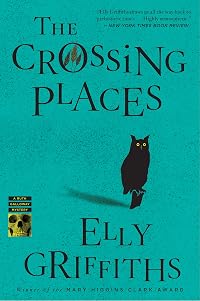

Member Recommendations
The Professor and the Madman: A Tale of Murder, Insanity, and the Making of the Oxford English Dictionary by Simon Winchester
upstairsgirl Readers intrigued by the mechanics of dictionary-writing may enjoy The Professor and the Madman, which is a non-fiction account of the writing of the first Oxford English Dictionary.
Member Reviews
A recent college grad gets a job at a dictionary publisher, and finds some unconventional citations in the files that seem to point to a mystery.
Everything about this book is gentle: the slow unraveling of the story hidden in the citations, the probing of the narrator's personal history, the supervisory style of the narrator's manager, the handling of various kooky questions about grammar and usage. The written correspondence and phone conversations are incredibly memorable, and delightful, like the caller who is sure that the pronunciations are written with a Boston accent. Anyone who has ever staffed a reference desk knows that there's plenty of material there for biting satire. Instead, Arsenault embraces compassion: every question show more is answered seriously, every person treated with dignity. show less
Everything about this book is gentle: the slow unraveling of the story hidden in the citations, the probing of the narrator's personal history, the supervisory style of the narrator's manager, the handling of various kooky questions about grammar and usage. The written correspondence and phone conversations are incredibly memorable, and delightful, like the caller who is sure that the pronunciations are written with a Boston accent. Anyone who has ever staffed a reference desk knows that there's plenty of material there for biting satire. Instead, Arsenault embraces compassion: every question show more is answered seriously, every person treated with dignity. show less
I read this first time author on the first day of the year and couldn't put the book down. Quite the omen!
It's the story of a couple of lexicographers working for a venerable company that publishes dictionaries. Billy and Mona are young, bright and stuck in a job with no future but the perfect fit for a couple of classic lit and philosophy majors. Arsenault used to work in such a place and the scenes here ring absolutely true. There is drudgery, humor and pathos in these people and what they do and as someone who also works surrounded by dictionaries (more for their pronunciation value than their etymology) I can relate to the strange, quirky world of low tech.
The lexicographers' work is to find citations ("cits" for short) in current show more periodicals that could change the meanings of words in future editions. The two young people come across some cryptic messages in the files, listed under an unknown title: "The Broken Teaglass". Eventually the two sleuths piece together fifty of these cits which form a story involving a grizzly murder that occurred fifteen years earlier.
Arsenault reveals the writer and the mystery gradually. The cits aren't discovered in order so the tension builds. Clearly the writer worked at their company; does anyone still working there have any information or something they don't want known?
Mona and Billy have their own secrets which they also are slow to reveal. The whole process is like the peeling of an onion and the pace and surprises of the plot led me to finish the book in a day. Just when I thought it was time to put it aside, something else would turn up and I was re-hooked.
Highly entertaining and a fresh, inventive voice. show less
It's the story of a couple of lexicographers working for a venerable company that publishes dictionaries. Billy and Mona are young, bright and stuck in a job with no future but the perfect fit for a couple of classic lit and philosophy majors. Arsenault used to work in such a place and the scenes here ring absolutely true. There is drudgery, humor and pathos in these people and what they do and as someone who also works surrounded by dictionaries (more for their pronunciation value than their etymology) I can relate to the strange, quirky world of low tech.
The lexicographers' work is to find citations ("cits" for short) in current show more periodicals that could change the meanings of words in future editions. The two young people come across some cryptic messages in the files, listed under an unknown title: "The Broken Teaglass". Eventually the two sleuths piece together fifty of these cits which form a story involving a grizzly murder that occurred fifteen years earlier.
Arsenault reveals the writer and the mystery gradually. The cits aren't discovered in order so the tension builds. Clearly the writer worked at their company; does anyone still working there have any information or something they don't want known?
Mona and Billy have their own secrets which they also are slow to reveal. The whole process is like the peeling of an onion and the pace and surprises of the plot led me to finish the book in a day. Just when I thought it was time to put it aside, something else would turn up and I was re-hooked.
Highly entertaining and a fresh, inventive voice. show less
It's difficult to imagine that work at a dictionary company and word definitions and citations could be mysterious. But these are the elements that Emily Arsenault quite artfully combines in The Broken Teaglass.
Billy Webb is a new hire at Samuelson Company, an esteemed dictionary publisher in New England. Billy recently graduated from college and is now working as an editor. Parts of his responsibilities include obtaining new citations or "cits" for word usage, as well as checking previously filed cits to determine if usage and definitions have changed. He discovers several cits for a book but cannot find any reference to the book in the library or anywhere else. Curiously the cits are rather long and seem to be telling a story, the show more story of a murder. Even more curious, the cits seem to make reference to Samuelson and several employees. Billy, with the help of a Mona Minot - a coworker, begins to investigate and seek out more cits in order to learn the entire story.
The cits tell a story of despair and in many ways seem to reflect Billy's life. Billy and Mona seem to have a friendship that borders romance, just like their mysterious author. Their stories are revealed bit by bit, just as they unravel the mystery of the cits bit by bit. Although Billy is in his mid-twenties, in many ways this is also a coming-of-age tale in addition to a mystery. I wasn't sure about the story when I first read the blurbs as I presumed it would be a dry or plodding tale. Imagine my surprise when I began reading and simply couldn't tear myself away (even with the reading block). The Broken Teaglass is an artfully crafted story to be savored, perhaps while drinking a delicious cup of tea (may I suggest Darjeeling or Oolong). show less
Billy Webb is a new hire at Samuelson Company, an esteemed dictionary publisher in New England. Billy recently graduated from college and is now working as an editor. Parts of his responsibilities include obtaining new citations or "cits" for word usage, as well as checking previously filed cits to determine if usage and definitions have changed. He discovers several cits for a book but cannot find any reference to the book in the library or anywhere else. Curiously the cits are rather long and seem to be telling a story, the show more story of a murder. Even more curious, the cits seem to make reference to Samuelson and several employees. Billy, with the help of a Mona Minot - a coworker, begins to investigate and seek out more cits in order to learn the entire story.
The cits tell a story of despair and in many ways seem to reflect Billy's life. Billy and Mona seem to have a friendship that borders romance, just like their mysterious author. Their stories are revealed bit by bit, just as they unravel the mystery of the cits bit by bit. Although Billy is in his mid-twenties, in many ways this is also a coming-of-age tale in addition to a mystery. I wasn't sure about the story when I first read the blurbs as I presumed it would be a dry or plodding tale. Imagine my surprise when I began reading and simply couldn't tear myself away (even with the reading block). The Broken Teaglass is an artfully crafted story to be savored, perhaps while drinking a delicious cup of tea (may I suggest Darjeeling or Oolong). show less
** spoiler alert **
For a book that could have been the Holy Grail for wordies everywhere, Emily Arsenault’s The Broken Teaglass was a let down. The setting for a brilliant mystery novel is there: an intriguing job, a saucy love interest, an unsolved murder, creepy neighbors – books greater than you and me have been built on a foundation of far less. Yet somehow with Teaglass, the whole was not greater than the sum of its parts.
The tidbits divulging the behind-the-scenes secrets of dictionaries are priceless. For word-lovers and budding linguists, the questions of “who gets to decide which words are real?” is finally answered, complete with counter-theories and the philosophy behind the process all tied up with a neat little show more bow: in a thoughtful piece of dialogue, characters debate whether to search for new words only in text, or to include conversation as well. Arsenault uses her characters wisely to explain some very murky ideologies.
But the rest of it, the side stories and the intrigues surrounding such a rich setting, are poorly executed. The novel, it seems, exists in two disjointed acts. Act One focuses on our protagonist Billy’s neighbors who offer him conversation and a beer at the end of the day and offer the reader an unsettling feeling that maybe Billy should lock his door at night. This sentence on page 14 sets it up:
“Maybe it was a sort of omen that my first encounter with Tom was on the very first day of work… He was bald but for a few long clumps of hair growing out of the sides and back of his head, all pulled into a then ponytail at the back. His body matched his hair – stringy, skinny, and formless in his lawn chair.”
Ominous, right? Well, not for long. By the half-way point in the book, we never really hear from Tom or the rest of the neighbors again. They have dropped off the pages. The “omen” of the first meeting is never revealed.
Instead we are introduced to Billy’s unfortunate struggle with cancer during his senior year of high school. Now five years later, he spends the second half of the book in the throes of an existential crisis as he begins to accept his remission with copious amounts of booze and a lackadaisical approach to dictionary editing. Arsenault makes sure the murder mystery is solved by the end of The Broken Teaglass but for this one tidy knot, there are several loose threads left dangling. show less
For a book that could have been the Holy Grail for wordies everywhere, Emily Arsenault’s The Broken Teaglass was a let down. The setting for a brilliant mystery novel is there: an intriguing job, a saucy love interest, an unsolved murder, creepy neighbors – books greater than you and me have been built on a foundation of far less. Yet somehow with Teaglass, the whole was not greater than the sum of its parts.
The tidbits divulging the behind-the-scenes secrets of dictionaries are priceless. For word-lovers and budding linguists, the questions of “who gets to decide which words are real?” is finally answered, complete with counter-theories and the philosophy behind the process all tied up with a neat little show more bow: in a thoughtful piece of dialogue, characters debate whether to search for new words only in text, or to include conversation as well. Arsenault uses her characters wisely to explain some very murky ideologies.
But the rest of it, the side stories and the intrigues surrounding such a rich setting, are poorly executed. The novel, it seems, exists in two disjointed acts. Act One focuses on our protagonist Billy’s neighbors who offer him conversation and a beer at the end of the day and offer the reader an unsettling feeling that maybe Billy should lock his door at night. This sentence on page 14 sets it up:
“Maybe it was a sort of omen that my first encounter with Tom was on the very first day of work… He was bald but for a few long clumps of hair growing out of the sides and back of his head, all pulled into a then ponytail at the back. His body matched his hair – stringy, skinny, and formless in his lawn chair.”
Ominous, right? Well, not for long. By the half-way point in the book, we never really hear from Tom or the rest of the neighbors again. They have dropped off the pages. The “omen” of the first meeting is never revealed.
Instead we are introduced to Billy’s unfortunate struggle with cancer during his senior year of high school. Now five years later, he spends the second half of the book in the throes of an existential crisis as he begins to accept his remission with copious amounts of booze and a lackadaisical approach to dictionary editing. Arsenault makes sure the murder mystery is solved by the end of The Broken Teaglass but for this one tidy knot, there are several loose threads left dangling. show less
Six-word review: Inventive premise, weak characters, lame ending.
Extended review:
This debut novel turns a once-groundbreaking approach to fiction inside out, with a premise that starts off seeming very original and ends up feeling like a gimmick that the author didn't know how to resolve.
The gist of the story is that two young people who work for a dictionary publisher discover that some of the examples of word use stored in the files cite a nonexistent source--and that when pieced together, the citations begin to tell a story. They soon realize that the narrative not only sounds as if it describes a real event but seems to have taken place right there in their workplace--maybe even involving some of the people they know.
Putting their show more heads together, Billy and Mona delve surreptitiously into the citations files and also into the personal histories of present and former employees, looking for the thread that ties it all together.
This device is a clever variant on the narrative structures of Nabokov's Pale Fire (the story is told in the footnotes to a long poem), Danielewski's House of Leaves (multilayered annotations and analysis combine to tell the tale), Byatt's Possession (secrets of long-dead characters seep out through their writings), and Phillips's The Tragedy of Arthur (the novel is positioned as a skeptical introduction to a supposed play of Shakespeare).
However, in this instance it amounts to a whole lot of not very much. The two main characters stumble onto the mystery, and they keep looking, and finally they find out the answer.
All right, then.
The characters themselves have very little appeal. The focal character, Billy, is far too lightweight to carry the novel, never mind (or so it seems to me) to have landed a job that some of us might have considered the ultimate challenge to our logical and linguistic sensibilities. He presents the sort of wide-eyed, slack-jawed appearance that belongs in a sitcom or comic strip and not in a silent cubicle composing terse, precise distillations of verbal essences.
His colleague Mona is so forgettable that five days after finishing the book I can't seem to remember anything about her.
Billy's secret illness is meant, I think, to lend a certain gravitas to his character, but in terms of plot it seems to be nothing more than a distraction.
It does, however, furnish an occasion for what I thought was the best passage of the book: his sister, a very minor character, explains to him why their parents simply can't stop making his favorite dessert every time he goes home, no matter how inappropriate to the occasion and no matter how well they understand, rationally, that he doesn't have to have it whenever he visits. She tells him that it's up to him to help them make the transition that will let them off the hook. Or she tries to. But he cuts her off and ignores her remarks, and that's that.
Several other minor characters, notably a neighbor who seems to know a surprising amount about the dictionary company for someone who never worked there, supply potentially interesting digressions that never amount to anything.
So what we have here is a balloon that doesn't get off the ground, a sparkler that fizzles out, a gift-wrapped box that turns out to be empty.
Meanwhile, if what you're really interested in (as some reviewers have earnestly claimed to be) is a behind-the-scenes look at how dictionaries are made, allow me to recommend these titles:
• The Professor and the Madman, by Simon Winchester,
• The Meaning of Everything, also by Simon Winchester, and
• The Story of Webster's Third: Philip Gove's Controversial Dictionary and its Critics, by Herbert C. Morton
These nonfiction works will give you much more than a glimpse of this remote, fascinating world without a go-nowhere plot that sounds good in concept but falters in execution. show less
Extended review:
This debut novel turns a once-groundbreaking approach to fiction inside out, with a premise that starts off seeming very original and ends up feeling like a gimmick that the author didn't know how to resolve.
The gist of the story is that two young people who work for a dictionary publisher discover that some of the examples of word use stored in the files cite a nonexistent source--and that when pieced together, the citations begin to tell a story. They soon realize that the narrative not only sounds as if it describes a real event but seems to have taken place right there in their workplace--maybe even involving some of the people they know.
Putting their show more heads together, Billy and Mona delve surreptitiously into the citations files and also into the personal histories of present and former employees, looking for the thread that ties it all together.
This device is a clever variant on the narrative structures of Nabokov's Pale Fire (the story is told in the footnotes to a long poem), Danielewski's House of Leaves (multilayered annotations and analysis combine to tell the tale), Byatt's Possession (secrets of long-dead characters seep out through their writings), and Phillips's The Tragedy of Arthur (the novel is positioned as a skeptical introduction to a supposed play of Shakespeare).
However, in this instance it amounts to a whole lot of not very much. The two main characters stumble onto the mystery, and they keep looking, and finally they find out the answer.
All right, then.
The characters themselves have very little appeal. The focal character, Billy, is far too lightweight to carry the novel, never mind (or so it seems to me) to have landed a job that some of us might have considered the ultimate challenge to our logical and linguistic sensibilities. He presents the sort of wide-eyed, slack-jawed appearance that belongs in a sitcom or comic strip and not in a silent cubicle composing terse, precise distillations of verbal essences.
His colleague Mona is so forgettable that five days after finishing the book I can't seem to remember anything about her.
Billy's secret illness is meant, I think, to lend a certain gravitas to his character, but in terms of plot it seems to be nothing more than a distraction.
It does, however, furnish an occasion for what I thought was the best passage of the book: his sister, a very minor character, explains to him why their parents simply can't stop making his favorite dessert every time he goes home, no matter how inappropriate to the occasion and no matter how well they understand, rationally, that he doesn't have to have it whenever he visits. She tells him that it's up to him to help them make the transition that will let them off the hook. Or she tries to. But he cuts her off and ignores her remarks, and that's that.
Several other minor characters, notably a neighbor who seems to know a surprising amount about the dictionary company for someone who never worked there, supply potentially interesting digressions that never amount to anything.
So what we have here is a balloon that doesn't get off the ground, a sparkler that fizzles out, a gift-wrapped box that turns out to be empty.
Meanwhile, if what you're really interested in (as some reviewers have earnestly claimed to be) is a behind-the-scenes look at how dictionaries are made, allow me to recommend these titles:
• The Professor and the Madman, by Simon Winchester,
• The Meaning of Everything, also by Simon Winchester, and
• The Story of Webster's Third: Philip Gove's Controversial Dictionary and its Critics, by Herbert C. Morton
These nonfiction works will give you much more than a glimpse of this remote, fascinating world without a go-nowhere plot that sounds good in concept but falters in execution. show less
I was very keen to read The Broken Teaglass when I first heard about it. After all, it has a lot of elements that I find appealing: lexicography, mystery, and local interest--the author currently lives in nearby Shelburne Falls and worked at Merriam-Webster, right up the street from the central library in Springfield. Despite the fact that first-person narrator Billy, a recent college graduate with a secret in his past, is male, a lot of the narrative details seem drawn from Emily Arsenault's own experience. The details of lexicographical work at the "Samuelson Company" certainly do not disappoint, and in many ways the public service aspect (Billy and a co-worker field calls and letters from inquiring dictionary users for definitions show more and clarifications) reminded my of my own job as a reference librarian. However, I have some lingering uncertainty as to the lasting power of the "mystery" itself. Billy and his co-worker Mona fall into a friendship as they pursue the curious citations from a non-existent novel called The Broken Teaglass, which seems to be about some former Samuelson employee's deadly encounter. As they learn more about each other, and work to uncover what happened in 1985, it becomes clear that the novel is less about the mystery itself than about Billy's struggle to find a place for himself in the post-college world. I have certainly read my share of twentysomething angst books disguised as genre fiction (The Magicians comes to mind as a recent example), and that wasn't really what I was looking for here. However, I have already used at least one quote in conversation:
"Oh, Billy," she said, opening her door. "Don't hate words. Hate the people who misuse them."
Overall, I found the book engaging and its premise fascinating, despite the fact that the narrative sometimes seemed to be backtracking. show less
"Oh, Billy," she said, opening her door. "Don't hate words. Hate the people who misuse them."
Overall, I found the book engaging and its premise fascinating, despite the fact that the narrative sometimes seemed to be backtracking. show less
Just out of college, Billy gets a job as a definer for the Samuelson dictionary in sleepy Claxton, Massachusetts. When looking through the citations files (commonly shortened to "cits") in answer to a letter, he and his co-worker Mona stumble upon a rather unusual citation. Taken from The Broken Teaglass, the cit is longer than normal and seems to be a story that takes place at Samuelson. What's going on?
This is a rather unusual mystery, not merely because of its setting but also because it doesn't have the building pace that mysteries generally have until you reach the denouement. I was often a step ahead of Mona or Billy, and figured out the ending early. I kept reading because I liked the premise and the setting (though I was a show more little disappointed to learn in the acknowledgments that the author "took liberties" with the lexicographical process and didn't explain which parts), and being rather dialogue-heavy the book read fast even when the pace wasn't flying along. show less
This is a rather unusual mystery, not merely because of its setting but also because it doesn't have the building pace that mysteries generally have until you reach the denouement. I was often a step ahead of Mona or Billy, and figured out the ending early. I kept reading because I liked the premise and the setting (though I was a show more little disappointed to learn in the acknowledgments that the author "took liberties" with the lexicographical process and didn't explain which parts), and being rather dialogue-heavy the book read fast even when the pace wasn't flying along. show less
Members
- Recently Added By
Lists

BingoDOG - Language in Fiction
35 works; 12 members
Author Information

9 Works 1,609 Members
Common Knowledge
- Canonical title
- The Broken Teaglass
- Original publication date
- 2009-09-29
- People/Characters
- Billy Webb; Mona Minot
- Important places
- Claxton, Massachusetts, USA; Samuelson Company, Claxton, Massachusetts, USA
- Dedication
- For Ross
- First words
- I lifted my head when I heard her knocking.
Classifications
Statistics
- Members
- 535
- Popularity
- 55,793
- Reviews
- 49
- Rating
- (3.46)
- Languages
- English, Hungarian
- Media
- Paper, Audiobook, Ebook
- ISBNs
- 7
- ASINs
- 6