The WEIRDest People in the World: How the West Became Psychologically Peculiar and Particularly Prosperous
by Joseph Henrich
On This Page
Description
"Harvard University's Joseph Henrich, Chair of the Department of Human Evolutionary Biology, delivers a bold, epic investigation into the development of the Western mind, global psychological diversity, and its impact on the world"--Tags
Recommendations

























Member Reviews
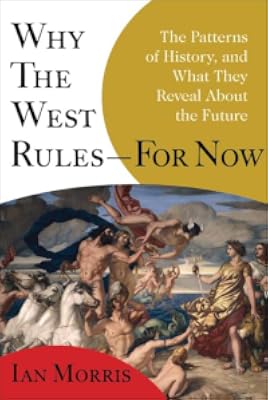
Along the lines of Jared Diamond's GUNS, GERMS, & STEEL, this is a big-picture book with a big-picture answer to the basic question: Why did and does Europe rock so much?
In one of the final sections he answers Diamond directly: GG&S is a great theory to explain why Europe was so far ahead circa 1000 AD. But then, why England? Why the Netherlands? TWPITW purports to be The Explanation for why Europe continued to rock so much.
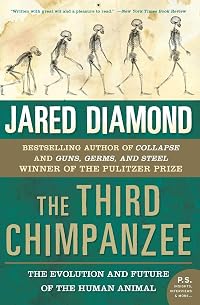
To recap Diamond (and GG&S has always been one of my all-time favorites): it's agriculture. Eurasia got all the good crops and domesticatable mammals. If you're stuck eating cassava with nothing to pull a plow, why invent the wheel?
And to summarize TWPITW's 489 pages of content (there's a couple hundred more pages of show more appendix & index)... it's what the Catholic Church (back then simply the Church) did to the family.
I should probably back up: WEIRD people are Western, Educated, Industrialized, Rich, and Democratic. (Just double-checked myself - yup, 5 out of 5.) And we got this way because our psychology was altered when our vast kinship networks were destroyed by what he calls the Church's MFP - no, not Maximum Fluoride Protection, but Marriage & Family Program. The Church's rules said: no more marrying your cousin. No more staying within the husband's or wife's parents' house after marriage. No more arranged marriage. No more polygyny, "or even moderate bigamy" as THE KING AND I song goes. No more marrying your former in-laws.
And this was all a tremendous shock, and a heck of a lot of work to get people to go along with - it took centuries for it all to really gain a foothold. And that's because being proto-WEIRD is truly weird - we, meaning humans, have always lived within vast kinship networks. Marrying cousins or in-laws kept everything in the clan. Polygyny and arranged marriage cemented patriarchal power. Family/clan/tribe has always meant everything it was to be human. Now, disassociated from that source of meaning, protection, and power, individuals had to look elsewhere - to strangers, voluntary organizations, the Church (how convenient) - and within. This made us more trusting of strangers, and more literally self-centered, than we were when were all Family Guys.
It played a lot of other psychological tricks too. 400 pages worth. Yes, this was a difficult book to read, physically - every night was a weight-lifting exercise. In the end I do like the theory; definitely a fascinating way to look at things. But I guess I have two faults to find.
a) It wasn't the book I thought I was going to read. It starts out with in-depth looks at non-WEIRD societies, and contrasts with our own - but I thought it was going to be mostly, or more of, that. It's actually a lot more rah-rah cheering for how great us WEIRD societies are, and less about how, well, weird we are.
b) Why exactly did the Church do all this, fight for centuries to come up with weird new rules for who and how and how many to marry? The reasons were "many and varied." I kid you not. That's the extent of the explanation.
So just keep in mind, next time you're reading a blithe statement about human psychology - it may very well apply only to WEIRD human psychology. Things we think of as rational "givens" aren't givens. The ideals of democracy, human rights, etc. - these are not self-evident, with apologies to Thomas Jefferson. They are ideas cooked up by WEIRD minds.
Great food for thought - WEIRD thought. show less
In one of the final sections he answers Diamond directly: GG&S is a great theory to explain why Europe was so far ahead circa 1000 AD. But then, why England? Why the Netherlands? TWPITW purports to be The Explanation for why Europe continued to rock so much.
To recap Diamond (and GG&S has always been one of my all-time favorites): it's agriculture. Eurasia got all the good crops and domesticatable mammals. If you're stuck eating cassava with nothing to pull a plow, why invent the wheel?
And to summarize TWPITW's 489 pages of content (there's a couple hundred more pages of show more appendix & index)... it's what the Catholic Church (back then simply the Church) did to the family.
I should probably back up: WEIRD people are Western, Educated, Industrialized, Rich, and Democratic. (Just double-checked myself - yup, 5 out of 5.) And we got this way because our psychology was altered when our vast kinship networks were destroyed by what he calls the Church's MFP - no, not Maximum Fluoride Protection, but Marriage & Family Program. The Church's rules said: no more marrying your cousin. No more staying within the husband's or wife's parents' house after marriage. No more arranged marriage. No more polygyny, "or even moderate bigamy" as THE KING AND I song goes. No more marrying your former in-laws.
And this was all a tremendous shock, and a heck of a lot of work to get people to go along with - it took centuries for it all to really gain a foothold. And that's because being proto-WEIRD is truly weird - we, meaning humans, have always lived within vast kinship networks. Marrying cousins or in-laws kept everything in the clan. Polygyny and arranged marriage cemented patriarchal power. Family/clan/tribe has always meant everything it was to be human. Now, disassociated from that source of meaning, protection, and power, individuals had to look elsewhere - to strangers, voluntary organizations, the Church (how convenient) - and within. This made us more trusting of strangers, and more literally self-centered, than we were when were all Family Guys.
It played a lot of other psychological tricks too. 400 pages worth. Yes, this was a difficult book to read, physically - every night was a weight-lifting exercise. In the end I do like the theory; definitely a fascinating way to look at things. But I guess I have two faults to find.
a) It wasn't the book I thought I was going to read. It starts out with in-depth looks at non-WEIRD societies, and contrasts with our own - but I thought it was going to be mostly, or more of, that. It's actually a lot more rah-rah cheering for how great us WEIRD societies are, and less about how, well, weird we are.
b) Why exactly did the Church do all this, fight for centuries to come up with weird new rules for who and how and how many to marry? The reasons were "many and varied." I kid you not. That's the extent of the explanation.
So just keep in mind, next time you're reading a blithe statement about human psychology - it may very well apply only to WEIRD human psychology. Things we think of as rational "givens" aren't givens. The ideals of democracy, human rights, etc. - these are not self-evident, with apologies to Thomas Jefferson. They are ideas cooked up by WEIRD minds.
Great food for thought - WEIRD thought. show less
WEIRD stands for Western, Educated, Industrialized, Rich, and Democratic. This is a long and fascinating book with tons of references to interesting research that I could only gesture vaguely at even in a long review. Basically, Henrich argues that a society’s organization can change individual brains, which then can change the society further. These changes mean that memory works differently for different groups, as does visual processing and facial recognition, and he argues that they can also explain big differences in moral reasoning, such as the relative importance of guilt v. shame in controlling behavior. Westerners are more likely than non-Westerners to participate in punishing someone who has broken norms but not personally show more harmed them, and less likely to seek revenge against someone who has personally harmed them. Also, fundamental attribution error—attributing behavior to character rather than circumstance—turns out to be fundamental only to the WEIRD; non-Westerners are more likely to explain behavior by pointing to an individual’s circumstances. We are more subject to the endowment effect (valuing things more because we deem them ours), we value having choices more, and we overestimate our own talents more.
Why? The book argues that the West, for whatever reason (Henrich doesn’t speculate), largely adopted a particular kind of monotheism that promoted monogamy; discouraged concentration of power in kin groups because they stood as counterweights to Church power; enforced monogamy so that powerful men couldn’t have multiple wives; and ultimately promoted individualism, which led to things like literacy and non-kin affinity networks such as coreligionists and political parties. “How many people do you personally know who married their cousins? If you know none, that’s WEIRD, since 1 in 10 marriages around the world today is to a cousin or other relative.” (A country’s rate of cousin marriage turns out to correlate with a lot of these other things, like generalized trust, rate of blood donations, and even how many parking tickets a UN delegation gets.) Less kin-based societies developed other mechanisms of social control, focusing on individual behavior and punishing defectors without getting into revenge cycles.
As a result, Westerners became psychologically distinct from other groups. Among other things, we are more likely than non-Westerners to be trusting of strangers, to favor testifying truthfully that our friends committed a crime over lying to protect them, and otherwise to favor large structures over close kin groups. There are similar differences within Western society, so areas that became Protestant early on are even more WEIRD in these ways than areas that were or stayed Catholic, and so too with immigrants’ children; “people in North Dakota and New Hampshire are the most trusting, with around 60 percent of people generally trusting others; meanwhile, at the other end, only about 20 percent of people are generally trusting in Alabama and Mississippi.” This dynamic isn’t unique to Christianity; Heinrich argues that similar patterns can be discerned in groups from India and China which developed in more or less kin-oriented directions.
There is a lot of fascinating stuff, including the effect of individualism on walking speed in crowded cities. What there is not is much discussion of the meaning of percentages and proportions. So, Westerners are a lot more likely than non-Westerners to trust strangers … but that means that there are a lot of untrusting Westerners and trusting non-Westerners. (Likewise: Peer pressure is powerful, and studies show that when an experimenter’s confederates give obviously wrong answers to objective questions, a number of people often go with the majority despite being unhappy and uncomfortable doing so—from 20% in highly individualistic societies to 40-50% in highly communal societies—which is a big change, but not a complete one.) This complexity also extends to the race/class/gender differences washed away in much of this discussion—Western trust is often limited to those who match the right profile, which is a very different thing from generalized trust although also a very different thing from “I only trust my close kin.” Because Henrich is interested in dynamic processes, he argues that there is an inherent pressure to trust (etc.) larger and larger groups once the process of leaving kin behind begins, so that’s how you get people who agree that all human people have valid moral claims on one another. But how we get there, and how far we are from there, matters, especially given that it seems that trust is declining in the West and that many people are willing to prey economically and politically on the (often racialized) trust that exists.
I’m not even getting into his discussions of the varying effects of testosterone depending on society/the presence of polygamy; the variances in behavior of WEIRD and non-WEIRD people competing within a group versus competing among groups; the psychological effects of war (which 18th century Europe experienced pretty constantly). He is not a genetic determinist. For creativity, for example, he argues that exposure to different sources of knowledge drives innovation far more than anything we could call “natural” intelligence. And in the key centuries, he argues, European cities were pretty much deathtraps requiring a constant inflow of rural migrants, meaning that natural selection is not a good explanation for WEIRD psychology. show less
Why? The book argues that the West, for whatever reason (Henrich doesn’t speculate), largely adopted a particular kind of monotheism that promoted monogamy; discouraged concentration of power in kin groups because they stood as counterweights to Church power; enforced monogamy so that powerful men couldn’t have multiple wives; and ultimately promoted individualism, which led to things like literacy and non-kin affinity networks such as coreligionists and political parties. “How many people do you personally know who married their cousins? If you know none, that’s WEIRD, since 1 in 10 marriages around the world today is to a cousin or other relative.” (A country’s rate of cousin marriage turns out to correlate with a lot of these other things, like generalized trust, rate of blood donations, and even how many parking tickets a UN delegation gets.) Less kin-based societies developed other mechanisms of social control, focusing on individual behavior and punishing defectors without getting into revenge cycles.
As a result, Westerners became psychologically distinct from other groups. Among other things, we are more likely than non-Westerners to be trusting of strangers, to favor testifying truthfully that our friends committed a crime over lying to protect them, and otherwise to favor large structures over close kin groups. There are similar differences within Western society, so areas that became Protestant early on are even more WEIRD in these ways than areas that were or stayed Catholic, and so too with immigrants’ children; “people in North Dakota and New Hampshire are the most trusting, with around 60 percent of people generally trusting others; meanwhile, at the other end, only about 20 percent of people are generally trusting in Alabama and Mississippi.” This dynamic isn’t unique to Christianity; Heinrich argues that similar patterns can be discerned in groups from India and China which developed in more or less kin-oriented directions.
There is a lot of fascinating stuff, including the effect of individualism on walking speed in crowded cities. What there is not is much discussion of the meaning of percentages and proportions. So, Westerners are a lot more likely than non-Westerners to trust strangers … but that means that there are a lot of untrusting Westerners and trusting non-Westerners. (Likewise: Peer pressure is powerful, and studies show that when an experimenter’s confederates give obviously wrong answers to objective questions, a number of people often go with the majority despite being unhappy and uncomfortable doing so—from 20% in highly individualistic societies to 40-50% in highly communal societies—which is a big change, but not a complete one.) This complexity also extends to the race/class/gender differences washed away in much of this discussion—Western trust is often limited to those who match the right profile, which is a very different thing from generalized trust although also a very different thing from “I only trust my close kin.” Because Henrich is interested in dynamic processes, he argues that there is an inherent pressure to trust (etc.) larger and larger groups once the process of leaving kin behind begins, so that’s how you get people who agree that all human people have valid moral claims on one another. But how we get there, and how far we are from there, matters, especially given that it seems that trust is declining in the West and that many people are willing to prey economically and politically on the (often racialized) trust that exists.
I’m not even getting into his discussions of the varying effects of testosterone depending on society/the presence of polygamy; the variances in behavior of WEIRD and non-WEIRD people competing within a group versus competing among groups; the psychological effects of war (which 18th century Europe experienced pretty constantly). He is not a genetic determinist. For creativity, for example, he argues that exposure to different sources of knowledge drives innovation far more than anything we could call “natural” intelligence. And in the key centuries, he argues, European cities were pretty much deathtraps requiring a constant inflow of rural migrants, meaning that natural selection is not a good explanation for WEIRD psychology. show less
In The WEIRDest People in the World Joseph Henrich discusses how WEIRD nations — countries that are Western, Educated, Industrialized, Rich, Democratic — are psychologically, well, weird. Various propensities that are assumed to be just human nature in the global west are, in fact, oddities globally.
People in WEIRD countries are more focused on individualism and personal motivation. They have higher levels of impersonal prosociality; they are more trusting of people and institutions they don't know than most of the world. They lean toward being more analytical. They focus more on the foreground and demonstrate less holistic thinking.
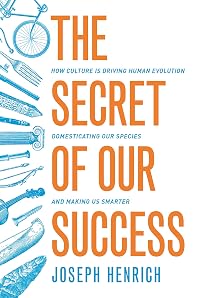
How did that happen? After establishing that WEIRD societies are, in fact, globally atypical, show more Henrich spends a while recapping The Secret of Our Success, his earlier book about cultural evolution. The brief recap is that our genes, psychology, and societies have all coevolved with culture. Culture changes us even as we change culture.
The story of WEIRD psychology kicks off with the early Christian Church, continuing with its Western branch and then Protestantism. Before these institutions, Western Europe looked like most of the rest of the world. As far as we can tell, society was primarily structured around kinship groups. Kinship based societies stressed the importance of understanding and conforming to the social and normative structure imposed by kin networks. These kin networks are relatively static and involuntary: people don't get to choose their kin network and don't have much control over their place in it. Note that kinship based societies are not all small scale. Large societies like those in the Middle East, Mediterranean, and Asia utilized structures which extended kinship-like social structures to larger and larger groups of people. For example, religion was a key force which bonded unrelated people into "kin" groups.
In WEIRD societies, we see that family and kinship structures are much weaker. We see these changes starting around 1000 CE as people in the areas that would become WEIRD started to marry relatives less, become more monogamous, and focused on individual ownership of property. One of the key claims of the book is that weakening kinship ties are directly tied to the emergence of WEIRD psychology. Because people cannot rely on kinship networks to tell if others are trustworthy and for social support, they had to rely on other means of trust building and support. This led to the emergence of voluntary associations such as guilds, monasteries, universities, and eventually cities. These institutions reinforced WEIRD psychological ideas such as individualism and analytical thinking. Weak kinship networks and the institutions which evolved to replace them helped to drive psychological tendencies.
Why were kinship ties weaker in Western Europe? The other big claim of the book is that the cause was the marriage and family policies of the early Christian Church and continued with its Western branch. The Church instituted a number of policies which had the effect of weakening kinship networks. One of the biggest was preventing marriage between cousins; not just first cousins but also cousins to other degrees (that varied over time and by bishopric). When people could not marry cousins, kinship networks could not maintain the density they had in the past. The Church also reduced practices which increased the number of children a man would have by requiring monogamy and putting restrictions on divorce and remarriage.
A complementary set of changes introduced by the Church was the introduction of personal inheritance. Traditionally, property has belonged to kinship groups, not individuals. Thus, individuals did not have the ability to dispose of property as they would. Individual property rights weakened kin groups by allowing property to be distributed in ways that were not always advantageous to the kin group (e.g., by giving it to the Church upon death).
Over time, these effects compounded leading to effects like couples moving away from their families and generally greater geographic mobility. It also led people to seek out alternate networks of trust and support — the voluntary associations described above. These changes also affected societal violence, the structure of markets, innovation, and more. A greater focus on industriousness and analytical thinking along with a more diverse mixture of minds in cities led to innovation which eventually sparked the Industrial Revolution.
Not surprisingly, these changes were not simple cause and effect: as psychologies got more WEIRD, people started to change institutions in ways that reflected an increasing focus on individualism. We see this in early precursors of democracy, such as voting on leadership of voluntary associations. We also see it in the rise of Protestantism which focused on the individual's relationship with God.
Why does this matter? Is this just a curiosity satisfying tale of how we got here from there? There are a couple of important consequences of this perspective of the cultural evolution of WEIRD psychology.
First, it forces those of us in WEIRD societies to acknowledge that we are the weird ones. Those of us who are individualistic, socially mobile, disconnected from our families, analytically minded, more trusting of strangers, we are the odd ones out on a global scale. Many of the things we take for granted — such as the idea that society should hold kin and strangers to the same moral standard or that strangers are useful trading partners — are not things that can generally be assumed about human societies.
The other consequence is that this perspective should make us more humble. The evolution of Western society has brought about good things. Innovation which has reduced hunger and disease. We now have forms of governance which, despite their shortcomings, are still much more participative and equitable than in the past. However, we need to acknowledge that while some of these innovations can be transmitted fairly easily, many build upon a psychological substructure. Psychology takes generations to change, and when Western institutions or technologies are imposed on others rather than letting others adopt and adapt them, we often see failure. One prominent example of this is the repeated failure of attempts to impose democracy in regions without properly accounting for the influence of tribal ties.
Henrich advances a multi-faced thesis. It is almost certainly contains inaccurate details. However, he weaves together a broad enough set of evidence that he makes a convincing case of the general thesis that the influence of the Church disrupted kinship networks in ways that affected psychology and influenced the shape of society. show less
People in WEIRD countries are more focused on individualism and personal motivation. They have higher levels of impersonal prosociality; they are more trusting of people and institutions they don't know than most of the world. They lean toward being more analytical. They focus more on the foreground and demonstrate less holistic thinking.
How did that happen? After establishing that WEIRD societies are, in fact, globally atypical, show more Henrich spends a while recapping The Secret of Our Success, his earlier book about cultural evolution. The brief recap is that our genes, psychology, and societies have all coevolved with culture. Culture changes us even as we change culture.
The story of WEIRD psychology kicks off with the early Christian Church, continuing with its Western branch and then Protestantism. Before these institutions, Western Europe looked like most of the rest of the world. As far as we can tell, society was primarily structured around kinship groups. Kinship based societies stressed the importance of understanding and conforming to the social and normative structure imposed by kin networks. These kin networks are relatively static and involuntary: people don't get to choose their kin network and don't have much control over their place in it. Note that kinship based societies are not all small scale. Large societies like those in the Middle East, Mediterranean, and Asia utilized structures which extended kinship-like social structures to larger and larger groups of people. For example, religion was a key force which bonded unrelated people into "kin" groups.
In WEIRD societies, we see that family and kinship structures are much weaker. We see these changes starting around 1000 CE as people in the areas that would become WEIRD started to marry relatives less, become more monogamous, and focused on individual ownership of property. One of the key claims of the book is that weakening kinship ties are directly tied to the emergence of WEIRD psychology. Because people cannot rely on kinship networks to tell if others are trustworthy and for social support, they had to rely on other means of trust building and support. This led to the emergence of voluntary associations such as guilds, monasteries, universities, and eventually cities. These institutions reinforced WEIRD psychological ideas such as individualism and analytical thinking. Weak kinship networks and the institutions which evolved to replace them helped to drive psychological tendencies.
Why were kinship ties weaker in Western Europe? The other big claim of the book is that the cause was the marriage and family policies of the early Christian Church and continued with its Western branch. The Church instituted a number of policies which had the effect of weakening kinship networks. One of the biggest was preventing marriage between cousins; not just first cousins but also cousins to other degrees (that varied over time and by bishopric). When people could not marry cousins, kinship networks could not maintain the density they had in the past. The Church also reduced practices which increased the number of children a man would have by requiring monogamy and putting restrictions on divorce and remarriage.
A complementary set of changes introduced by the Church was the introduction of personal inheritance. Traditionally, property has belonged to kinship groups, not individuals. Thus, individuals did not have the ability to dispose of property as they would. Individual property rights weakened kin groups by allowing property to be distributed in ways that were not always advantageous to the kin group (e.g., by giving it to the Church upon death).
Over time, these effects compounded leading to effects like couples moving away from their families and generally greater geographic mobility. It also led people to seek out alternate networks of trust and support — the voluntary associations described above. These changes also affected societal violence, the structure of markets, innovation, and more. A greater focus on industriousness and analytical thinking along with a more diverse mixture of minds in cities led to innovation which eventually sparked the Industrial Revolution.
Not surprisingly, these changes were not simple cause and effect: as psychologies got more WEIRD, people started to change institutions in ways that reflected an increasing focus on individualism. We see this in early precursors of democracy, such as voting on leadership of voluntary associations. We also see it in the rise of Protestantism which focused on the individual's relationship with God.
Why does this matter? Is this just a curiosity satisfying tale of how we got here from there? There are a couple of important consequences of this perspective of the cultural evolution of WEIRD psychology.
First, it forces those of us in WEIRD societies to acknowledge that we are the weird ones. Those of us who are individualistic, socially mobile, disconnected from our families, analytically minded, more trusting of strangers, we are the odd ones out on a global scale. Many of the things we take for granted — such as the idea that society should hold kin and strangers to the same moral standard or that strangers are useful trading partners — are not things that can generally be assumed about human societies.
The other consequence is that this perspective should make us more humble. The evolution of Western society has brought about good things. Innovation which has reduced hunger and disease. We now have forms of governance which, despite their shortcomings, are still much more participative and equitable than in the past. However, we need to acknowledge that while some of these innovations can be transmitted fairly easily, many build upon a psychological substructure. Psychology takes generations to change, and when Western institutions or technologies are imposed on others rather than letting others adopt and adapt them, we often see failure. One prominent example of this is the repeated failure of attempts to impose democracy in regions without properly accounting for the influence of tribal ties.
Henrich advances a multi-faced thesis. It is almost certainly contains inaccurate details. However, he weaves together a broad enough set of evidence that he makes a convincing case of the general thesis that the influence of the Church disrupted kinship networks in ways that affected psychology and influenced the shape of society. show less
Fantastic powerful ideas in this book but it’s a real slog. However, this brought so many things into focus that I would thoroughly recommend it.
Henrich shows that western society and thinking is a real outlier in human history and even in the world today. For thousands of years in prehistory and then in the last few millennia as tribes have grown into clans and then into pronto states, the most important way of coordinating and cooperating to act together was through kin based ties. So your key loyalty was to your extended family and your measure of success was your family’s success.
He really emphasises that we are a unique because of the importance of our cultural learning. We are wired to give more importance to what people show more close to us pass on than our own personal experiences. This we are primed for cultural competition between societal units, so that the tribe with the most adaptive culture grows and prospers.
Another key element in his story is that the Catholic Church in the middle ages accidentally hit on a strategy to disallow close kin marriage and marriage to multiple wives. The church benefited because dynasties that did not have a successor were not allowed to pass on the inheritance through cousin marriage for the dynasty to keep the fortune in the family, so the inheritance passed to the church. This had the effect of dismantling the kin based society in Europe in the Middle Ages.
He also talks about how literacy re wires our brains (when you see writing, reading is involuntary, you can’t not read). There is a lot of repetition and scholarly references in this book which make it hard going, but the ideas are absolute gold. Recommended. show less
Henrich shows that western society and thinking is a real outlier in human history and even in the world today. For thousands of years in prehistory and then in the last few millennia as tribes have grown into clans and then into pronto states, the most important way of coordinating and cooperating to act together was through kin based ties. So your key loyalty was to your extended family and your measure of success was your family’s success.
He really emphasises that we are a unique because of the importance of our cultural learning. We are wired to give more importance to what people show more close to us pass on than our own personal experiences. This we are primed for cultural competition between societal units, so that the tribe with the most adaptive culture grows and prospers.
Another key element in his story is that the Catholic Church in the middle ages accidentally hit on a strategy to disallow close kin marriage and marriage to multiple wives. The church benefited because dynasties that did not have a successor were not allowed to pass on the inheritance through cousin marriage for the dynasty to keep the fortune in the family, so the inheritance passed to the church. This had the effect of dismantling the kin based society in Europe in the Middle Ages.
He also talks about how literacy re wires our brains (when you see writing, reading is involuntary, you can’t not read). There is a lot of repetition and scholarly references in this book which make it hard going, but the ideas are absolute gold. Recommended. show less
The inspiration for this book is that 70% of studies on the subject of “universal human nature” use western undergraduate students as their sample. The reason for this is self-evident (convenience), yet it’s implausible that western undergraduates are representative of the whole of humanity. When the author looks at some of the few studies (and conducts several of his own) including other populations, many of these “universal” features become far more variable. Of particular attention is the degree of willingness to trust strangers (i.e. impersonal relationships).
He traces this divergence back a thousand years, to the imposition of Catholic family structure in Europe – something that did not occur elsewhere. This transformed show more the way that people viewed each other (especially viz in-groups and out-groups) and led to association being voluntary rather than innate. The result is that westerners’ worldview is more individual than non-westerners, who tend to be more group-oriented. The same dynamics exist in other contexts; for example, he cites the divergent social dynamics in rice and wheat farmers in China – or, more precisely, in their descendants. While not at all innate, these are quite culturally durable.
I liked that he was able to describe these concepts without an air of superiority; i.e. there was no prescription about how one or the other must “fix” their culture to “overcome” limitations, or similar that often accompanies such studies. On the other hand, I think he glosses over the role that many “pre-assigned voluntary associations” (my term) play in contemporary identity, i.e. nationalism – recognizing that, although these can be changed, such a change is difficult and rare. show less
He traces this divergence back a thousand years, to the imposition of Catholic family structure in Europe – something that did not occur elsewhere. This transformed show more the way that people viewed each other (especially viz in-groups and out-groups) and led to association being voluntary rather than innate. The result is that westerners’ worldview is more individual than non-westerners, who tend to be more group-oriented. The same dynamics exist in other contexts; for example, he cites the divergent social dynamics in rice and wheat farmers in China – or, more precisely, in their descendants. While not at all innate, these are quite culturally durable.
I liked that he was able to describe these concepts without an air of superiority; i.e. there was no prescription about how one or the other must “fix” their culture to “overcome” limitations, or similar that often accompanies such studies. On the other hand, I think he glosses over the role that many “pre-assigned voluntary associations” (my term) play in contemporary identity, i.e. nationalism – recognizing that, although these can be changed, such a change is difficult and rare. show less
I first came across Jack Goody's thesis that the medieval European Catholic Church's family policies (opposing cousin-marriage, marriage without consent of the partners, remarriage to in-laws, adoption, levirate marriage, and polygyny, and promoting the stigma of illegitimacy) killed off tribalism and inaugurated individualism in Francis Fukuyama's excellent "Origins of Political Order". Fukuyama essentially accepted Goody's theory without criticism as an essential component of Western European uniqueness. Goody in his 1983 "Development of the Family and Marriage in Europe" didn't know why the Church promoted these policies, and nor does Joseph Henrich know today. Goody suggested, though he admitted he lacked evidence, that the Church show more deliberately pursued policies that would make it harder to marry and produce heirs, so that more land and wealth would end up donated to the Church. Henrich simply says the reasons are complicated, and leaves it at that. It's not very satisfying to posit that a policy caused the rise of the modern, liberal, capitalist, individualist world, without being able to explain why the policy was developed, but we apparently simple don't know. It's also unsatisfying not to have actual data on historical rates of cousin marriage, etc., to show when they actually declined, although Henrich alludes to some clever work on historical relationship terminology. Perhaps historical genetics will tell us. The main thing Henrich adds to the argument is a heap of inverse correlations between tribalist family practices and indices of psychological and social individualism. I do believe something went on in Western Europe to make it "WEIRD" early on. England, especially, had developed an unusual level of individual rights and market commerce by early modern times, and was seemingly bereft of the tribalism of the extended family, outside royal and noble elites. Henrich has very gamely tried to apply the cultural evolution model he developed in his superb "Secret of our Success" to explain why this happened. I'm just not convinced yet that it was a Church policy of uncertain reach and impact that did it, rather than some lucky mix of a balance of power between king and nobility, a royal legal system that protected individual rights, ease and prevalence of trade, and the economic consequences of the Black Death. show less
This is a good book, but not a perfect one. Joseph Henrich has quoted extensive research, and some of the forces that changed the West surprised me.
I agree with much of what he wrote - the move away from a kinshp-based society to one based on individuality helped them move towards economic and innovative strengths.
Apart from the influence of the Church, he spoke of the rise of towns, town charters, and universities. This has all been significant.
However, I disagree with some of his conclusions. For instance, he says commerce makes people fair in their dealings, and trustworthy. This, therefore, spills over into greater compliance in daily life. He quotes examples of diplomats from certain third-world countries who are more liable to show more avoid paying parking fees than those from "WEIRD" societies. Also, the fact that Western people walk faster than those from countries like Indonesia makes them more purpose-driven.
He is correct - I believe - in most of what he has written. However, I do not think he has completed the picture.
1. The societal changes did drive the Western countries to be more competitive, and innovative. However, this does not mean they are more honest. Joseph Henrich brushed off colonialism and exploitation of the environment. He did not even mention slavery. However, the history of the West indicates that, without these three 'evils', the West would not have risen. Commerce did not make them more honest!
2. A Western person lives in colder climate zones. It is possible to walk faster than a person living in a hot, humid country like Indonesia. In my own experience, I walk faster when I am in Europe than when I am in Delhi's summer!
These are significant weaknesses and detract from the value of the book. However, there are some excellent lessons to be gleaned from the book. These lessons are what make the book worth reading. show less
I agree with much of what he wrote - the move away from a kinshp-based society to one based on individuality helped them move towards economic and innovative strengths.
Apart from the influence of the Church, he spoke of the rise of towns, town charters, and universities. This has all been significant.
However, I disagree with some of his conclusions. For instance, he says commerce makes people fair in their dealings, and trustworthy. This, therefore, spills over into greater compliance in daily life. He quotes examples of diplomats from certain third-world countries who are more liable to show more avoid paying parking fees than those from "WEIRD" societies. Also, the fact that Western people walk faster than those from countries like Indonesia makes them more purpose-driven.
He is correct - I believe - in most of what he has written. However, I do not think he has completed the picture.
1. The societal changes did drive the Western countries to be more competitive, and innovative. However, this does not mean they are more honest. Joseph Henrich brushed off colonialism and exploitation of the environment. He did not even mention slavery. However, the history of the West indicates that, without these three 'evils', the West would not have risen. Commerce did not make them more honest!
2. A Western person lives in colder climate zones. It is possible to walk faster than a person living in a hot, humid country like Indonesia. In my own experience, I walk faster when I am in Europe than when I am in Delhi's summer!
These are significant weaknesses and detract from the value of the book. However, there are some excellent lessons to be gleaned from the book. These lessons are what make the book worth reading. show less
Members
- Recently Added By
Lists

Top Five Books of 2020
982 works; 350 members

Library Non-Fiction
164 works; 1 member
Author Information
6 Works 1,014 Members
Some Editions
Awards and Honors
Common Knowledge
- Original publication date
- 2020
- Important places
- Europe
- First words
- Your brain has been altered, neurologically rewired as it acquired a skill that your society greatly values.
- Quotations
- Your brain has been altered, neurologically rewired as it acquired a skill that your society greatly values. Until recently, this skill was of little or no use and most people in most societies never acquired it. In developin... (show all)g this ability, you have:
1. Specialized an area of your brain's left ventral occipito-temporal region, which lies between your language, object, and face processing centers.
2. Thickened your corpus callosum, which is the information highway that connects the left and right hemispheres of your brain.
3. Altered the part of your prefontal cortex that is involved in language production (Broca's area) as well as other brain areas engaged in a variety of neurological tasks, including both speech processing and thinking about others' minds.
4. Improved your verbal memory and broadened your brain's activation when processing speech.
5. Shifted your facial recognition process to the right hemisphere. Normal humans (not you) process faces almost equally on the left and right sides of their brains, but those with your peculiar skill are biased toward the right hemisphere.
6. Diminished your ability to identify faces, probably because while jury-rigging your left ventral occipito-temporal region, you impinged on an area that usually specializes in facial recognition.
7. Reduced your default tendency toward holistic visual processing in favor of more analytical processing You now rely more on breaking scenes and objects down into their component parts and less on broad configurations and gestalt patterns.
What is this mental ability? What capacity could have renovated your brain, endowing you with new, specialized skills as well as inducing specific cognitive defects?
The exotic mental ability is reading. You are likely highly literate. - Last words
- (Click to show. Warning: May contain spoilers.)We'll think, feel, perceive, and moralize differently in the future, and we'll struggle to comprehend the mentality of those who lived back at the dawn of the third millennium.
Classifications
Statistics
- Members
- 663
- Popularity
- 43,451
- Reviews
- 16
- Rating
- (4.02)
- Languages
- English, German, Italian, Spanish
- Media
- Paper, Audiobook, Ebook
- ISBNs
- 14
- ASINs
- 6