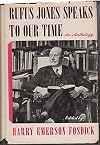
Rufus Jones speaks to our time, an anthology
by Rufus Matthew Jones
On This Page
Tags
Recommendations














Member Reviews
Rufus Jones (1863-1948) was an educator, a philosopher, a fine writer, and "lighted many candles" as one of his students once said. This collection of short pieces and extracts from larger works is arranged as answers to common questions among spiritual seekers: Where Is God? How Does God Reveal Himself? What Is Man? How Explain Conscience? What Is Vital Religion? Is Science Enough? What Is True Mysticism? What Does Prayer Mean? What Is the Matter with the Church? What Is the Christian Way of Life? How Deal with Dark Days? Who Are the Quakers? Why Believe in Immortality?
My first acquaintance with Jones's writing was his Pathways to the Reality of God (1931), which I found on a library shelf in 2008. When I came across the section where show more he chastised any religion that demands that you ignore good science, I was prepared to open my mind to anything else he had to say. At the time, I was trying to make sense of my own mystical experiences. Well known as one of American's most famous mystics, in one volume of his autobiography series, he stated, "The essential characteristic of [mysticism] is the attainment of a personal conviction by an individual that the human spirit and the divine Spirit have met, have found each other, and are in mutual and reciprocal correspondence as spirit with Spirit."
I aspire to read everything he wrote, from the first in 1899 to the last in 1948. (The first three are available online in the "Quaker Digital Collection.") Many of his books are currently available as paperback reprints.
While this collection is a nice "taster" of Jones's writing, I far prefer his full-length books for development of his ideas that are good fodder for the ruminations of the spiritual seeker. show less
My first acquaintance with Jones's writing was his Pathways to the Reality of God (1931), which I found on a library shelf in 2008. When I came across the section where show more he chastised any religion that demands that you ignore good science, I was prepared to open my mind to anything else he had to say. At the time, I was trying to make sense of my own mystical experiences. Well known as one of American's most famous mystics, in one volume of his autobiography series, he stated, "The essential characteristic of [mysticism] is the attainment of a personal conviction by an individual that the human spirit and the divine Spirit have met, have found each other, and are in mutual and reciprocal correspondence as spirit with Spirit."
I aspire to read everything he wrote, from the first in 1899 to the last in 1948. (The first three are available online in the "Quaker Digital Collection.") Many of his books are currently available as paperback reprints.
While this collection is a nice "taster" of Jones's writing, I far prefer his full-length books for development of his ideas that are good fodder for the ruminations of the spiritual seeker. show less
C. 1, 2
An anthology of shorter works by Rufus Jones (accompanied by a compendium of books written by, or edited by Jones) compiled by Harry Emerson Fosdick on the following topics; I. Where Is God?
II. How Does God Reveal Himself?
III. What Is Man?
IV. How Explain Conscience?
V. What is Vital Religion?
VI. Is Science Enough?
VII. What is True Mysticism?
VIII. What Does Prayer Mean?
IX. What is the Matter with the Church?
X. What is the Christian Way of Life?
XI. How Deal with Dark Days?
XII. Who are the Quakers?
XIII. Why Believe in Immortality?
II. How Does God Reveal Himself?
III. What Is Man?
IV. How Explain Conscience?
V. What is Vital Religion?
VI. Is Science Enough?
VII. What is True Mysticism?
VIII. What Does Prayer Mean?
IX. What is the Matter with the Church?
X. What is the Christian Way of Life?
XI. How Deal with Dark Days?
XII. Who are the Quakers?
XIII. Why Believe in Immortality?
Goodwill
Rufus Jones studied at Haverford, Heidelberg, Oxford and Harvard, later becoming a professor of philosophy and teaching for many years at Haverford. He was and perhaps continues to be "the leading historian of mysticism." He authored more than fifty books and contributed mightily to the world's philosophical thought. The editor has listed his selections by topic:
I. Where Is God?
II. How Does God Reveal Himself?
III. What Is Man?
IV. How Explain Conscience?
V. What is Vital Religion?
VI. Is Science Enough?
VII. What is True Mysticism?
VIII. What Does Prayer Mean?
IX. What is the Matter with the Church?
X. What is the Christian Way of Life?
XI. How Deal with Dark Days?
XII. Who are the Quakers?
XIII. Why Believe in Immortality?
I. Where Is God?
II. How Does God Reveal Himself?
III. What Is Man?
IV. How Explain Conscience?
V. What is Vital Religion?
VI. Is Science Enough?
VII. What is True Mysticism?
VIII. What Does Prayer Mean?
IX. What is the Matter with the Church?
X. What is the Christian Way of Life?
XI. How Deal with Dark Days?
XII. Who are the Quakers?
XIII. Why Believe in Immortality?
Ratings
Members
- Recently Added By
Author Information

98+ Works 2,841 Members
All Editions
Awards and Honors
Distinctions
Classifications
- Genres
- Religion & Spirituality, Nonfiction, Biography & Memoir, Philosophy
- DDC/MDS
- 208.1 — Religion The Bible & Christianity Sources
- LCC
- BX7617 .J6 — Philosophy, Psychology and Religion Christian Denominations Christian Denominations Protestantism Other Protestant denominations Friends. Society of Friends. Quakers
Statistics
- Members
- 169
- Popularity
- 194,208
- Reviews
- 5
- Rating
- (3.33)
- Languages
- English
- Media
- Paper
- ISBNs
- 1
- ASINs
- 7