
Triton
by Samuel R. Delany
On This Page
Description
"In a story as exciting as any science fiction adventure written, Samuel R. Delany's 1976 SF novel, originally published as Triton, takes us on a tour of a utopian society at war with our own Earth. High wit in this future comedy of manners allows Delany to question gender roles and sexual expectations at a level that, 20 years after it was written, still make it a coruscating portrait of "the happily reasonable man," Bron Helstrom - an immigrant to the embattled world of Triton, whose show more troubles become more and more complex, till there is nothing left for him to do but become a woman. Against a background of high adventure, this minuet of a novel dances from the farthest limits of the solar system to Earth's own Outer Mongolia. Alternately funny and moving, it is a wide-ranging tale in which character after character turns out not to be what he - or she - seems."--Jacket. show lessTags
Recommendations














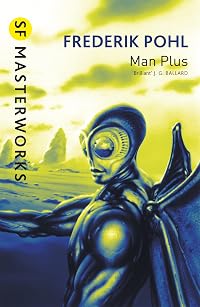


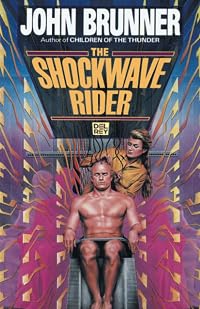





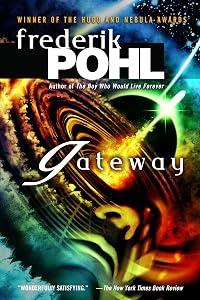
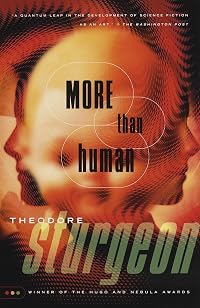
















Member Recommendations

by anonymous user
paradoxosalpha Odysseys of identity in post-scarcity societies
Member Reviews
I wanted to like this book, but rather than develop characters, a plot, or setting, Delany appears to throw a bunch of interesting ideas into a blender and set to frappe. Delany can do military sci-fi well, witness the ferocious creativity of Babel-17. He is a master of unconventional bodies and sexes, as in "Aye, and Gomorrah...". But in Triton, a fundamentally unlikeable main character wanders through an interplanetary war without witnessing any of the machinations of power. Triton society places an emphasis on the diversity of sex and gender, yet total gender and sexual reassignment is a state provided out-patient surgery that is apparently easier than deciding what to wear to dinner. While some of the fragments are interesting, the show more book itself is a uncomfortable lump of uncooked ideas, without the redeeming literary qualities of Delany's other works. show less
Samuel Delany's novels from the 1960s and 70s represent a "linguistic turn" in science fiction that engages a productive experimentalism. Triton has an unusual structure that makes it a little unsatisfying as a novel, but encourages the reader to break its ideas out of the frame of its narrative.
There are three main textual objects under Triton's cover. The first is the novel proper in seven chapters, presented as the story of Bron, a "metalogician" on Neptune's moon Triton, where he had immigrated from Mars. It focuses on Bron's encounters with a theatrical director named the Spike, which include a trip to Earth during a time of increasing political tension that has on one side "the worlds" (Earth and Mars) and on the other "the show more satellites" (the inhabited moons of the Solar System).
Appended to the novel are two more texts. Despite their position, these should not be viewed as supplementary, but as integral to Triton. In my case, at least, they were crucial to a deeper appreciation of the book. The first is a composite "From the Triton Journal: Work Notes and Omitted Texts." Both "Omitted Texts" which are set in the narrative frame of the novel, along with all three "Work Notes," are critical reflections on the nature and potentials of the science fiction genre. The longest of the "Work Notes" is in fact one of the best efforts at literary definition and general defense of sf I have ever encountered.
Appendix B is subtitled "Some Informal Remarks on the Modal Calculus, Part Two," where the novel was Part One. (Further parts can be found, I understand, in several volumes of Delany's Return to Nevèrÿon series). This appendix takes the form of a scholarly journal article regarding an abortive lecture series on metalogic, which was to have taken place at the same time as the events of the novel. The content and emphases of this article shed light on the aims of the novel, as for example when remarking, "the three threads from which the collection of notes are braided ... are the psychological, the logical, and the political" (357).
Triton has for its subtitle "An Ambiguous Heterotopia," by which Delany makes allusion both to the "Ambiguous Utopia" of Ursula LeGuin's novel The Dispossessed and to Michel Foucault's The Order of Things, which advanced the idea of the episteme as a basis for historical and cultural discontinuity. It was in this latter book that the word "heterotopia" was coined. Each of the book's seven chapters has an epigram taken from an academic work, such as Natural Symbols by Mary Douglas (anthropology), Word and Object by W.V.O. Quine (philosophy), and Laws of Form by G. Spencer Brown (mathematics).
The futurism of Triton is not so notable on the technological side, since it was written just before the advent of the microcomputer. It alludes to tapes and other unlikely information media, as well as positing centralized information processing for entire cities. On the social side, it is more interesting. The opening pages detail the peculiar institution of the "ego-booster booths," which rehabilitate invasive surveillance by means of appeals to narcissism. The setup strikes me as oddly prescient of the conditions of Facebook and similar "social media" in the early 21st century.
The society of the satellites is conspicuously sex-egalitarian, with "no majority configuration" (272) for sexual preference. Both corporeal sexuality and sexual preference can be retrofitted with a high degree of convenience. There are "communes," which are affectionally-bound domestic arrangements of wide variety, and there are "co-ops" which furnish dormitory options for individuals. The satellites (unlike the worlds) have a comprehensive social benefit to maintain baseline economic and medical welfare for individuals, and thus for the relatively small and dense communities of which they are composed.
All of this intriguing world-building undergirds a story that takes place at a very personal level in Bron's conversations and introspections. While starting out as a somewhat neutral character whom the reader is predisposed to trust (given that Delany has made him our guide to this fictional universe), Bron becomes rather unlikable over the middle phases of the novel. By the book's end, this central figure has changed substantially, and finally "turned to the other side" (329), but it is at best unclear whether these changes have significantly addressed the essential tensions and problems confronted during the course of the book.
In the notes of Appendix A, Delany remarks his own experience as a teenager of discovering in the late chapters of Starship Troopers that the protagonist Rico was black, and thus that Heinlein's posited future society had in fact "dissolved" the racial difficulties of our own (339). Delany provides the attentive reader of Triton with a similar dislocation from an implicit norm, when he tardily reveals that the language in which all of his characters have been communicating is in fact a "Magyar-Cantonese dialect, with ... foggy distinctions between the genitive and the associative, personally or politically enforced" (352). To be sure, the chapter "Idylls in Outer Mongolia" had caused me briefly to wonder whether the apparent lack of language barriers could be due to globally pervasive English. Still, given the conceptual importance of language to this book (and to other Delany novels of this period, as well as LeGuin's The Dispossessed), one feels obliged to wonder how "othered" this heterotopia is from our Anglophone episteme, to say nothing of our terrestrial one. show less
There are three main textual objects under Triton's cover. The first is the novel proper in seven chapters, presented as the story of Bron, a "metalogician" on Neptune's moon Triton, where he had immigrated from Mars. It focuses on Bron's encounters with a theatrical director named the Spike, which include a trip to Earth during a time of increasing political tension that has on one side "the worlds" (Earth and Mars) and on the other "the show more satellites" (the inhabited moons of the Solar System).
Appended to the novel are two more texts. Despite their position, these should not be viewed as supplementary, but as integral to Triton. In my case, at least, they were crucial to a deeper appreciation of the book. The first is a composite "From the Triton Journal: Work Notes and Omitted Texts." Both "Omitted Texts" which are set in the narrative frame of the novel, along with all three "Work Notes," are critical reflections on the nature and potentials of the science fiction genre. The longest of the "Work Notes" is in fact one of the best efforts at literary definition and general defense of sf I have ever encountered.
Appendix B is subtitled "Some Informal Remarks on the Modal Calculus, Part Two," where the novel was Part One. (Further parts can be found, I understand, in several volumes of Delany's Return to Nevèrÿon series). This appendix takes the form of a scholarly journal article regarding an abortive lecture series on metalogic, which was to have taken place at the same time as the events of the novel. The content and emphases of this article shed light on the aims of the novel, as for example when remarking, "the three threads from which the collection of notes are braided ... are the psychological, the logical, and the political" (357).
Triton has for its subtitle "An Ambiguous Heterotopia," by which Delany makes allusion both to the "Ambiguous Utopia" of Ursula LeGuin's novel The Dispossessed and to Michel Foucault's The Order of Things, which advanced the idea of the episteme as a basis for historical and cultural discontinuity. It was in this latter book that the word "heterotopia" was coined. Each of the book's seven chapters has an epigram taken from an academic work, such as Natural Symbols by Mary Douglas (anthropology), Word and Object by W.V.O. Quine (philosophy), and Laws of Form by G. Spencer Brown (mathematics).
The futurism of Triton is not so notable on the technological side, since it was written just before the advent of the microcomputer. It alludes to tapes and other unlikely information media, as well as positing centralized information processing for entire cities. On the social side, it is more interesting. The opening pages detail the peculiar institution of the "ego-booster booths," which rehabilitate invasive surveillance by means of appeals to narcissism. The setup strikes me as oddly prescient of the conditions of Facebook and similar "social media" in the early 21st century.
The society of the satellites is conspicuously sex-egalitarian, with "no majority configuration" (272) for sexual preference. Both corporeal sexuality and sexual preference can be retrofitted with a high degree of convenience. There are "communes," which are affectionally-bound domestic arrangements of wide variety, and there are "co-ops" which furnish dormitory options for individuals. The satellites (unlike the worlds) have a comprehensive social benefit to maintain baseline economic and medical welfare for individuals, and thus for the relatively small and dense communities of which they are composed.
All of this intriguing world-building undergirds a story that takes place at a very personal level in Bron's conversations and introspections. While starting out as a somewhat neutral character whom the reader is predisposed to trust (given that Delany has made him our guide to this fictional universe), Bron becomes rather unlikable over the middle phases of the novel. By the book's end, this central figure has changed substantially, and finally "turned to the other side" (329), but it is at best unclear whether these changes have significantly addressed the essential tensions and problems confronted during the course of the book.
In the notes of Appendix A, Delany remarks his own experience as a teenager of discovering in the late chapters of Starship Troopers that the protagonist Rico was black, and thus that Heinlein's posited future society had in fact "dissolved" the racial difficulties of our own (339). Delany provides the attentive reader of Triton with a similar dislocation from an implicit norm, when he tardily reveals that the language in which all of his characters have been communicating is in fact a "Magyar-Cantonese dialect, with ... foggy distinctions between the genitive and the associative, personally or politically enforced" (352). To be sure, the chapter "Idylls in Outer Mongolia" had caused me briefly to wonder whether the apparent lack of language barriers could be due to globally pervasive English. Still, given the conceptual importance of language to this book (and to other Delany novels of this period, as well as LeGuin's The Dispossessed), one feels obliged to wonder how "othered" this heterotopia is from our Anglophone episteme, to say nothing of our terrestrial one. show less
Not as good as Dhalgren, but maintained my impression of Delaney as an author working beyond his pigeon-holed genre. In each of his books I've read he seems more concerned with the relationship between reality and art than with the technicalities of "hard sci-fi." Not that he doesn't fully embrace the genre--this book is most definitely science fiction with its share of technical flamboyance--but I feel that is only his platform to attack greater issues.
I'm not sure what I think about his representation of the differences between the sexes in this book. The description of the book is maybe one of the most misleading I've ever seen. Sure, the action takes place amidst a war, but the majority of the book was about love and art, and the show more final quarter is solely about postmodern gender differences. The description is an excellent example of the publishing industry forcing authors into their marketable subtypes--sci-fi nerds would not be as likely to pick this up if the description were more accurate. I'm interested to hear the opinion of a female reader, unfortunately I don't know many who would pick up anything vaguely resembling science fiction... show less
I'm not sure what I think about his representation of the differences between the sexes in this book. The description of the book is maybe one of the most misleading I've ever seen. Sure, the action takes place amidst a war, but the majority of the book was about love and art, and the show more final quarter is solely about postmodern gender differences. The description is an excellent example of the publishing industry forcing authors into their marketable subtypes--sci-fi nerds would not be as likely to pick this up if the description were more accurate. I'm interested to hear the opinion of a female reader, unfortunately I don't know many who would pick up anything vaguely resembling science fiction... show less
It took me a while to get hold of a copy of [b:Trouble on Triton: An Ambiguous Heterotopia|85893|Trouble on Triton An Ambiguous Heterotopia|Samuel R. Delany|https://i.gr-assets.com/images/S/compressed.photo.goodreads.com/books/1347816176l/85893._SY75_.jpg|82889], as I think it's been out of print for a while. I read a 1996 edition and found it an extraordinary analysis of gender and misogyny, although the latter word is never mentioned. The protagonist, Bron, moved to Triton after a stint on Mars and works as a metalogistician. Triton's society is utopian: money and marriage are illegal, everyone lives in communes and co-ops, and anything goes sexually. However Triton is at risk of being pulled into a war with Earth, for reasons that show more never become clear because Bron is too self-involved to be interested in them. The narrative is concerned with his troubled relationships and existential frustrations.
I found it difficult to get into at first, as Bron is a really insufferable protagonist. But his perspective is genuinely interesting and Delany explores it with delicacy and nuance. His interactions with friends, colleagues, and lover are strikingly observed. After he complains to his gay neighbour Lawrence that women "don't understand" him, this is the reply:
Bron, unsurprisingly, does not take this very well. Indeed, immediately after this conversation, he decides that the only way to find a woman who meets his requirements is to become one. On Triton, this takes a couple of conversations and a few hours to achieve. Spoilers, Bron then finds herself unsatisfied with life as a woman. The change in perspective is nonetheless really interesting. Delany examines gender and sexuality in a thoughtful and genuinely original manner that still feels amazingly contemporary 48 years after first publication.
As for what hasn't aged so well, it has to be the fashion. I appreciated Delany's descriptions of what everyone is wearing, while finding all the outfits terrible aesthetically and practically. Why wear a tiny cape that covers your shoulders but not your chest? It would get in the way without keeping your nipples warm. Similarly the braces with plastic letters attached would surely get caught on things. Nudity in public and the workplace is also normal on Triton. It's not so much that I'm prudish as that it sounds so uncomfortable! Triton's public spaces would all have to be very warm and lacking in sharp edges. Seemingly this is a future where humanity has moved on from the concept of jackets; perhaps in the seventies things seemed to be going that way.
The edition of [b:Trouble on Triton: An Ambiguous Heterotopia|85893|Trouble on Triton An Ambiguous Heterotopia|Samuel R. Delany|https://i.gr-assets.com/images/S/compressed.photo.goodreads.com/books/1347816176l/85893._SY75_.jpg|82889] I read included two appendices with omitted and tangentially-related material. I really enjoyed Delany's reflections on sci-fi and how it uses language, which echo or develop points I've read elsewhere (e.g. in Jo Walton's [b:What Makes This Book So Great: Re-Reading the Classics of Science Fiction & Fantasy|17910076|What Makes This Book So Great Re-Reading the Classics of Science Fiction & Fantasy|Jo Walton|https://i.gr-assets.com/images/S/compressed.photo.goodreads.com/books/1370009391l/17910076._SY75_.jpg|25095529]) and reflected upon myself (e.g. when reviewing [b:Deep Wheel Orcadia|58320923|Deep Wheel Orcadia|Harry Josephine Giles|https://i.gr-assets.com/images/S/compressed.photo.goodreads.com/books/1634398669l/58320923._SX50_.jpg|91441976]).
[b:Trouble on Triton: An Ambiguous Heterotopia|85893|Trouble on Triton An Ambiguous Heterotopia|Samuel R. Delany|https://i.gr-assets.com/images/S/compressed.photo.goodreads.com/books/1347816176l/85893._SY75_.jpg|82889] is a singular sci-fi novel with little direct interest in science or technology, instead concerning itself with society, gender, and sexuality in a much more technologically advanced setting. It inverts genre expectations by ostensibly taking the literary fiction route. Rather than focusing upon a space war, it delves into one man's emotional problems. Yet in a futuristic context examination of these problems necessitates bringing in analysis of the wider society, just as Delany points out. show less
I found it difficult to get into at first, as Bron is a really insufferable protagonist. But his perspective is genuinely interesting and Delany explores it with delicacy and nuance. His interactions with friends, colleagues, and lover are strikingly observed. After he complains to his gay neighbour Lawrence that women "don't understand" him, this is the reply:
"Let me tell you a secret. There is a difference between men and women, a little, tiny one that, I'm afraid, has probably made most of your adult life miserable and will probably continue to make it so until you die. The difference is simply that women have only really been treated, by that bizarre Durkenheimian abstraction, 'society', as human beings for the last - oh, say sixty-five years; and then, really, only on the moons; whereas men have had the luxury of such treatment for the last four thousand. The result of this historical anomaly is simply that, on a statistical basis, women are just a little less willing to put up with certain kinds of shit than men - simply because the concept of a certain kind of shit-free Universe is, in that equally bizarre Jungian abstraction, the female 'collective unconscious', too new and too precious."
Bron, unsurprisingly, does not take this very well. Indeed, immediately after this conversation, he decides that the only way to find a woman who meets his requirements is to become one. On Triton, this takes a couple of conversations and a few hours to achieve. Spoilers, Bron then finds herself unsatisfied with life as a woman. The change in perspective is nonetheless really interesting. Delany examines gender and sexuality in a thoughtful and genuinely original manner that still feels amazingly contemporary 48 years after first publication.
As for what hasn't aged so well, it has to be the fashion. I appreciated Delany's descriptions of what everyone is wearing, while finding all the outfits terrible aesthetically and practically. Why wear a tiny cape that covers your shoulders but not your chest? It would get in the way without keeping your nipples warm. Similarly the braces with plastic letters attached would surely get caught on things. Nudity in public and the workplace is also normal on Triton. It's not so much that I'm prudish as that it sounds so uncomfortable! Triton's public spaces would all have to be very warm and lacking in sharp edges. Seemingly this is a future where humanity has moved on from the concept of jackets; perhaps in the seventies things seemed to be going that way.
The edition of [b:Trouble on Triton: An Ambiguous Heterotopia|85893|Trouble on Triton An Ambiguous Heterotopia|Samuel R. Delany|https://i.gr-assets.com/images/S/compressed.photo.goodreads.com/books/1347816176l/85893._SY75_.jpg|82889] I read included two appendices with omitted and tangentially-related material. I really enjoyed Delany's reflections on sci-fi and how it uses language, which echo or develop points I've read elsewhere (e.g. in Jo Walton's [b:What Makes This Book So Great: Re-Reading the Classics of Science Fiction & Fantasy|17910076|What Makes This Book So Great Re-Reading the Classics of Science Fiction & Fantasy|Jo Walton|https://i.gr-assets.com/images/S/compressed.photo.goodreads.com/books/1370009391l/17910076._SY75_.jpg|25095529]) and reflected upon myself (e.g. when reviewing [b:Deep Wheel Orcadia|58320923|Deep Wheel Orcadia|Harry Josephine Giles|https://i.gr-assets.com/images/S/compressed.photo.goodreads.com/books/1634398669l/58320923._SX50_.jpg|91441976]).
The hugely increased repertoire of sentences science fiction has to draw on (thanks to this relation between the 'science' and the 'fiction') leaves the structure of the fictional field of s-f notably different from the fictional field of those texts which, by eschewing technological discourse in general, sacrifice this increased range of nontechnological sentences - or at least sacrifice them in the particular, foreground mode. Because the added sentences in science fiction are primarily foreground sentences, the relationship between foreground and background in science fiction differs from that of mundane fiction. The deposition of weight between landscape and psychology shifts.
[b:Trouble on Triton: An Ambiguous Heterotopia|85893|Trouble on Triton An Ambiguous Heterotopia|Samuel R. Delany|https://i.gr-assets.com/images/S/compressed.photo.goodreads.com/books/1347816176l/85893._SY75_.jpg|82889] is a singular sci-fi novel with little direct interest in science or technology, instead concerning itself with society, gender, and sexuality in a much more technologically advanced setting. It inverts genre expectations by ostensibly taking the literary fiction route. Rather than focusing upon a space war, it delves into one man's emotional problems. Yet in a futuristic context examination of these problems necessitates bringing in analysis of the wider society, just as Delany points out. show less
Bron Helstrom is a selfish, unsettled immigrant on Neptune's moon Triton. He fails to find happiness, eventually undergoing gender reassignment to manage his personal dysphoria.
Triton is an ambiguous heterotopia, a varied, often chaotic society that challenges traditional societal structures rather than being a perfect utopia. Bron Helstrom is a former male prostitute from Mars who struggles to adapt to the utopian freedom of Triton.
Triton is an ambiguous heterotopia, a varied, often chaotic society that challenges traditional societal structures rather than being a perfect utopia. Bron Helstrom is a former male prostitute from Mars who struggles to adapt to the utopian freedom of Triton.
This was probably the Delany bk that most intersected my own life. As I recall, the novel begins w/ a street performance group entering the "u-l" wch I think meant "un-lawful" zone or some such. I've done many a guerrilla 'performance', I've walked down the streets of Baltimore dressed in totally bizarre clothes completely high at 3AM KNOWING that it was always open season on people who looked different, that I cd be killed at any moment, that there was no such thing as police protection for people like me, & knowing that the only thing likely to keep me alive was my alertness, my articulateness, my quick wit, my very audacity, my extremely necessary psychosis. Like the time 2 thugs flanked me & sd "You owe me $5" to wch I replied "No, show more I distinctly remember that you owe ME $5." Back & forth, them fucking w/ me, me giving it right back, defiant. Finally a 3rd friend of theirs appeared & heard the interchange & told them to leave me alone & they left. In order to defend myself physically I wd've had to've gone completely psycho - something I was prepared to do - & it wdn't've been pretty - but I preferred talking my way out of it. A dangerous game to play. But I wasn't going to hide in a car, in a protected neighborhood - even if I cd've afforded to - wch I cdn't. & Delany's characters were just like I was. This was the 1st novel where I ever saw MYSELF depicted. & one of the very, very few. show less
There is a type of science fiction novel one expects from the late 60's and 70's. It is the kind that feels as if it was written in a drug-induced haze. And reading it often makes the reader feel they are in the middle of that haze – sometimes understanding what is happening, sometimes understanding more than is happening, and sometimes not having the vaguest clue. Some of these novels I like; some I want to throw away in disgust.
Let's change the subject slightly. I almost always enjoy Delany's work. I still feel one of the all-time greatest collections of short stories is his Driftglass. Yet, in spite of this, I find myself still shying away from some of Delany's work. And I think it is because I read once, somewhere, that his work show more is incomprehensible. So, with the fear of the worst of the 60's and 70's ringing in my head, completely ignoring the experiences I continued to have with his work, I shied away from Triton (as I have shied away from some others.)
I should have come around sooner.
Don't get me wrong, there are portions of this novel that swerve towards the "the drugs made me do it" side. (I'm not saying drugs were involved; I'm just saying it feels that way.) And every once in a while there is speech rather than writing. (And don't even get me started about the appendices – I don't understand why they are there or what they were meant to add.) But any of those excesses are to be forgiven as the story and images unfold. The protagonist is on Triton, a world that is fairly free and open. His past comes from a less open upbringing (he was a prostitute on Mars), and his experiences color his interpretations of Triton. (It happens to all of us.) And, when all is said and done, there is a devastating interplanetary war.
This plot is fine. But what really makes this novel are the images Delany has left in our minds. (Something that he does so well in all his writing.) There is the pleasure spot on earth where he takes the woman he is trying to impress. There are the guerilla theaters that spring up in a lawless area. There is the way destruction occurs in the war. There is something as simple as the game played by individuals at the residence where the protagonist lives.
They are ideas and images that help flesh out Delany's world, and make it unforgettable.
This is a book that you should not shy away from. The story works well. But the ideas bombard you throughout. show less
Let's change the subject slightly. I almost always enjoy Delany's work. I still feel one of the all-time greatest collections of short stories is his Driftglass. Yet, in spite of this, I find myself still shying away from some of Delany's work. And I think it is because I read once, somewhere, that his work show more is incomprehensible. So, with the fear of the worst of the 60's and 70's ringing in my head, completely ignoring the experiences I continued to have with his work, I shied away from Triton (as I have shied away from some others.)
I should have come around sooner.
Don't get me wrong, there are portions of this novel that swerve towards the "the drugs made me do it" side. (I'm not saying drugs were involved; I'm just saying it feels that way.) And every once in a while there is speech rather than writing. (And don't even get me started about the appendices – I don't understand why they are there or what they were meant to add.) But any of those excesses are to be forgiven as the story and images unfold. The protagonist is on Triton, a world that is fairly free and open. His past comes from a less open upbringing (he was a prostitute on Mars), and his experiences color his interpretations of Triton. (It happens to all of us.) And, when all is said and done, there is a devastating interplanetary war.
This plot is fine. But what really makes this novel are the images Delany has left in our minds. (Something that he does so well in all his writing.) There is the pleasure spot on earth where he takes the woman he is trying to impress. There are the guerilla theaters that spring up in a lawless area. There is the way destruction occurs in the war. There is something as simple as the game played by individuals at the residence where the protagonist lives.
They are ideas and images that help flesh out Delany's world, and make it unforgettable.
This is a book that you should not shy away from. The story works well. But the ideas bombard you throughout. show less
Members
- Recently Added By
Lists

Best Science Fiction Novels
816 works; 430 members

Classics you know you should have read but probably haven't
421 works; 408 members

Bibliography for Among Others
159 works; 15 members

Solar System
12 works; 3 members

Swinging Seventies
255 works; 18 members

Literary SF/F
19 works; 1 member

Speculative Fiction to Read
706 works; 32 members
Author Information

194+ Works 28,969 Members
Samuel R. Delany Jr. was born in Harlem, New York on April 1, 1942. He is a science fiction and short story writer. His first novel, The Jewels of Aptor, was published in 1962. He has written more than 20 novels and collections of short stories, memoirs, and critical essays. He has received numerous awards including the Nebula Award for best novel show more for Babel-17 in 1966 and The Einstein Intersection in 1967, the Nebula Award for best short story for Aye, and Gomorrah and Time Considered as a Helix of Semi-Precious Stones, the Hugo Award for best short story for Time Considered as a Helix of Semi-Precious Stones in 1970 and for his non-fiction book, The Motion of Light in Water, and the Bill Whitehead Award for Lifetime Achievement in Gay Literature in 1993. He is as a professor in the department of English at the University at Buffalo, Buffalo, New York. (Bowker Author Biography) Samuel R. Delany is a professor of English & Creative Writing at Temple University in Philadelphia. (Publisher Provided) show less
Some Editions
Awards and Honors
Awards
Series
Belongs to Publisher Series
Work Relationships
Is contained in
Common Knowledge
- Canonical title*
- Triton
- Original title
- Triton
- Alternate titles
- Trouble on Triton
- Original publication date
- 1976
- People/Characters
- Bron Helstrom; The Spike
- Important places
- Triton
- Epigraph
- The social body constrains the way the physical body is perceived. The physical experience of the body, always modified by the social categories through which it is known, sustains a particular view of the society. There is a... (show all) continual exchange of meaning between the two kinds of bodily experience so that each reinforces the categories of the other. As a result of this interaction, the body itself is a highly restricted medium of expression... To be useful, the structural analysis of the symbols has somehow to be related to a hypothesis about role structure. From here, the argument will go in two stages. First, the drive to achieve consonance in all levels of experience produces concordance among other means of expression, so that the use of the body is co-ordinated with other media. Second, controls exerted from the social system place limits on the use of the body as medium. -Mary Douglas, Natural Symbols
- Dedication
- for Isaac Asimov, Jean-Marc Gawron, and Howard Barbara, David, Danny, Jeremy, and Juliet Wise
- First words
- He had been living at the men's co-op (Serpent's House) six months now.
- Last words
- (Click to show. Warning: May contain spoilers.)But their discussion must be left for the last lecture.
- Blurbers
- Jonas, Gerald
- Original language
- English
- Disambiguation notice
- Trouble on Triton was originally published as Triton.
*Some information comes from Common Knowledge in other languages. Click "Edit" for more information.
Classifications
Statistics
- Members
- 1,496
- Popularity
- 15,537
- Reviews
- 24
- Rating
- (3.49)
- Languages
- 6 — English, French, German, Italian, Spanish, Turkish
- Media
- Paper, Ebook
- ISBNs
- 19
- ASINs
- 13