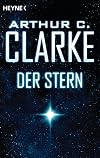
The Star {short story}
by Arthur C. Clarke
On This Page
Description
In the title story of this outstanding collection, a group of cosmonauts discovers the remains of an advanced civilization in a remote star system—destroyed when their sun went supernova. They find that the civilization was very similar to Earth's—and that its people knew of their coming doom centuries before it occurred. What they find leads their chief astrophysicist—also a Jesuit priest—into a deep crisis of faith, sparked by a shocking revelation that has implications not just show more for history—but for religion.This collection of short stories demonstrates not only Clarke's technological imagination—but also a deep poetic sensibility that led him to ponder the philosophical and moral implications of technological advances. These stories demonstrate the range of his vision as an author—based on both our scientific potential and the deeper aspects of the human condition.
. Science Fiction. Fiction. show less
Tags
Recommendations







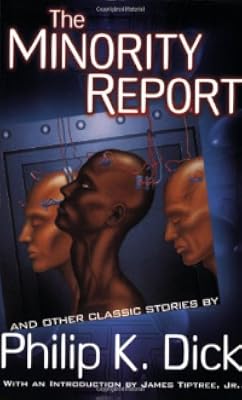


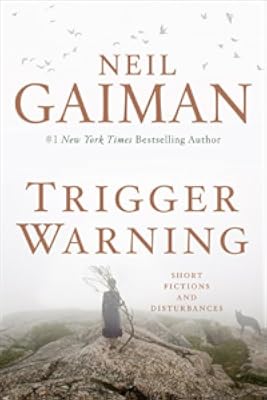

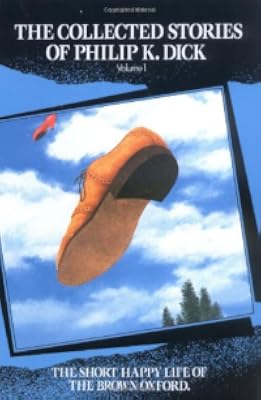


Member Reviews
A priest goes on an exploratory mission to find the Star of Bethlehem. Very disturbing if you believe in the Christian mythos as I did when I read it. It still resonates with me, now that I don't
Clarke at his best. A remarkable short story that makes one stop and think about subjects as vast as the universe itself.
...The Star is a story that packs a good punch. It is easy to see why someone who wrote such elegant stories in a time when a lot of science fiction was barely past the pulp stage, would have been considered one of the big writers in the genre. It is worth reading, not just because it aged gracefully, but also because it shows the darker side of the writing of a man known for his optimistic work.
Full Random Comments review
Full Random Comments review
Very powerful, and could be open to several differing opinions about the true meaning. I would say that it was written to be interpreted by everyone individually, as either anti-religious or the opposite, underscoring the power and sovereignty.
It is definitely an engrossing read, not light, very intense and written with great feeling.
Certainly not the typical Christmas read!
It is definitely an engrossing read, not light, very intense and written with great feeling.
Certainly not the typical Christmas read!
A solid scifi short story. I probably shouldn't be surprised at Clarke's knowledge of the Jesuits. At only four pages, it felt well-written (but not quite as moving as it wants to be).
19 December 2022
Before rereading the story, a note about what comes to mind about it now. And the answer is "nothing except the awful discovery."
***
21 December 2022
I mean, the Jesuit astrophysicist was kind of a dick, since he only cared about this civilization because they made graceful stuff. God slaughters innocents all the time in the Old Testament, including his son, in the New, but that's cool because....? He doesn't mention other civilizations
that people interact with, but notes that remains of other extinct races have been discovered, and those don't bother him. Pretty clear who is the asshole in this story.
In looking for a copy to read I came across "Rebbutal" by Betsy Curtis, which is available from Project Gutenburg. It ran show more in the same magazine, sometime in the year after Clarke's. It has a unique point to make, but fair warning, it is even less a story, although presented as a diologue.
To my mind, both of these stories suffer the same deficiency: they both are based on the same premise: that the god of a culture of a certain place and time, one who implies the existence of others in his insistence on primacy, and one who seemingly did not reveal himself to any other culture at the same or earlier time, that god and no other is indeed the Supreme Ruler of the universe, and that humans cannot go on without him despite ample evidence that a great many humans have managed to go on no better or worse without that god.
Review cross-posted with Rebuttal.
Personal copies show less
Before rereading the story, a note about what comes to mind about it now. And the answer is "nothing except the awful discovery."
***
21 December 2022
I mean, the Jesuit astrophysicist was kind of a dick, since he only cared about this civilization because they made graceful stuff. God slaughters innocents all the time in the Old Testament, including his son, in the New, but that's cool because....? He doesn't mention other civilizations
that people interact with, but notes that remains of other extinct races have been discovered, and those don't bother him. Pretty clear who is the asshole in this story.
In looking for a copy to read I came across "Rebbutal" by Betsy Curtis, which is available from Project Gutenburg. It ran show more in the same magazine, sometime in the year after Clarke's. It has a unique point to make, but fair warning, it is even less a story, although presented as a diologue.
To my mind, both of these stories suffer the same deficiency: they both are based on the same premise: that the god of a culture of a certain place and time, one who implies the existence of others in his insistence on primacy, and one who seemingly did not reveal himself to any other culture at the same or earlier time, that god and no other is indeed the Supreme Ruler of the universe, and that humans cannot go on without him despite ample evidence that a great many humans have managed to go on no better or worse without that god.
Review cross-posted with Rebuttal.
Personal copies show less
This is an amazing short story by Arthur C. Clarke, probably one of his best. This audio recording is particularly good as well. Basically, it is a story which brings together religion and science in an interesting way.
Members
- Recently Added By
Lists

Religious Science Fiction
70 works; 20 members

Favourite Short Stories
157 works; 9 members
Author Information

Arthur C. Clarke was born in Minehead, Somerset, England, on December 16, 1917. During World War II, he served as a radar specialist in the RAF. His first published piece of fiction was Rescue Party and appeared in Astounding Science, May 1946. He graduated from King's College in London with honors in physics and mathematics, and worked in show more scientific research before turning his attention to writing fiction. His first book, Prelude to Space, was published in 1951. He is best known for his book 2001: A Space Odyssey, which was later turned into a highly successful and controversial film under the direction of Stanley Kubrick. His other works include Childhood's End, Rendezvous with Rama, The Garden of Rama, The Snows of Olympus, 2010: A Space Odyssey II, 2062: Odyssey III, and 3001: The Final Odyssey. During his lifetime, he received at least three Hugo Awards and two Nebula Awards. He died of heart failure on March 19, 2008 at the age of 90. (Bowker Author Biography) show less
Some Editions
Awards and Honors
Awards
Notable Lists
Work Relationships
Is contained in
From the Ocean, from the Stars; An Omnibus Containing the Complete Novels: The Deep Range and the City and the Stars, and Twenty-Four Short Stories. by Arthur C. Clarke
Second orbit: A new science fiction anthology for schools (Albemarle library for schools) by Geoffrey Donald Doherty
Has as a student's study guide
Common Knowledge
- Canonical title
- The Star {short story}
- Original title
- The Star [short story]
- Original publication date
- 1955-11 (Infinity) (Infinity)
- First words*
- Dreitausend Lichtjahre weit sind wir vom Vatikan weg.
- Last words*
- (Click to show. Warning: May contain spoilers.)Warum war es nötig, dieses Volk ins Feuer zu werfen, damit das Symbol seines Untergangs über Bethlehem erstrahlen konnte?
- Original language*
- Englisch
- Disambiguation notice
- This is the short fiction/short story. Please do not combine with other versions and/or collections.
*Some information comes from Common Knowledge in other languages. Click "Edit" for more information.
Classifications
Statistics
- Members
- 84
- Popularity
- 381,025
- Reviews
- 8
- Rating
- (3.89)
- Languages
- English, German, Italian, Polish
- Media
- Paper, Audiobook, Ebook
- ISBNs
- 4
- ASINs
- 1