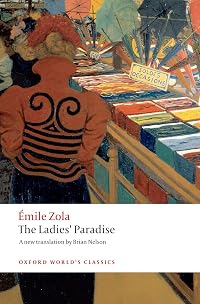
The Ladies' Paradise
by Émile Zola
Les Rougon-Macquart (publication order) (11), Les Rougon-Macquart (Zola's recommended reading order) (8)
There is 1 current discussion about this work.
On This Page
Description
Denise comes to Paris to work as a saleswoman at the heart of retail innovation - a new department store which threatens the existence of all the neighbourhood shops. Octave, the owner of this successful megastore, has gathered silks, woolens, ready-made garments, accessories and furniture. His aim is to overwhelm the senses of his female customers, forcing them to spend more. As Octave continues to drive the traditional retailers who operate smaller, speciality shops out of business, he show more finds himself slowly falling in love with Denise. show lessTags
Recommendations

































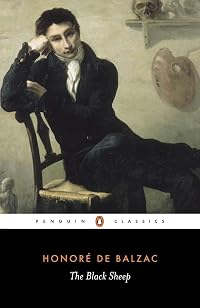



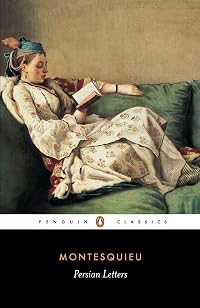

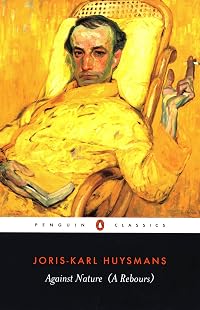

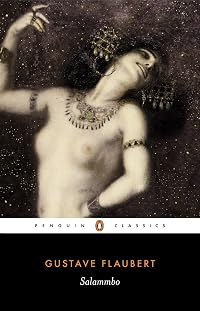
Member Recommendations

Member Reviews
Zola's big sex-and-shopping novel turns out to have surprisingly little obvious sex, but makes up for it by giving us what's essentially a complete primer in retail theory and practice circa 1870. And some gloriously erotic descriptions of textiles and haberdashery, which help us to see Zola's point that in the new capitalist society of the Second Empire there isn't any meaningful distinction to be made between sex and shopping: they are simply two different aspects of the way society is based on the exploitation of women.
We follow the unstoppable expansion of the Bonheur des Dames from simple draper's shop to vast department store from the perspectives of its proprietor, Octave Mouret (last seen marrying into the business in show more Pot-Bouille), and of a young shop assistant from the provinces, Denise, who comes to work for him. And we experience the effect of the new retail phenomenon as seen by Octave's middle-class women friends — the customers whose money it is designed to extract — and from the less sanguine viewpoint of the small shopkeepers in the neighbourhood who are being crushed under Mouret's wheels.
Not Zola's strongest novel in terms of its human plot, which turns out to be a very standard sort of romance. But he more than makes up for it with the non-fiction aspect of the book, its detailed analysis of how big retail works, not only the front-of-house manipulation of customer psychology we expect, but also the behind-the-scenes business administration that makes it all possible. Right down to the economics of staff-canteen menus. All very fascinating, and surprisingly modern: it's a shock to be reminded that we're still in the age of gas-light, horses and carts, and snail-mail... show less
We follow the unstoppable expansion of the Bonheur des Dames from simple draper's shop to vast department store from the perspectives of its proprietor, Octave Mouret (last seen marrying into the business in show more Pot-Bouille), and of a young shop assistant from the provinces, Denise, who comes to work for him. And we experience the effect of the new retail phenomenon as seen by Octave's middle-class women friends — the customers whose money it is designed to extract — and from the less sanguine viewpoint of the small shopkeepers in the neighbourhood who are being crushed under Mouret's wheels.
Not Zola's strongest novel in terms of its human plot, which turns out to be a very standard sort of romance. But he more than makes up for it with the non-fiction aspect of the book, its detailed analysis of how big retail works, not only the front-of-house manipulation of customer psychology we expect, but also the behind-the-scenes business administration that makes it all possible. Right down to the economics of staff-canteen menus. All very fascinating, and surprisingly modern: it's a shock to be reminded that we're still in the age of gas-light, horses and carts, and snail-mail... show less
Let me begin this review by saying that I loathe shopping. With the exception of bookstores and plant nurseries, I feel like a trapped animal in a shop, overwhelmed by the feeling that I need to bolt from whatever array of discretionary goods surrounds me. On one level such a bias makes a book such as [Au Bonheur des Dames] a mild form of torture delivered as some sort of misguided immersion therapy. However, at the same time, I am intrigued by why people shop as an activity in itself, why they spend hours wandering in what appears to be an aimless manner, why they redo houses every two or three years, why they have closets with clothes that have never been worn, why they are obsessed by fashion rather than style.
[Au Bonheur des Dames] show more is Zola's exploration of recreational shopping and unnecessary consumption. Octave Mouret, the young man who came to Paris to succeed in Pot Luck, is now in a position to expand his ladies' clothing store. Mouret's dream was to build an enormous department store. This was a revolutionary idea at the time. Such a place would assemble all the goods ladies might desire in one spot. No longer would they have to traipse from milliner to glove maker to shoe maker, umbrella maker and endlessly on and on to outfit themselves. They could come to Mouret's establishment, meet their friends, eat and do all their shopping at once. Zola based this idea on the Bon Marché, the grand new department store in Paris.
Mouret was aided in his idea by the redevelopment of Paris and the new desire for light and space. The new open boulevards allowed for enormous buildings. The warrens of small specialty shops would disappear; their own fault in Mouret's eyes, for not keeping up with the times. Mouret's new store was so large it was a small town in itself. More than that, it was operated to resemble a huge machine.
Customers were cleverly routed through from department to department, areas ingeniously designed so that the shoppers would be led in a circuitous manner through the store, deliberately distracted by more goods than they had thought possible. Beneath and above the public areas, the machine hummed away. Mouret designed assembly lines for shipping and receiving. Staff ate in company dining rooms. Shop girls lived in the attic in an effort to keep them from the temptations of the street.
Zola gives the reader the worlds of all these people; displaced artisans, shop girls, buyers, customers and many more. Through Mouret, he shows the origin of much of twentieth century marketing: fixed price -- no bargaining, end of season sales, store displays for next season this season, commissions for sales staff. Being Zola though, these are not dry discussions. There are the petty disputes and politics among the staff, the tension between the shop girls and their clients, and over it all, Mouret's developing megalomania. Then there is the developing love story between the worldly Mouret and the young Denise Baudu, just up from the provinces and completely overwhelmed by Paris.
All this is swathed in the sensuousness of tactile things amid the eroticism of objects which Zola describes so well.
This was the first of Zola's books to be translated into English, the very year it was published. Needless to say, there was fairly heavy editing, but this particular translation uses the full French text. Department stores were opening in other large centres; New York, Chicago and London to name a few, so the theme had wide appeal. The book could be read as a standalone, and there was almost no political matter for a Zola novel. While the book could be read on this lighter level, its strength is in its examination of the changes in commerce and what those changes did to the society around them. Most of all, it worked as a strong critique of consumption, while managing to portray that same consumption as necessary to the new economy. Much has changed in the ways and whys of our buying, but that same drive to consume it still there. For that critique alone this book is well worth it. show less
[Au Bonheur des Dames] show more is Zola's exploration of recreational shopping and unnecessary consumption. Octave Mouret, the young man who came to Paris to succeed in Pot Luck, is now in a position to expand his ladies' clothing store. Mouret's dream was to build an enormous department store. This was a revolutionary idea at the time. Such a place would assemble all the goods ladies might desire in one spot. No longer would they have to traipse from milliner to glove maker to shoe maker, umbrella maker and endlessly on and on to outfit themselves. They could come to Mouret's establishment, meet their friends, eat and do all their shopping at once. Zola based this idea on the Bon Marché, the grand new department store in Paris.
Mouret was aided in his idea by the redevelopment of Paris and the new desire for light and space. The new open boulevards allowed for enormous buildings. The warrens of small specialty shops would disappear; their own fault in Mouret's eyes, for not keeping up with the times. Mouret's new store was so large it was a small town in itself. More than that, it was operated to resemble a huge machine.
... he had fifteen hundred sales assistants, and a thousand other employees of every kind, including forty inspectors and seventy cashiers; the kitchens alone employed thirty-two men; there were ten people in advertising, three hundred and fifty porters in livery, twenty-four permanent fire wardens. In the stables -- regal stables, in the Rue Monsigny opposite the shops -- there were one hundred and forty-five horses, a wealth of carriage teams that were already famous.
Customers were cleverly routed through from department to department, areas ingeniously designed so that the shoppers would be led in a circuitous manner through the store, deliberately distracted by more goods than they had thought possible. Beneath and above the public areas, the machine hummed away. Mouret designed assembly lines for shipping and receiving. Staff ate in company dining rooms. Shop girls lived in the attic in an effort to keep them from the temptations of the street.
Zola gives the reader the worlds of all these people; displaced artisans, shop girls, buyers, customers and many more. Through Mouret, he shows the origin of much of twentieth century marketing: fixed price -- no bargaining, end of season sales, store displays for next season this season, commissions for sales staff. Being Zola though, these are not dry discussions. There are the petty disputes and politics among the staff, the tension between the shop girls and their clients, and over it all, Mouret's developing megalomania. Then there is the developing love story between the worldly Mouret and the young Denise Baudu, just up from the provinces and completely overwhelmed by Paris.
All this is swathed in the sensuousness of tactile things amid the eroticism of objects which Zola describes so well.
The silk department was like a huge love nest hung in white to satisfy the fancy of a woman in love who wished her own snow-white nakedness to compete with it in radiance. All the milky pallors of a loved one's body were there, from the velvet of the back to the fine silk of the thighs and the glowing satin of the breasts. Lengths of velvet were hung between the columns, while silks and satins stood out against this background of creamy white as a drapery of metallic white and china white; and there were also arches of silk poults and Sicilian grosgrains, light foulards and surahs which varied in tone from the heavy white of a Norwegian blonde to the transparent, sun-warmed whiteness of a redhead from Italy or Spain.
This was the first of Zola's books to be translated into English, the very year it was published. Needless to say, there was fairly heavy editing, but this particular translation uses the full French text. Department stores were opening in other large centres; New York, Chicago and London to name a few, so the theme had wide appeal. The book could be read as a standalone, and there was almost no political matter for a Zola novel. While the book could be read on this lighter level, its strength is in its examination of the changes in commerce and what those changes did to the society around them. Most of all, it worked as a strong critique of consumption, while managing to portray that same consumption as necessary to the new economy. Much has changed in the ways and whys of our buying, but that same drive to consume it still there. For that critique alone this book is well worth it. show less
Zola dissects 19th century capitalism with matchless vividness and acuity. The main character of 'The Ladies Paradise' is the department store itself. Using the predominant modernist metaphor, Zola repeatedly describes it as a machine. Yet I also thought of it as an invasive pest, consisting of many interdependent organisms, constantly growing and transforming its surrounding environment. Although some scenes do take place elsewhere, the department store looms over them literally, figuratively, or both. The reader explores it exhaustively through the eyes of employees, customers, competitors, and its owner and boss, Octave Mouret. The place is initially introduced via Denise, a young woman arriving in Paris with her brothers to stay show more with their uncle. Said uncle owns a small drapers shop directly opposite the department store, which has taken all his customers. Despite sympathising with her uncle, Denise is both pragmatic about her job prospects and drawn to the dazzle of the huge store. She becomes a shop assistant there and learns to survive, even thrive, within the machine.
I found Denise an interesting character, particularly her amoral motives for superficially virtuous actions. Most shopgirls become the mistress of one or more richer men, while she refuses to. Not because she thinks it morally wrong, but because she kinds the idea viscerally disgusting. Initially she appears old-fashioned, dowdy, and awkward, but from the start she understands how the Ladies Paradise works better than most. Her kindness is tempered by a hard-headed awareness of business. Her counterpoint is Mouret, whose undoubted business acumen, ambition, and ruthlessness are eventually tempered by sentiment. The large cast of secondary characters that populate the book personify the crushing competitive pressure caused by economies of scale, the tensions of insecure employment, and the dangerous allure of early consumerism. Yet Zola's skill is such that they are well-realised characters too. Each of the women who are perpetually lured into the department store is distinctive. Some have the money to pay for their lavish purchases; others do not. One feels compelled to steal; another to look at everything then buy nothing. Likewise, each shop assistant has their friends, enemies, and challenges on the shop floor and beyond.
Nonetheless, the department store remains the main character. Zola conjures it in extremely evocative, sensual terms that invite the reader to walk its halls in their mind. The displays sound incredibly beautiful and seductive; I'm sure I'd be tempted to buy some gloves and perhaps a parasol. The customers are overwhelmed by the shop, cut off from the wider world, and melded into an ecstatic crowd. Zola conveys this intense experience via multisensory description:
Zola based The Ladies Paradise on Le Bon Marché, a Parisian department store with all the grandeur of his fictional version. The Ladies Paradise has Le Bon Marché's innovative ironwork, which Gustave Eiffel was involved with the design of. The attention to material details throughout both gives the novel its impact and reinforces the theme of materialism. As the book proceeds, Mouret pioneers various retail strategies that have become entirely normal since the 1880s. These include multi-channel advertising, constant expansion and diversification, heavily hyped seasonal sales, rapid home delivery, loss leaders, and organising a store so as to deliberately disorientate the customer. There's even the embryo of fast fashion:
Incidentally, Mouret is explaining this to a very thinly veiled Baron Haussman character, Baron Hartmann. The Paris of 'The Ladies Paradise' is in a ferment of redevelopment, with small shops bankrupted, displaced, and demolished to make way for big capital. Zola presents this tumultuous economic, social, and spatial transformation from the perspective of its vanguard, its detractors, and others who experience a more ambiguous combination of benefit and loss. The former two groups are notably older, whereas the young staff of the Ladies Paradise are both exploited and offered new opportunities. Giving the main point of view to Denise, as well as showing the perspectives of female customers, invites readers to consider the impact of department stores on late 19th century women's lives. The female customers gain a new social space, while also being encouraged towards material dissatisfaction and excessive spending. The female shop workers gain financial independence and career opportunities, as well as an interesting disincentive to get married (as they would almost certainly lose their job if they did). Instead, most have one or more lovers, something that creates lots of gossip within the shop and moral panic outside it. On the other hand, these women are also constantly dealing with sexual harassment from male colleagues. Their work is insecure, exhausting, and health-destroying, their conditions poor, and their wages largely dependent on how much they sell. This really shows in microcosm the impacts of 19th century wage labour on women more generally. As I said at the start, Zola is incredible at this kind of analytical sharpness, presented via vividly textured scenes. The aftermath of a sale is described in gorgeously lyrical terms:
These run-on sentences drag you through the store, gently forcing you to browse each department in turn. I also greatly appreciated Zola ending the novel by skewering one of those annoying men who affect a supercilious indifference:
I think we've all met that guy. In short, I was fascinated and beguiled by 'The Ladies Paradise'. The translation I read was excellent. This novel is a stunning portrait of a historical time and place, one that also invites consideration of what has changed since. The profusion of products and constant invitations to consider buying this other thing you weren't looking for have now migrated online. Big data analytics have replaced the department store shop assistants, but the principles of mass selling, constant advertising, and hyped price cuts remain, albeit in personalised forms. Actual department stores were struggling before the pandemic and seem unlikely to survive much longer. What we've lost with e-commerce, though, is the sensuality of choosing what to purchase. Zola's characters caress fabrics and try on clothes before deciding whether to buy them. I am fussy about fibres and prefer to touch garments before purchase, which hasn't been feasible this past year. It bothers me that online shopping incentivises retailers to sell clothing that looks nice on a screen but feels awful on the skin, not to mention wearing out quickly. I doubt 19th century Parisian shoppers would stand for the translucent viscose knit and scratchy polyester crepe of a great many current garments. For all the exploitative greed of the Ladies Paradise, plunging your hands into its selection of exquisite lace sounds like a wonderfully voluptuous pleasure. What an illuminating place to explore all the corners of, with Zola as a guide. show less
I found Denise an interesting character, particularly her amoral motives for superficially virtuous actions. Most shopgirls become the mistress of one or more richer men, while she refuses to. Not because she thinks it morally wrong, but because she kinds the idea viscerally disgusting. Initially she appears old-fashioned, dowdy, and awkward, but from the start she understands how the Ladies Paradise works better than most. Her kindness is tempered by a hard-headed awareness of business. Her counterpoint is Mouret, whose undoubted business acumen, ambition, and ruthlessness are eventually tempered by sentiment. The large cast of secondary characters that populate the book personify the crushing competitive pressure caused by economies of scale, the tensions of insecure employment, and the dangerous allure of early consumerism. Yet Zola's skill is such that they are well-realised characters too. Each of the women who are perpetually lured into the department store is distinctive. Some have the money to pay for their lavish purchases; others do not. One feels compelled to steal; another to look at everything then buy nothing. Likewise, each shop assistant has their friends, enemies, and challenges on the shop floor and beyond.
Nonetheless, the department store remains the main character. Zola conjures it in extremely evocative, sensual terms that invite the reader to walk its halls in their mind. The displays sound incredibly beautiful and seductive; I'm sure I'd be tempted to buy some gloves and perhaps a parasol. The customers are overwhelmed by the shop, cut off from the wider world, and melded into an ecstatic crowd. Zola conveys this intense experience via multisensory description:
In the still air, where the stifling central heating brought out the smell of the materials. The hubbub was increasing, made up of all sorts of noises - the continuous trampling of feet, the same phrase repeated a hundred times at the counters, gold clinking on the brass of the cash desks, besieged by a mass of purses, the baskets on wheels with their loads of parcels falling endlessly into gaping cellars. In the end everything became intermingled amidst the fine dust; it became impossible to recognise the divisions between the different department: over there, the haberdashery seemed swamped; further on, in the linen department, a ray of sunlight coming through the window on the Rue Neuve-Saint-Augustin was like a golden arrow in the snow; while, in the glove and woollen departments, a dense mass of hats and hair hid the furthest reaches of the shop from view. Even the clothes of the crowd could no longer be seen, only head-dresses, decked with feathers and ribbons, were floating on the surface; a few men's hats made black smudges, while the pale complexions of the women, in the general fatigue and heat, were acquiring the transparency of camellias.
Zola based The Ladies Paradise on Le Bon Marché, a Parisian department store with all the grandeur of his fictional version. The Ladies Paradise has Le Bon Marché's innovative ironwork, which Gustave Eiffel was involved with the design of. The attention to material details throughout both gives the novel its impact and reinforces the theme of materialism. As the book proceeds, Mouret pioneers various retail strategies that have become entirely normal since the 1880s. These include multi-channel advertising, constant expansion and diversification, heavily hyped seasonal sales, rapid home delivery, loss leaders, and organising a store so as to deliberately disorientate the customer. There's even the embryo of fast fashion:
[...] The younger man, inflamed by the desire to convince him, was talking away, explaining how the new type of drapery business worked. It was now based on the rapid and continuous turnover of capital, which had to be converted into goods as many times as possible within twelve months. Thus, in the present year, his initial capital of only five hundred thousand francs has been turned over four times and had produced business [revenue] worth two million francs.
Incidentally, Mouret is explaining this to a very thinly veiled Baron Haussman character, Baron Hartmann. The Paris of 'The Ladies Paradise' is in a ferment of redevelopment, with small shops bankrupted, displaced, and demolished to make way for big capital. Zola presents this tumultuous economic, social, and spatial transformation from the perspective of its vanguard, its detractors, and others who experience a more ambiguous combination of benefit and loss. The former two groups are notably older, whereas the young staff of the Ladies Paradise are both exploited and offered new opportunities. Giving the main point of view to Denise, as well as showing the perspectives of female customers, invites readers to consider the impact of department stores on late 19th century women's lives. The female customers gain a new social space, while also being encouraged towards material dissatisfaction and excessive spending. The female shop workers gain financial independence and career opportunities, as well as an interesting disincentive to get married (as they would almost certainly lose their job if they did). Instead, most have one or more lovers, something that creates lots of gossip within the shop and moral panic outside it. On the other hand, these women are also constantly dealing with sexual harassment from male colleagues. Their work is insecure, exhausting, and health-destroying, their conditions poor, and their wages largely dependent on how much they sell. This really shows in microcosm the impacts of 19th century wage labour on women more generally. As I said at the start, Zola is incredible at this kind of analytical sharpness, presented via vividly textured scenes. The aftermath of a sale is described in gorgeously lyrical terms:
The salesmen, harassed and exhausted, were camping amid the havoc of their shelves and counters, which looked as if they had been wrecked by the raging blast of a hurricane. The ground-floor galleries were blocked up with an untidy mass of chairs; in the glove department it was necessary to step over a barricade of boxes, piled up around Mignot; in the woollens it was impossible to get through at all, and Lienard was dozing on a sea of materials in which some half-destroyed stacks of cloth were still standing, like ruined houses about to be carried away by an overflowing river; further along, the white linen has snowed all over the ground, and one stumbled against ice-flows of table napkins and walked on the soft flakes of handkerchiefs.
These run-on sentences drag you through the store, gently forcing you to browse each department in turn. I also greatly appreciated Zola ending the novel by skewering one of those annoying men who affect a supercilious indifference:
At this Vallagnosc lost his temper: was quite unable to regain his now compromised philosophy; the whole of his middle-class upbringing recoiled from his mother-in-law in virtuous indignation. As soon as he experienced something personally, at the slightest contact with human misery, at which he had always sneered, the braggart sceptic in him collapsed in suffering. It was abominable, the honour of his ancestry was being dragged through the mud, and the world seemed to be coming to an end. [...]
"Damn it! You who professed such scorn at the universal baseness of humankind!"
"Of course!" exclaimed Vallagnosc naively. "When it affects other people!"
I think we've all met that guy. In short, I was fascinated and beguiled by 'The Ladies Paradise'. The translation I read was excellent. This novel is a stunning portrait of a historical time and place, one that also invites consideration of what has changed since. The profusion of products and constant invitations to consider buying this other thing you weren't looking for have now migrated online. Big data analytics have replaced the department store shop assistants, but the principles of mass selling, constant advertising, and hyped price cuts remain, albeit in personalised forms. Actual department stores were struggling before the pandemic and seem unlikely to survive much longer. What we've lost with e-commerce, though, is the sensuality of choosing what to purchase. Zola's characters caress fabrics and try on clothes before deciding whether to buy them. I am fussy about fibres and prefer to touch garments before purchase, which hasn't been feasible this past year. It bothers me that online shopping incentivises retailers to sell clothing that looks nice on a screen but feels awful on the skin, not to mention wearing out quickly. I doubt 19th century Parisian shoppers would stand for the translucent viscose knit and scratchy polyester crepe of a great many current garments. For all the exploitative greed of the Ladies Paradise, plunging your hands into its selection of exquisite lace sounds like a wonderfully voluptuous pleasure. What an illuminating place to explore all the corners of, with Zola as a guide. show less
It is strange to think of a novel in which a department store is almost a protagonist. The story is set in 1880' Paris as one store begins to encompass drapers, linen, ladies' wear and other fabric merchandise. The store eventually includes an entire city block, with children's wear, shoes, and even furniture under the same roof. Modern merchandising enables price cuts that drive neighboring shops into bankruptcy but provide a largely female clientele with a seemingly endless supply of household necessities and personal luxuries. Into this engine of social change comes Denise Baudu, a young woman from a provincial town who has two brothers to support. Finding that her uncle, a draper (owner of a yardage or fabric shop) is unable to show more employ her she seeks a position at The Ladies Paradise, owned by merchandising innovator, Octave Mouret, a man known for numerous long- and short-term mistresses, many of them salesgirls in his employ. Denise appears as an awkward country bumpkin but after periods of unemployment and great hardship eventually becomes an assistant buyer in ladies' wear. Mouret becomes attracted to her, and she realizes that she loves him, but she refuses to become his mistress, maintaining her caution and her principles. show less
"What I want to do in The Ladies Paradise is write the poem of modern activity." -- Emile Zola
Rather surprisingly, Zola's 11th novel in the Rougon-Macquart series is ... dare I say friendly towards humankind? Acknowledging that he had explored much of the darkness - the wealthy in The Kill and His Excellency Eugène Rougon and the impoverished in L'Assommoir and The Belly of Paris, among others - Zola knew that, to capture all of society, he must eventually make his way toward the light.
It is 1864, the height of the French Second Empire, and Octave Mouret - previously seen as a youth in The Conquest of Plassans and as a young Casanova in Pot Luck (neither of which are required reading) - has now found himself head of France's most show more successful department store, The Ladies' Paradise, which is rapidly expanding. The Paradise is another of Zola's corporate monsters, like the food markets in The Belly of Paris, but here it represents a different form of human progress. The monster is, seemingly, controlled by Mouret and his board, deliberately designed to "conquer" women of means. In its grand scope, the department store both recalls a feudal past (staff eat and in many cases live on site, while fighting for commission from a deceptively equitable-looking roster system) and looks forward to a grand future. It is the Age of Iron, and the Paradise does not just conquer women; it devours the small traders in the streets of Paris, who continue to sell using the old methods, rejecting what they see as upstart techniques. To their own tragic end.
As always, Zola invested himself in extensive research to capture these unusual, maddening businesses. In his usual set-piece chapters, Zola catalogues an ordinary day, an opening day, a stocktaking day, from the perspective of shoppers, management, and staff alike. As he does so, the author captures a world. In his role as historical-novelist, Zola also provides the modern reader with a scientific dissection of an era. Some of Mouret's more avant-garde ideas - a "returns policy", a decision to sell a particularly attractive item at cost, the deliberate muddling of departments to prevent a straightforward journey to the customer - are still key business techniques in the 2020s. If all great literature is an attempt to explain to a people where they are and what they have left behind (which I suspect is the case), Zola is devastatingly precise in doing so.
At the heart of the novel is Denise Baudu, an impoverished young woman from the provinces, arriving in Paris with her two kid brothers, desperately seeking work. Installed at The Paradise, Denise's essential goodness quickly puts her at odds with the alpha men and women. Yet for all her humanist tendencies, Denise is coolly rational, and struggles when asked by her small trader uncle and his fellow business-owners to take a side against the Leviathan. Ideologically, it may surprise the casual reader of the Rougon-Macquart cycle. But for all Zola's rage against unfettered capitalism, he reserves a certain disdain for the stubborn and the mule-headed. Uncle Baudu and his ilk fighting against the rise of the mega-store (if "fighting" is even a valid verb for their slow, irate demise) believe they are fighting negative progress, that they are standing up for humanity. Instead, the novel suggests, they are positioning themselves in the least helpful place. By being against such an inevitable shift in culture, they cannot play a role in guiding it, in humanising it. Denise's choice is not between human and corporation, it is between useless ideology and active decision-making. (In pop culture terms, it's the difference between Rent's "I won't go to work because the system hates me" mentality and the more pragmatic "I will try and change the workplace for the better" position of Norma Rae.)
While Zola's skill at creating densely populated worlds is almost unparalleled, I confess to enjoying most his intimate novels, such as A Love Story. (I was exhausted after Pot Luck!) This time around however, the subjects are such a part of their world, that every character contributes to our central understanding of Denise and Mouret. It's a thickly unified tapestry. And of course Zola has lost none of his pinpoint characterisation, from the increasing indignities Mouret's lover, Madame Desforges, lays down upon a rival, to Denise's sickly cousin Genevieve, who "had the debilitated, colourless appearance of a plant left to grow in the dark."
Perhaps the central conceit of the novel - a developing relationship about which both characters seem to be ignorant for some time - can feel a little contrived to the reader. Zola lays the groundwork, but the feelings read as one-sided to our eyes or perhaps simply unearned. I might suggest that the symbolic resonance of the relationship was more important to the author than the literal one, and that this diminishes the attempt. But the novel is about so much more than the individuals, that it's heavily enjoyable nevertheless.
(A word should also be said about Brian Nelson's clear, spirited, wry translation. Nelson may be my favourite of Zola's translators, and it is a joy that Oxford have utilised his skills for several of their complete modern Rougon-Macquart series.)
We leave Octave Mouret and Denise Baudu and their cohorts in 1869, the year that Zola began writing this series and in which the Second Empire started to topple. A new Paris is rising. Indeed, a new way of trading, of living amongst others, of viewing our very selves. (A new world was emerging for Zola, too, as he published this book in 1883 - entering the central act of his public life as someone both esteemed and oft objected to.) The Ladies' Paradise may have been intended to explore the changes between mid-19th century Paris and late-19th century, but it feels just as much about changes whose ripples we still grapple with. show less
Rather surprisingly, Zola's 11th novel in the Rougon-Macquart series is ... dare I say friendly towards humankind? Acknowledging that he had explored much of the darkness - the wealthy in The Kill and His Excellency Eugène Rougon and the impoverished in L'Assommoir and The Belly of Paris, among others - Zola knew that, to capture all of society, he must eventually make his way toward the light.
It is 1864, the height of the French Second Empire, and Octave Mouret - previously seen as a youth in The Conquest of Plassans and as a young Casanova in Pot Luck (neither of which are required reading) - has now found himself head of France's most show more successful department store, The Ladies' Paradise, which is rapidly expanding. The Paradise is another of Zola's corporate monsters, like the food markets in The Belly of Paris, but here it represents a different form of human progress. The monster is, seemingly, controlled by Mouret and his board, deliberately designed to "conquer" women of means. In its grand scope, the department store both recalls a feudal past (staff eat and in many cases live on site, while fighting for commission from a deceptively equitable-looking roster system) and looks forward to a grand future. It is the Age of Iron, and the Paradise does not just conquer women; it devours the small traders in the streets of Paris, who continue to sell using the old methods, rejecting what they see as upstart techniques. To their own tragic end.
As always, Zola invested himself in extensive research to capture these unusual, maddening businesses. In his usual set-piece chapters, Zola catalogues an ordinary day, an opening day, a stocktaking day, from the perspective of shoppers, management, and staff alike. As he does so, the author captures a world. In his role as historical-novelist, Zola also provides the modern reader with a scientific dissection of an era. Some of Mouret's more avant-garde ideas - a "returns policy", a decision to sell a particularly attractive item at cost, the deliberate muddling of departments to prevent a straightforward journey to the customer - are still key business techniques in the 2020s. If all great literature is an attempt to explain to a people where they are and what they have left behind (which I suspect is the case), Zola is devastatingly precise in doing so.
At the heart of the novel is Denise Baudu, an impoverished young woman from the provinces, arriving in Paris with her two kid brothers, desperately seeking work. Installed at The Paradise, Denise's essential goodness quickly puts her at odds with the alpha men and women. Yet for all her humanist tendencies, Denise is coolly rational, and struggles when asked by her small trader uncle and his fellow business-owners to take a side against the Leviathan. Ideologically, it may surprise the casual reader of the Rougon-Macquart cycle. But for all Zola's rage against unfettered capitalism, he reserves a certain disdain for the stubborn and the mule-headed. Uncle Baudu and his ilk fighting against the rise of the mega-store (if "fighting" is even a valid verb for their slow, irate demise) believe they are fighting negative progress, that they are standing up for humanity. Instead, the novel suggests, they are positioning themselves in the least helpful place. By being against such an inevitable shift in culture, they cannot play a role in guiding it, in humanising it. Denise's choice is not between human and corporation, it is between useless ideology and active decision-making. (In pop culture terms, it's the difference between Rent's "I won't go to work because the system hates me" mentality and the more pragmatic "I will try and change the workplace for the better" position of Norma Rae.)
While Zola's skill at creating densely populated worlds is almost unparalleled, I confess to enjoying most his intimate novels, such as A Love Story. (I was exhausted after Pot Luck!) This time around however, the subjects are such a part of their world, that every character contributes to our central understanding of Denise and Mouret. It's a thickly unified tapestry. And of course Zola has lost none of his pinpoint characterisation, from the increasing indignities Mouret's lover, Madame Desforges, lays down upon a rival, to Denise's sickly cousin Genevieve, who "had the debilitated, colourless appearance of a plant left to grow in the dark."
Perhaps the central conceit of the novel - a developing relationship about which both characters seem to be ignorant for some time - can feel a little contrived to the reader. Zola lays the groundwork, but the feelings read as one-sided to our eyes or perhaps simply unearned. I might suggest that the symbolic resonance of the relationship was more important to the author than the literal one, and that this diminishes the attempt. But the novel is about so much more than the individuals, that it's heavily enjoyable nevertheless.
(A word should also be said about Brian Nelson's clear, spirited, wry translation. Nelson may be my favourite of Zola's translators, and it is a joy that Oxford have utilised his skills for several of their complete modern Rougon-Macquart series.)
We leave Octave Mouret and Denise Baudu and their cohorts in 1869, the year that Zola began writing this series and in which the Second Empire started to topple. A new Paris is rising. Indeed, a new way of trading, of living amongst others, of viewing our very selves. (A new world was emerging for Zola, too, as he published this book in 1883 - entering the central act of his public life as someone both esteemed and oft objected to.) The Ladies' Paradise may have been intended to explore the changes between mid-19th century Paris and late-19th century, but it feels just as much about changes whose ripples we still grapple with. show less
In 19th Century Paris, young Denise has arrived from the countryside with her younger brothers following the deaths of their parents; they are looking for help from their uncle, who had previously offered to house them should they need that help. But when they arrive, all is not well with Uncle Baudu: his small shop is losing business thanks to the opening across the road of a new “department” store, The Ladies’ Paradise, a huge building that is driving many small businesses to bankruptcy because it can undersell them due to sheer volume. But Denise is taken with The Paradise, and soon enough finds a job there. When the owner, Octave Mouret, falls in love with her, Denise’s fortunes begin to rise, but at what cost?.... This is a show more very famous satire about consumer society in France at the beginning of full-on capitalism there, and as such is easily relatable to today; one can think of The Paradise as, first, the Sears of its time, then the Walmart of its time and, now, the Amazon.com of its time. The characters, both store employees and those shopping there, are all consumed with merchandise, with consumerism, and certainly today’s reader can relate to that phenomenon without difficulty. What is a little harder to accept is that Denise, a young woman of 20 at the start of the novel, is constantly referred to as a “little girl,” and Octave, who falls in love with her, is in his mid-30s or early 40s; i.e., the relationship in terms of the words used, is pretty creepy. Also, Denise is portrayed as being exceedingly gentle and kind-hearted, and her focus is said to be firmly on looking after her younger brothers, but after the first couple of chapters the brothers are nowhere to be found except for one instance toward the end. And, although portrayed as virginal and honest, there is no small amount of consuming ambition and deceit to be found in the young woman; perhaps that is Zola’s point all along. A classic. show less
The Ladies' Paradise is one of the best novels in the Les Rougon-Macquart series. The social issues are still universally relevant, the story and characters are fascinating and upbeat, and it's a revealing portrait of French (and world) cultural history. The story concerns the bourgeous line of the Rougon-Macquart family, and takes place almost entirely within a large Parisian department store called "Ladies' Paradise", sort of like a Nordstrom's or Lord & Taylor, but modeled on the real-life Le Bon March, which was the world's first modern department store.
In the novel Zola unveils the female fetish for clothing, and how a department store trades on female desires. The department store is a fantasy world where anything seems possible, show more women are pampered and treated like royalty, for a price. This was at a time when department stores were first being invented: mass advertising, item returns/refunds, fanciful window displays, loss-leading sales, departments, catalogs, home delivery, etc. prior to this most stores were boutique, sold one type of thing only (no departments), and prices were usually high due to price-fixing, inefficiencies and low volumes. It's a fascinating cultural perspective of when things changed, who won and lost, what was created and destroyed.
Socially, the novel looks at the impact of large corporations on small businesses, like current-day debates about Wal-Mart that force local mom and pops out of business. France in the 19th c. underwent wrenching changes as artisan and family businesses handed down over generations were put out of business by new mass industrial methods, seemingly inhuman and cold (it would lead in part to the rise of Socialism), the novel does an excellent job of dramatizing this early historical trend that is still playing out today.
This is probably the most optimistic Zola novel. The bad guy (owner of Ladies Paradise) is modeled on the real-life owner of La Bon March, and the courtship of his wife. It's a Cinderella story with a happy ending. The victims of the novel are simply victims of progress, an old decaying way of life making room for the new, for better or worse.
--Review by Stephen Balbach, via CoolReading (c) 2011 cc-by-nd show less
In the novel Zola unveils the female fetish for clothing, and how a department store trades on female desires. The department store is a fantasy world where anything seems possible, show more women are pampered and treated like royalty, for a price. This was at a time when department stores were first being invented: mass advertising, item returns/refunds, fanciful window displays, loss-leading sales, departments, catalogs, home delivery, etc. prior to this most stores were boutique, sold one type of thing only (no departments), and prices were usually high due to price-fixing, inefficiencies and low volumes. It's a fascinating cultural perspective of when things changed, who won and lost, what was created and destroyed.
Socially, the novel looks at the impact of large corporations on small businesses, like current-day debates about Wal-Mart that force local mom and pops out of business. France in the 19th c. underwent wrenching changes as artisan and family businesses handed down over generations were put out of business by new mass industrial methods, seemingly inhuman and cold (it would lead in part to the rise of Socialism), the novel does an excellent job of dramatizing this early historical trend that is still playing out today.
This is probably the most optimistic Zola novel. The bad guy (owner of Ladies Paradise) is modeled on the real-life owner of La Bon March, and the courtship of his wife. It's a Cinderella story with a happy ending. The victims of the novel are simply victims of progress, an old decaying way of life making room for the new, for better or worse.
--Review by Stephen Balbach, via CoolReading (c) 2011 cc-by-nd show less
Members
- Recently Added By
Lists

Favourite Books
1,819 works; 316 members

Paris, City of Lights
103 works; 17 members

french letters
18 works; 1 member

Books We Love to Reread
688 works; 296 members
School Made Us Read It
380 works; 196 members

Slightly Foxed 2
20 works; 1 member
Talk Discussions
Current Discussions
November 2025 Au Bonheur des Dames: (1883) (The Ladies Paradise) Ch1-4 in Emile Zola Group Read (February 8)
Past Discussions
The Ladies' Paradise by Zola in Author Theme Reads (August 2013)
Author Information

702+ Works 35,798 Members
Zola was the spokesperson for the naturalist novel in France and the leader of a school that championed the infusion of literature with new scientific theories of human development drawn from Charles Darwin (see Vol. 5) and various social philosophers. The theoretical claims for such an approach, which are considered simplistic today, were show more outlined by Zola in his Le Roman Experimental (The Experimental Novel, 1880). He was the author of the series of 20 novels called The Rougon-Macquart, in which he attempted to trace scientifically the effects of heredity through five generations of the Rougon and Macquart families. Three of the outstanding volumes are L'Assommoir (1877), a study of alcoholism and the working class; Nana (1880), a story of a prostitute who is a femme fatale; and Germinal (1885), a study of a strike at a coal mine. All gave scope to Zola's gift for portraying crowds in turmoil. Today Zola's novels have been appreciated by critics for their epic scope and their visionary and mythical qualities. He continues to be immensely popular with French readers. His newspaper article "J'Accuse," written in defense of Alfred Dreyfus, launched Zola into the public limelight and made him the political conscience of his country. (Bowker Author Biography) show less
Some Editions
Awards and Honors
Series

Les Rougon-Macquart (publication order)
21 works (11)

Les Rougon-Macquart (Zola's recommended reading order)
20 works (8)
Belongs to Publisher Series
Work Relationships
Is contained in
Has as a study
Common Knowledge
- Canonical title
- The Ladies' Paradise
- Original title
- Au Bonheur des Dames
- Alternate titles
- The Ladies' Delight; Ladies' Paradise
- Original publication date
- 1883
- People/Characters
- Octave Mouret; Denise Baudu
- Important places
- Paris, France; Le Bon Marché
- Related movies
- The Paradise (2012 | IMDb)
- Original language
- French
Classifications
Statistics
- Members
- 2,395
- Popularity
- 8,186
- Reviews
- 61
- Rating
- (3.98)
- Languages
- 18 — Catalan, Dutch, English, Estonian, Finnish, French, German, Greek, Hungarian, Italian, Lithuanian, Polish, Portuguese, Romanian, Russian, Serbian, Spanish, Swedish
- Media
- Paper, Audiobook, Ebook
- ISBNs
- 179
- ASINs
- 57