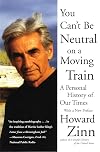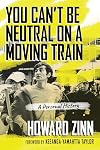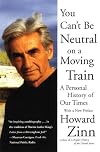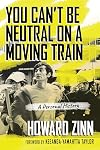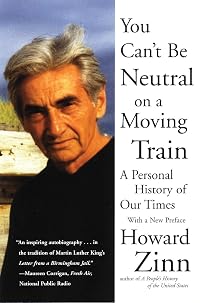
You Can't Be Neutral on a Moving Train: A Personal History of Our Times
by Howard Zinn
On This Page
Description
Howard Zinn, author of A People's History of the United States, tells his personal stories about more than thirty years of fighting for social change, from teaching at Spelman College to recent protests against war. A former bombardier in World War II, Zinn emerged in the civil rights movement as a powerful voice for justice. Although he's a fierce critic, he gives us reason to hope that by learning from history and engaging politically, we can make a difference in the world.Tags
Recommendations


















Member Reviews
Anne Feeney's challenging song “Have You Been to Jail for Justice?” provides us a pretty comprehensive musical summary of Howard Zinn's You Can't Be Neutral on a Moving Train. As much as her music lauds the righteousness of civil disobedience in defiance of repressive, destructive, racist, and sexist mores in society, mores often embodied in law and rigorously enforced by legally armed and uniformed officers of that law, so Zinn's book extols that righteousness in written form—and what a form! His command of language, syntax, and style is excellent, and this book is entirely free of any of the linguistic faux pas that have intruded onto the reader's consciousness in several recently published nonfiction history and science books I show more have lately come across.
If one is now old enough to remember the sensations, fears, frustrations, dreams, and angers of the Civil Rights Movement of the 1960s, or of the anti-war protests of the early 1970s, Zinn's recounting of his experiences during those decades will reignite those memories and sensations—and, indeed, they should not be forgotten. If, good reader, you are too youthful to have personal recollections of those years, then let Zinn bring them to life for you, for they are truly significant milestones in the evolution of the United States as a nation and of the culture and the society in which you live today. Do not make the mistake, however, of thinking that Zinn has written a dull history of that era. On the contrary, he gives us a colorful, vibrant word-picture of the swirling, often chaotic unrest that roiled the nation and its people. Can a history book possibly be a “page turner”? Yes, because Zinn has written a perfect example of such.
The subtitle of this book is A Personal History. So is the “personal history” of a writer and an academic who died over a decade ago (in 2010 to be somewhat more precise) sufficiently important to justify spending a few days in reading what is ostensibly an autobiography? That question is answered with an unambiguous “yes.” While Zinn does indeed focus largely upon his own experiences and actions, we see the societal maelstrom that formed those experiences and that drove those actions. The subtitle notwithstanding, this book shows us not “just” Howard Zinn but also (or even more so) reveals the turmoil in which he found himself enveloped and which motivated him to resist injustice, militarism, and destructive nationalism.
If one feels that he or she has time to read only one book by Howard Zinn, then make that book A People's History of the United States for it may well be the overall best—and most readable—U.S. history book one will ever be fortunate enough to encounter. However, if one can sandwich in a second book, then by all means make it You Can't Be Neutral on a Moving Train for it not only gives us insights into the character of the author himself but also reminds us of (or, depending on our ages, introduces us to) one of the most dramatic and consequential periods of modern U.S. history.
Finally, to be thoroughly rigorous in this monumentally objective review, I must levy one criticism against and must pick one nit with the book: The text occupies a mere 208 pages, and the reader comes to the end far more rapidly than he or she would desire. Had Zinn made this book twice as long, his readers would enjoy it twice as much! show less
If one is now old enough to remember the sensations, fears, frustrations, dreams, and angers of the Civil Rights Movement of the 1960s, or of the anti-war protests of the early 1970s, Zinn's recounting of his experiences during those decades will reignite those memories and sensations—and, indeed, they should not be forgotten. If, good reader, you are too youthful to have personal recollections of those years, then let Zinn bring them to life for you, for they are truly significant milestones in the evolution of the United States as a nation and of the culture and the society in which you live today. Do not make the mistake, however, of thinking that Zinn has written a dull history of that era. On the contrary, he gives us a colorful, vibrant word-picture of the swirling, often chaotic unrest that roiled the nation and its people. Can a history book possibly be a “page turner”? Yes, because Zinn has written a perfect example of such.
The subtitle of this book is A Personal History. So is the “personal history” of a writer and an academic who died over a decade ago (in 2010 to be somewhat more precise) sufficiently important to justify spending a few days in reading what is ostensibly an autobiography? That question is answered with an unambiguous “yes.” While Zinn does indeed focus largely upon his own experiences and actions, we see the societal maelstrom that formed those experiences and that drove those actions. The subtitle notwithstanding, this book shows us not “just” Howard Zinn but also (or even more so) reveals the turmoil in which he found himself enveloped and which motivated him to resist injustice, militarism, and destructive nationalism.
If one feels that he or she has time to read only one book by Howard Zinn, then make that book A People's History of the United States for it may well be the overall best—and most readable—U.S. history book one will ever be fortunate enough to encounter. However, if one can sandwich in a second book, then by all means make it You Can't Be Neutral on a Moving Train for it not only gives us insights into the character of the author himself but also reminds us of (or, depending on our ages, introduces us to) one of the most dramatic and consequential periods of modern U.S. history.
Finally, to be thoroughly rigorous in this monumentally objective review, I must levy one criticism against and must pick one nit with the book: The text occupies a mere 208 pages, and the reader comes to the end far more rapidly than he or she would desire. Had Zinn made this book twice as long, his readers would enjoy it twice as much! show less
Although I own a copy of Zinn's major work, A People's History of the United States, I confess I have not read it. It is not a slim volume, and I find it easy to postpone, sometimes all but permanently, the reading commitment to such fat tomes.
But having read Zinn's autobiography, I may have to rethink my laziness. His commitment to all the right causes, and the justification for translating those beliefs into a lifetime of action, is a timely lesson given today's Trumpian abuse of power built upon shrill demonization of minorities and the poor. He remarks that ours is a "long, slow struggle, not for equality (that phrase suggests completion), but toward equality."
Especially powerful was that Zinn was not a "saint" about his activism. show more He relates several instances where he hesitated before getting involved in something as he thought of possible personal consequences (as when he was asked to be the speaker at a rally at the Board of Trustees of Boston University, at the meeting when they were voting on his tenure). But then he weighed his professed values, and realized this was something he had to do. So doing the right thing is not necessarily easy or cost free, but if we remind ourselves about what we truly value, what is really important, sometimes the right thing to do becomes clear.
And so here we are today, refighting battles that should have ended a generation ago -- removing Confederate statutes that honor the fight to maintain slavery, demanding that police be punished for their street executions of unarmed black men. The choice that Zinn presents is how we will respond, what role will we play in these, the challenges of our time. show less
But having read Zinn's autobiography, I may have to rethink my laziness. His commitment to all the right causes, and the justification for translating those beliefs into a lifetime of action, is a timely lesson given today's Trumpian abuse of power built upon shrill demonization of minorities and the poor. He remarks that ours is a "long, slow struggle, not for equality (that phrase suggests completion), but toward equality."
Especially powerful was that Zinn was not a "saint" about his activism. show more He relates several instances where he hesitated before getting involved in something as he thought of possible personal consequences (as when he was asked to be the speaker at a rally at the Board of Trustees of Boston University, at the meeting when they were voting on his tenure). But then he weighed his professed values, and realized this was something he had to do. So doing the right thing is not necessarily easy or cost free, but if we remind ourselves about what we truly value, what is really important, sometimes the right thing to do becomes clear.
And so here we are today, refighting battles that should have ended a generation ago -- removing Confederate statutes that honor the fight to maintain slavery, demanding that police be punished for their street executions of unarmed black men. The choice that Zinn presents is how we will respond, what role will we play in these, the challenges of our time. show less
 This review was written for LibraryThing Early Reviewers.
I didn’t know much about Howard Zinn going into this book, other than he wrote The People’s History of the United States (which has been sitting on my shelves, unread, for years) and that his political views, like mine, are left of center, and by a fair amount.
So it was quite a surprise to read this extremely interesting, quick-moving, and most of all, inspiring, autobiography. Written in 2002, eight years before his death, Zinn uses 15 chapters to tell stories of his life - from growing up poor during the depression to hard-working parents, to teaching at a historically black college and helping students find their voices in the culture rights movement, to protesting the Vietnam war and his time as a bombardier in World War II and show more how it shaped his future views on war. Any one of these topics could make for a good book - that Zinn covers them all rather concisely and as part of an overall background to a life of civil disobedience makes for a great, compelling book.
After the 2016 presidential elections and the changes which followed, many on the left became discouraged and even somewhat depressed. This is the book those people - print company included - needed to read. As gripping of an autobiography this is, the bigger takeaway and a point that Zinn drives home repeatedly is that in even against tremendous odds, it is important to stand for what you believe in and protest as needed. In fact, failed attempts at resistance are important to bring likeminded individuals together and to further strengthen their beliefs. It tells the reader that standing up for what’s right is important and that individual voices are important, as eventually those voices form a group and that group can institute major change. I started the book thinking I was glad Zinn wasn’t around to see our current political environment, but finished wishing he was. He would have been thrilled to see Black Lives Matter, Indivisible, Action for a Better Tomorrow and the #MeToo movement. This book is a great starting point for those who are upset about the world, are unsure if their voice will make a difference and have no idea where to start. show less
So it was quite a surprise to read this extremely interesting, quick-moving, and most of all, inspiring, autobiography. Written in 2002, eight years before his death, Zinn uses 15 chapters to tell stories of his life - from growing up poor during the depression to hard-working parents, to teaching at a historically black college and helping students find their voices in the culture rights movement, to protesting the Vietnam war and his time as a bombardier in World War II and show more how it shaped his future views on war. Any one of these topics could make for a good book - that Zinn covers them all rather concisely and as part of an overall background to a life of civil disobedience makes for a great, compelling book.
After the 2016 presidential elections and the changes which followed, many on the left became discouraged and even somewhat depressed. This is the book those people - print company included - needed to read. As gripping of an autobiography this is, the bigger takeaway and a point that Zinn drives home repeatedly is that in even against tremendous odds, it is important to stand for what you believe in and protest as needed. In fact, failed attempts at resistance are important to bring likeminded individuals together and to further strengthen their beliefs. It tells the reader that standing up for what’s right is important and that individual voices are important, as eventually those voices form a group and that group can institute major change. I started the book thinking I was glad Zinn wasn’t around to see our current political environment, but finished wishing he was. He would have been thrilled to see Black Lives Matter, Indivisible, Action for a Better Tomorrow and the #MeToo movement. This book is a great starting point for those who are upset about the world, are unsure if their voice will make a difference and have no idea where to start. show less
This review was written for LibraryThing Early Reviewers.Its interesting to read this book in 2018, almost 25 years after the original publication date. In many ways, things are much better - gay marriage is the law of the land, marijuana is slowly becoming legalized and elected officials are becoming more and more diverse. In many other ways, the struggle remains the same and very little seems to have changed. I enjoyed reading about Zinn's reactions and commentaries on the major events in his life that shaped his thinking. There is a very strong colloquial style throughout this book, as if it was your uncle or grandfather telling you these stories. Zinn's reactions to events can often be easily predicted however there is this sense of hope and optimism that really drives the message of the show more possibility of improving life in the United States. show less
This is an interesting book, I think, because Zinn did more than just present a linear view of his life; he showed how the actions of so many people he came in contact with encouraged him to make a difference. He also illustrated how he was influenced to change his outlook, both by his experiences (growing up poor, manual labor with mixed races, fighting in WWII) and by the occasional comment made by someone which led him to think and consider. I think his openness to thinking about new ideas is probably one of his most important characteristics.
This book was familiar because I lived through a lot of what he talks about, although at a younger age. It was also instructive because I didn't have a useful framework in which to understand show more all the events of the times.
Every chapter seems to end, somewhere on the last page, with an inspiring summary. I'm sure every reviewer has expressed amazement that Zinn continued to be hopeful in the face of the long, hard, struggle to create a world in which we all have a chance to be our better selves. He shows us that every person who takes a small step is important. show less
This book was familiar because I lived through a lot of what he talks about, although at a younger age. It was also instructive because I didn't have a useful framework in which to understand show more all the events of the times.
Every chapter seems to end, somewhere on the last page, with an inspiring summary. I'm sure every reviewer has expressed amazement that Zinn continued to be hopeful in the face of the long, hard, struggle to create a world in which we all have a chance to be our better selves. He shows us that every person who takes a small step is important. show less
I received an advanced review copy of this book through the Library Thing Early Reviewers program.
This book serves as an autobiography of the historian and activist Howard Zinn, and intersects with America's history of inequality and imperialism, as well as the work of activists towards justice and equality. Zinn grew up poor in Brooklyn and worked at the Brooklyn Naval Yard where he formed bonds with the other laborers. He signed up with the Army Air Force during World War II in order to fight fascism, but was also exposed to segregation in the armed forces and participated in a napalm bombing raid in France that he felt was more of a show of American military might than a strategical necessity. Zinn began his academic career at show more Spellman College in Atlanta in 1956 where he served as a mentor to Alice Walker and Marian Wright Edelman. He also became involved in the Civil Rights Movement, serving as an adviser to the Student Nonviolent Coordinating Committee. Zinn was fired for insubordination in 1963, and accepted a professorship at Boston University in 1964. Zinn's arrival BU coincided with the movement against the war in Vietnam of which he became an active leader. Zinn's courses were extremely popular but he also had to contend with prickly and conservative BU president, John Silber.Despite the dominance of inequality and opression in the world, Zinn remains optomistic. He sees the changes made in people in the various movements as a net positive. He notes that while tyranny is a danger in a short term it also will be defeated by the people in the long term. show less
This book serves as an autobiography of the historian and activist Howard Zinn, and intersects with America's history of inequality and imperialism, as well as the work of activists towards justice and equality. Zinn grew up poor in Brooklyn and worked at the Brooklyn Naval Yard where he formed bonds with the other laborers. He signed up with the Army Air Force during World War II in order to fight fascism, but was also exposed to segregation in the armed forces and participated in a napalm bombing raid in France that he felt was more of a show of American military might than a strategical necessity. Zinn began his academic career at show more Spellman College in Atlanta in 1956 where he served as a mentor to Alice Walker and Marian Wright Edelman. He also became involved in the Civil Rights Movement, serving as an adviser to the Student Nonviolent Coordinating Committee. Zinn was fired for insubordination in 1963, and accepted a professorship at Boston University in 1964. Zinn's arrival BU coincided with the movement against the war in Vietnam of which he became an active leader. Zinn's courses were extremely popular but he also had to contend with prickly and conservative BU president, John Silber.Despite the dominance of inequality and opression in the world, Zinn remains optomistic. He sees the changes made in people in the various movements as a net positive. He notes that while tyranny is a danger in a short term it also will be defeated by the people in the long term. show less
This review was written for LibraryThing Early Reviewers.This memoir was an inspiring read. I knew Zinn from The People's History of the United States, but that was about the extent of it. Learning about his activism and devotion to his beliefs was inspiring. The end statement about hope in the face of seemingly overwhelming power was a good way to end this look at a life devoted to social justice, challenge, and change.
This review was written for LibraryThing Early Reviewers.Members
- Recently Added By
Lists

Non-Fiction Worth Reading
1,015 works; 254 members

Beacon Press
39 works; 1 member

Read
293 works; 4 members
Author Information

83+ Works 26,119 Members
A committed radical historian and activist, Howard Zinn approaches the study of the past from the point of view of those whom he feels have been exploited by the powerful. Zinn was born in Brooklyn, New York in 1922. After working in local shipyards during his teens, he joined the U.S. Army Air Force, where he saw combat as a bombardier in World show more War II. He received a Ph.D. in history from Columbia University in 1958 and was a postdoctoral fellow in East Asian studies at Harvard University. While teaching at Spelman College in Atlanta, Georgia, Zinn joined the civil rights movement and wrote The Southern Mystique (1964) and SNCC: The New Abolitionists (1964). He also became an outspoken critic of the Vietnam War, writing Vietnam: The Logic of Withdrawal (1967) and visiting Hanoi to receive the first American prisoners released by the North Vietnamese. Zinn's best-known and most-praised work, as well as his most controversial, is A People's History of the United States (1980). It explores American history under the thesis that most historians have favored those in power, leaving another story untold. Zinn discusses such topics as Native American views of Columbus and the socialist and anarchist opposition to World War I in examining his theory that historical change is most often due to "mass movements of ordinary people." Zinn's other books include You Can't Be Neutral on a Moving Train: A Personal History of Our Times (1995) and Artists in Times of War (2004). He has also written the plays Emma (1976), Daughter of Venus (1985), and Marx in Soho (1999). (Bowker Author Biography) Howard Zinn grew up in the immigrant slums of Brooklyn, where he worked in shipyards in his late teens. He saw combat duty as an air force bombardier in World War II, and afterward received his doctorate in history from Columbia University. His first book, "La Guardia in Congress", was an Albert Beveridge Prize winner. In 1956, he moved with his wife and children to Atlanta to become chairman of the history department of Spelman College. He has since written and edited many more books, including A People's History of the United States, SNCC: The New Abolitionist; Disobedience and Democracy; The Politics of History; The Pentagon Papers: Critical Essays; You Can't Be Neutral on a Moving Train: A Personal History of Our Times; and The Zinn Reader (Seven Stories Press, 1997). Zinn is also the author of three plays, Emma, Daughter of Venus, and Marx in Soho. Among the many honors Zinn has received is the 1998 Lannan Literary Award for nonfiction. A professor emeritus of political science at Boston University, he lives with his wife, Roslyn, in the Boston area, near their children and grandchildren. (Publisher Provided) show less
Some Editions
Common Knowledge
- Canonical title*
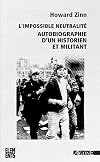
- L'impossible neutralité. Autobiographie d'un historien et militant
- Original title
- You can't be neutral on a moving train
- Original publication date
- 1994
- People/Characters
- Howard Zinn
- Important places
- USA
- Related movies
- Howard Zinn: You Can't Be Neutral on a Moving Train (2004 | IMDb)
- Dedication
- To Roslyn, for everything
- First words
- Teaching and living for seven years in the black community of Spelman College in Atlanta, Georgia, in theyears of "the Movement," I came to see the importance of small-scale actions as preparing the way for larger ones.
Introduction: I had been invited to give a talk in Kalamazoo, Michigan. - Quotations
- People respect feelings, but still want reasons. Reasons for going on, for not surrendering, for not retreating into private luxury or private desperation. People want evidence of those possibilities in human behavior. (p.... (show all)12)
...in the "quiet" years before the eruption of the sit-ins there were individual acts--obscure, unrecorded, sometimes seemingly futile--which kept the spirit of defiance alive. (p.25)
"The rule of law"...usually means that whoever can afford to pay lawyers and can afford to wait is the winner, and "justice" does not much matter. (p.43)
Social movements may have many "defeats"--failing to achieve objectives in the short run--but in the course of the struggle the strength of the old order begins to erode, the minds of people begin to change; the protesters ar... (show all)e momentarily defeated but not crushed, and have been lifted, heartened, by their ability to fight back. (p.54)
A systematic failure to enforce civil rights law had marked every national administration since 1877, whether Democrat or Republican, liberal or conservative. Racism was not southern policy, it was national policy.(p.57)
Ella Baker spoke..."Even if segregation is gone, we will still need to be free, we will still have to see that everyone has a job. Even if we can all vote, but if people are still hungry, we will not be free...we are not figh... (show all)ting for the freedom of the Negro alone, but for the freedom of the human spirit, a larger freedom that encompasses all mankind." (p.75-6)
...most racists have something they care about more than racial segregation, and the problem is to locate what that is. (p.92)
...the atmosphere of war brutalizes everyone involved, begets a fanaticism in which the original moral factor...is buried at the bottom. of a heap of atrocities committed by all sides....War may be undertaken for what appears... (show all) a good cause, against violence, against cruelty, but war itself multiplies the violence, multiplies the cruelty. (p.98-100)
I see this as the central issue of our time: how to find a substitute for war in human ingenuity, imagination, courage sacrifice, patience...War is not inevitable, however persistent it is...It does not come out of some insti... (show all)nctive human need. It is manufactured by political leaders... (p101)
Americans have a long history of protesting against wars into which their government tries to entice them or force them under threat of prison. (p.107)
I have come to believe that our lives can be turned in a different direction, our minds adopt a different way of thinking, because of some significant though small event. That belief can be frightening or exhilarating, depen... (show all)ding on whether you just contemplate the event or do something with it. (p.173)
...it seems that human beings, whatever their backgrounds, are more open than we think, that their behavior cannot be confidently predicted from their past, that we are all creatures vulnerable to new thoughts, new attitudes.... (show all)..no human being should be written off, no change in thinking deemed impossible. (p.181-2)
...the history of social movements often confines itself to the large events, the pivotal moments...Missing from such histories are the countless small actions of unknown people that led up to those great moments. When we un... (show all)derstand this, we can see that the tiniest acts of protest in which we engage may become the invisible roots of social changed. (p.24)
For an aggrieved group to learn that it must rely on itself, even if the learning is accompanied by bitter losses in the immediate sense, is to strengthen itself for future struggles. (p.55) - Last words
- (Click to show. Warning: May contain spoilers.)The future is an infinite succession of presents, and to live now as we think human beings should live, in defiance of all that is bad around us, is itself a marvelous victory.
- Blurbers
- Walker, Alice; Kozol, Jonathan; Rothschild, Matthew; O'Connell, Patricia; Edelman, Marian Wright; McCarthy, Colman
- Original language*
- Anglais (Etats-Unis) (Etats-Unis)
*Some information comes from Common Knowledge in other languages. Click "Edit" for more information.
Classifications
Statistics
- Members
- 806
- Popularity
- 34,280
- Reviews
- 22
- Rating
- (4.18)
- Languages
- 7 — English, French, German, Korean, Spanish, Swedish, Turkish
- Media
- Paper, Audiobook, Ebook
- ISBNs
- 18
- UPCs
- 1
- ASINs
- 9