
Keeanga-Yamahtta Taylor
Author of How We Get Free: Black Feminism and the Combahee River Collective
About the Author
Keeanga-Yamahtta Taylor writes and speaks on Black politics, social movements, and racial inequality in the United States. She is the author of Race for Profit How Banks and the Real Estate industry Undermined Black Homeownership, which was a finalist for the 2020 Pulitzer Prize for History, and of show more How We Get Free: Black Feminism and the Combahee River Collective, which won the Lambda Literary Award for LGBTQ nonfiction in 2018. She is a professor of African American Studies at Princeton University and a contributing writer at the New Yorker. show less
Image credit: Via Wikipedia
Works by Keeanga-Yamahtta Taylor
How We Get Free: Black Feminism and the Combahee River Collective (2017) — Editor — 672 copies, 3 reviews
Race for Profit: How Banks and the Real Estate Industry Undermined Black Homeownership (2019) 265 copies, 2 reviews
Associated Works
Four Hundred Souls: A Community History of African America, 1619-2019 (2021) — Contributor — 1,172 copies, 25 reviews
You Can't Be Neutral on a Moving Train: A Personal History of Our Times (1994) — Foreword, some editions — 811 copies, 22 reviews
The Anti-Inauguration: Building Resistance in the Trump Era (2016) — Contributor — 33 copies, 1 review
We Refuse to Be Silent: Women's Voices on Justice for Black Men (2024) — Contributor — 16 copies, 9 reviews
Socialist Strategy and Electoral Politics: A Report — Contributor, some editions — 9 copies
Tagged
Common Knowledge
- Birthdate
- 1950
- Gender
- female
- Education
- Northeastern Illinois University (BA)
Northwestern University (MA, PhD | African American Studies)
University of Illinois at Urbana-Champaign (post-doc) - Occupations
- professor
historian
author
political activist - Organizations
- International Socialist Organization
Princeton University, African American Studies
Urban History Association
American Historical Association
American Sociological Association - Agent
- France Coady
- Nationality
- USA
- Associated Place (for map)
- USA
Members
Reviews

Where do we go from here?
"From the mutual foundation of slavery and freedom at the country’s inception to the genocide of the Native population that made the “peculiar institution” possible to the racist promulgation of “manifest destiny” to the Chinese Exclusion Act to the codified subordinate status of Black people for a hundred years after slavery ended, they are all grim reminders of the millions of bodies upon which the audacious smugness of American hubris is built. Race and show more racism have not been exceptions; instead, they have been the glue that holds the United States together."
"Pathologizing 'Black' crime while making 'white' crime invisible creates a barrier between the two, when solidarity could unite both in confronting the excesses of the criminal justice system. This, in a sense, is the other product of the “culture of poverty” and of naturalizing Black inequality. This narrative works to deepen the cleavages between groups of people who would otherwise have every interest in combining forces."
-- 4.5 stars --
I picked up From #BlackLivesMatter to Black Liberation expecting a discussion about police brutality, mass incarceration, and the criminalization of blackness and poverty; what I found was a little different, and much more far-reaching.
While Keeanga-Yamahtta Taylor does talk about recent, high-profile cases of police brutality and murder - and the protest movement these injustices have birthed - she also goes further back, in order to examine the current wave of activism in its historical context. Reaching as far back as Roosevelt's New Deal in the 1920s and LBJ's "Great Society" reforms in the 1960s, Taylor shows how each came about as a result of social unrest - and was later undermined and dismantled as activism waned (or was routinely suppressed by the government), often under the guise of some utopian, post-racial colorblindness. Tracing the beginning of harmful racist stereotypes to the rise of the Trans-Atlantic slave trade, she argues that the path to black liberation is primarily economic, i.e., dismantling the capitalist system and/or embracing socialist initiatives (presumably resembling the People's Platform recently presented to the Democrats).
The early chapters on politics that predate me were a little rough to get through, I'm not gonna lie. But this is a personal preference, and you or may not feel the same. Once Taylor hit more contemporary events, my interest picked up too. Her argument is shrewd, impassioned, and all but guaranteed to make you think - even if you don't agree with her conclusions 100%.
Before my reading, I perused the reviews on Goodreads to get a feel for the material. My attention was drawn to the lone two-star review, which took Taylor to task for ignoring the racism of early leftists, "equating racism by whites & black people's response to it as if they are on the same level" (which I definitely don't remember seeing). I think maybe some of the confusion lies in the terms; for example, Taylor frequently criticizes liberals for erasure (e.g., ignoring racism and racial identity in their policies and agendas), or engaging in racism themselves. Can the terms "liberal," "progressive," and "socialist" be used interchangeably, though? More importantly, are they here? It wasn't always clear to me.
To this first point - erasure, for example, by focusing on class instead of race - I wondered what Taylor would make of Bernie Sanders, who has been roundly criticized by women and people of color for throwing these groups under the bus ('identity politics are divisive') in order to attract white, middle- and working-class Christian men (i.e., Trump's base). Taylor does mention Sanders briefly, only to dismiss him as part of the "right wing" of the socialist party. I have to wonder how different (if at all) this book might have looked it it was written and published a year or two later. (fwiw, I supported Sanders in the primary, but voted for Clinton in the general election. I've grown increasingly disillusioned with Sanders's focus on white men to the exclusion of marginalized groups. It's almost like the Dems didn't learn anything in November!)
Though not without some minor flaws, From #BlackLivesMatter to Black Liberation is a book that informs, educates, and challenges. I really hope it gets published with an update four or eight years down the line.
Table of Contents
Introduction: Black Awakening in Obama’s America
Chapter 1. A Culture of Racism
Chapter 2. From Civil Rights to Colorblind
Chapter 3. Black Faces in High Places
Chapter 4. The Double Standard of Justice
Chapter 5. Barack Obama: The End of an Illusion
Chapter 6. Black Lives Matter: A Movement, Not a Moment
Chapter 7. From #BlackLivesMatter to Black Liberation
Acknowledgments
Notes
About the Author
http://www.easyvegan.info/2017/08/10/from-blacklivesmatter-to-black-liberation-b... show less
"From the mutual foundation of slavery and freedom at the country’s inception to the genocide of the Native population that made the “peculiar institution” possible to the racist promulgation of “manifest destiny” to the Chinese Exclusion Act to the codified subordinate status of Black people for a hundred years after slavery ended, they are all grim reminders of the millions of bodies upon which the audacious smugness of American hubris is built. Race and show more racism have not been exceptions; instead, they have been the glue that holds the United States together."
"Pathologizing 'Black' crime while making 'white' crime invisible creates a barrier between the two, when solidarity could unite both in confronting the excesses of the criminal justice system. This, in a sense, is the other product of the “culture of poverty” and of naturalizing Black inequality. This narrative works to deepen the cleavages between groups of people who would otherwise have every interest in combining forces."
-- 4.5 stars --
I picked up From #BlackLivesMatter to Black Liberation expecting a discussion about police brutality, mass incarceration, and the criminalization of blackness and poverty; what I found was a little different, and much more far-reaching.
While Keeanga-Yamahtta Taylor does talk about recent, high-profile cases of police brutality and murder - and the protest movement these injustices have birthed - she also goes further back, in order to examine the current wave of activism in its historical context. Reaching as far back as Roosevelt's New Deal in the 1920s and LBJ's "Great Society" reforms in the 1960s, Taylor shows how each came about as a result of social unrest - and was later undermined and dismantled as activism waned (or was routinely suppressed by the government), often under the guise of some utopian, post-racial colorblindness. Tracing the beginning of harmful racist stereotypes to the rise of the Trans-Atlantic slave trade, she argues that the path to black liberation is primarily economic, i.e., dismantling the capitalist system and/or embracing socialist initiatives (presumably resembling the People's Platform recently presented to the Democrats).
The early chapters on politics that predate me were a little rough to get through, I'm not gonna lie. But this is a personal preference, and you or may not feel the same. Once Taylor hit more contemporary events, my interest picked up too. Her argument is shrewd, impassioned, and all but guaranteed to make you think - even if you don't agree with her conclusions 100%.
Before my reading, I perused the reviews on Goodreads to get a feel for the material. My attention was drawn to the lone two-star review, which took Taylor to task for ignoring the racism of early leftists, "equating racism by whites & black people's response to it as if they are on the same level" (which I definitely don't remember seeing). I think maybe some of the confusion lies in the terms; for example, Taylor frequently criticizes liberals for erasure (e.g., ignoring racism and racial identity in their policies and agendas), or engaging in racism themselves. Can the terms "liberal," "progressive," and "socialist" be used interchangeably, though? More importantly, are they here? It wasn't always clear to me.
To this first point - erasure, for example, by focusing on class instead of race - I wondered what Taylor would make of Bernie Sanders, who has been roundly criticized by women and people of color for throwing these groups under the bus ('identity politics are divisive') in order to attract white, middle- and working-class Christian men (i.e., Trump's base). Taylor does mention Sanders briefly, only to dismiss him as part of the "right wing" of the socialist party. I have to wonder how different (if at all) this book might have looked it it was written and published a year or two later. (fwiw, I supported Sanders in the primary, but voted for Clinton in the general election. I've grown increasingly disillusioned with Sanders's focus on white men to the exclusion of marginalized groups. It's almost like the Dems didn't learn anything in November!)
Though not without some minor flaws, From #BlackLivesMatter to Black Liberation is a book that informs, educates, and challenges. I really hope it gets published with an update four or eight years down the line.
Table of Contents
Introduction: Black Awakening in Obama’s America
Chapter 1. A Culture of Racism
Chapter 2. From Civil Rights to Colorblind
Chapter 3. Black Faces in High Places
Chapter 4. The Double Standard of Justice
Chapter 5. Barack Obama: The End of an Illusion
Chapter 6. Black Lives Matter: A Movement, Not a Moment
Chapter 7. From #BlackLivesMatter to Black Liberation
Acknowledgments
Notes
About the Author
http://www.easyvegan.info/2017/08/10/from-blacklivesmatter-to-black-liberation-b... show less
Race for Profit: How Banks and the Real Estate Industry Undermined Black Homeownership (Justice, Power, and Politics) by Keeanga-Yamahtta Taylor

Race for Profit is a deeply researched, impeccably argued study of the conception, implementation, and consequences of HUD-FHA's low income housing programs in the late 60s and early 70s. Previously, redlining by the government and the financial sector meant that Black people and Black neighborhoods were--legally--perceived as risky investments due to race. Thus Blacks were overwhelmingly excluded from the rising postwar prosperity enjoyed by whites, who were extended generous FHA loans to show more buy houses in the suburbs whose value was precisely tied to their location in racially homogenous white neighborhoods.
Federal redlining officially ended in 1968, but racialized residential segregation and wealth disparity did not. That year, in response to residential segregation and housing shortages, Lyndon Johnson signed the Fair Housing and HUD (Housing and Urban Development) Acts into law, which centralized federal housing policy under one department, prohibited explicit racial discrimination in the housing industry, and created a public-private partnership between the government and mortgage banks to incentivize investment and encourage homeownership in black communities. Crucially, the central mechanism created to achieve these goals was heavy government subsidy of private mortgage loans: if a bank offered a standard loan at 8% interest and $1,000 down payment, HUD would pay the lender 7% of the interest and $750 of the down payment, greatly easing the borrower’s financial burden. In addition, the entire loan was guaranteed by HUD, meaning the mortgage banker got paid the full amount of the loan, even if the borrower defaulted. Because it was conceived as a public-private partnership (for reasons that have to do in large part with the ballooning costs of the Vietnam War) HUD’s low-income housing program absorbed the deeply ingrained racial prejudice of the housing industry, a prejudice so integral that it structured the entire housing market, and touched every element of the home-buying process, from mortgage underwriting criteria, to appraisal, to zoning, and more. By completely removing the risk associated with lending to Blacks without remedying the racism of the housing industry, the new program created a perverse incentive for banks to generate as many new loans as possible without ensuring--and often willfully overlooking--their viability (an incentive that was supercharged by the introduction of a new financial instrument called a “mortgage-backed security,” hmmmm). In fact, under this regime, mortgage banks were especially incentivized to loan to buyers who they knew could not afford the terms of the loan, because when the house went into foreclosure, they could buy it again at a low price and start the process anew, getting paid in full by HUD no matter what. These incentives, in combination with disastrously inadequate oversight, meant that poor Blacks in urban neighborhoods with old housing stock were sold homes they couldn’t afford, at inflated prices set by corrupt appraisers, and given no material support should they almost inevitably fall behind on mortgage payments and maintenance costs, leading in most cases to quick eviction from homes they were promised were the ticket to the American Dream. Though the exclusionary race discrimination policy of redlining had ended, HUD’s federal mortgage insurance scheme created a new regime of wealth extraction in Black neighborhoods through a pernicious “predatory inclusion.”
Though Taylor makes clear that it was the combination of racism and profit-seeking in the housing industry that caused HUD-FHA’s low-income mortgage insurance scheme to fail, she also documents the program’s mismanagement under Richard Nixon and his HUD secretary George Romney. Nixon sought to cut back the burgeoning administrative state created to oversee LBJ’s Great Society initiatives. This desire dovetailed with his “southern strategy” of dogwhistle racism to consolidate his white suburban political base. With these goals in mind, Nixon took two measures that effectively doomed HUD’s fair housing initiatives to failure. First, he announced that the federal government would not take punitive measures against white suburban neighborhoods that resisted the construction of low-income housing, even though withholding federal money is the central enforcement mechanism of 20th century American civil rights law. Then, Nixon handed down severe budget cuts to HUD, crippling its ability to properly administer such a large, regulation-intensive program. These two actions greatly exacerbated the existing structural problems involved with the mortgage insurance scheme, nigh-guaranteeing the failures described above. Nixon then blamed this failure on the Black homeowners themselves, taking it as evidence of a deficit of character among Black citizens rather than the result of the racism, profit-seeking, and mismanagement of government and private industry.
The HUD act’s low-income housing scheme fell as part of the wider turn to neoliberalism, which Taylor helpfully reminds us was as much a white backlash against the civil rights provisions of the 1960s as it was a corporate backlash to the stagflation and unemployment crises of the 70s. But its failures were not inevitable. Taylor’s analysis suggests that the program would have been more viable if it did not rely on incentivizing private investment, and if the government took civil rights enforcement seriously (If these seem like unlikely counterfactuals, it’s because American capitalism is deeply racist). But because it was a public-private partnership under the aegis of a large federal agency, and because the government did not take civil rights enforcement seriously, Nixon could paint the mortgage insurance plan as a wasteful government handout to undeserving racial minorities, and then use this as evidence that the welfare state needed to be dramatically curtailed, rather than reinforced. These days, we face a cascading series of crises--climate change, extreme wealth inequality, health care, drug-resistant microbes, and more--that call for massive public investment. Taylor’s book should remind us that there are better and worse ways to structure this investment. First, do not structure the investment around the profit-seeking behavior of private actors. Instead, use social welfare as the basis of taxpayer-funded government investment. Second, do not apportion this investment according to racial or other prejudice. Instead, make sure the programs are well-funded and use existing civil rights law to rigorously safeguard against uneven apportionment. It’s no coincidence that these steps cut directly against the principles of neoliberal governance. They are essential qualities for any program that aims to tackle one of the slow-rolling catastrophes listed above.
---
I keep trying to add some personal reflections on reading the book at the end of this review, but I find that nothing I write adds anything substantial to my attempt at a description of Taylor’s argument. It’s an argument so powerful, and so well-supported by original research, that all I can say is that if you are interested in mid-century American politics, structural racism, political economy, housing, or (broadly speaking) justice, you are obligated to find a copy of this book and read it as carefully as possible. The style may be a bit academic (it is adapted from a dissertation), but this is in service of precision, not obfuscation. show less
Federal redlining officially ended in 1968, but racialized residential segregation and wealth disparity did not. That year, in response to residential segregation and housing shortages, Lyndon Johnson signed the Fair Housing and HUD (Housing and Urban Development) Acts into law, which centralized federal housing policy under one department, prohibited explicit racial discrimination in the housing industry, and created a public-private partnership between the government and mortgage banks to incentivize investment and encourage homeownership in black communities. Crucially, the central mechanism created to achieve these goals was heavy government subsidy of private mortgage loans: if a bank offered a standard loan at 8% interest and $1,000 down payment, HUD would pay the lender 7% of the interest and $750 of the down payment, greatly easing the borrower’s financial burden. In addition, the entire loan was guaranteed by HUD, meaning the mortgage banker got paid the full amount of the loan, even if the borrower defaulted. Because it was conceived as a public-private partnership (for reasons that have to do in large part with the ballooning costs of the Vietnam War) HUD’s low-income housing program absorbed the deeply ingrained racial prejudice of the housing industry, a prejudice so integral that it structured the entire housing market, and touched every element of the home-buying process, from mortgage underwriting criteria, to appraisal, to zoning, and more. By completely removing the risk associated with lending to Blacks without remedying the racism of the housing industry, the new program created a perverse incentive for banks to generate as many new loans as possible without ensuring--and often willfully overlooking--their viability (an incentive that was supercharged by the introduction of a new financial instrument called a “mortgage-backed security,” hmmmm). In fact, under this regime, mortgage banks were especially incentivized to loan to buyers who they knew could not afford the terms of the loan, because when the house went into foreclosure, they could buy it again at a low price and start the process anew, getting paid in full by HUD no matter what. These incentives, in combination with disastrously inadequate oversight, meant that poor Blacks in urban neighborhoods with old housing stock were sold homes they couldn’t afford, at inflated prices set by corrupt appraisers, and given no material support should they almost inevitably fall behind on mortgage payments and maintenance costs, leading in most cases to quick eviction from homes they were promised were the ticket to the American Dream. Though the exclusionary race discrimination policy of redlining had ended, HUD’s federal mortgage insurance scheme created a new regime of wealth extraction in Black neighborhoods through a pernicious “predatory inclusion.”
Though Taylor makes clear that it was the combination of racism and profit-seeking in the housing industry that caused HUD-FHA’s low-income mortgage insurance scheme to fail, she also documents the program’s mismanagement under Richard Nixon and his HUD secretary George Romney. Nixon sought to cut back the burgeoning administrative state created to oversee LBJ’s Great Society initiatives. This desire dovetailed with his “southern strategy” of dogwhistle racism to consolidate his white suburban political base. With these goals in mind, Nixon took two measures that effectively doomed HUD’s fair housing initiatives to failure. First, he announced that the federal government would not take punitive measures against white suburban neighborhoods that resisted the construction of low-income housing, even though withholding federal money is the central enforcement mechanism of 20th century American civil rights law. Then, Nixon handed down severe budget cuts to HUD, crippling its ability to properly administer such a large, regulation-intensive program. These two actions greatly exacerbated the existing structural problems involved with the mortgage insurance scheme, nigh-guaranteeing the failures described above. Nixon then blamed this failure on the Black homeowners themselves, taking it as evidence of a deficit of character among Black citizens rather than the result of the racism, profit-seeking, and mismanagement of government and private industry.
The HUD act’s low-income housing scheme fell as part of the wider turn to neoliberalism, which Taylor helpfully reminds us was as much a white backlash against the civil rights provisions of the 1960s as it was a corporate backlash to the stagflation and unemployment crises of the 70s. But its failures were not inevitable. Taylor’s analysis suggests that the program would have been more viable if it did not rely on incentivizing private investment, and if the government took civil rights enforcement seriously (If these seem like unlikely counterfactuals, it’s because American capitalism is deeply racist). But because it was a public-private partnership under the aegis of a large federal agency, and because the government did not take civil rights enforcement seriously, Nixon could paint the mortgage insurance plan as a wasteful government handout to undeserving racial minorities, and then use this as evidence that the welfare state needed to be dramatically curtailed, rather than reinforced. These days, we face a cascading series of crises--climate change, extreme wealth inequality, health care, drug-resistant microbes, and more--that call for massive public investment. Taylor’s book should remind us that there are better and worse ways to structure this investment. First, do not structure the investment around the profit-seeking behavior of private actors. Instead, use social welfare as the basis of taxpayer-funded government investment. Second, do not apportion this investment according to racial or other prejudice. Instead, make sure the programs are well-funded and use existing civil rights law to rigorously safeguard against uneven apportionment. It’s no coincidence that these steps cut directly against the principles of neoliberal governance. They are essential qualities for any program that aims to tackle one of the slow-rolling catastrophes listed above.
---
I keep trying to add some personal reflections on reading the book at the end of this review, but I find that nothing I write adds anything substantial to my attempt at a description of Taylor’s argument. It’s an argument so powerful, and so well-supported by original research, that all I can say is that if you are interested in mid-century American politics, structural racism, political economy, housing, or (broadly speaking) justice, you are obligated to find a copy of this book and read it as carefully as possible. The style may be a bit academic (it is adapted from a dissertation), but this is in service of precision, not obfuscation. show less

First off, this book was written during the Obama administration, with a short update at the end that appears to have been written immediately after Trump was elected. I'd love to see an update that covers the recent BLM uprising.
That said, this book was much better than I thought it would be. It gives a detailed history of the Civil Rights movement, and it's successes and failures, and then compares them to the current (six years ago) Black Lives Matter movement. Taylor explains this in an show more academic voice, but one that's accessible to just about anyone. I feel like I have a much clearer understanding of many things now that I've read this.
The only section that rubbed me the wrong way was when Taylor, seemingly apropos of nothing, defends Marx from charges that he was racist. She doesn't do a very good job, and doesn't even mention his misogyny or rampant anti-Semitism show less
That said, this book was much better than I thought it would be. It gives a detailed history of the Civil Rights movement, and it's successes and failures, and then compares them to the current (six years ago) Black Lives Matter movement. Taylor explains this in an show more academic voice, but one that's accessible to just about anyone. I feel like I have a much clearer understanding of many things now that I've read this.
The only section that rubbed me the wrong way was when Taylor, seemingly apropos of nothing, defends Marx from charges that he was racist. She doesn't do a very good job, and doesn't even mention his misogyny or rampant anti-Semitism show less
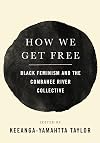
American's are loathe to place things into historical context, to reflect on past experience, to learn, and to move forward. Rather we burn things down and start from zero all the time. It is frustrating and infuriating, and as much as I would like to lay this behavior at the feet of the radical anarchist in the White House and his merry band of self-dealing lackeys it is something that is routinely done by the left, the center, and those at every point in between those spots on the show more spectrum. One movement that has been most guilty of this is feminism. Third wave feminists reject second-wave feminism out of hand as just a bunch of bitter women who want to stop them from getting laid and wearing cute shorts. This book, a collection of interviews by and between current black feminist socialist activists and the founders of the Combahee River Collective, contextualizes current definitions of feminism, gender and sexuality, and to a lesser extent the modern American spin on socialism. This is where intersectionality comes from, and the discussion is really satisfying.
I am an old feminist, most definitely placed squarely within the later part of the second wave. I was a Women's Studies minor in the 80's. and read some about the Combahee Collective at the time, but honestly not a ton, so much of this was revelatory. The interviews with the three founders were unending genius. Barbara Smith, Beverly Smith, and Demita Frazier are spectacularly wise. I learned so much from listening to their interviews. Though I support BLM, I am not a fan of Keeanga-Yamahtta Taylor, and my opinion of her after reading this book has not really improved much, she is sloppy as an academic, and to the extent she has a philosophy guiding her actions it is a philosophy that favors toppling over building. Tear that shit down is not reasoned or productive political discourse. Her anti-semitic rant at the end did not help. (You can support the interests of the Palestinian people without being an anti-semite, I am a person who does that -- Taylor does not.) For the most part this was amazing, and I tore through the audiobook. I recommend it absolutely,. show less
I am an old feminist, most definitely placed squarely within the later part of the second wave. I was a Women's Studies minor in the 80's. and read some about the Combahee Collective at the time, but honestly not a ton, so much of this was revelatory. The interviews with the three founders were unending genius. Barbara Smith, Beverly Smith, and Demita Frazier are spectacularly wise. I learned so much from listening to their interviews. Though I support BLM, I am not a fan of Keeanga-Yamahtta Taylor, and my opinion of her after reading this book has not really improved much, she is sloppy as an academic, and to the extent she has a philosophy guiding her actions it is a philosophy that favors toppling over building. Tear that shit down is not reasoned or productive political discourse. Her anti-semitic rant at the end did not help. (You can support the interests of the Palestinian people without being an anti-semite, I am a person who does that -- Taylor does not.) For the most part this was amazing, and I tore through the audiobook. I recommend it absolutely,. show less
Lists
Awards


You May Also Like


Associated Authors
Statistics
- Works
- 9
- Also by
- 11
- Members
- 1,637
- Popularity
- #15,691
- Rating
- 4.2
- Reviews
- 10
- ISBNs
- 34
- Languages
- 3