
Richard Rothstein (1) (1943–)
Author of The Color of Law: A Forgotten History of How Our Government Segregated America
For other authors named Richard Rothstein, see the disambiguation page.
About the Author
Richard Rothstein is a Distinguished Fellow of the Economic Policy Institute and an Emeritus Senior Fellow of the Thurgood Marshall Institute at the NAACP Legal Defense Fund. He lives in California, where he is a Senior Fellow at the Haas Institute at the University of California, Berkeley.
Works by Richard Rothstein
The Color of Law: A Forgotten History of How Our Government Segregated America (2017) — Author — 3,453 copies, 49 reviews
Just Action: How to Challenge Segregation Enacted Under the Color of Law (2023) — Author — 98 copies, 2 reviews
Class and Schools: Using Social, Economic, and Educational Reform to Close the Black-White Achievement Gap (2004) 86 copies, 3 reviews
The Way We Were?: The Myths and Realities of America's Student Achievement (Century Foundation/Twentieth Century Fund Report) (1998) 21 copies
Can Public Schools Learn From Private Schools: Case Studies in the Public and Private Nonprofit Sectors (1999) 4 copies
Associated Works
And Jill Came Tumbling After: Sexism in American Education (1974) — Contributor — 32 copies, 1 review
Tagged
Common Knowledge
- Birthdate
- 1943
- Gender
- male
- Organizations
- Economic Policy Institute
NAACP Legal Defense Fund
University of California, Berkeley - Nationality
- USA
- Places of residence
- California, USA
- Associated Place (for map)
- California, USA
Members
Reviews
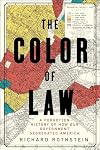
An excellent, comprehensive book which describes our country’s century-old laws and policies regarding residential segregation. Rothstein explains how political leaders and government agencies were complicit and full participants in this destructive and systemic segregation.
Most Americans have been encouraged by ‘The American Dream;’ to work hard, obey the law, provide for family, do the right thing. In return you get to have a good life, a decent job, a nice home, a happy, healthy show more family and more. This book has shown me how white Americans expected and felt entitled to red-carpet access to that dream. African-Americans were deliberately, criminally and immorally excluded from virtually all of that dream. While they were expected to work hard, obey the law, provide for their families, life was more of a complicated, endless struggle, a fraught nightmare with far-reaching consequences for generations and still visible, dangerous, and shameful today.
Housing shortages especially after WWII, led to construction of public housing mainly for white families. These buildings were located near good schools, and employment opportunities. If black families tried to move in, the federal government, in the form of many presidents including: FDR, Woodrow Wilson, Richard Nixon, Ronald Reagan and others, various government bodies and agencies including the Supreme Court, FHA, and others, banks, real estate associations, building and community associations, neighbors and individuals openly created non-inclusive laws, wrote manuals and guides to forbid, discourage, and stop blacks from doing so. The FHA would NOT provide mortgage insurance to any housing development built for African-Americans, and banks would not provide financing, etc.
In suburban one- and two-family homes developed around the country with tax-payer funds, the same anti-black policies held true. Levittown in Long Island, New York is just one example. Homes could not be purchased by African-Americans or Communists. If a home was sold to a black family, neighbors would harass, attack the family and the home while the police watched and did nothing to protect a black American family! And sometimes the neighbors would go after the white homeowners who sold their homes to black families.
Smaller housing developments for African-American families were built with inferior workmanship and materials. Located near warehouses, industries, far from schools, and job locations. In many cases, African-American men had to drive hours to get to work, and if late, they could easily be fired and replaced by white employees. Black men were employed mostly in low-level positions; and not offered job training for better jobs (that were available) because whites felt it would not be appropriate for African-Americans to manage or supervise white employees!
This created a cruel crescendo of buildings falling into disrepair; black men earning paltry salaries or out of work, marriages and families fracturing, people turning to crime to support families, black men arrested and jailed. While mothers worked, children were left on their own, and were vulnerable to gang influence. When a housing development got bad enough, the state/city decided to demolish it. Then builders constructed new, good quality housing for white families! Black tenants had to double up in relatives’ apartments in other housing for African-Americans. Overcrowded housing was common for poor immigrants, and now for African-American families, causing more stress and difficulties.
The flip side of this scenario, blacks being moved out to make room for whites, was ‘blockbusting.’ This occurred when real estate agents lied or exaggerated to white home owners that blacks had started moving into the neighborhood. This ‘effective’ scare tactic resulted in ‘white flight’; white families fleeing urban neighborhoods to find homes in the suburbs. Real estate agents then sold homes to blacks at higher prices, mortgaged at higher interest rates, and added other fees and penalties some of which buyers were not advised. In many cases, the real estate agents and banks wanted African-American owners to default on payments. Blacks would then be evicted without any equity, and the process would begin again with new people desperate for housing!
These policies were often protested, and government agencies sued, which brought some changes to the law. But because racism was insidious, those in authority felt above the law, free to ruthlessly, and often openly continue their egregious behavior, filled with hate and prejudice.
The ludicrous rationale used by these racists: blacks want to live by themselves, not with white citizens. The truth is that in the 19th century there were many ethnic neighborhoods (Greeks, Jews, Italians, Russian, etc.) in many cities where each group’s landsmen spoke the same language, practiced the same religion, cooked and ate the same foods, and who helped each other through difficult times. They were hopeful, ambitious, and wanted to fully participate in, and enjoy the freedoms of this country, and raise their families in peace and prosperity.
African-Americans were no different; they wanted the same rights and benefits. They obeyed the laws, worked hard, paid taxes, served (and died) in the military defending our country, and raised their families. They did not choose to live in inferior, crowded housing, kept far from good schools, jobs, cultural institutions and medical facilities. They did not deserve to be marginalized, disenfranchised, treated as less than 2nd class citizens. No one deserves that.
Other ridiculous racist excuses were that blacks were morally and mentally inferior, or that having integrated neighborhoods would result in miscegenation. Or that blacks would bring drugs and crime. Again, untrue. Drugs were used more often by white people. Drugs and crime found in some African-American neighborhoods were the results of decades of poverty, deprivation and hopelessness due many things including lack of job training and good-paying jobs.
And all because the South could not accept that the Civil War had ended, and they had lost. Slavery and Jim Crow were over for many, many years but the people of the South were stubborn and hard-hearted like Pharaoh in the Bible’s story of Exodus, and would not let the ‘slaves’ go. Disenfranchising, impoverishing, cheating, jailing, and expunging the voice of black human beings was the new form of slavery and Jim Crow!
Gradually, the government was finally forced into enforcing laws to stop housing segregation. In reality, some racist policies linger. Additionally, it may take decades to rectify the pervasive imbalance of unequal and illegal treatment, and the long-lasting damage done to our country.
The harm to African-American citizens includes: Economic Inequality between white and African-Americans. Southern racism permeated most aspects of politics and government. To win elections Northern politicians made evil deals with Southern politicians to maintain the status quo of horrific Jim Crow laws, and 2nd class treatment of blacks. By being excluded from the advantages of integrated housing with mortgages insured by the FHA, not given access to job training or good jobs, and being overcharged for inferior segregated housing, African-Americans did not benefit from the wealth the US generated. This has created a huge ‘wealth gap.’
Secondly, Educational Inequality - African-Americans lived in inferior over-crowded neighborhoods, attended poorly funded schools which did not have the resources white schools offered. Less libraries, cultural institutions, parks and more, black children had less opportunities to develop, grow and benefit educationally. That, of course, limits future success.
Additionally, Health Inequality - black neighborhoods often located near industries releasing toxins into the air, and because housing developments aged and fell into disrepair without regular maintenance. The original lead in pipes leached into water supply, and lead in old wall paint was eaten by hungry children. Many African-Americans suffer from asthma. Ingesting lead can harm developing brains, and result in violent behavior when child is older.
What about the emotional and psychological toll, the anger, depression and fear? How do we measure and quantify that pain?
Systemic racism, particularly housing segregation, has badly hurt all citizens of this country. It prevented millions of blacks and whites from living, going to school, working, worshipping together. Simply being neighbors and friends. Helping each other, bonding, and developing trust. A huge, unnecessary loss to all of us. Imagine how much better all our lives would have been had housing and neighborhoods been fully integrated.
Rothstein offers suggestions on remedies including giving African-Americans the homes they were prevented from owning in the past, reparations and a few compelling others.
My thoughts: The Color of Law was instructive and heart-breaking; revealing and maddening. To mistreat African-Americans, citizens, human beings, by deliberately planning, codifying, and carrying out immoral and illegal policies of exclusion. Leaving out one group of people based on race and nothing more. Rejecting, ostracizing hard-working people with dreams, skills, talents and needs like all human beings, to ensure they got the message that they were not welcome or wanted. To guarantee they remain poor, less educated, less healthy and certainly NOT happy. To make them work for whites for less pay, help defend our country, then lie to and cheat them of their full rights. To allow whites to harass, intimidate, and attack them when African-Americans moved to better neighborhoods, and to have officers of the law stand by and do nothing to protect them. To write untrue inciteful, inflammatory articles against blacks to scare whites from caring, or helping them. To intentionally set them up for failure. This is pure evil, and self-perpetuating. In effect, this is character assassination of a race of people, nothing less than wholesale murder of the spirit of a people!
Some will excuse it saying times were different but these policies have continued for over a century in different forms. And we clearly see that prejudice and racism still survive today.
Others will say the poor, uneducated people of the South didn’t know better. They felt threatened by blacks succeeding when they couldn’t, or of losing their free labor. Jealousy and greed are poor excuses for brutalizing people. But presidents, government officers, and other leaders cannot claim ignorance as an excuse. They had been educated, but didn’t exercise that privilege humanely or benevolently. Instead they chose to perpetuate the status quo by continuing inequality, with its harsh attitudes to and cruel treatment of black people.
There is so much information in this book that I know I haven’t covered everything. There is much I didn’t know about housing segregation, and so many other forms of discrimination. I need to continue reading and learning. It was hard to swallow and process this jarring and sorrowful topic, so I read it slowly. I needed to give myself time to digest, and attempt to fathom the enormity of evil in what the US, this country of much potential and hope, has done.
I hope others will read The Color of Law to understand the troubling truth of American history, and how because the U.S. defaulted on its promise of democracy, equality, and freedom for all must now make amends to African-Americans on a grand scale. show less
Most Americans have been encouraged by ‘The American Dream;’ to work hard, obey the law, provide for family, do the right thing. In return you get to have a good life, a decent job, a nice home, a happy, healthy show more family and more. This book has shown me how white Americans expected and felt entitled to red-carpet access to that dream. African-Americans were deliberately, criminally and immorally excluded from virtually all of that dream. While they were expected to work hard, obey the law, provide for their families, life was more of a complicated, endless struggle, a fraught nightmare with far-reaching consequences for generations and still visible, dangerous, and shameful today.
Housing shortages especially after WWII, led to construction of public housing mainly for white families. These buildings were located near good schools, and employment opportunities. If black families tried to move in, the federal government, in the form of many presidents including: FDR, Woodrow Wilson, Richard Nixon, Ronald Reagan and others, various government bodies and agencies including the Supreme Court, FHA, and others, banks, real estate associations, building and community associations, neighbors and individuals openly created non-inclusive laws, wrote manuals and guides to forbid, discourage, and stop blacks from doing so. The FHA would NOT provide mortgage insurance to any housing development built for African-Americans, and banks would not provide financing, etc.
In suburban one- and two-family homes developed around the country with tax-payer funds, the same anti-black policies held true. Levittown in Long Island, New York is just one example. Homes could not be purchased by African-Americans or Communists. If a home was sold to a black family, neighbors would harass, attack the family and the home while the police watched and did nothing to protect a black American family! And sometimes the neighbors would go after the white homeowners who sold their homes to black families.
Smaller housing developments for African-American families were built with inferior workmanship and materials. Located near warehouses, industries, far from schools, and job locations. In many cases, African-American men had to drive hours to get to work, and if late, they could easily be fired and replaced by white employees. Black men were employed mostly in low-level positions; and not offered job training for better jobs (that were available) because whites felt it would not be appropriate for African-Americans to manage or supervise white employees!
This created a cruel crescendo of buildings falling into disrepair; black men earning paltry salaries or out of work, marriages and families fracturing, people turning to crime to support families, black men arrested and jailed. While mothers worked, children were left on their own, and were vulnerable to gang influence. When a housing development got bad enough, the state/city decided to demolish it. Then builders constructed new, good quality housing for white families! Black tenants had to double up in relatives’ apartments in other housing for African-Americans. Overcrowded housing was common for poor immigrants, and now for African-American families, causing more stress and difficulties.
The flip side of this scenario, blacks being moved out to make room for whites, was ‘blockbusting.’ This occurred when real estate agents lied or exaggerated to white home owners that blacks had started moving into the neighborhood. This ‘effective’ scare tactic resulted in ‘white flight’; white families fleeing urban neighborhoods to find homes in the suburbs. Real estate agents then sold homes to blacks at higher prices, mortgaged at higher interest rates, and added other fees and penalties some of which buyers were not advised. In many cases, the real estate agents and banks wanted African-American owners to default on payments. Blacks would then be evicted without any equity, and the process would begin again with new people desperate for housing!
These policies were often protested, and government agencies sued, which brought some changes to the law. But because racism was insidious, those in authority felt above the law, free to ruthlessly, and often openly continue their egregious behavior, filled with hate and prejudice.
The ludicrous rationale used by these racists: blacks want to live by themselves, not with white citizens. The truth is that in the 19th century there were many ethnic neighborhoods (Greeks, Jews, Italians, Russian, etc.) in many cities where each group’s landsmen spoke the same language, practiced the same religion, cooked and ate the same foods, and who helped each other through difficult times. They were hopeful, ambitious, and wanted to fully participate in, and enjoy the freedoms of this country, and raise their families in peace and prosperity.
African-Americans were no different; they wanted the same rights and benefits. They obeyed the laws, worked hard, paid taxes, served (and died) in the military defending our country, and raised their families. They did not choose to live in inferior, crowded housing, kept far from good schools, jobs, cultural institutions and medical facilities. They did not deserve to be marginalized, disenfranchised, treated as less than 2nd class citizens. No one deserves that.
Other ridiculous racist excuses were that blacks were morally and mentally inferior, or that having integrated neighborhoods would result in miscegenation. Or that blacks would bring drugs and crime. Again, untrue. Drugs were used more often by white people. Drugs and crime found in some African-American neighborhoods were the results of decades of poverty, deprivation and hopelessness due many things including lack of job training and good-paying jobs.
And all because the South could not accept that the Civil War had ended, and they had lost. Slavery and Jim Crow were over for many, many years but the people of the South were stubborn and hard-hearted like Pharaoh in the Bible’s story of Exodus, and would not let the ‘slaves’ go. Disenfranchising, impoverishing, cheating, jailing, and expunging the voice of black human beings was the new form of slavery and Jim Crow!
Gradually, the government was finally forced into enforcing laws to stop housing segregation. In reality, some racist policies linger. Additionally, it may take decades to rectify the pervasive imbalance of unequal and illegal treatment, and the long-lasting damage done to our country.
The harm to African-American citizens includes: Economic Inequality between white and African-Americans. Southern racism permeated most aspects of politics and government. To win elections Northern politicians made evil deals with Southern politicians to maintain the status quo of horrific Jim Crow laws, and 2nd class treatment of blacks. By being excluded from the advantages of integrated housing with mortgages insured by the FHA, not given access to job training or good jobs, and being overcharged for inferior segregated housing, African-Americans did not benefit from the wealth the US generated. This has created a huge ‘wealth gap.’
Secondly, Educational Inequality - African-Americans lived in inferior over-crowded neighborhoods, attended poorly funded schools which did not have the resources white schools offered. Less libraries, cultural institutions, parks and more, black children had less opportunities to develop, grow and benefit educationally. That, of course, limits future success.
Additionally, Health Inequality - black neighborhoods often located near industries releasing toxins into the air, and because housing developments aged and fell into disrepair without regular maintenance. The original lead in pipes leached into water supply, and lead in old wall paint was eaten by hungry children. Many African-Americans suffer from asthma. Ingesting lead can harm developing brains, and result in violent behavior when child is older.
What about the emotional and psychological toll, the anger, depression and fear? How do we measure and quantify that pain?
Systemic racism, particularly housing segregation, has badly hurt all citizens of this country. It prevented millions of blacks and whites from living, going to school, working, worshipping together. Simply being neighbors and friends. Helping each other, bonding, and developing trust. A huge, unnecessary loss to all of us. Imagine how much better all our lives would have been had housing and neighborhoods been fully integrated.
Rothstein offers suggestions on remedies including giving African-Americans the homes they were prevented from owning in the past, reparations and a few compelling others.
My thoughts: The Color of Law was instructive and heart-breaking; revealing and maddening. To mistreat African-Americans, citizens, human beings, by deliberately planning, codifying, and carrying out immoral and illegal policies of exclusion. Leaving out one group of people based on race and nothing more. Rejecting, ostracizing hard-working people with dreams, skills, talents and needs like all human beings, to ensure they got the message that they were not welcome or wanted. To guarantee they remain poor, less educated, less healthy and certainly NOT happy. To make them work for whites for less pay, help defend our country, then lie to and cheat them of their full rights. To allow whites to harass, intimidate, and attack them when African-Americans moved to better neighborhoods, and to have officers of the law stand by and do nothing to protect them. To write untrue inciteful, inflammatory articles against blacks to scare whites from caring, or helping them. To intentionally set them up for failure. This is pure evil, and self-perpetuating. In effect, this is character assassination of a race of people, nothing less than wholesale murder of the spirit of a people!
Some will excuse it saying times were different but these policies have continued for over a century in different forms. And we clearly see that prejudice and racism still survive today.
Others will say the poor, uneducated people of the South didn’t know better. They felt threatened by blacks succeeding when they couldn’t, or of losing their free labor. Jealousy and greed are poor excuses for brutalizing people. But presidents, government officers, and other leaders cannot claim ignorance as an excuse. They had been educated, but didn’t exercise that privilege humanely or benevolently. Instead they chose to perpetuate the status quo by continuing inequality, with its harsh attitudes to and cruel treatment of black people.
There is so much information in this book that I know I haven’t covered everything. There is much I didn’t know about housing segregation, and so many other forms of discrimination. I need to continue reading and learning. It was hard to swallow and process this jarring and sorrowful topic, so I read it slowly. I needed to give myself time to digest, and attempt to fathom the enormity of evil in what the US, this country of much potential and hope, has done.
I hope others will read The Color of Law to understand the troubling truth of American history, and how because the U.S. defaulted on its promise of democracy, equality, and freedom for all must now make amends to African-Americans on a grand scale. show less
I often don't pay close attention to year-end best-of lists for books, since most of them focus on fiction, which I rarely read. That said, I do take note of non-fiction lists, and one book that was on many such best-of lists last year was Richard Rothstein's account of housing segregation in America. Previous to reading it, I'd heard about redlining and the maps (like the one on the cover) that they refer to, but I was as guilty as most Americans in not having enough knowledge of this show more "forgotten" history. (I actually wonder if "forgotten" in the book's subtitle should be replaced with "untold.") Rothstein's history is deeply researched (with many long footnotes), clearly told, and one of the best books I've read in recent years, well worth all the year-end praise.
In "The Color of Law" Rothstein provides evidence and stories of how racial housing segregation in the United States last century was mandated by the government. It was, as he describes it repeatedly, de jure segregation rather than de facto segregation; the former is in accordance with law while the latter arises from social factors. But Rothstein doesn't just tell a history, he also argues for some fixes (none of them easy) for the lasting effects of residential segregation. Perhaps knowing the controversy of his book's subject and the difficulty in people swallowing his fixes, he even supplies a section of Frequently Asked Questions -- and clear-headed answers -- at the back of the book. It's a history I wish didn't exist, but one that needed to be told in just the way Rothstein did. show less
In "The Color of Law" Rothstein provides evidence and stories of how racial housing segregation in the United States last century was mandated by the government. It was, as he describes it repeatedly, de jure segregation rather than de facto segregation; the former is in accordance with law while the latter arises from social factors. But Rothstein doesn't just tell a history, he also argues for some fixes (none of them easy) for the lasting effects of residential segregation. Perhaps knowing the controversy of his book's subject and the difficulty in people swallowing his fixes, he even supplies a section of Frequently Asked Questions -- and clear-headed answers -- at the back of the book. It's a history I wish didn't exist, but one that needed to be told in just the way Rothstein did. show less
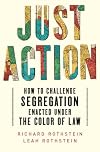
In Just Action: How to Challenge Segregation Enacted Under the Color of Law, Richard and Leah Rothstein examine the policies at the heart of residential segregation, explore efforts to challenge those policies over the years, and posit possible solutions based on local efforts from throughout the United States as well as existing policies that – if properly enforced – could offer an avenue to redress segregation. They build upon Richard Rothstein’s earlier book, The Color of Law. As show more they explain, “The Color of Law recounted the unconstitutional fashion by which government at all levels created segregation. Just Action describes how we can begin to undo it” (p. 7). Discussing the scale of the problem, the Rothsteins write, “African American household wealth is only about 5 percent of whites’. The disparity largely stems from mid-twentieth-century government policy that subsidized the purchase of suburban homes by white working-class families. These properties subsequently appreciated greatly in value, while the same federal program prohibited black working-class families from gaining homeownership and equity in the same way” (p. 4). Further demonstrating the scale of segregation in the United States, they write, “Even a vigorously imposed ban of discrimination can do little to transform racial living patterns that were established fifty or one hundred years ago” (p. 5).
Summarizing prior legislation, the Rothsteins write, “While the Fair Housing Act of 1968 prohibits new acts of discrimination in the sale and rental of housing, even if it were well enforced (and it is not), a ban on future unlawful actions can do little to remedy the segregation and inequality of neighborhoods that already exist. It is a mostly empty gesture to tell black families, as the act does, that they now have the right to move into neighborhoods that have become too costly but were affordable when African Americans were excluded” (p. 41). The Rothsteins note that the Supreme Court may afford an opportunity to enact great changes, but that these changes should not rely upon a court that may issue a different ruling when new judges ascend to the bench. To this end, they advocate for localities pushing forward policies and programs even if they may face potential judicial review, noting that failure to act simply due to these fears does a disservice to those most in need of these policies. The Rothsteins write, “Public and private programs that are designed to redress past segregation should be the priority for civil rights advocates and be adopted, in disobedience of a Court that may later strike them down” (p. 47). They conclude, “As a democratic society, we should abandon entirely the notion of judicial supremacy and return to the principle upon which the nation was founded: three coequal branches of government” (p. 50).
Turning to zoning and property laws, the Rothsteins write, “The history of whites’ gains in property value makes it tempting to conclude that increased black homeownership is also the main way to close today’s wealth gap. It’s one way, but not the only one, and it cannot close the gap alone” (p. 64). They continue, “More than a century of discriminatory zoning policies in black neighborhoods have permitted nonresidential uses, such as industry and even toxic dumps, to be placed in many black areas. When they could, highway planners routed interstates through black communities, not white ones” (p. 65). Discussing the seemingly colorblind programs that reinforce segregation in their implementation, the Rothsteins write, “Banks’ use of scores to evaluate credit worthiness may not intentionally discriminate by race, but it’s discriminatory in effect” (p. 75). Addressing the creation of neighborhood identities, they write,“Once racial and class isolation becomes self-perpetuating and makes it even more difficult for us to come together, undermining our ability to forge a common national identity” (p. 84). The Rothsteins continue, “A healthy community that can sustain a common national identity is one where affluent, middle-class, working-class, and low-income families of all races and ethnicities have access to the same resources and whose children attend the same schools. This should be the aspiration of civil rights activists” (p. 89). They conclude of the risk that new policies might foster gentrification, “The challenge is to improve amenities so a neighborhood diversifies and strengthens economically, while preserving existing residents’ ability to remain in sufficient numbers that cultural characteristics and social networks of the community are not undermined. This requires place-based strategies to prevent the displacement of African American residents as conditions improve” (p. 89).
The Rothsteins list the important policies that activists must mobilize to ensure preservation of neighborhoods’ characters in the face of gentrification. They write, “These policies include inclusionary (mixed-income) zoning, rent control, prohibition of evictions except for just cause, prevention of security deposit theft, limits on condominium conversions, support for community land trusts, regulation of phony home sales, and property tax freezes” (p. 100). They propose new programs and an expansion of government powers to prevent segregation, writing, “No policy can force a building owner to remain in business. If one chooses to get out and cannot find a buyer who will pay a fair price and maintain regulated rent levels, a city should purchase the building at that price, effectively turning the rent-controlled building into public housing until it finds a new buyer. This has never been done, but it should be” (p. 112).
The Rothsteins describe how the lack of any justice only reproduces discrimination and makes it seem natural. They note that the real estate agencies, banks, and others who created housing systems in support of segregation have identifiable successor organizations that exist today and which have never faced accountability (p. 129). The Rothsteins write, “Once government and private businesses collaborated to establish neighborhood segregation in the twentieth century, policies and practices today can deepen that segregation, even without trying to do so. Seemingly race-neutral policies that intensify segregation have a disparate impact on African Americans – they discriminate in effect if not necessarily in intent” (p. 144). Both assessments and appraisals of Black-owned properties or in majority African American communities work to owners’ disadvantage, with those homeowners having less success in appealing the results than white homeowners with similar properties. Discussing the systemic failures that led Black homeowners to overpay, the Rothsteins write, “It is indisputable that African Americans are entitled to approximate recompense because they were harmed by the failure to conduct timely and accurate assessments” (p. 149).
Despite Kennedy’s 1962 order to for federal agencies to end discriminatory practices and the 1968 Fair Housing Act, “the courts… still consider it legal to maintain residential segregation with zoning, provided racial discrimination is not too explicit” (p. 171). The Rothsteins write, “Inclusionary zoning can be useful for desegregating white, affluent neighborhoods, but only if it is designed with this goal in mind. Local racial justice activists should make certain that their community’s inclusionary requirements serve this purpose” (p. 182). They caution, “Cleaning up behavior going forward can, at best, prevent segregation from deepening further, but past practices were racially explicit and generated huge profits. No corporations have acknowledged the need for equally explicit action of comparable size to remedy harms for which they bear responsibility. Certainly, government at all levels has a duty to lead” (p. 207). Proposing further actions that activists can pressure government and policymakers to take, the Rothsteins write, “The federal Department of Justice should ensure compliance with the Fair Housing Act. Its Civil Rights Division has an enforcement program that can conduct paired testing. The department does almost nothing with this authority. Considering how commonplace discrimination remains, this failure is shameful” (p. 212). They conclude with a reference to the effect of housing segregation on school segregation. The Rothsteins write, “School segregation makes neighborhood integration difficult, if not impossible, and neighborhood segregation makes school segregation inevitable” (p. 233). This trend supports the school-to-prison pipeline. The Rothsteins write, “A horrible consequence of school segregation is the harsher discipline of African American students, especially in more racially isolated schools” (p. 236). They conclude, “Communities conducting fair housing assessments should include in their analyses how school and neighborhood segregation are interconnected” (p. 240).
The Rothsteins’ Just Action is a critically important work, written for a wide readership committed to advocating for greater equity in their neighborhoods. It offers several policy proposals, outlining the steps others have taken around the county and describing how people may apply those actions in their own communities. The Rothsteins detail historical trends, but only as necessary for readers to understand how the policies they address developed over time with citations for those interested in further reading, but a style that is not overly-academic and thus makes their research more accessible to the people who most need to take these actions. show less
Summarizing prior legislation, the Rothsteins write, “While the Fair Housing Act of 1968 prohibits new acts of discrimination in the sale and rental of housing, even if it were well enforced (and it is not), a ban on future unlawful actions can do little to remedy the segregation and inequality of neighborhoods that already exist. It is a mostly empty gesture to tell black families, as the act does, that they now have the right to move into neighborhoods that have become too costly but were affordable when African Americans were excluded” (p. 41). The Rothsteins note that the Supreme Court may afford an opportunity to enact great changes, but that these changes should not rely upon a court that may issue a different ruling when new judges ascend to the bench. To this end, they advocate for localities pushing forward policies and programs even if they may face potential judicial review, noting that failure to act simply due to these fears does a disservice to those most in need of these policies. The Rothsteins write, “Public and private programs that are designed to redress past segregation should be the priority for civil rights advocates and be adopted, in disobedience of a Court that may later strike them down” (p. 47). They conclude, “As a democratic society, we should abandon entirely the notion of judicial supremacy and return to the principle upon which the nation was founded: three coequal branches of government” (p. 50).
Turning to zoning and property laws, the Rothsteins write, “The history of whites’ gains in property value makes it tempting to conclude that increased black homeownership is also the main way to close today’s wealth gap. It’s one way, but not the only one, and it cannot close the gap alone” (p. 64). They continue, “More than a century of discriminatory zoning policies in black neighborhoods have permitted nonresidential uses, such as industry and even toxic dumps, to be placed in many black areas. When they could, highway planners routed interstates through black communities, not white ones” (p. 65). Discussing the seemingly colorblind programs that reinforce segregation in their implementation, the Rothsteins write, “Banks’ use of scores to evaluate credit worthiness may not intentionally discriminate by race, but it’s discriminatory in effect” (p. 75). Addressing the creation of neighborhood identities, they write,“Once racial and class isolation becomes self-perpetuating and makes it even more difficult for us to come together, undermining our ability to forge a common national identity” (p. 84). The Rothsteins continue, “A healthy community that can sustain a common national identity is one where affluent, middle-class, working-class, and low-income families of all races and ethnicities have access to the same resources and whose children attend the same schools. This should be the aspiration of civil rights activists” (p. 89). They conclude of the risk that new policies might foster gentrification, “The challenge is to improve amenities so a neighborhood diversifies and strengthens economically, while preserving existing residents’ ability to remain in sufficient numbers that cultural characteristics and social networks of the community are not undermined. This requires place-based strategies to prevent the displacement of African American residents as conditions improve” (p. 89).
The Rothsteins list the important policies that activists must mobilize to ensure preservation of neighborhoods’ characters in the face of gentrification. They write, “These policies include inclusionary (mixed-income) zoning, rent control, prohibition of evictions except for just cause, prevention of security deposit theft, limits on condominium conversions, support for community land trusts, regulation of phony home sales, and property tax freezes” (p. 100). They propose new programs and an expansion of government powers to prevent segregation, writing, “No policy can force a building owner to remain in business. If one chooses to get out and cannot find a buyer who will pay a fair price and maintain regulated rent levels, a city should purchase the building at that price, effectively turning the rent-controlled building into public housing until it finds a new buyer. This has never been done, but it should be” (p. 112).
The Rothsteins describe how the lack of any justice only reproduces discrimination and makes it seem natural. They note that the real estate agencies, banks, and others who created housing systems in support of segregation have identifiable successor organizations that exist today and which have never faced accountability (p. 129). The Rothsteins write, “Once government and private businesses collaborated to establish neighborhood segregation in the twentieth century, policies and practices today can deepen that segregation, even without trying to do so. Seemingly race-neutral policies that intensify segregation have a disparate impact on African Americans – they discriminate in effect if not necessarily in intent” (p. 144). Both assessments and appraisals of Black-owned properties or in majority African American communities work to owners’ disadvantage, with those homeowners having less success in appealing the results than white homeowners with similar properties. Discussing the systemic failures that led Black homeowners to overpay, the Rothsteins write, “It is indisputable that African Americans are entitled to approximate recompense because they were harmed by the failure to conduct timely and accurate assessments” (p. 149).
Despite Kennedy’s 1962 order to for federal agencies to end discriminatory practices and the 1968 Fair Housing Act, “the courts… still consider it legal to maintain residential segregation with zoning, provided racial discrimination is not too explicit” (p. 171). The Rothsteins write, “Inclusionary zoning can be useful for desegregating white, affluent neighborhoods, but only if it is designed with this goal in mind. Local racial justice activists should make certain that their community’s inclusionary requirements serve this purpose” (p. 182). They caution, “Cleaning up behavior going forward can, at best, prevent segregation from deepening further, but past practices were racially explicit and generated huge profits. No corporations have acknowledged the need for equally explicit action of comparable size to remedy harms for which they bear responsibility. Certainly, government at all levels has a duty to lead” (p. 207). Proposing further actions that activists can pressure government and policymakers to take, the Rothsteins write, “The federal Department of Justice should ensure compliance with the Fair Housing Act. Its Civil Rights Division has an enforcement program that can conduct paired testing. The department does almost nothing with this authority. Considering how commonplace discrimination remains, this failure is shameful” (p. 212). They conclude with a reference to the effect of housing segregation on school segregation. The Rothsteins write, “School segregation makes neighborhood integration difficult, if not impossible, and neighborhood segregation makes school segregation inevitable” (p. 233). This trend supports the school-to-prison pipeline. The Rothsteins write, “A horrible consequence of school segregation is the harsher discipline of African American students, especially in more racially isolated schools” (p. 236). They conclude, “Communities conducting fair housing assessments should include in their analyses how school and neighborhood segregation are interconnected” (p. 240).
The Rothsteins’ Just Action is a critically important work, written for a wide readership committed to advocating for greater equity in their neighborhoods. It offers several policy proposals, outlining the steps others have taken around the county and describing how people may apply those actions in their own communities. The Rothsteins detail historical trends, but only as necessary for readers to understand how the policies they address developed over time with citations for those interested in further reading, but a style that is not overly-academic and thus makes their research more accessible to the people who most need to take these actions. show less
This book was recommended by a guy who testified at our City Council. He provided annotated copies to all our councilmembers. I was so impressed I went straight to the library and got a copy.
The book is about the US government's direct involvement in US housing segregation history. Its central thesis is that our current narrative assumes that housing segregation is a "de facto" issue brought about largely because of individual / local expressions of racism, when the reality is that it is a show more "de jure" decision made by federal, state and local governments over a long historical period. It is very convincing and well-argued.
The final chapter contains several ideas for reducing the levels of segregation in American cities and suburbs.
• Educate people that segregation was purposeful and government-incentivized and funded (current K-12 materials on American history make it sound like it was just due to the attitudes of residents rather than actual rules, regulations and laws)
• Revive George Romney’s idea from the 70s about denying HUD funds to any jurisdictions that exacerbate or prolong segregation through exclusionary zoning (“Open Communities”)
• Protect the Affirmatively Furthering Fair Housing rule (sort of on the back burner in Trump/Carson admin but can be revived)
• Federal subsidies for African American homeownership programs for specifically highly white communities
• Ban zoning ordinances that prohibit multifamily housing or mandate large lot sizes
• Require inclusionary zoning (Portland a bit ahead of the curve here)
• “Fair Share Act” to require states to establish mechanisms to ensure that every jurisdiction houses a representative share of African Americans and low income people
• Increase Section 8 subsidies to African Americans renting in high rent communities and increase vouchers to all who qualify (as we do for the mortgage income deduction which applies to everyone and is not first-come-first-serve)
For all who are interested in the US housing sector and racial equity, I highly recommend it. show less
The book is about the US government's direct involvement in US housing segregation history. Its central thesis is that our current narrative assumes that housing segregation is a "de facto" issue brought about largely because of individual / local expressions of racism, when the reality is that it is a show more "de jure" decision made by federal, state and local governments over a long historical period. It is very convincing and well-argued.
The final chapter contains several ideas for reducing the levels of segregation in American cities and suburbs.
• Educate people that segregation was purposeful and government-incentivized and funded (current K-12 materials on American history make it sound like it was just due to the attitudes of residents rather than actual rules, regulations and laws)
• Revive George Romney’s idea from the 70s about denying HUD funds to any jurisdictions that exacerbate or prolong segregation through exclusionary zoning (“Open Communities”)
• Protect the Affirmatively Furthering Fair Housing rule (sort of on the back burner in Trump/Carson admin but can be revived)
• Federal subsidies for African American homeownership programs for specifically highly white communities
• Ban zoning ordinances that prohibit multifamily housing or mandate large lot sizes
• Require inclusionary zoning (Portland a bit ahead of the curve here)
• “Fair Share Act” to require states to establish mechanisms to ensure that every jurisdiction houses a representative share of African Americans and low income people
• Increase Section 8 subsidies to African Americans renting in high rent communities and increase vouchers to all who qualify (as we do for the mortgage income deduction which applies to everyone and is not first-come-first-serve)
For all who are interested in the US housing sector and racial equity, I highly recommend it. show less
Lists
Awards


You May Also Like


Associated Authors
Statistics
- Works
- 9
- Also by
- 1
- Members
- 3,691
- Popularity
- #6,867
- Rating
- 4.3
- Reviews
- 54
- ISBNs
- 29