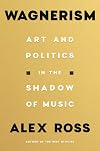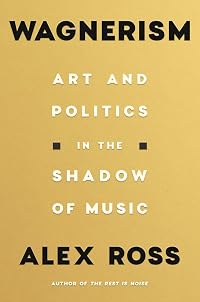
Wagnerism: Art and Politics in the Shadow of Music
by Alex Ross
On This Page
Description
"A large-canvas narrative history, charting the impact of the cultural titan Wagner on art and politics. Ross will show how various artists-composers, novelists, poets, filmmakers-wrestled with the legacy of Wagner in the twentieth century"--Tags
Recommendations























Member Reviews
I have loved the music of Richard Wagner for a very long time; first, I was drawn to the orchestral sounds of the overtures and some of the more theatrical set-pieces; and later, I discovered the operas themselves. At the same time, I became aware of the controversies caused by Wagner's music and his politics - specifically, his anti-Semitism - which fed into one of the great questions of the 20th Century: why did the nation that in the 19th Century was the byword for culture and learning - Germany - become in the 20th Century the byword for some of the greatest evil perpetrated in our history, giving rise to a movement and events whose names have become bywords for evil in our time?
Wagner is a part of this quest. His music embodies show more another great question: can we separate the art from the artist? This book looks at that question and tries to answer it, in part. Alex Ross has written a compendious (though not complete) study of the impact of Wagner on artistic and political thought in his time and subsequently. Almost every significant cultural figure of Wagner's time and since at least gets a namecheck in this book, which shows how much Ross considers Wagner to be a major influence in art and thought in Western civilization, both for good and for ill.
Ross takes Wagner's anti-Semitism on head first. It cannot be avoided. At the same time, he points out how prevalent anti-Semitism was across Europe in the 19th Century, and how it spread to the USA and beyond in the first half of the 20th Century. He describes how Wagner has become the target of attention for those looking for anti-Semitism to oppose, thus diverting attention away from other anti-Semitic utterances by cultural figures who are still highly regarded (for example, T.S. Eliot). He also looks closely at the relationship between the Nazis and Wagner, and finds it not as close as we are often led to believe. Wagner's status as Hitler's favourite composer belies the fact that much of Nazi appropriation of German music bypassed Wagner because many of his ideas beyond his anti-Semitism - opposition to centralised power structures and anti-capitalism to allow individual liberty and artistic freedom - were diametrically opposed to Fascism. The redeeming strength of love, a major theme in many of his operas, sits uneasily with Fascist ideology which centres on the exercise of power and the harnessing of hate.
"But what about the Wagner in the concentration camps?" objectors will say. "What about all that Wagner in The Triumph of the Will"? Ross looks at these questions: his conclusions will surprise many. A lot of the Wagner in Nazi propaganda is in the ears of the beholders; for example, the other night, I watched the first episode of Amazon's television reworking of Philip K. Dick's alternate-history novel The Man in the High Castle (where Germany won World War 2), and because age has meant I have difficulty hearing conversations in tv drama, I put the subtitles on: I was surprised to see some dramatic incidental music described in the subtitles as Wagner's overture to Tannhäuser when it was nothing of the sort! (It was the finale to one of the Bruckner symphonies.) But the frequent use of the word 'Wagnerian' to describe the look and feel of Nazi propaganda has led many to "hear" Wagner that isn't there.
In another instance, a friend once showed me a copy of Wagner's libretto to Der Ring des Nibelungen, with illustrations by Arthur Rackham (an English illustrator known for whimsical fantasy illustrations). I was shocked to see that his interpretation of the Nibelungs themselves looked nothing less than the caricatures of Jews that became part of the visual language of the Nazi regime. How much blame have subsequent generations heaped on Wagner for the Holocaust? His often-cited article Jewishness in Music is repellent, with its call for the elimination of Jews from the artistic life of German music; but it does not make Wagner the sole author of the Holocaust; and he cannot be blamed for others seizing on this for their own ends.
Ross also looks at the role of Wagner and his music in promoting German nationalism, and the way in which that allowed Nazis to claim Wagner as the authentic voice of their sort of Volk. Given that Germany only became a unified, single nation during Wagner's lifetime, perhaps this should not be so unexpected (this is one of the areas that Ross overlooks, to my surprise). Hans Sachs' call to embrace "Holy German Art" at the end of Die Meistersinger von Nürnberg was taken up by others after Wagner's time and twisted to exclude anything that wasn't "German and true".
Interestingly, Ross also misses out the great question in Austrian politics throughout the 19th and early 20th centuries: whether Austrians were Germans or not, and whether that meant that they should look east (in political terms) or west. That question consumed Austria for something like 150 years, until Hitler decided it for the Austrian people once and for all in 1938. The experience of the war years proved to most Austrians that they were certainly not Germans and should look to their own identity in the centre of Europe much more readily. Whilst this isn't a matter with a direct bearing on Ross' thesis on Wagner, it colours a lot of the attitudes and thinking of many of the Austrians who feature in this book, and it should not be ignored.
In short, the argument is that, despite Wagner's many shortcomings, especially those most relevant to our time, the way in which Wagner has been promoted as foreshadowing or promoting Nazism is a fault that should be laid at the feet of those making that association. Those who see Hitler in Wagner are assuming that it was a two-way street.
Ross' artistic knowledge is broad. If you have a particular favourite author, poet or thinker from the late 19th or early 20th Century, you will not have to wait long for them to be at least namechecked. Some receive a closer study than others - Nietzsche, Thomas Mann, Willa Cather and James Joyce have considerable portions of the book given over to their connections with Wagner and his influence on their work. Other references will broaden your horizons - I, for instance, had not encountered Willa Cather before now - and other figures will jump out of the woodwork to surprise you. At one point, I was reading an early account of Wagner's influence on European thought in the 1890s and 1900s, and thought "This is the sort of thing Gabriele d'Annunzio wrote about", and I turned the page and up popped d'Annunzio! (Gabriele d'Annunzio was an Italian Futurist poet, author and proto-Fascist whose ideas and style were all stolen by Mussolini. He is probably one of the more influential people in 20th century European history, but he has faded into obscurity, eclipsed by later figures.) At the same time, I found a few artistic holes: Wagner's namesake, the Art Deco architect Otto Wagner (no relation) redesigned many of the public buildings in Vienna; a biography and study of his work, especially on the Viennese Stadtbahn, is subtitled "Ein Gesamtkunstwerk für Wien" ("A total work of art for Vienna", echoing Wagner the composer's concept of such an artwork that combines all the artistic disciplines into one overwhelming experience) (though I suspect the authors of the Otto Wagner book had their tongues in their collective cheeks). Another omission was the Canadian author David Gurr, whose novel The Ring Master depicts the rise and fall of Nazi Germany as a Wagner opera, thorough the eyes of a brother and sister (the sister being an operatic soprano) who become closely involved with the leaders of the Reich and each other.
This book is not an easy read because of its extreme detail, quite apart from whether it challenges some firmly-held beliefs about the nature of Wagner's music and its meaning for subsequent generations. In the end, we must all decide for ourselves. Ross closes the book with these words: "When we look at Wagner, we are gazing into a magnifying mirror of the soul of the human species. What we hate in it, we hate in ourselves; what we love in it, we love in ourselves also." That is the message I take away from Wagnerism. show less
Wagner is a part of this quest. His music embodies show more another great question: can we separate the art from the artist? This book looks at that question and tries to answer it, in part. Alex Ross has written a compendious (though not complete) study of the impact of Wagner on artistic and political thought in his time and subsequently. Almost every significant cultural figure of Wagner's time and since at least gets a namecheck in this book, which shows how much Ross considers Wagner to be a major influence in art and thought in Western civilization, both for good and for ill.
Ross takes Wagner's anti-Semitism on head first. It cannot be avoided. At the same time, he points out how prevalent anti-Semitism was across Europe in the 19th Century, and how it spread to the USA and beyond in the first half of the 20th Century. He describes how Wagner has become the target of attention for those looking for anti-Semitism to oppose, thus diverting attention away from other anti-Semitic utterances by cultural figures who are still highly regarded (for example, T.S. Eliot). He also looks closely at the relationship between the Nazis and Wagner, and finds it not as close as we are often led to believe. Wagner's status as Hitler's favourite composer belies the fact that much of Nazi appropriation of German music bypassed Wagner because many of his ideas beyond his anti-Semitism - opposition to centralised power structures and anti-capitalism to allow individual liberty and artistic freedom - were diametrically opposed to Fascism. The redeeming strength of love, a major theme in many of his operas, sits uneasily with Fascist ideology which centres on the exercise of power and the harnessing of hate.
"But what about the Wagner in the concentration camps?" objectors will say. "What about all that Wagner in The Triumph of the Will"? Ross looks at these questions: his conclusions will surprise many. A lot of the Wagner in Nazi propaganda is in the ears of the beholders; for example, the other night, I watched the first episode of Amazon's television reworking of Philip K. Dick's alternate-history novel The Man in the High Castle (where Germany won World War 2), and because age has meant I have difficulty hearing conversations in tv drama, I put the subtitles on: I was surprised to see some dramatic incidental music described in the subtitles as Wagner's overture to Tannhäuser when it was nothing of the sort! (It was the finale to one of the Bruckner symphonies.) But the frequent use of the word 'Wagnerian' to describe the look and feel of Nazi propaganda has led many to "hear" Wagner that isn't there.
In another instance, a friend once showed me a copy of Wagner's libretto to Der Ring des Nibelungen, with illustrations by Arthur Rackham (an English illustrator known for whimsical fantasy illustrations). I was shocked to see that his interpretation of the Nibelungs themselves looked nothing less than the caricatures of Jews that became part of the visual language of the Nazi regime. How much blame have subsequent generations heaped on Wagner for the Holocaust? His often-cited article Jewishness in Music is repellent, with its call for the elimination of Jews from the artistic life of German music; but it does not make Wagner the sole author of the Holocaust; and he cannot be blamed for others seizing on this for their own ends.
Ross also looks at the role of Wagner and his music in promoting German nationalism, and the way in which that allowed Nazis to claim Wagner as the authentic voice of their sort of Volk. Given that Germany only became a unified, single nation during Wagner's lifetime, perhaps this should not be so unexpected (this is one of the areas that Ross overlooks, to my surprise). Hans Sachs' call to embrace "Holy German Art" at the end of Die Meistersinger von Nürnberg was taken up by others after Wagner's time and twisted to exclude anything that wasn't "German and true".
Interestingly, Ross also misses out the great question in Austrian politics throughout the 19th and early 20th centuries: whether Austrians were Germans or not, and whether that meant that they should look east (in political terms) or west. That question consumed Austria for something like 150 years, until Hitler decided it for the Austrian people once and for all in 1938. The experience of the war years proved to most Austrians that they were certainly not Germans and should look to their own identity in the centre of Europe much more readily. Whilst this isn't a matter with a direct bearing on Ross' thesis on Wagner, it colours a lot of the attitudes and thinking of many of the Austrians who feature in this book, and it should not be ignored.
In short, the argument is that, despite Wagner's many shortcomings, especially those most relevant to our time, the way in which Wagner has been promoted as foreshadowing or promoting Nazism is a fault that should be laid at the feet of those making that association. Those who see Hitler in Wagner are assuming that it was a two-way street.
Ross' artistic knowledge is broad. If you have a particular favourite author, poet or thinker from the late 19th or early 20th Century, you will not have to wait long for them to be at least namechecked. Some receive a closer study than others - Nietzsche, Thomas Mann, Willa Cather and James Joyce have considerable portions of the book given over to their connections with Wagner and his influence on their work. Other references will broaden your horizons - I, for instance, had not encountered Willa Cather before now - and other figures will jump out of the woodwork to surprise you. At one point, I was reading an early account of Wagner's influence on European thought in the 1890s and 1900s, and thought "This is the sort of thing Gabriele d'Annunzio wrote about", and I turned the page and up popped d'Annunzio! (Gabriele d'Annunzio was an Italian Futurist poet, author and proto-Fascist whose ideas and style were all stolen by Mussolini. He is probably one of the more influential people in 20th century European history, but he has faded into obscurity, eclipsed by later figures.) At the same time, I found a few artistic holes: Wagner's namesake, the Art Deco architect Otto Wagner (no relation) redesigned many of the public buildings in Vienna; a biography and study of his work, especially on the Viennese Stadtbahn, is subtitled "Ein Gesamtkunstwerk für Wien" ("A total work of art for Vienna", echoing Wagner the composer's concept of such an artwork that combines all the artistic disciplines into one overwhelming experience) (though I suspect the authors of the Otto Wagner book had their tongues in their collective cheeks). Another omission was the Canadian author David Gurr, whose novel The Ring Master depicts the rise and fall of Nazi Germany as a Wagner opera, thorough the eyes of a brother and sister (the sister being an operatic soprano) who become closely involved with the leaders of the Reich and each other.
This book is not an easy read because of its extreme detail, quite apart from whether it challenges some firmly-held beliefs about the nature of Wagner's music and its meaning for subsequent generations. In the end, we must all decide for ourselves. Ross closes the book with these words: "When we look at Wagner, we are gazing into a magnifying mirror of the soul of the human species. What we hate in it, we hate in ourselves; what we love in it, we love in ourselves also." That is the message I take away from Wagnerism. show less
This study of Wagner's cultural and political impact is fascinating, going right to the heart of the "Wagner Problem" that is a key focus. That is, how are we to deal with loving the music and detesting the man? Ross's study makes it unequivocally clear that Wagner was a ferocious anti-Semite and that he glorified German nationalism, at least in the latter part of his career. This had consequences, though there is a lot more debate about those than about the nature of Wagner's views, as Ross illustrates. The book also shows what a towering figure Wagner was in his time and afterwards, not just in Germany and not just in music, but across Europe and across the arts. The book is not an easy read (I was tempted to headline it "Exhaustive show more and Exhausting") but it is worth the effort. I learned a lot that I didn't know, and saw connections that I not known of. What I missed was more about the music. I love Ross's music criticism and his "The Rest is Noise", and wish there had been more in this book about Wagner's music. Maybe someday. show less
Ross's book explores the cultural and political impact of operatic works and a composer that have become bywords for excess and overblown intensity. It isn't quite ironic, then, that the book is -- probably, but maybe I'm just being picky -- overlong.
Please don't misconstrue this as the complaint of a lazy reader with no attention span ... that ain't me. I love long books ... I love big, difficult books. But there's a hammerschlag character to this one that has left me, starting somewhere around page 400, becoming impatient. It's obvious that a crapton of work went into this, and it IS a pleasure to read and to explore, but I just want to get on with my life.
Maybe the issue is that Ross seems to make the same points again and again: show more Wagner can be seen here, Wagner pops up there, here's THIS figure's take on Wagner. Yup, it sure seems like Wagner was and maybe still is everywhere! but does it really require this much repetition to make the point?
I hate to say such a thing where an obviously very very smart (and talented) writer is concerned, but ... was there an editor? was she heeded?
Worth reading if only for the obscure stuff the author spades up. show less
Please don't misconstrue this as the complaint of a lazy reader with no attention span ... that ain't me. I love long books ... I love big, difficult books. But there's a hammerschlag character to this one that has left me, starting somewhere around page 400, becoming impatient. It's obvious that a crapton of work went into this, and it IS a pleasure to read and to explore, but I just want to get on with my life.
Maybe the issue is that Ross seems to make the same points again and again: show more Wagner can be seen here, Wagner pops up there, here's THIS figure's take on Wagner. Yup, it sure seems like Wagner was and maybe still is everywhere! but does it really require this much repetition to make the point?
I hate to say such a thing where an obviously very very smart (and talented) writer is concerned, but ... was there an editor? was she heeded?
Worth reading if only for the obscure stuff the author spades up. show less
This is an examination of the influence Wagner has had on art, philosophy, politics, and general intellectual culture, from Nietzsche to Hitler to Star Wars. This is a very broad topic, which Ross often discusses in detail. I suppose it's not unreasonable for Ross to assume that anyone who likes Wagner enough to read a book about his influence would have a very long attention span, but the detail in this book is very exhaustive, and I wish Ross had focused more on the big picture instead of dwelling in so much minutia. Regardless, it is a very interesting read. Wagner's music and writings have been interpreted in a wide variety of ways, some of them directly contradictory.
Of course, looming large over the whole book is the relationship show more between Wagnerism and Nazism, and Ross does not shy away from the complicated relationship. He makes it clear that nothing in Wagner's writings leads inevitably to Nazism, and that Wagner's use by Nazis has been exaggerated (there are no credible reports that Wagner was actually played at death camps, for instance), but Wagner is still inextricably linked with Nazism in the modern mind. Wagner was a raging anti-Semite, but also believed in the redemption of Jews, and would likely not have approved of the Holocaust.
All in all, this is an interesting read, although probably only for a very niche audience. show less
Of course, looming large over the whole book is the relationship show more between Wagnerism and Nazism, and Ross does not shy away from the complicated relationship. He makes it clear that nothing in Wagner's writings leads inevitably to Nazism, and that Wagner's use by Nazis has been exaggerated (there are no credible reports that Wagner was actually played at death camps, for instance), but Wagner is still inextricably linked with Nazism in the modern mind. Wagner was a raging anti-Semite, but also believed in the redemption of Jews, and would likely not have approved of the Holocaust.
All in all, this is an interesting read, although probably only for a very niche audience. show less
Ok- only read about 1/3 of this very long book- but that is because it is a very long book and is on a wait list at the library and i will buy this one i think.
Not a biography and not a musical assessment / appreciation or review of Wagner, but for me- definitely works as a bio and musical appreciation. I don't know enough about Wagner, but the author assumes one does, so you pick it up as you go along. Deep analysis of Wagner in Germany, France, England, US and in tandem with Nietzsche, Baudelaire, Verlaine... everyone ... so well written and so insightful. one wants to thank the author for taking this on and laying it out so clearly for us!
Not a biography and not a musical assessment / appreciation or review of Wagner, but for me- definitely works as a bio and musical appreciation. I don't know enough about Wagner, but the author assumes one does, so you pick it up as you go along. Deep analysis of Wagner in Germany, France, England, US and in tandem with Nietzsche, Baudelaire, Verlaine... everyone ... so well written and so insightful. one wants to thank the author for taking this on and laying it out so clearly for us!
I bought this book as a Kindle book and an Audible book. When the book first came out in 2020, it was really overpriced, but price the has come down to a reasonable level in 2024. The narration is fantastic and I'm learning a lot of valuable things, not just about Wagner, because I've never read one of his biographies, but about other implications, which I really do enjoy. In fact, this is a really excellent Biography even though I think that Wagner is a detestable person.
Reading this book is a massive undertaking, but well worth it if you really want to understand Wagner's influence on popular culture. Alex Ross is an excellent writer and he makes these 700 pages a pleasure to read.
Members
- Recently Added By
Lists

Stuff from Bard
70 works; 1 member

Books for Birute
39 works; 1 member

Books for Dustin
19 works; 1 member
Author Information

10+ Works 4,244 Members
Alex Ross was born in 1968. He attended St. Alban's School in Washington, D.C. and graduated from Harvard University in 1990. It was there that he studied under composer Peter Lieberson and was a D.J. on the classical and underground rock departments of the college radio station. He earned a Harvard A.B. in English summa cum laude for a thesis on show more James Joyce. From the years, 1992-1996, Alex Ross was a music critic at the New York Times. He also wrote for the New Republic, Slate, and The London Review of Books. In 1993 he started contributing to The New Yorker and became a staff writer in 1996. In 2007 his released his first book in the U.S. entitled The Rest is Noise: Listening to the Twentieth Century, a cultural history of music since 1900. This book received widespread crritical praise in the U.S. and earned a National Book Critics Circle Award, a spot on New York Times list of the ten best books of 2007, and a finalist citation for the Pulitzer Prize in general non-fiction. His second book - Listen to This- was published in September 2010. Alex Ross has also received a Holtzbrink fellowship at the American Academy in Berlin. (Bowker Author Biography) show less
Awards and Honors
Awards
Distinctions
Notable Lists
Common Knowledge
- Canonical title*
- Wagnerismi
- Alternate titles
- Wagnerism : How a composer shaped the modern world
- Original publication date
- 2020
- People/Characters
- Richard Wagner; Cosima Wagner; Franz Liszt; Thomas Mann; Joséphin Péladan; Charles Baudelaire (show all 7); James Joyce
- Important places
- Bayreuth, Bavaria, Germany
- Important events
- Bayreuther Festspiele
- Related movies
- Apocalypse Now (1979 | IMDb)
- First words
- At the end of Das Rheingold, the first part of Richards Wagner's operatic cycle The Ring of the Nibeling, the gods are entering the newly built palace of Valhalla and the Rhinemaidens are singing in dismay. The ... (show all)river nymphs know that Valhalla rests on a corrupt foundation, its laborers paid in gold extracted from the water's depths.
- Publisher's editor*
- Bompiani
- Blurbers
- Kushner, Tony; Keefe, Patrick Radden; Johnson, Rian; Als, Hilton; Greene, Vivien; Appiah, Kwame Anthony
- Disambiguation notice
- 0007319053 2020 hardcover Fourth Estate.
0007319088 2020 softcover Fourth Estate.
000751851X 2020 eBook HarperCollins UK.
000842294X 2021 softcover Fourth Estate.
0374285934 2020 hardcover Farrar, Straus and Girou... (show all)x.
1250770114 AudioBook.
1250800080 2021 softcover Picador.
1429944544 2020 eBook Farrar, Straus and Giroux.
*Some information comes from Common Knowledge in other languages. Click "Edit" for more information.
Classifications
- Genres
- Music, History, Nonfiction, General Nonfiction, Art & Design, Biography & Memoir
- DDC/MDS
- 782.1092 — Arts & recreation Music Vocal music Operas and related dramatic vocal forms; concert versions modified standard subdivisions History, geographic treatment, biography Biography
- LCC
- ML410 .W13 .R77 — Music Literature on music Literature on music History and criticism Biography
- BISAC
Statistics
- Members
- 442
- Popularity
- 69,412
- Reviews
- 11
- Rating
- (4.22)
- Languages
- English, German, Italian, Spanish
- Media
- Paper, Audiobook, Ebook
- ISBNs
- 14
- ASINs
- 4