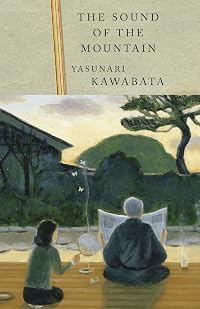
The Sound of the Mountain
by Yasunari Kawabata
On This Page
Description
" ... in his portrait of an elderly Tokyo businessman, Yasunari Kawabata charts the gradual, reluctant narrowing of a human life, along with the sudden upsurges of passion that illumunate its closing. By day, Ogata Shingo is troubled by small failures of memory. At night he hears a distant rumble from the nearby mountain, a sound he associates with death. In between are the relationships that were once the foundations of Shingo's life: with his disappointing wife, his philandering son, and show more his daughter-in-law Kikuko, who instills in him both pity and uneasy stirrings of sexual desire."--Publisher description. show lessTags
Recommendations
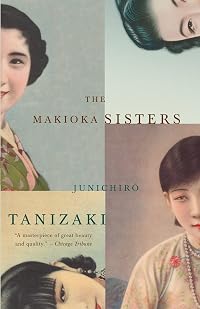
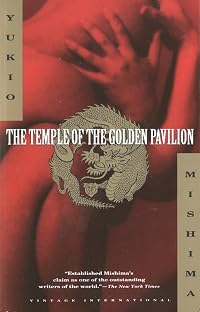
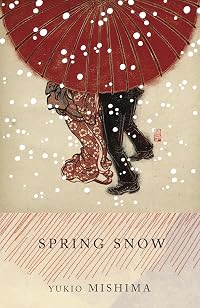

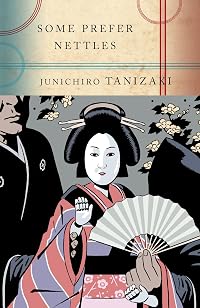

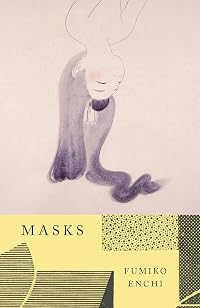
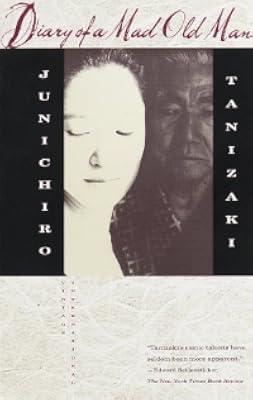
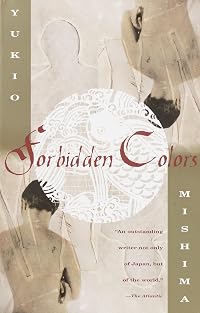
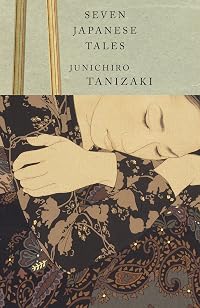

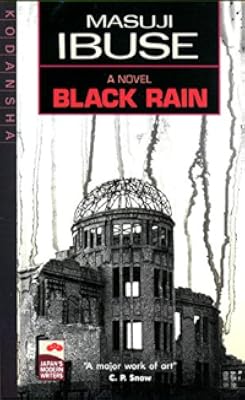
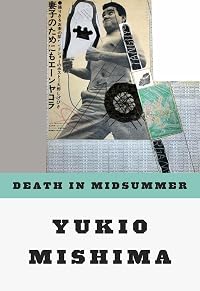
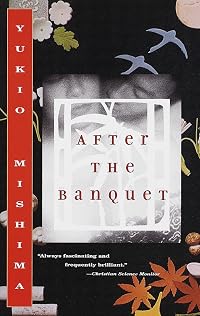
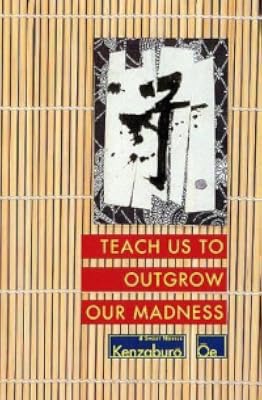
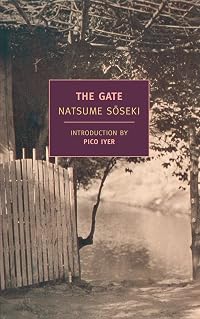
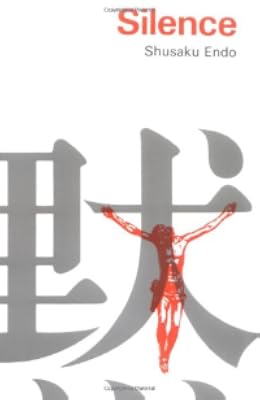
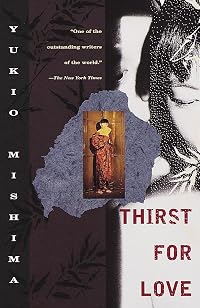
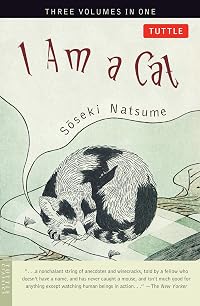
Member Recommendations
Member Reviews
Yasunari Kawabata is one of my favourite writers of all time, and I'm ranking him next to people like Garcia Marquez and Dostoevsky. This book was the very first I had read by him and it immediately caught me. Here is why.
Kawabata has just simply an undeniable way with words and settings. Through the entire 200p. (in my edition) I always had the feeling that every sentence meant something completely else and was a subtle hint at something deeper.
Ogata Shingo is the old patriarch of a family that is falling apart in a time that is falling apart. Set after WW2, a lot of changes are in this book, but there is always that bit of romanticised japanese mystic in there. His oldest son is having an affair that is never mentioned in the family show more with words, but only in the subtext of the sentences of the people. The patriarch and his wife have more of a platonic relationship than real love. Instead, Shingo focuses much more on his daughter-in-law, Kikuko, a girl that is devoting herself to her husband and often even more to Shingo.
The book deals with changes in Japan, such as electricity, but also society changes (e.g. that Shingo cannot completely control his son anymore, while usually in Japan Shingo could have) and new habits of love and sex (promiscuity of Shingos son).
The book is completely about Shingo and it is done with such mastery that I lack words. The two passages that struck me the most were:
1. His thoughts about giving your head to a clinic to have it washed and ordered like laundry as he watches sunflowers.
2. The subtle hint at his developing the onset of dementia when he can no longer put on his tie in the morning, yet has no problems redoing it in the train.
The book is full of these beautiful, beautiful passages that overall just reflect life and its beauties. I recommend this to absolutely everyone and it is after Dostoevskys "The Idiot" possibly the best book I've ever read and clearly the book I enjoy reading the most.
Category: Oh my god this shit is mindblowing show less
Kawabata has just simply an undeniable way with words and settings. Through the entire 200p. (in my edition) I always had the feeling that every sentence meant something completely else and was a subtle hint at something deeper.
Ogata Shingo is the old patriarch of a family that is falling apart in a time that is falling apart. Set after WW2, a lot of changes are in this book, but there is always that bit of romanticised japanese mystic in there. His oldest son is having an affair that is never mentioned in the family show more with words, but only in the subtext of the sentences of the people. The patriarch and his wife have more of a platonic relationship than real love. Instead, Shingo focuses much more on his daughter-in-law, Kikuko, a girl that is devoting herself to her husband and often even more to Shingo.
The book deals with changes in Japan, such as electricity, but also society changes (e.g. that Shingo cannot completely control his son anymore, while usually in Japan Shingo could have) and new habits of love and sex (promiscuity of Shingos son).
The book is completely about Shingo and it is done with such mastery that I lack words. The two passages that struck me the most were:
1. His thoughts about giving your head to a clinic to have it washed and ordered like laundry as he watches sunflowers.
2. The subtle hint at his developing the onset of dementia when he can no longer put on his tie in the morning, yet has no problems redoing it in the train.
The book is full of these beautiful, beautiful passages that overall just reflect life and its beauties. I recommend this to absolutely everyone and it is after Dostoevskys "The Idiot" possibly the best book I've ever read and clearly the book I enjoy reading the most.
Category: Oh my god this shit is mindblowing show less
A quiet, reflective and subtle novel by Japan's Kawabata. His style is very spare; this is writing where every single word, every single image, matters. Ogata Shingo is getting older, and his memory is failing him. Into his household, where he lives with his wife Yasuko, arrives his daughter and her two children, and his daughter-in-law. Over a period of a year or so these relationships play out, from his daughter having fled from her husband, to Shingo's son Shiuchi, who is having an affair and doesn't care who knows about it. There is much reflection on dreams, nature, family and responsibility; Shingo muses whether he has somehow failed in his life when around him he sees his children's lives falling apart. It's all very, well, show more Japanese - it reads like a dream sequence itself, at times, with Kawabata's exactness and precision, which is often hard to capture in translation. A chestnut falls from a tree, cherry blossom lies scattered on the ground, a single bird flies past - this is literature to be savoured and left to develop in your mind. Wonderful stuff. show less
This book almost perfectly mirrors the emotions and perspectives of my current stage of life. I admire the precision and compassion with which Kawabata can perceive the true significance of what relatives, his junior, are going through. There must be something almost cosmological about being a modernistic individual in the context of a strict traditional social structure. Modernity seems to intensify rather than diminish the complexities and tensions between family members. Contrasted with the primordial forces the protagonist is confronting (his mortality) his own relatives play almost archetypal roles in the story and I can't help but visualize the "sound" of the mountain as, in addition to a metaphor for death, having resonance as show more one for current climate change and the apocalypse in general.
Wild though my interpretation might be this is what I get from it. Such is the richness of Kawabata's writing. I think it comes from the discipline of focus. However, it never feels overly austere or contrived. Might be my favorite Japanese writer next to Tanizaki. show less
Wild though my interpretation might be this is what I get from it. Such is the richness of Kawabata's writing. I think it comes from the discipline of focus. However, it never feels overly austere or contrived. Might be my favorite Japanese writer next to Tanizaki. show less
A slow-moving, lyrical account of a couple of years in the life of a middle-class family living in the historic small town of Kamakura a few years after the end of the war. Shingo, a businessman in his early sixties, is watching rather helplessly whilst just about everything he counts on is slowly crumbling away around him. His mind and body aren’t what they used to be, his son and daughter are both going through difficult patches in their marriages, his own marriage has gone stale, his friends are gradually dying off, and he can’t even take the same pleasure in nature, poetry and the harmonies of Japanese society and religion that he used to. Even the one thing that really does give him pleasure — his close friendship with his show more daughter-in-law — is a source of guilt to him when he sees that he may be holding her back from resolving the problems she has with her wayward husband.
Despite its very restrained, formal Japanese style, it’s not difficult to identify with Kawabata’s account of the fears and uncertainties that go with approaching old age in a time of destabilised social conditions. Kawabata isn’t known as political and historical writer, but the story here clearly is centred in the particular historical moment when he was writing, with frequent references to current newspaper stories or to people who have been damaged by the war in one way or another. show less
Despite its very restrained, formal Japanese style, it’s not difficult to identify with Kawabata’s account of the fears and uncertainties that go with approaching old age in a time of destabilised social conditions. Kawabata isn’t known as political and historical writer, but the story here clearly is centred in the particular historical moment when he was writing, with frequent references to current newspaper stories or to people who have been damaged by the war in one way or another. show less
Shingo is a, self-described, office worker in his sixties. He loves the picturesque, is also committed to the welfare of his family. In other words, a very ordinary man who one might argue has been made sentimental with age.
Kawabata however tells a beautiful story through this ordinary character, and through his family. Of a paterfamilias who looks out for his children and grandchildren, who finds beauty in puppies, trees, birds, flowers and people.
An observation I made in the book is the contrast between twos. Shingo mostly compares what he finds beautiful and pure with that he finds 'homely'. His beautiful sister-in-law to his homely wife, his beautiful daugher-in-law to his homely daughter and so on. And thus he tends to ignore the show more people he finds homely for those he finds beautiful and this affects the relationships he has with his family members.
Kawabata narrates of love, beauty, poetry, marriage, old age, loss and redemption and healing in a well paced beautiful tale. show less
Kawabata however tells a beautiful story through this ordinary character, and through his family. Of a paterfamilias who looks out for his children and grandchildren, who finds beauty in puppies, trees, birds, flowers and people.
An observation I made in the book is the contrast between twos. Shingo mostly compares what he finds beautiful and pure with that he finds 'homely'. His beautiful sister-in-law to his homely wife, his beautiful daugher-in-law to his homely daughter and so on. And thus he tends to ignore the show more people he finds homely for those he finds beautiful and this affects the relationships he has with his family members.
Kawabata narrates of love, beauty, poetry, marriage, old age, loss and redemption and healing in a well paced beautiful tale. show less
Yasunari Kawabata: The Sound of the Mountain
It took a little while to get into this book. The writing style is spare and taut in the extreme with only short, declaratory sentences. The story is told through the eyes of Shingo Okata, a man in his early sixties, living in Kamakura but still working in his own small business in Tokyo, with his son Shuichi. The main characters in the novel are all family: Shingo's wife, Yasuko, Shuichi, their daughter Fusako and her two small children, Shuichi's wife, Kikuko; Fusako is married to Aihara but he never appears on centre stage as they are separated. Secondary characters include Eiko, for a time a secretary who works with Shingo and Shuichi, and Kino, Shuichi's mistress, the fact of whom is show more well-known to the whole family.
The interior thoughts we hear are only those of Shingo and we see all the others through their interaction with Shingo and through his interpretation of their actions and supposed thoughts. There is no plot driving the novel forward. This is an account of "riding the wave of life", and herein lies the attraction that grew on me as I read.
Shingo is increasingly aware of the wing-beat of mortality with many of this friends dying, and his own signs of faltering physical and mental strength (his friends refer to themselves as "life's spare parts.") This pushes him inward to reflect on his life and especially, after forty years, the love he did not achieve with Yasuko's older sister whom he keeps alive in thoughts and perceived connections. What Shingo doesn't realise is that his obsession has made him less open to love, and so has constricted his life with Yasuko and, more seriously, affected his relations with Shuichi and Fusako. Shingo is pained by Shuichi's drinking, dissolute lifestyle, mistress, and shabby treatment of his wife, but there is no connection between the two men that allows Shingo to speak openly and to try to bring Shuichi back a more honourable path. Shingo's relationship with Fusako is even more fraught with deep-rooted anger based on Shingo never having been easy with her as a child, making it clear that he thought her unattractive (in his mind, how much prettier she would have been if he had married the older sister). This bites deep as Fusako blames him for having married her off to a loser such as Aihara, happy to have her out of the house, without proper vetting of the bridegroom. It is not said, explicitly, but you know that Yasuko is aware of Shingo's continued fascination with her deceased sister. In one moment of lucidity, Shingo realises, towards the end of the story, that, "he had contributed to no one's happiness."
Shingo's warmest, most human relationship is with his beautiful daughter-in-law, Kikuko who lives with Shuichi in Shingo and Yasuko's house. The novel is set in post-war Japan, but the practice of a bride moving into the home of her husband's family is still prevalent, if not now universal. Kikuko is lucky in that she has a close, respectful, even loving relationship with her in-laws, a far cry from the situation often portrayed in Japanese literature (see The Doctor's Wife). There are hints, including on the book blurb, of stirrings of desire from Shingo directed towards Kikuko. I don't think the story supports this. What Shingo exhibits is memories of desire, not desire to act. Shingo does have an eye for an attractive woman and he (or Kawabata?) does comment often on breasts; mention is made more than once of Eiko's quite small breasts, as opposed to Fusako's full and firm breasts as she feeds her youngest child, and when he meets Shuichi's mistress, her description includes how, "her rich breasts rose and fell." However, when Shingo dreams of an unnamed woman he vaguely recognizes, he feels, "neither excitement nor feelings of guilt" in touching her breasts in his dream. This is not a man burning to satisfying a desire. Kikuko is caring, compliant, and comfortable with Shingo, all the things he does not have with his immediate family members; this and her beauty, which stirs again memories of the deceased sister, are the bases for Shingo's feelings for Kikuko.
At one point, Shingo, "was astonished at his son's spiritual paralysis and decay, but it seemed to him that he was caught in the same filthy slough. Dark terror swept over him." There has to be different definitions of "slough" when looking at the two men. Unlike Shuichi, we do not see Shingo with a mistress, we do not see him dishonouring his wife, we do not see him abusive and drunk. We see that he has been a poor father, especially to Fusako, and not as loving a husband as he might have been, and someone stuck unhealthily in the past of things that never were, but these are far from a comparable spiritual decay.
Kawabata makes full use of nature as a metaphor for life. There are many references to the transitions of colours and shapes through the seasons from birth through life to death. Japan is a country that reveres flowers, trees, gardens and their role in appreciating life and its transience. It is also a country that has made art forms of arranging and controlling flowers in ikebana, and more forcefully, contorting and directing the growth of trees through bonsai. These practices of admiring natural occurrences while also controlling and directing nature's presentation, are two sides of the same coin; done properly, they can heighten awareness and pleasure and even complement each other, but they can have more negative effects. At one point, Shingo is, "deeply moved by the form [a] tree had taken in free and natural growth." It is precisely this "free and natural growth" that Shingo denied his children and himself by holding onto dreams and fantasies that only made him unhappy through comparisons with his life, throughout his life.
At the end of the novel there are hints of better futures, but nothing is resolved, and this is as it should be for this story of life and lives.
In the end, I appreciated the novel for its realistic portrait of lives and love and family, and for the reminder that regardless of the societal setting, the kaleidoscope of human interactions is universal. show less
It took a little while to get into this book. The writing style is spare and taut in the extreme with only short, declaratory sentences. The story is told through the eyes of Shingo Okata, a man in his early sixties, living in Kamakura but still working in his own small business in Tokyo, with his son Shuichi. The main characters in the novel are all family: Shingo's wife, Yasuko, Shuichi, their daughter Fusako and her two small children, Shuichi's wife, Kikuko; Fusako is married to Aihara but he never appears on centre stage as they are separated. Secondary characters include Eiko, for a time a secretary who works with Shingo and Shuichi, and Kino, Shuichi's mistress, the fact of whom is show more well-known to the whole family.
The interior thoughts we hear are only those of Shingo and we see all the others through their interaction with Shingo and through his interpretation of their actions and supposed thoughts. There is no plot driving the novel forward. This is an account of "riding the wave of life", and herein lies the attraction that grew on me as I read.
Shingo is increasingly aware of the wing-beat of mortality with many of this friends dying, and his own signs of faltering physical and mental strength (his friends refer to themselves as "life's spare parts.") This pushes him inward to reflect on his life and especially, after forty years, the love he did not achieve with Yasuko's older sister whom he keeps alive in thoughts and perceived connections. What Shingo doesn't realise is that his obsession has made him less open to love, and so has constricted his life with Yasuko and, more seriously, affected his relations with Shuichi and Fusako. Shingo is pained by Shuichi's drinking, dissolute lifestyle, mistress, and shabby treatment of his wife, but there is no connection between the two men that allows Shingo to speak openly and to try to bring Shuichi back a more honourable path. Shingo's relationship with Fusako is even more fraught with deep-rooted anger based on Shingo never having been easy with her as a child, making it clear that he thought her unattractive (in his mind, how much prettier she would have been if he had married the older sister). This bites deep as Fusako blames him for having married her off to a loser such as Aihara, happy to have her out of the house, without proper vetting of the bridegroom. It is not said, explicitly, but you know that Yasuko is aware of Shingo's continued fascination with her deceased sister. In one moment of lucidity, Shingo realises, towards the end of the story, that, "he had contributed to no one's happiness."
Shingo's warmest, most human relationship is with his beautiful daughter-in-law, Kikuko who lives with Shuichi in Shingo and Yasuko's house. The novel is set in post-war Japan, but the practice of a bride moving into the home of her husband's family is still prevalent, if not now universal. Kikuko is lucky in that she has a close, respectful, even loving relationship with her in-laws, a far cry from the situation often portrayed in Japanese literature (see The Doctor's Wife). There are hints, including on the book blurb, of stirrings of desire from Shingo directed towards Kikuko. I don't think the story supports this. What Shingo exhibits is memories of desire, not desire to act. Shingo does have an eye for an attractive woman and he (or Kawabata?) does comment often on breasts; mention is made more than once of Eiko's quite small breasts, as opposed to Fusako's full and firm breasts as she feeds her youngest child, and when he meets Shuichi's mistress, her description includes how, "her rich breasts rose and fell." However, when Shingo dreams of an unnamed woman he vaguely recognizes, he feels, "neither excitement nor feelings of guilt" in touching her breasts in his dream. This is not a man burning to satisfying a desire. Kikuko is caring, compliant, and comfortable with Shingo, all the things he does not have with his immediate family members; this and her beauty, which stirs again memories of the deceased sister, are the bases for Shingo's feelings for Kikuko.
At one point, Shingo, "was astonished at his son's spiritual paralysis and decay, but it seemed to him that he was caught in the same filthy slough. Dark terror swept over him." There has to be different definitions of "slough" when looking at the two men. Unlike Shuichi, we do not see Shingo with a mistress, we do not see him dishonouring his wife, we do not see him abusive and drunk. We see that he has been a poor father, especially to Fusako, and not as loving a husband as he might have been, and someone stuck unhealthily in the past of things that never were, but these are far from a comparable spiritual decay.
Kawabata makes full use of nature as a metaphor for life. There are many references to the transitions of colours and shapes through the seasons from birth through life to death. Japan is a country that reveres flowers, trees, gardens and their role in appreciating life and its transience. It is also a country that has made art forms of arranging and controlling flowers in ikebana, and more forcefully, contorting and directing the growth of trees through bonsai. These practices of admiring natural occurrences while also controlling and directing nature's presentation, are two sides of the same coin; done properly, they can heighten awareness and pleasure and even complement each other, but they can have more negative effects. At one point, Shingo is, "deeply moved by the form [a] tree had taken in free and natural growth." It is precisely this "free and natural growth" that Shingo denied his children and himself by holding onto dreams and fantasies that only made him unhappy through comparisons with his life, throughout his life.
At the end of the novel there are hints of better futures, but nothing is resolved, and this is as it should be for this story of life and lives.
In the end, I appreciated the novel for its realistic portrait of lives and love and family, and for the reminder that regardless of the societal setting, the kaleidoscope of human interactions is universal. show less
Subtle, but rich. Rich, but subtle. Allusions and imagery and observation roll together to produce something ... intriguing, beautiful, and honest.
The story is told from the perspective of Shingo, an old man. The perspective really is the story here though. The book goes into issues of legacy, memory, regrets and self-doubt as Shingo gets closer to the end of his life. Scenes and stories are picked out, but its this filtration of what is observed that ties everything together.
Touching on bravery within family life (what are a parent's responsibilities, values?), lessons learned, and dealing with a rapidly changing world (war here, but the idea of 'progress' translates to the 21st century well). It's a book I'd love to read again in 10 show more years' time, and 10 years after that.
On another note, it really highlights the use and power of imagery in Japanese culture and poetry (for me, haiku especially) as being directly relevant to what it is to be human. Almost essential reading for haiku poets, in a way. show less
The story is told from the perspective of Shingo, an old man. The perspective really is the story here though. The book goes into issues of legacy, memory, regrets and self-doubt as Shingo gets closer to the end of his life. Scenes and stories are picked out, but its this filtration of what is observed that ties everything together.
Touching on bravery within family life (what are a parent's responsibilities, values?), lessons learned, and dealing with a rapidly changing world (war here, but the idea of 'progress' translates to the 21st century well). It's a book I'd love to read again in 10 show more years' time, and 10 years after that.
On another note, it really highlights the use and power of imagery in Japanese culture and poetry (for me, haiku especially) as being directly relevant to what it is to be human. Almost essential reading for haiku poets, in a way. show less
Members
- Recently Added By
Published Reviews
"A rich, complicated novel.... Of all modern Japanese fiction, Kawabata's is the closest to poetry."
added by GYKM
Lists

Japanese Literature
230 works; 37 members

Best of World Literature
437 works; 52 members

The 100 Best Books of All Time by Norwegian Book Club (World Library)
104 works; 23 members

20th Century Literature
1,161 works; 55 members
1940s
221 works; 25 members

1950s
340 works; 22 members

Readable Classics
110 works; 15 members
Five star books
1,767 works; 110 members

National Book Award winners
65 works; 11 members

Books Read in 2021
5,361 works; 114 members

The 150 Greatest Novels of All Time
150 works; 6 members

Favorite Books in Translation
320 works; 133 members
Talk Discussions
Past Discussions
Kawabata Yasunari: The Sound of the Mountain in Japanese Literature (March 2024)
Author Information

214+ Works 16,208 Members
Author Yasunari Kawabata was born in Osaka, Japan on June 14, 1899. He experienced numerous family deaths during his childhood including his parents, a sister, and his grandparents. He graduated from the Tokyo Imperial University in March 1924. He wrote both short stories including The Dancing Girl of Izu and novels including The Sound of the show more Mountains, Snow Country, Thousand Cranes, and The Old Capital. In 1959, he received the Goethe Medal in Frankfurt and in 1968 he won the Nobel Prize for Literature. He committed suicide on April 16, 1972. (Bowker Author Biography) show less
Some Editions
Awards and Honors
Awards
Notable Lists
Series
Belongs to Publisher Series
Work Relationships
Is contained in
Has the adaptation
Common Knowledge
- Canonical title
- The Sound of the Mountain
- Original title
- 山の音
- Original publication date
- 1954
- People/Characters
- Ogata Shingo (father); Shuichi (son); Yasuko (Shingo's wife); Kikuko (Shuichi's wife); Fusako (Shingo's daughter); Kuniko (Fusako's younger daughter) (show all 14); Satoko (Fusako's older daughter); Tanizaki Eiko (Shingo's secretary,war widow); Aihara (Fusako's husband); Kitamoto (Shingo's friend of his student days); Kinu (Shuichi's mistress, war widow); Mizuta (Shingo's friend of his student days); Mrs. Ikeda (woman who lives with Suichi's mistress); Iwamura Natsuko (Shingo's secretary after Eiko left)
- Important places
- Kamakura, Japan
- Related movies*
- Sound of the Mountain (1954 | IMDb)
- First words
- Ogata Shingo, his brow slightly furrowed, his lips slightly parted, wore an air of thought. Perhaps to a stranger it would not have appeared so. It might have seemed rather that something had saddened him.
- Last words
- (Click to show. Warning: May contain spoilers.)"Your gourds are sagging," he called to Kikuko. "They seem to be too heavy."
She apparently could not hear him over the sound of the dishes. - Original language
- Japanese
*Some information comes from Common Knowledge in other languages. Click "Edit" for more information.
Classifications
- Genres
- General Fiction, Fiction and Literature
- DDC/MDS
- 895.634 — Literature & rhetoric Literatures of other languages Literatures of East and Southeast Asia Japanese Japanese fiction Meiji/Taishō periods 1868–1945
- LCC
- PL832 .A9 .Y313 — Language and Literature Languages and literatures of Eastern Asia, Africa, Oceania Languages of Eastern Asia, Africa, Oceania Japanese language and literature Japanese literature Individual authors and works
- BISAC
Statistics
- Members
- 1,444
- Popularity
- 16,369
- Reviews
- 22
- Rating
- (4.08)
- Languages
- 15 — Chinese, Czech, Dutch, English, Estonian, Finnish, French, German, Italian, Japanese, Polish, Portuguese, Romanian, Russian, Spanish
- Media
- Paper, Ebook
- ISBNs
- 46
- ASINs
- 22