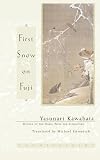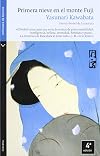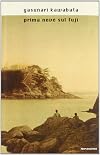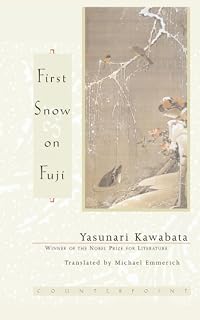
First Snow on Fuji
by Yasunari Kawabata
On This Page
Description
A play and eight stories by a Japanese winner of the Nobel Prize. In the title story, an ex-husband and wife try unsuccessfully to recapture their old feelings, in another story a romance fails to take off because he dislikes her ears.Tags
Recommendations

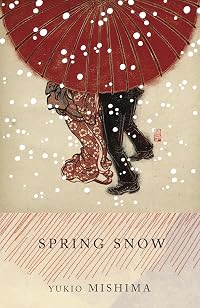
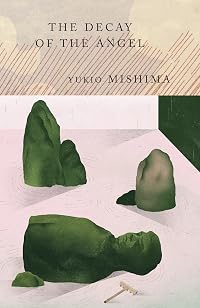
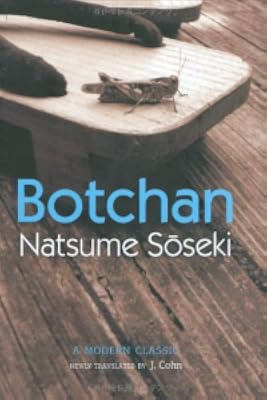
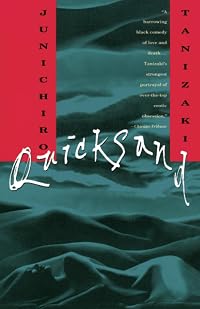
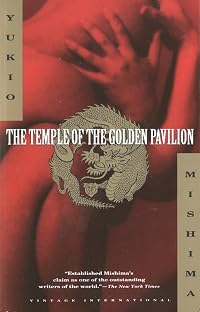
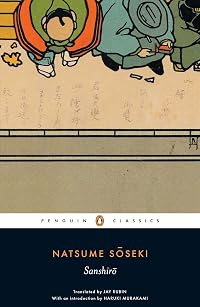
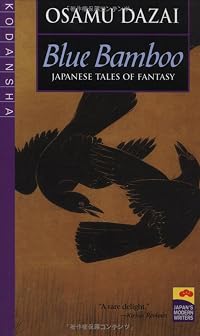
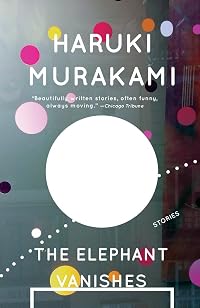

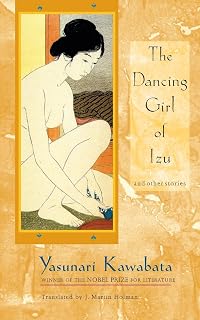
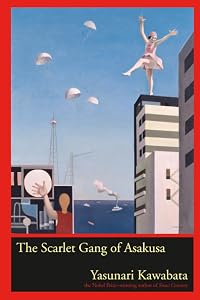
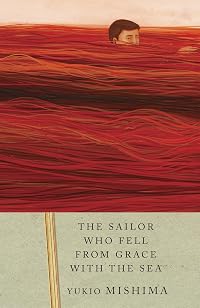
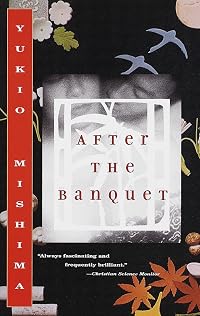


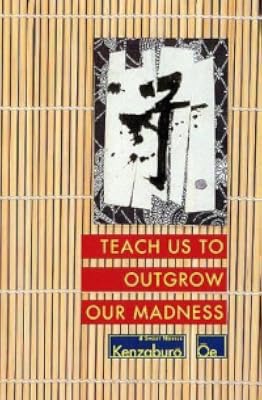
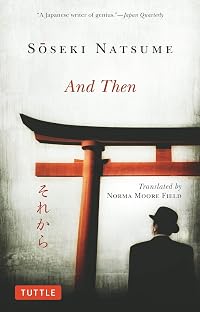
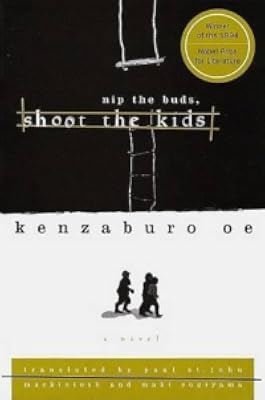
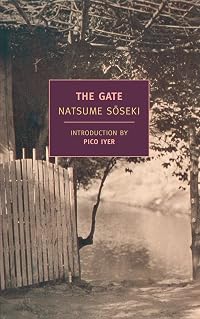


Member Recommendations
Member Reviews
The beauty of spare prose combined with the complications of conflicted emotions is the way I would describe the titular story in this collection. Yasunari Kawabata, whose novel Thousand Cranes moved me some years ago, manages to convey the sorrows of Japan through a chance meeting between two former lovers in the short story "First Snow on Fuji". In this spare story, as with much of the prose this very modern author, the chance meeting leads to a planned encounter. A trip to the country yields much about the lives of the two lovers, Jiro and Utake, but leaves even more unsaid, hidden between the lines. The conflicted emotions of each of them yield to the pain of war and the even more personal pain of grief and loss, yet this is not a show more tragedy, at least not in the classic sense. Both detachment and an inability to communicate seem to lead each of the two players closer together only to also underline unsurmountable differences - perhaps.
Ultimately Kawabata, the first Japanese writer to win the Nobel Prize for literature, demonstrates his genius in creating an amazing mosaic of interlocked events, feelings, and meanings - all rich with metaphor and allusion. These are stories worth reading and rereading for their depth defies damoclean certitude. Mysterious as a mount - their story remains as clouded as the brow of the thoughtful man Jiro. show less
Ultimately Kawabata, the first Japanese writer to win the Nobel Prize for literature, demonstrates his genius in creating an amazing mosaic of interlocked events, feelings, and meanings - all rich with metaphor and allusion. These are stories worth reading and rereading for their depth defies damoclean certitude. Mysterious as a mount - their story remains as clouded as the brow of the thoughtful man Jiro. show less
Pulitzer Prize winning author Yasunari Kawabata gives us this collection of ten shorter stories that are a glimpse into another culture and time, this time the 1950's after the war in Japan. East meets West. Coincidently one of them concerns a draft resistor who avoided the war, which was the theme I just read in the novel 'Grass For My Pillow'. This person hid very differently.
Having read some reviews before I started the collection I had high expectations. In truth I was a little underwhelmed by some of the stories which tend to focus on domestic unhappiness. Within these stories however are small elements which are quite insightful and sometimes revealing of things I would not have thought. There are one or two outstanding stories show more here that all by themselves would make this worth the read. The last story was a play which unfortunately I wasn't really able to understand very well.
Those readers who enjoy Japanese literature should be satisfied. show less
Having read some reviews before I started the collection I had high expectations. In truth I was a little underwhelmed by some of the stories which tend to focus on domestic unhappiness. Within these stories however are small elements which are quite insightful and sometimes revealing of things I would not have thought. There are one or two outstanding stories show more here that all by themselves would make this worth the read. The last story was a play which unfortunately I wasn't really able to understand very well.
Those readers who enjoy Japanese literature should be satisfied. show less
This collection of short stories is a beautiful introduction to the writing of Nobel Prize winner Yasunari Kawabata.
Come antiche rocce nascoste nei recessi delle montagne, non hanno forse una bellezza che cattura lo sguardo a prima vista. Eppure, ogni volta che una di esse penetrava nel mio campo visivo, la forte bellezza di cui esse erano impregnate si trasmetteva a me, comunicandomi un senso d'inesprimibile intimità nei confronti dell'antico Giappone.
(pagina 101)
Lungo la via del mare sospesa sulle onde
Vedenti e ciechi
Nella stessa nave
Sospinti verso un solo destino.
(pagina 187)
Sul mare la neve non si accumula
Solo i pensieri delle donne si accumulano.
(pagina 201)
(pagina 101)
Lungo la via del mare sospesa sulle onde
Vedenti e ciechi
Nella stessa nave
Sospinti verso un solo destino.
(pagina 187)
Sul mare la neve non si accumula
Solo i pensieri delle donne si accumulano.
(pagina 201)
Beautiful, poem-like stories!
"¿No crees que no hay mayor felicidad que la de dos personas que se encuentran después de largo tiempo de separación y se ven sin resentimiento?"
Silence might be the best short story you ever read.
Members
- Recently Added By
Lists

Japanese Literature
230 works; 37 members
Author Information

214+ Works 16,206 Members
Author Yasunari Kawabata was born in Osaka, Japan on June 14, 1899. He experienced numerous family deaths during his childhood including his parents, a sister, and his grandparents. He graduated from the Tokyo Imperial University in March 1924. He wrote both short stories including The Dancing Girl of Izu and novels including The Sound of the show more Mountains, Snow Country, Thousand Cranes, and The Old Capital. In 1959, he received the Goethe Medal in Frankfurt and in 1968 he won the Nobel Prize for Literature. He committed suicide on April 16, 1972. (Bowker Author Biography) show less
Some Editions
Common Knowledge
- Canonical title
- First Snow on Fuji
- Original title
- 富士の初雪
- Original publication date
- 1959 (original Japanese) (original Japanese); 1999 (English: Emmerich) (English: Emmerich)
- Original language
- Japanese
Classifications
- Genres
- Fiction and Literature, General Fiction
- DDC/MDS
- 895.6344 — Literature & rhetoric Literatures of other languages Literatures of East and Southeast Asia Japanese Japanese fiction Meiji/Taishō periods 1868–1945 1912–1945
- LCC
- PL832 .A9 .F813 — Language and Literature Languages and literatures of Eastern Asia, Africa, Oceania Languages of Eastern Asia, Africa, Oceania Japanese language and literature Japanese literature Individual authors and works
- BISAC
Statistics
- Members
- 370
- Popularity
- 85,188
- Reviews
- 8
- Rating
- (4.04)
- Languages
- English, French, Italian, Spanish
- Media
- Paper, Ebook
- ISBNs
- 13
- ASINs
- 2